

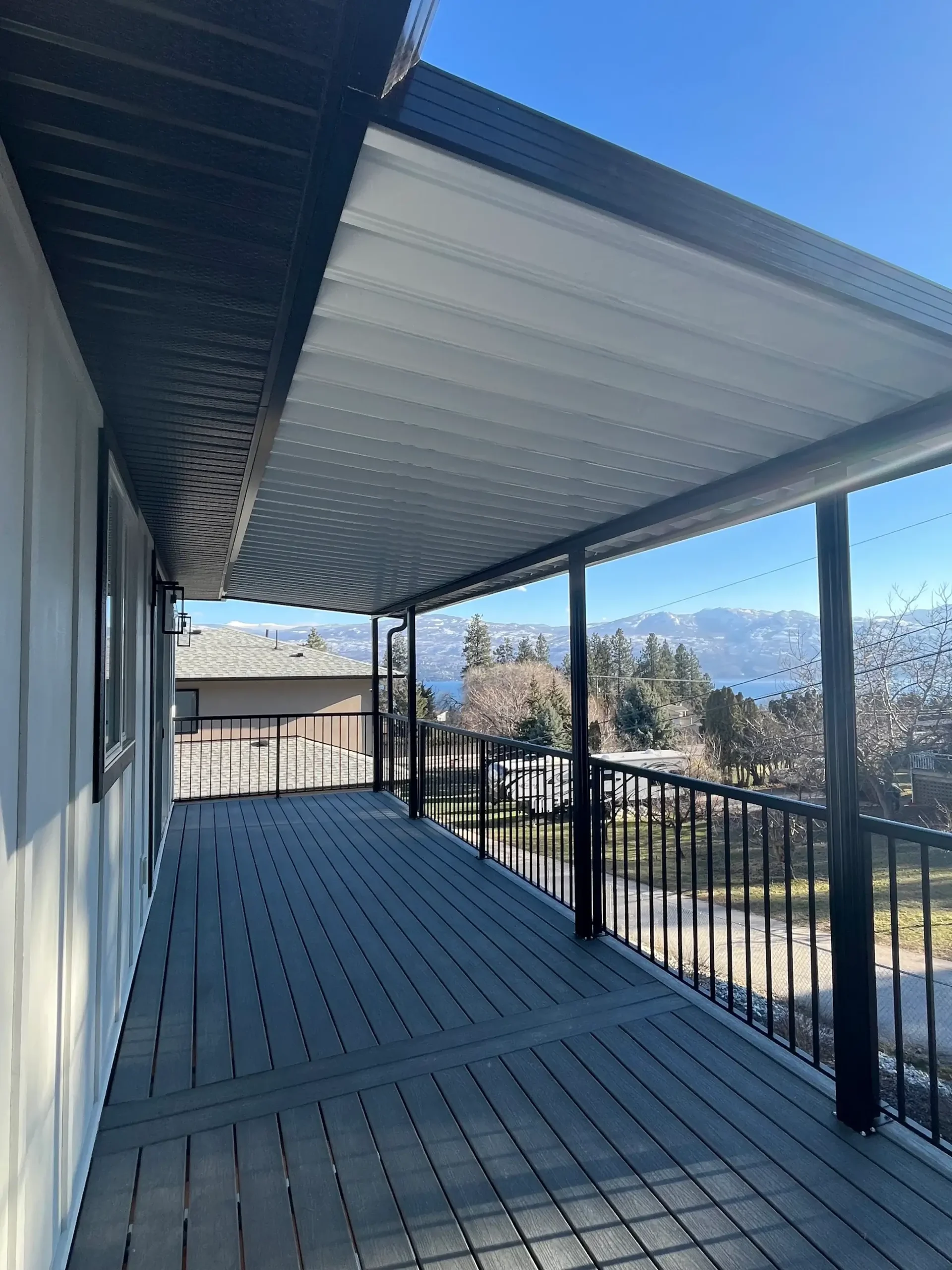
Aluminum vs Wood Patio Covers: An Honest Comparison for Okanagan Homeowners
Here’s the debate every Okanagan homeowner eventually has: wood patio covers look beautiful and feel natural, but they need constant attention. Aluminum is practical and worry-free, but does it have the same charm? After installing hundreds of covers across Kelowna, Vernon, and Penticton, we’ve seen how both materials actually hold up in our climate. This guide breaks down the real numbers, the honest maintenance requirements, and which material genuinely makes sense for your home.
The Okanagan Valley throws some unique challenges at outdoor structures. We get hot, dry summers that regularly push into the high 30s, then turn around and dump 50-100cm of snow in winter. Our semi-arid climate means intense UV exposure year-round. And those temperature swings from -10C to +35C? They cause expansion and contraction that weaker materials simply can’t handle.
If you’re already leaning toward aluminum, our complete aluminum patio covers guide goes deeper into the different types and styles available. But if you’re still weighing your options, keep reading for the honest comparison.
Quick Comparison at a Glance
Before we get into the details, here’s the bottom line for those of you short on time. This table shows what you’ll actually experience with each material over the first decade of ownership.
| Factor | Aluminum | Wood |
|---|---|---|
| Upfront Cost | $15-35/sq ft installed | $20-40/sq ft installed |
| 10-Year Total Cost | $15-35/sq ft (no maintenance) | $35-60/sq ft (with stain/seal) |
| Lifespan | 20-30+ years | 10-15 years |
| Maintenance | Annual wash | Annual stain/seal |
| Snow Load Rating | Engineered for BC loads | Depends on construction |
| Fire Resistance | Non-combustible | Combustible |
| Aesthetic Flexibility | Limited (but Alumawood mimics wood) | Unlimited customization |
| Best For | Low-maintenance, long-term value | Traditional aesthetic priority |
The Real Cost Breakdown
Most comparison articles only show material costs. That’s misleading, because what matters is what you’ll actually spend over the life of the cover. Here’s the complete picture.
Upfront Costs in the Okanagan
Aluminum Patio Covers:
- Basic attached cover: $4,500 – $8,000
- Mid-range insulated: $8,000 – $12,000
- Premium custom installation: $12,000 – $16,000+
- Per square foot: $15-35 installed
Wood Patio Covers:
- Basic cedar attached: $5,000 – $10,000
- Mid-range redwood: $10,000 – $18,000
- Premium custom build: $18,000 – $28,000+
- Per square foot: $20-40+ installed
Here’s what catches people off guard: wood’s upfront cost varies dramatically based on species. Pressure-treated lumber is the cheapest option, but it deteriorates fastest in our climate. Cedar and redwood cost considerably more but hold up better. Either way, you’re paying more upfront than aluminum.
The Hidden Maintenance Math
This is where the real story unfolds.
Aluminum Annual Costs:
- Soap and water wash: $0 (DIY) or $100-150 (professional)
- No staining, sealing, or painting required
- 10-year maintenance total: approximately $0-1,500
Wood Annual Costs:
- Staining/sealing every 2-3 years: $500-1,500 per treatment
- Annual inspection and minor repairs: $100-300
- Potential rot repair (years 8-10): $500-2,000
- 10-year maintenance total: approximately $3,000-8,000
For detailed pricing by size and style, check out our patio cover cost guide.
Maintenance Reality Check
Let’s talk about what you’ll actually need to do each season. No sugarcoating here.
Aluminum Maintenance (The Short List)
- Spring: Hose off winter debris, check fasteners are still tight
- Summer: Occasional wash if it looks dusty
- Fall: Clear leaves from gutters and drainage channels
- Winter: Nothing. Seriously, nothing special needed.
Total annual time investment: 2-4 hours
Wood Maintenance (The Full Story)
- Spring: Inspect for winter damage, check for rot at post bases and joints where moisture collects
- Summer: Watch for cracking and checking from heat and UV exposure, sand rough spots
- Fall: Apply stain and sealant every 2-3 years (this is a major project requiring prep, application, and drying time)
- Winter: Hope the seal holds against moisture infiltration and freeze-thaw cycles
Total annual time investment: 8-20+ hours (staining years add 20+ hours)
Here’s our honest take: if you genuinely enjoy weekend projects and find satisfaction in maintaining wood, it can be rewarding work. There’s something tactile and satisfying about caring for natural materials. But if you’d rather spend your weekends actually using your patio instead of maintaining it, aluminum wins this category hands down.
How They Handle Okanagan Weather
This is where the rubber meets the road. Our climate is brutal in specific ways that generic comparison articles don’t account for.
Hot, Dry Summers (27-35C)
Aluminum Performance:
- Reflects heat with proper powder coating
- No warping, cracking, or drying out regardless of temperature
- Insulated panels reduce heat transfer by up to 15 degrees underneath
- Powder coating resists UV fading for decades
Wood Performance:
- Natural wood cracks and checks in dry heat (those splits you see in old decks)
- Requires more frequent sealing in our semi-arid climate than coastal regions
- Can warp if the lumber wasn’t properly kiln-dried before installation
- UV exposure grays untreated wood within 1-2 seasons
Winner: Aluminum. It’s specifically engineered for heat and UV exposure.
Snowy Winters (50-100cm annually)
Aluminum Performance:
- Engineered for specific snow loads (always verify with your installer)
- Doesn’t absorb moisture that causes freeze-thaw damage
- Metal maintains structural integrity in cold temperatures
Wood Performance:
- Can be strong when properly built to code
- Absorbs moisture, expands and contracts with freeze-thaw cycles
- Post bases and joints are vulnerable to rot where snow sits and melts
- Snow sitting on wood accelerates deterioration over time
Winner: Aluminum. No moisture absorption means no freeze-thaw damage, period.
Temperature Swings (-10C to +35C)
Aluminum Performance:
- Predictable expansion and contraction (engineers account for this)
- Fasteners and joints designed to accommodate movement
Wood Performance:
- Unpredictable movement based on both moisture content AND temperature
- Joints can loosen over time as the wood moves
- More stress on fasteners leading to potential failure
Winner: Aluminum. Predictable, engineered behavior beats natural variability.
The Aesthetic Question
Let’s acknowledge the elephant in the room: natural wood looks beautiful. There’s no point pretending otherwise.
Wood’s Undeniable Charm
- Natural grain patterns are impossible to fully replicate
- Can be stained any color, carved, or detailed to match your vision
- Matches rustic, traditional, or craftsman architecture naturally
- Feels warm and organic in a way synthetic materials don’t
Modern Alumawood Options
- Textured finishes that mimic wood grain convincingly
- Available in wood-tone colors including cedar, redwood, and walnut
- Clean lines that suit modern and contemporary architecture
- Consistent appearance that doesn’t weather, gray, or fade
Here’s our honest assessment: if your home is a heritage craftsman and you need perfectly matched period-appropriate woodwork, real wood may be worth the maintenance investment. That’s a legitimate priority.
But for most modern Okanagan homes, quality Alumawood is nearly indistinguishable from real wood at ten feet away. More importantly, that Alumawood will look better in year 10 than real wood looks in year 5, because it won’t have weathered, cracked, or grayed.
Durability and Lifespan
Aluminum Longevity
- Typical lifespan: 20-30+ years (often longer)
- Lifetime limited warranty common from quality manufacturers
- Won’t rot, warp, crack, or attract pests like carpenter ants
- Powder coating lasts 15-20 years before potentially needing a refresh
Wood Longevity
- Typical lifespan: 10-15 years (with diligent maintenance)
- Without maintenance: 5-8 years to significant deterioration
- Vulnerable to: rot, warping, cracking, carpenter ants, UV damage
- Post bases and ground contact points typically fail first
Fire Safety Considerations
This one matters more in the Okanagan than anywhere else in Canada.
- Aluminum is non-combustible. It won’t ignite, won’t contribute to fire spread.
- Wood is combustible, even fire-treated options can burn under extreme conditions
- For homes in wildfire-prone areas, aluminum provides genuine peace of mind
- Some insurance companies offer better rates for non-combustible outdoor structures
After recent wildfire seasons in the Okanagan, many homeowners are reconsidering any combustible materials attached directly to their homes. We’ve had more than a few customers specifically cite fire safety as their reason for choosing aluminum over wood. It’s a conversation worth having with your insurance provider.
Which Should You Choose?
Here’s a simple decision framework based on what actually matters to you.
Choose Aluminum If:
- You want “set it and forget it” low maintenance
- Long-term value matters more than lowest upfront cost
- Your home has modern or contemporary architecture
- Fire safety is a concern (and in the Okanagan, it should be)
- You don’t enjoy regular outdoor maintenance projects
- You plan to stay in your home for 10+ years
Choose Wood If:
- Authentic natural aesthetics are your absolute top priority
- You have a heritage home requiring architecturally consistent materials
- You genuinely enjoy the ritual of maintaining outdoor structures
- Your upfront budget is limited AND you’re committed to ongoing maintenance
- You plan to move within 5-7 years (shorter ownership period)
Our take: For 90% of Okanagan homeowners, aluminum delivers better value. You’ll spend less over 10 years, invest zero hours in maintenance, and your cover will look better in year 15 than a wood cover looks in year 5. The math is straightforward.
Frequently Asked Questions
Is aluminum cheaper than wood for patio covers?
Upfront, aluminum and wood are comparable in price – roughly $15-35 per square foot for aluminum versus $20-40 per square foot for wood. However, over 10 years, aluminum becomes significantly cheaper because wood requires $3,000-8,000 in staining, sealing, and repairs that aluminum simply doesn’t need. When you factor in maintenance costs, aluminum typically saves homeowners 30-50% over the first decade.
How long does a wood patio cover last in the Okanagan?
With diligent annual maintenance including staining, sealing, and regular inspections, wood patio covers typically last 10-15 years in the Okanagan. Our hot, dry summers accelerate cracking and UV damage, while winter moisture contributes to rot at joints and post bases. Without proper maintenance, wood covers can show significant deterioration within 5-8 years. Compare this to aluminum’s 20-30+ year lifespan with minimal care.
Can aluminum patio covers look like real wood?
Yes, and the technology has improved dramatically. Alumawood products feature textured finishes that mimic wood grain convincingly, available in cedar, redwood, and walnut tones. From typical viewing distances of 10 feet or more, many homeowners and guests can’t tell the difference. The key advantage is that Alumawood still looks like fresh wood after 20 years, while real wood will have weathered, grayed, and cracked by then.
Do aluminum patio covers handle Okanagan snow loads?
When properly engineered and installed to meet BC Building Code requirements, absolutely. Reputable installers engineer covers specifically for local snow load requirements, which vary by elevation and location in the Okanagan. Unlike wood, aluminum doesn’t absorb moisture, so there’s no freeze-thaw damage that weakens the structure over time. This actually makes aluminum more reliable for snow loads year after year.
What’s the ROI on aluminum vs wood patio covers?
Both materials add value to your home, but the condition matters significantly. A well-maintained patio cover adds more resale value than a weathered one. Since aluminum maintains its appearance with zero effort, it typically contributes more to resale value when you sell. Real estate agents consistently note that low-maintenance outdoor features appeal strongly to buyers, especially in the Okanagan where outdoor living spaces are a major selling point.
Can I paint or stain an aluminum patio cover?
Aluminum patio covers come powder-coated in your color choice during manufacturing, and that finish typically lasts 15-20 years without needing attention. When it eventually needs refreshing, you can have it professionally re-coated. You cannot stain aluminum like wood, but you can paint it with proper preparation and metal-bonding primers. Most homeowners find the factory powder coating lasts long enough that repainting isn’t necessary during their ownership.
Is a wood patio cover ever the better choice?
Yes, in specific situations. If you have a heritage or craftsman home requiring architecturally consistent period materials, wood may be the right choice. If you genuinely enjoy outdoor maintenance as a hobby and find satisfaction in caring for natural materials, wood can be rewarding. And if authentic natural aesthetics are your absolute top priority regardless of cost and ongoing effort, wood delivers something aluminum can’t fully replicate. Just go in with realistic expectations about the time and money commitment.
Ready to See Your Options?
Get a free consultation with 3D renderings so you can visualize exactly how a new patio cover would look on your home before making any decisions.
Get Your Free QuoteRelated Guides
- Aluminum Patio Covers – Explore our full range of aluminum options
- Patio Cover Cost Guide – Detailed pricing for every budget
- Complete Aluminum Guide – Deep dive into aluminum types and styles
Ready to Start Your Project?
Get a free, no-pressure quote. We’ll help you choose the right material for your home and budget.
Serving Kelowna, West Kelowna, Vernon, Penticton, Lake Country & Salmon Arm