

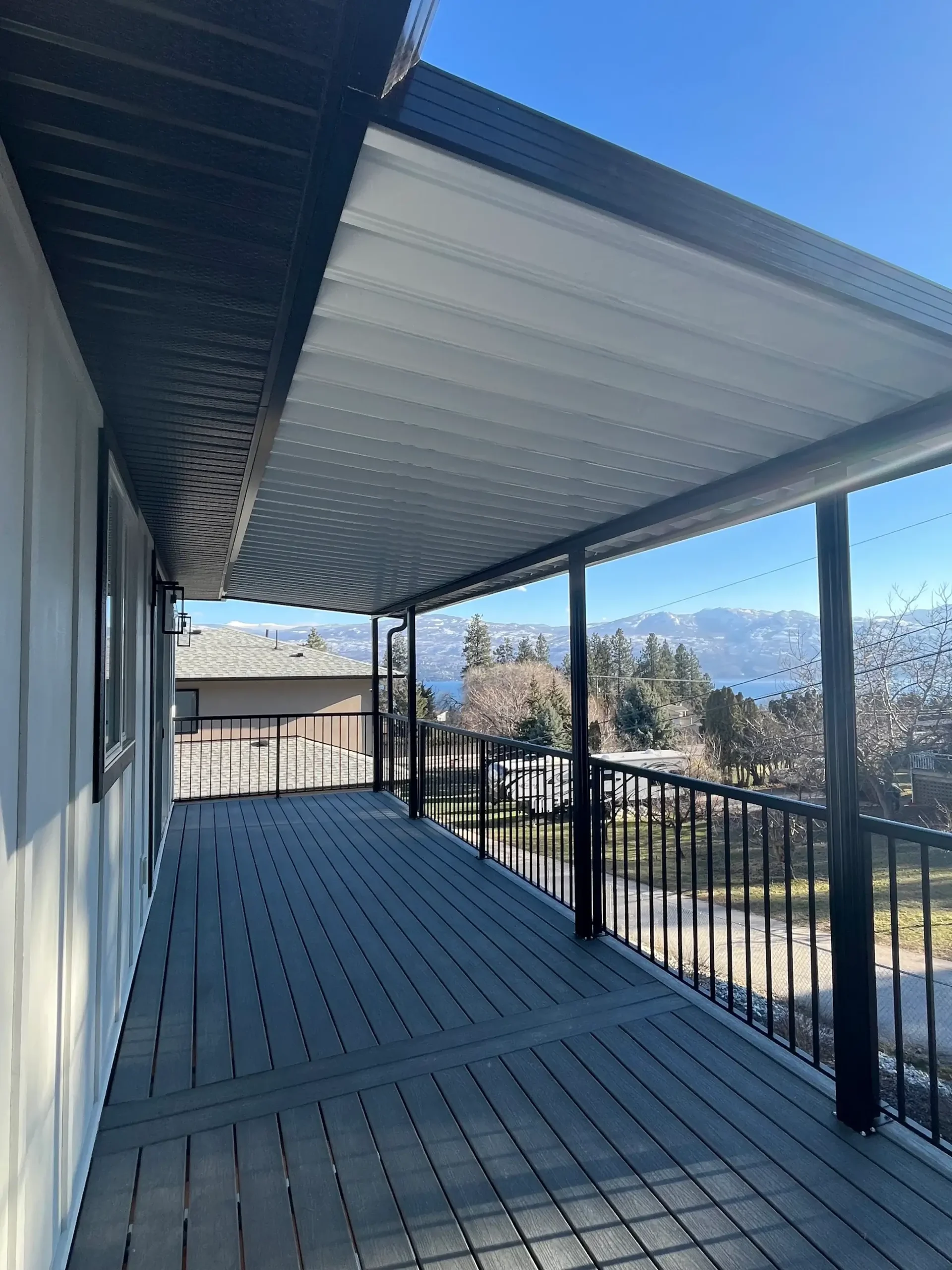
Aluminum vs Wood Patio Cover: An Honest Comparison for Okanagan Homeowners
Short answer: we build aluminum, not wood. After 1,500+ patio covers since 2005, we’ve watched wood decks fight stains, rot, and wildfire bylaws while aluminum just sits there looking good. Want the wood look without the upkeep? Ask about our powder-coated wood-grain finish.
We design, manufacture, and install every cover ourselves out of our West Kelowna shop, backed by a 3-year leak and 10-year materials warranty.
Aluminum Patio Covers vs Wood: The Quick Comparison
Every Okanagan homeowner runs into this choice eventually: aluminum patio covers or a wood roof over the deck. Both look great walking up to them. The real difference shows up over the next ten years, not the first ten days. Here’s the side-by-side before we get into why.
| Factor | Aluminum | Wood |
|---|---|---|
| Upfront cost | Comparable | Comparable, varies by species |
| 10-year cost | Lower, no upkeep | Higher, ongoing stain and repair |
| Lifespan | 20 to 30+ years | 10 to 15 years with upkeep |
| Maintenance | Hose-off once a year | Stain and seal every 2 to 3 years |
| Winter and snow | Built for BC winters, no moisture absorption | Depends on the build, rot risk at post bases |
| Fire resistance | Non-combustible | Combustible |
| Wood look | Powder-coated wood-grain finish available | The real thing, but it weathers |
| Best for | Low-maintenance, long-term value | Homeowners who enjoy the upkeep ritual |
Already sold on aluminum? Our aluminum patio covers guide covers the styles, panels, and colours we build.
Metal Patio Covers vs Wood: What Maintenance Actually Looks Like
Let’s talk about what you’ll actually do each season, not what the brochure promises.
Aluminum Covers: The Short List
- Spring: hose off winter grit, check the fasteners are still tight
- Summer: an occasional wash if it looks dusty
- Fall: clear leaves from the gutters and drainage channels
- Winter: nothing. We mean that.
Wood Roof for Patio: The Full Story
A wooden patio cover asks for a different kind of attention. Spring means checking the post bases for rot, since that’s where moisture sits all winter. Summer means watching for cracking and checking in our dry heat. Every two to three years you’re staining and sealing the whole wood frame patio cover, and that’s a weekend-eating job, not an afternoon one.
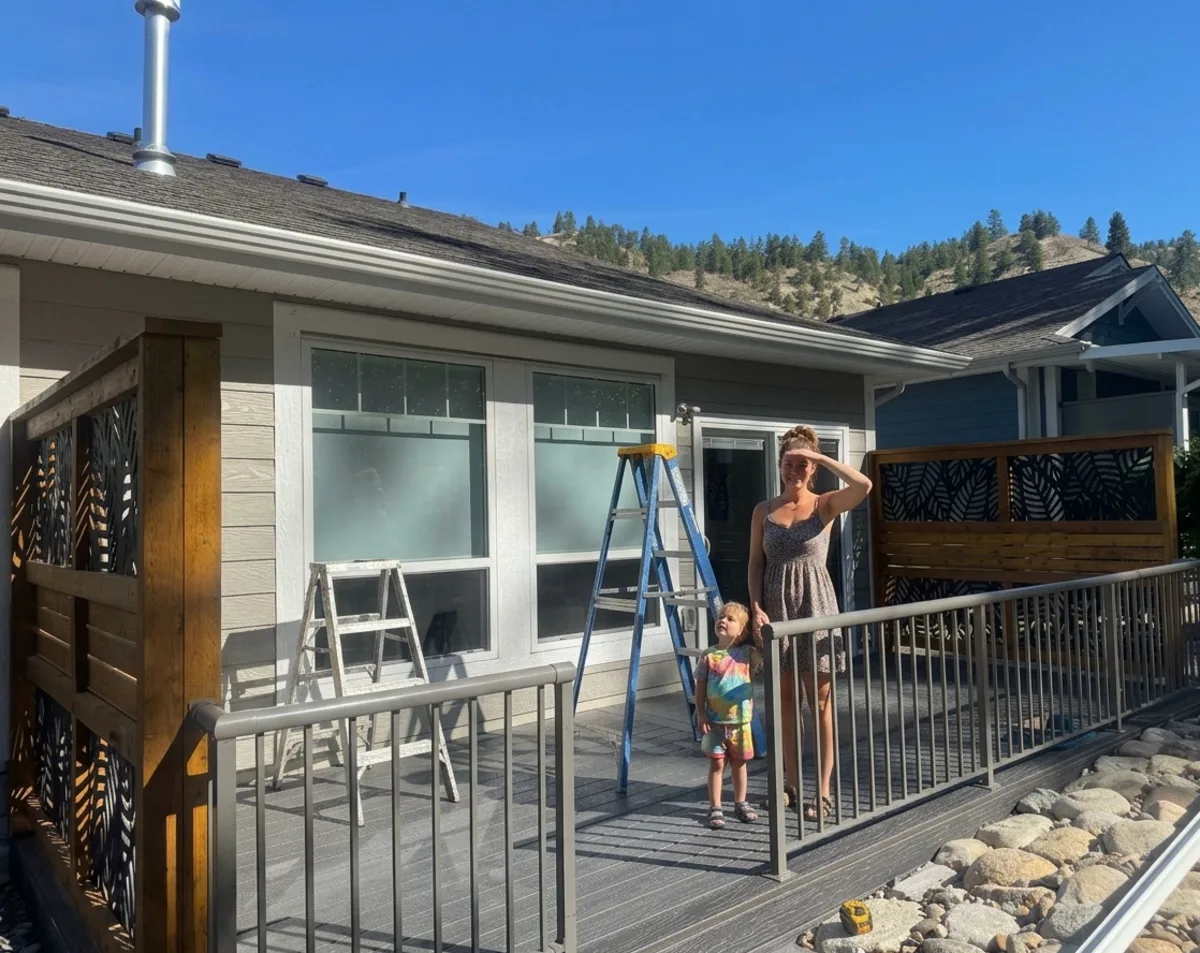
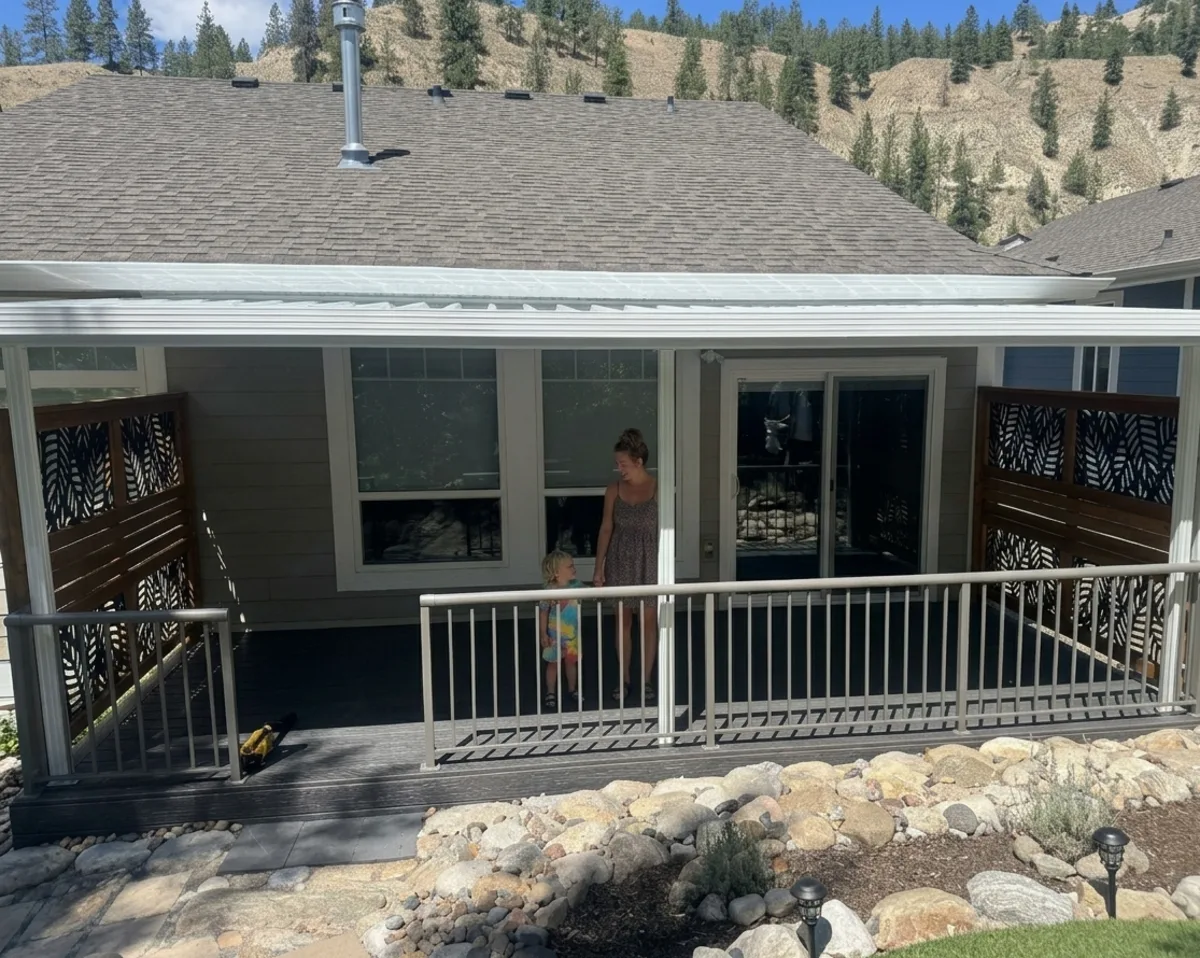
Here’s our honest take: if you genuinely enjoy weekend projects and find satisfaction in caring for natural materials, a wooden patio cover can be rewarding. There’s something to that. But if you’d rather spend your weekends using the patio instead of maintaining it, aluminum wins this one, no contest.
Aluminum Patio Roof Panels in Okanagan Heat, Snow, and Wildfire Risk
Our climate is hard on outdoor structures in specific ways. Hot, dry summers that push past 35C, winters that can dump 50 to 100cm of snow, and temperature swings from minus 10 to plus 35 that expand and contract weaker materials. Generic comparison articles don’t account for any of it.
Lifespan: Why Aluminum Outlasts Wood
Most of our aluminum patio covers last for decades, backed by a 3-year leak warranty and a 10-year materials warranty. Aluminum won’t rot, warp, or attract carpenter ants the way wood can, and the powder coating itself typically holds up for 15 to 20 years before it would ever need a refresh.
Deck Cover Wood and Our Wildfire Seasons
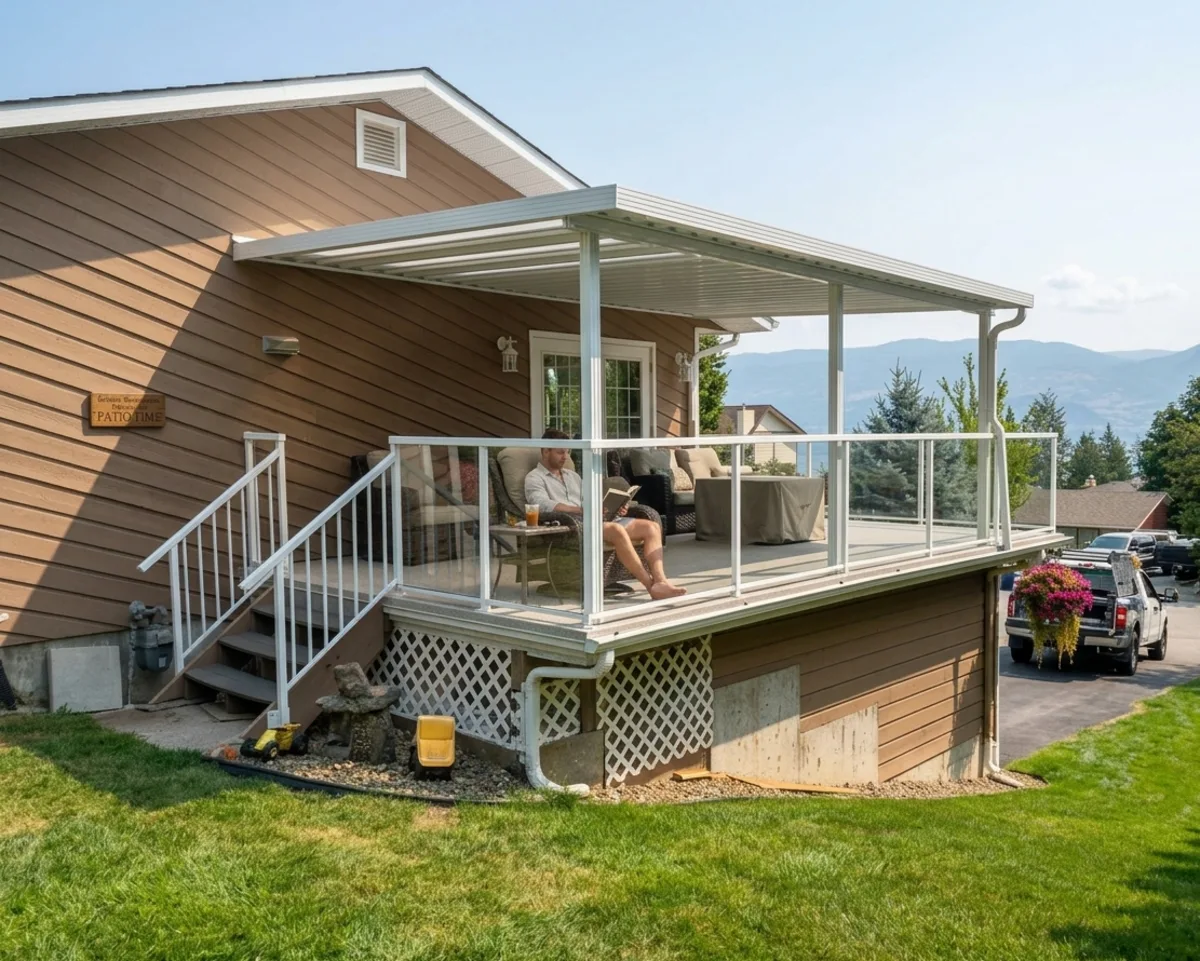
This matters more here than almost anywhere else in Canada. Aluminum is non-combustible, full stop. A deck cover wood build is combustible, even fire-treated versions, under the wrong conditions. After the wildfire seasons we’ve had, quite a few customers have told us fire safety was the real reason they chose aluminum over wood. It’s worth raising with your insurance broker too.
Mistakes We Get Called to Fix
- Skipping the stain schedule. Miss one year and the wood’s playing catch-up for two.
- Post bases sitting in standing water. Rot starts there first, every time.
- Assuming a wood-look aluminum cover needs wood-level care. It doesn’t. Hose it off and move on.
- Painting aluminum without a metal-bonding primer. It peels within a season.
- Choosing real wood for a south or west-facing deck. It cracks faster than you’d expect in our dry summers.
Aluminum Patio Rooms in Wood Tones: The Look Without the Work
Let’s acknowledge the obvious: natural wood grain is genuinely beautiful. We won’t pretend otherwise. But today’s wood-tone powder coat, often called wood-grain aluminum, closes that gap for most homeowners without asking for a single weekend of sanding.
Custom Aluminum Patio Covers in Wood-Tone Colours
Our powder-coated finishes come in wood-tone colours with a textured grain that reads as real wood from a few feet away, cedar and walnut tones included. It won’t ever need staining, and it won’t greet year ten looking greyer than year one.
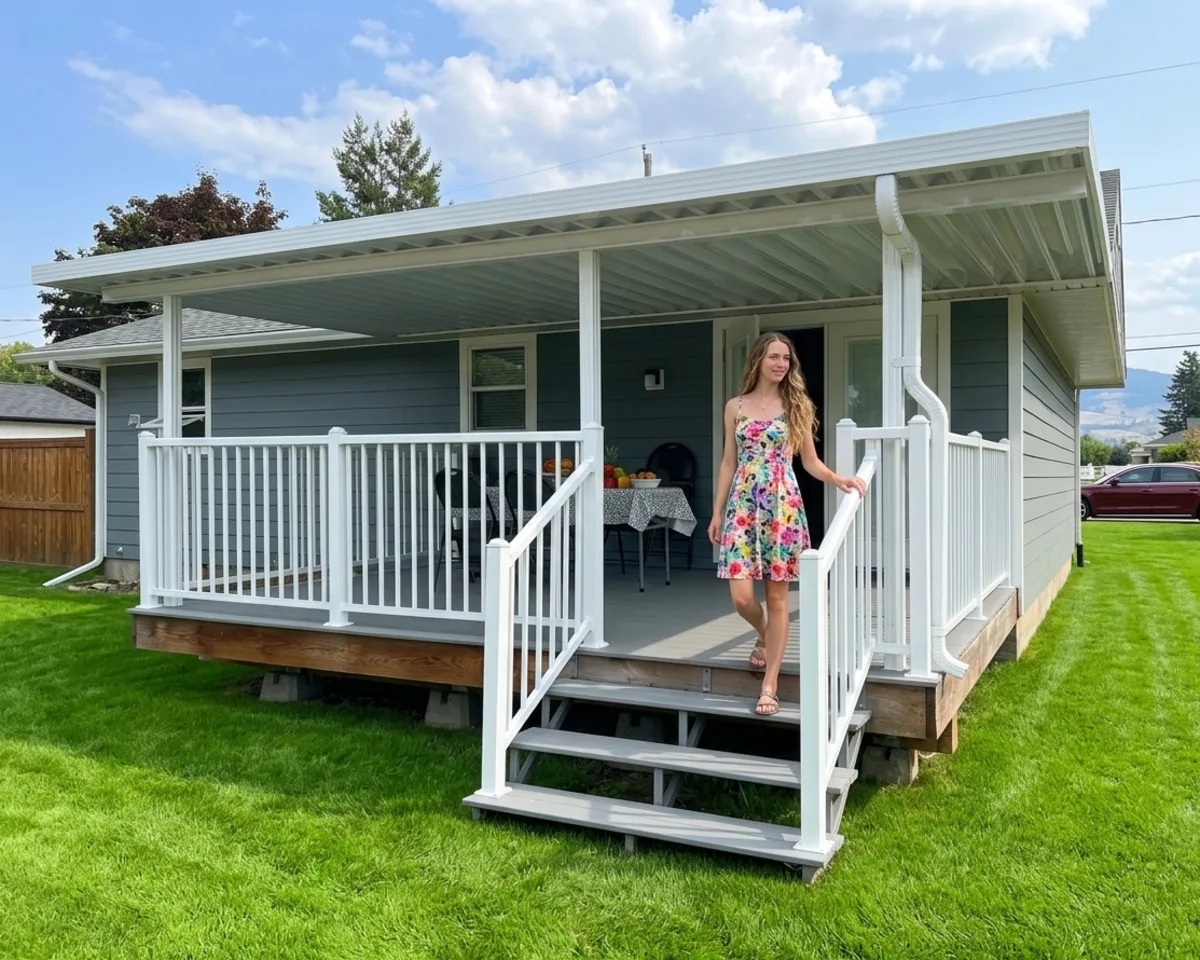
Our honest take: if your home’s a heritage craftsman and you need period-accurate woodwork, real wood might be worth the upkeep. That’s a legitimate priority. For most modern Okanagan homes, though, a quality wood-tone aluminum patio room is nearly indistinguishable from real wood at ten feet, and it’ll look better in year ten than real wood looks in year five.
Aluminum Patio or Wood: Which Fits Your Home?
Here’s the honest breakdown of who each material actually fits.
| What you care about most | Go with |
|---|---|
| Zero weekend maintenance | Aluminum |
| Fire safety in a wildfire-prone area | Aluminum |
| Lowest cost over 10+ years | Aluminum |
| A heritage or craftsman home needing real wood detail | Wood |
| You enjoy the ritual of staining and sealing | Wood |
| The wood look without the wood work | Aluminum, wood-grain powder coat |
Curious how the installation process of aluminum patio enclosures compares to other materials? Ours is quick: we design and manufacture in our West Kelowna shop, then our own crew installs most aluminum covers in about a day. Compare that to a multi-day wood build followed by years of follow-up maintenance. See our installation process guide for the full walkthrough, or check our patio covers for BC rain and snow guide if weather performance is your main concern. Not every metal patio cover contractor builds in-house the way we do, start to finish, one crew.
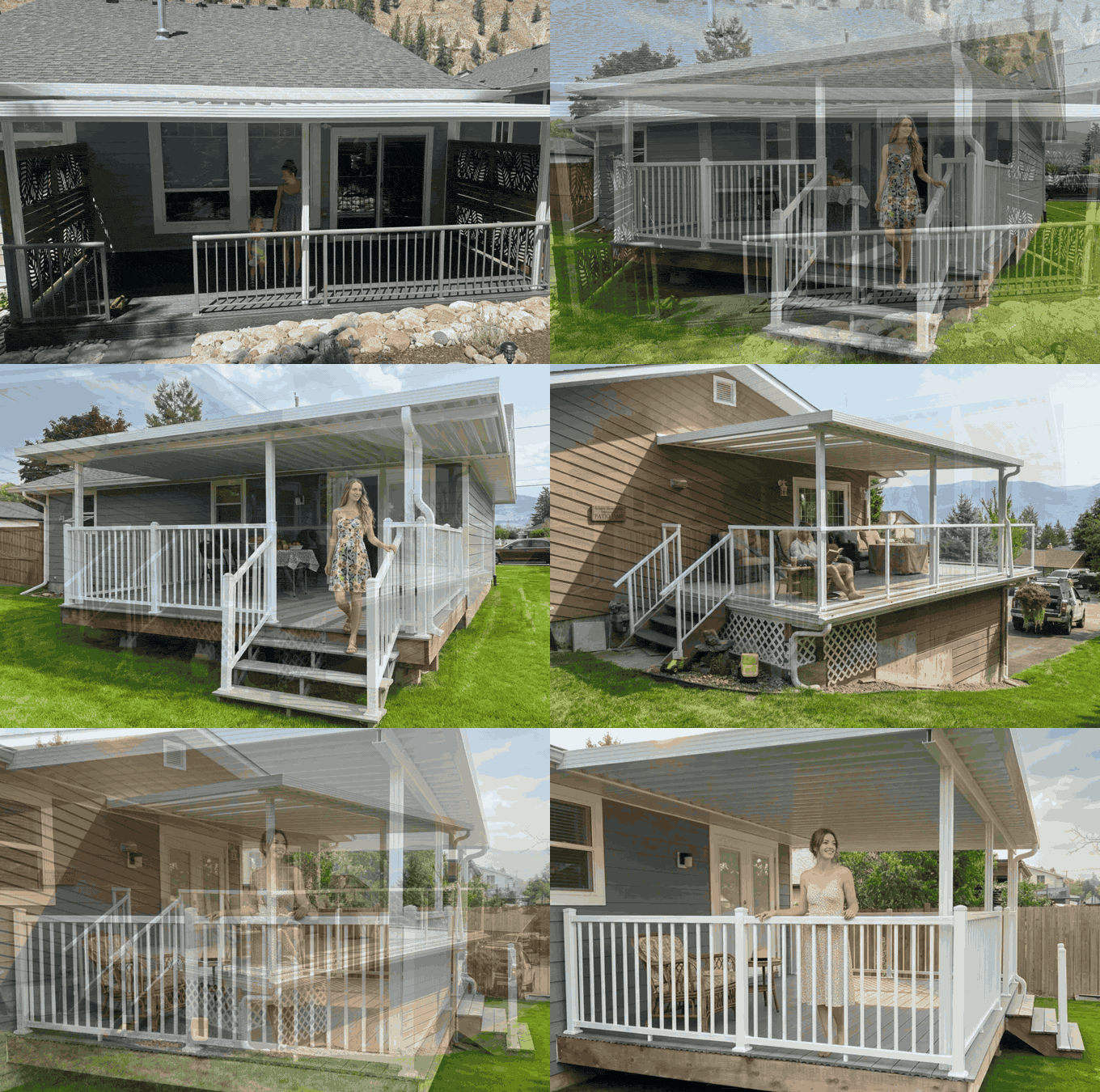
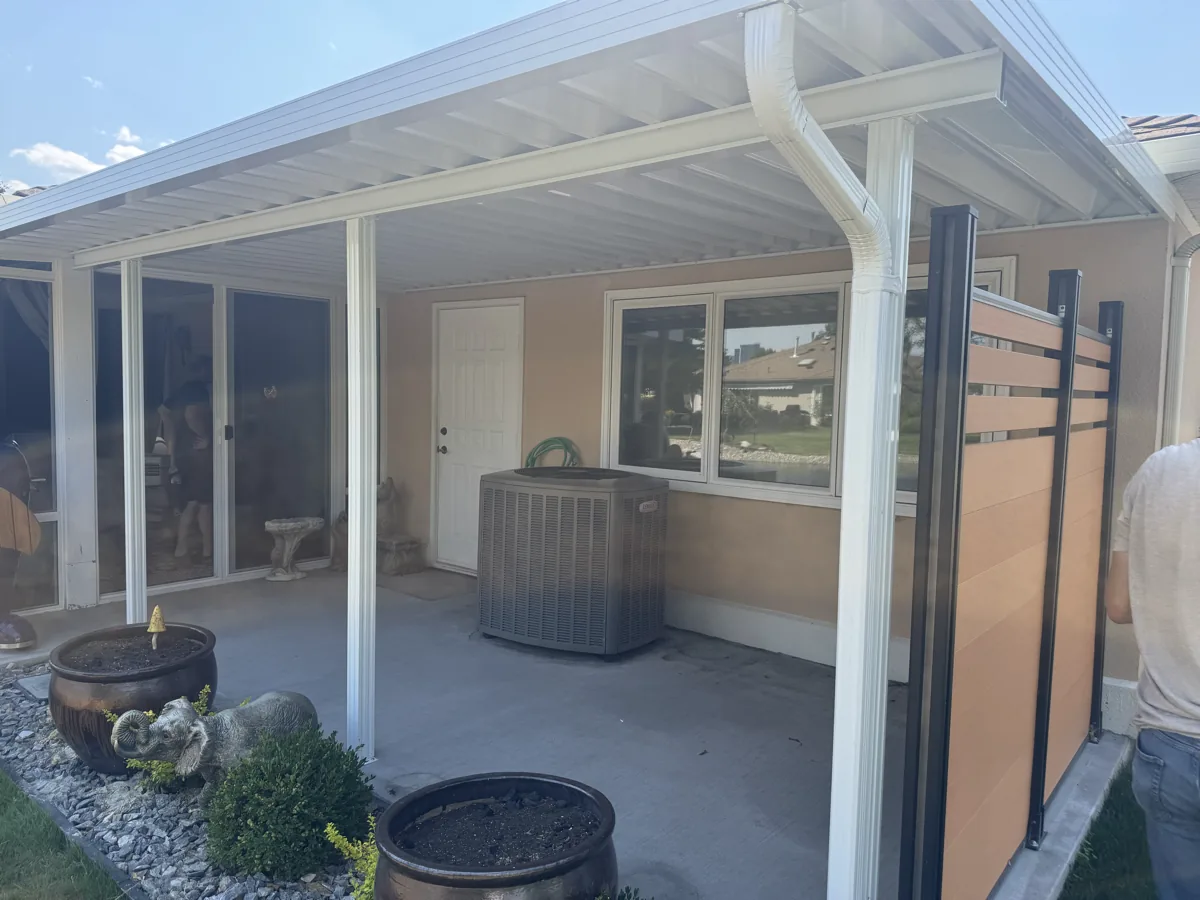
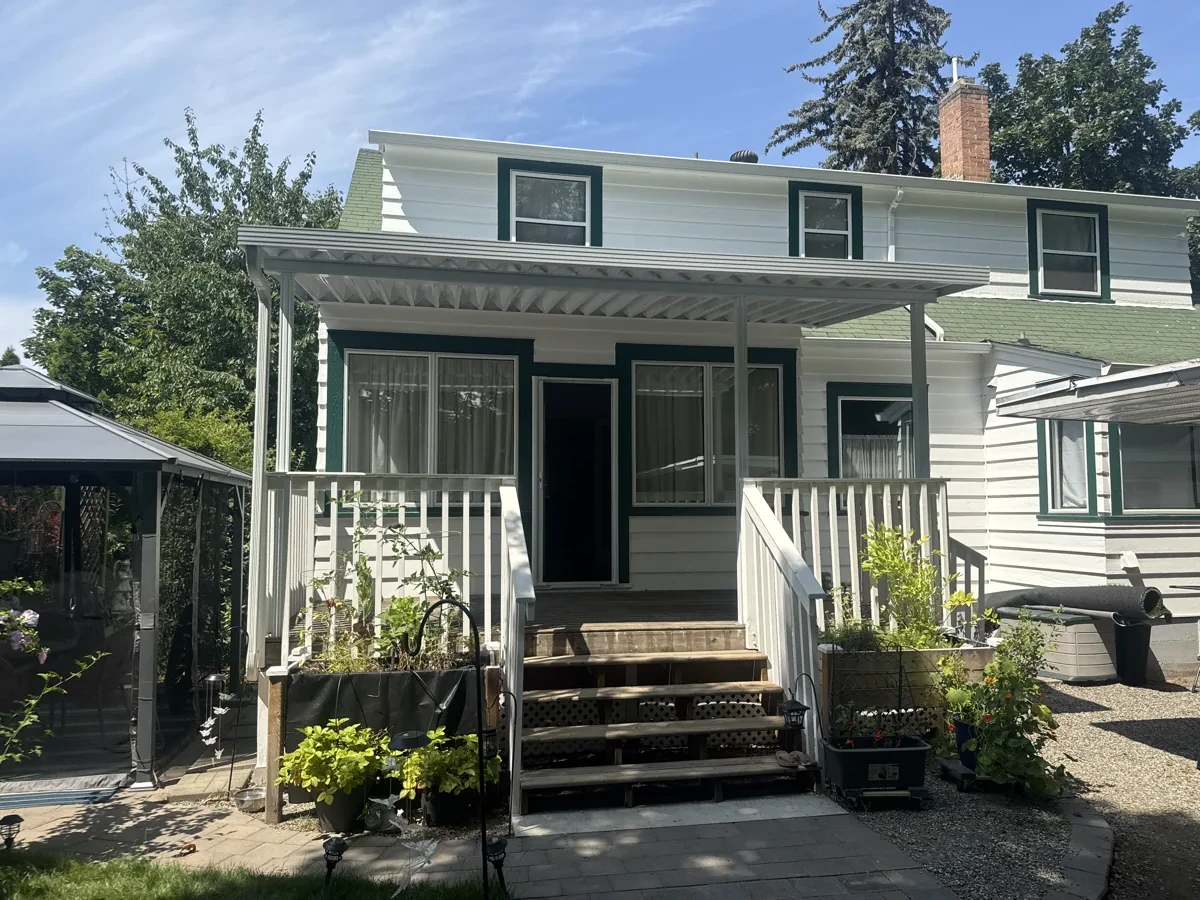
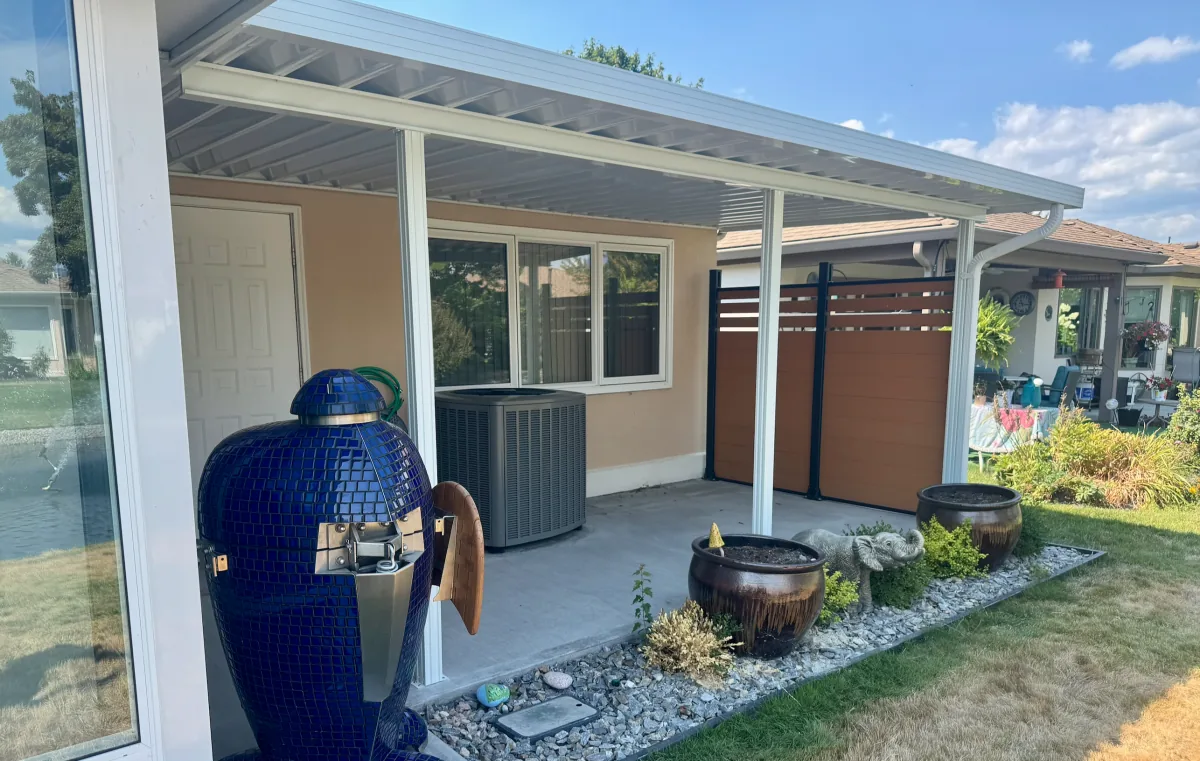
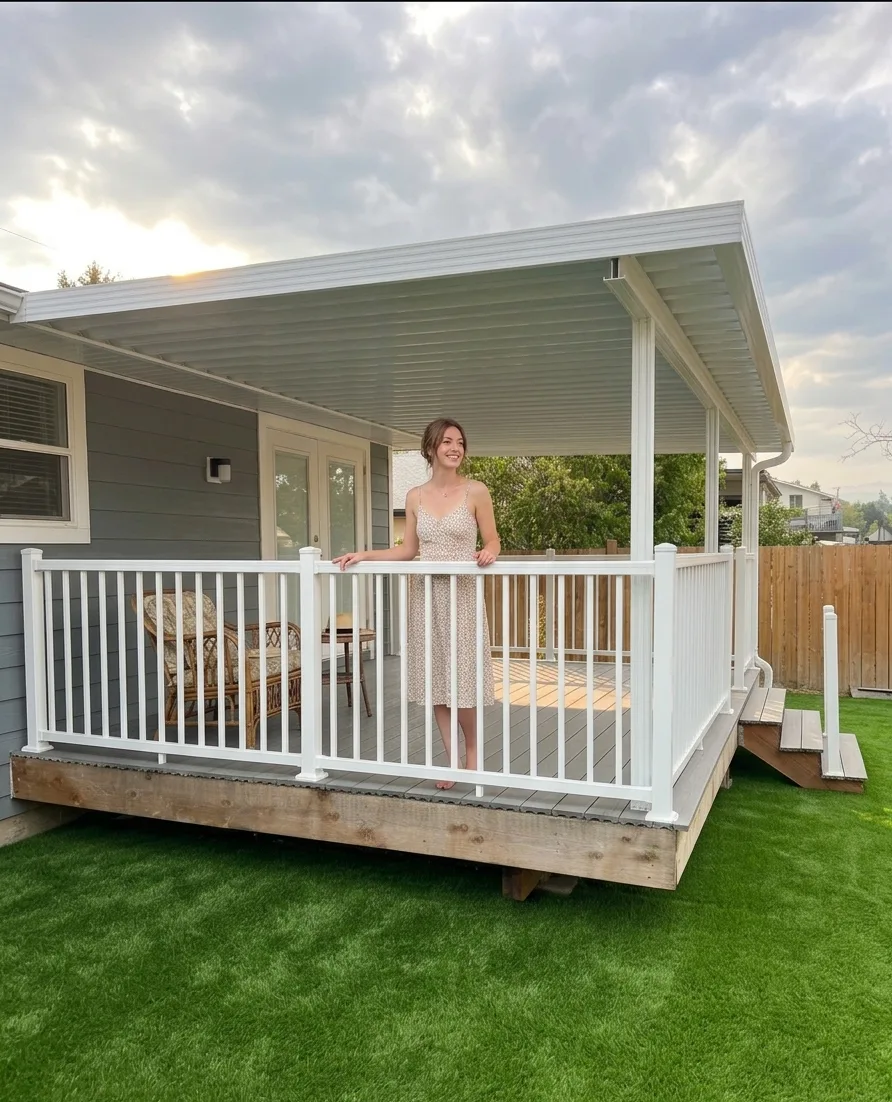
Recent Aluminum Cover Projects
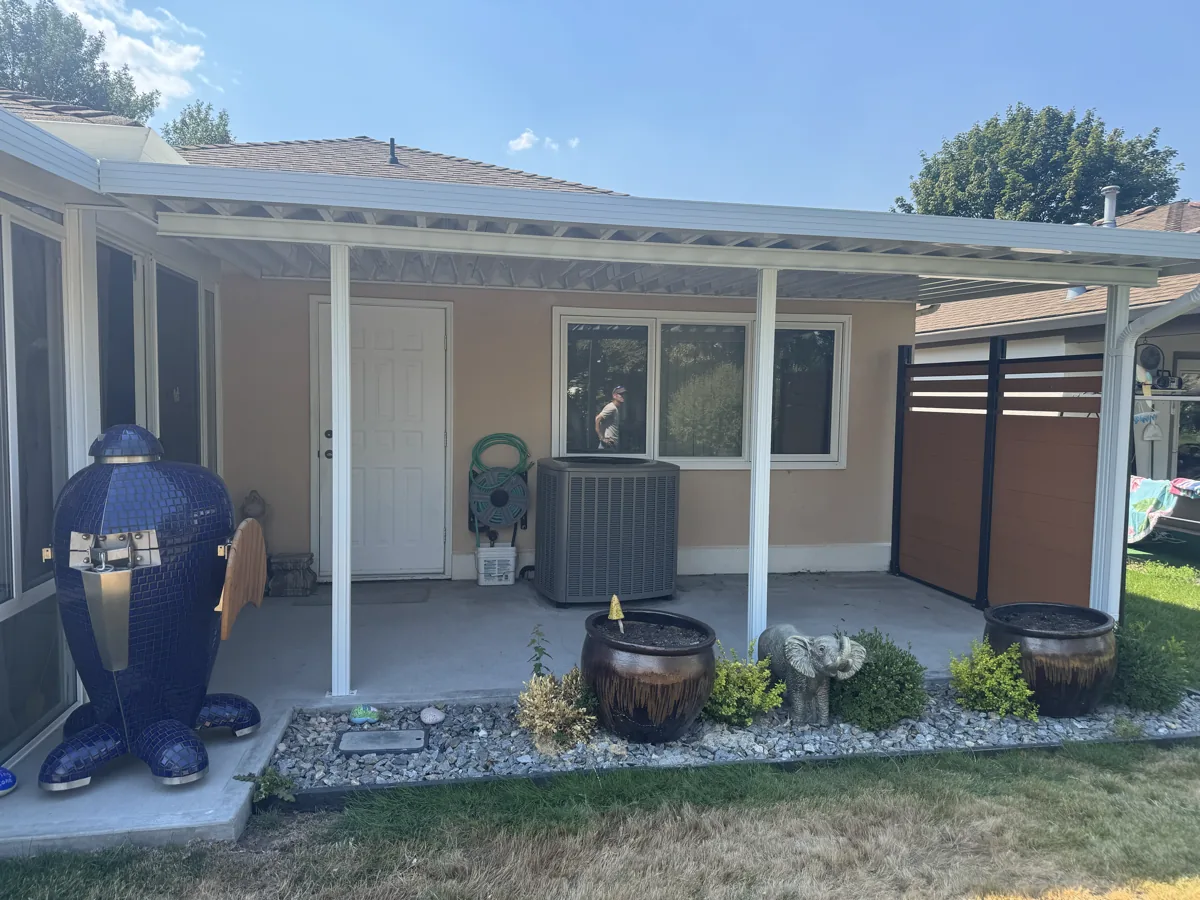
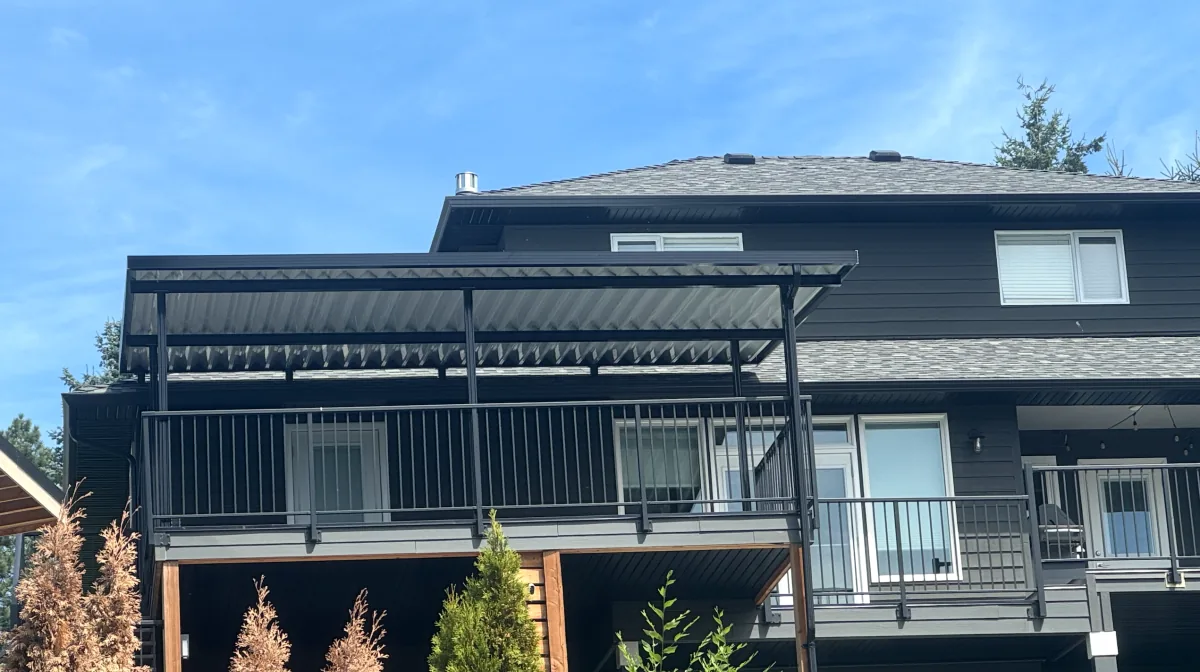
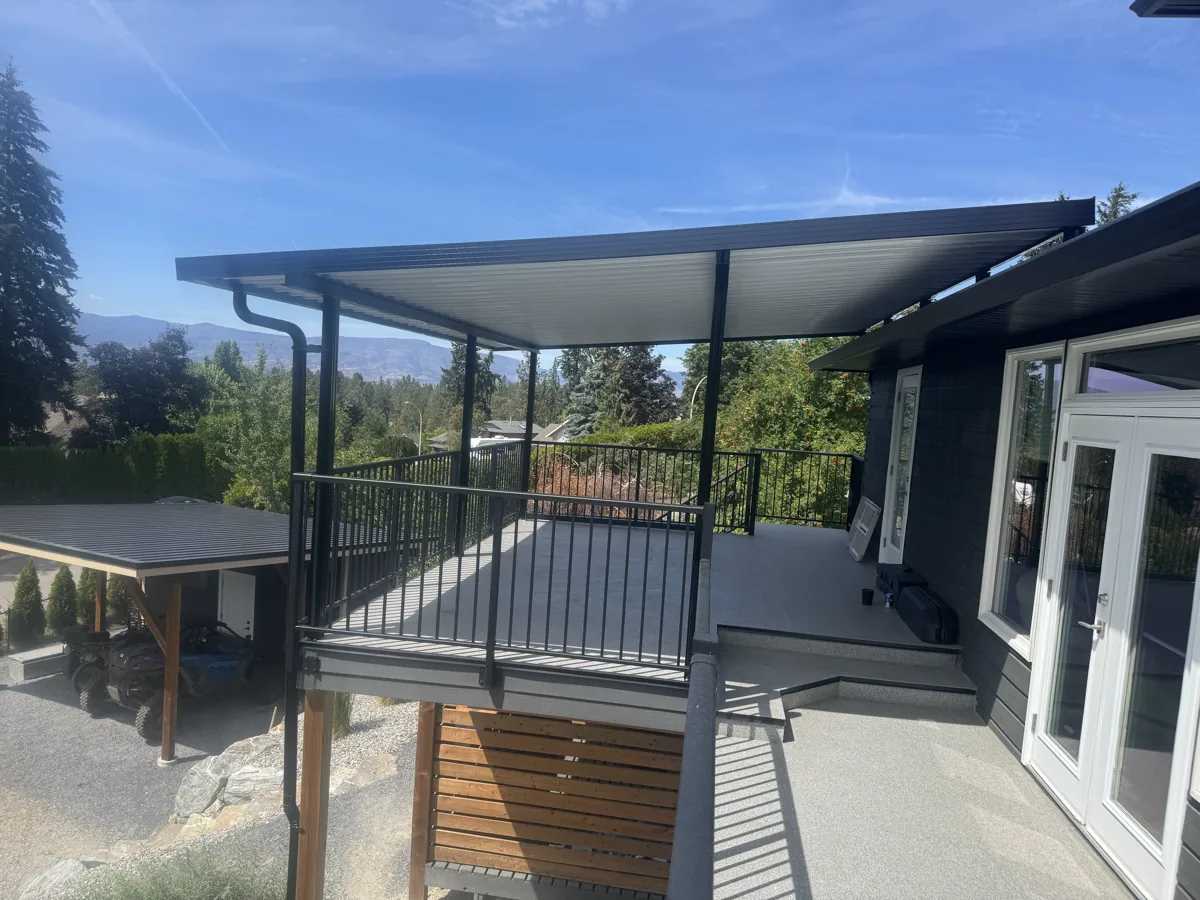
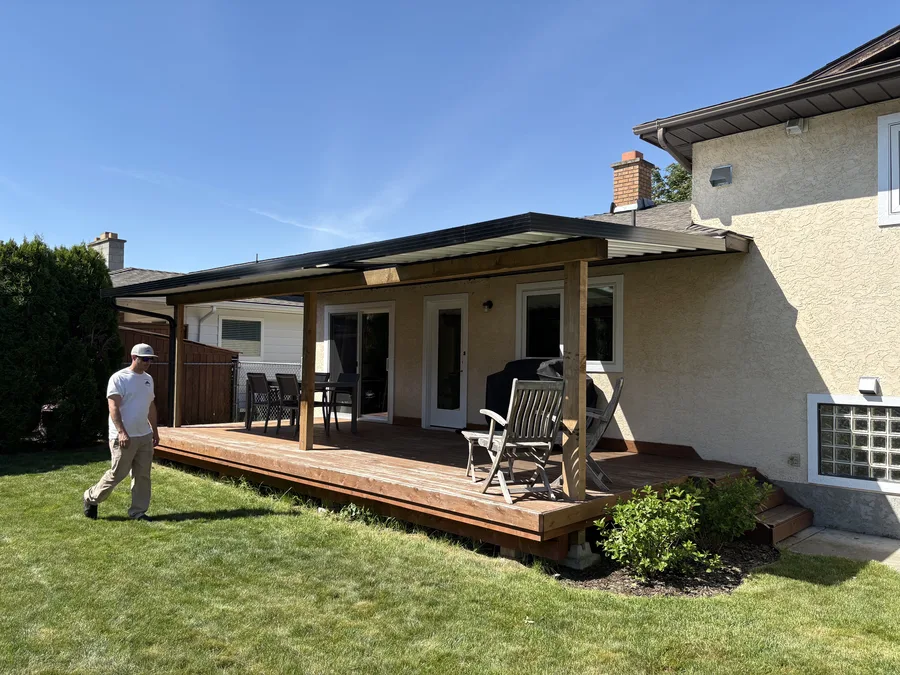
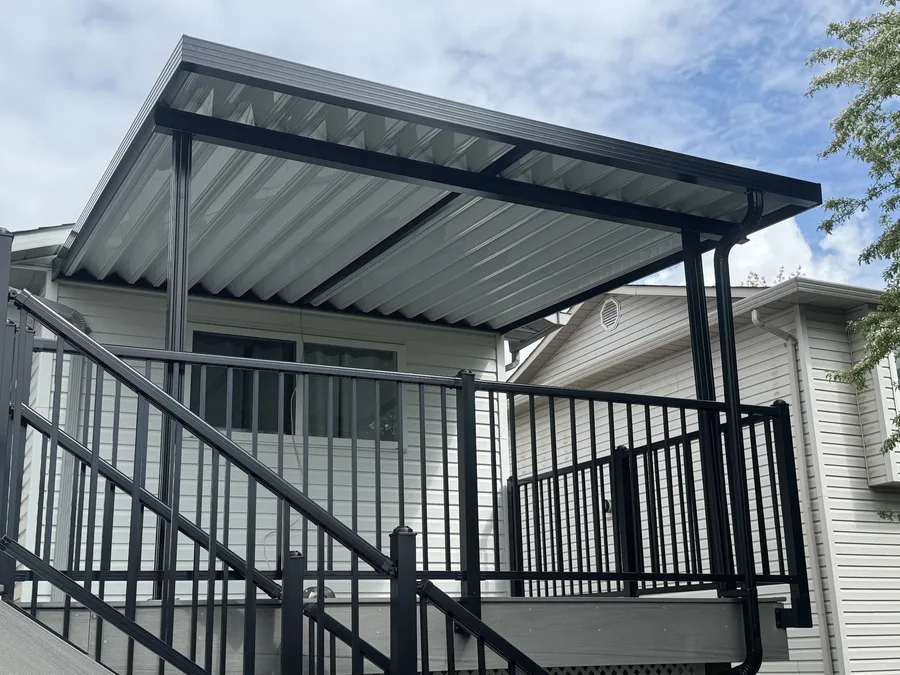
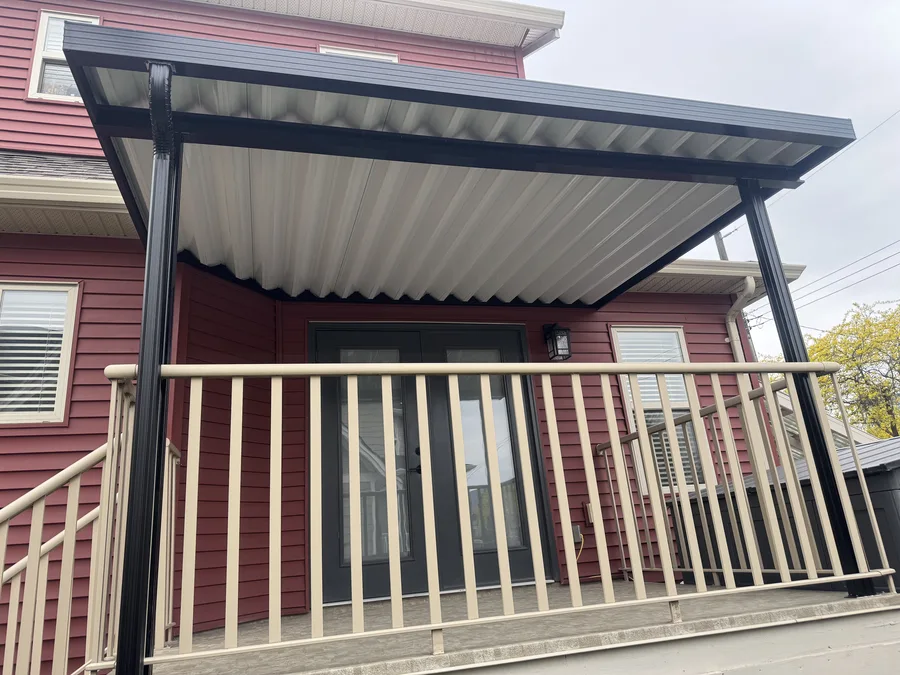
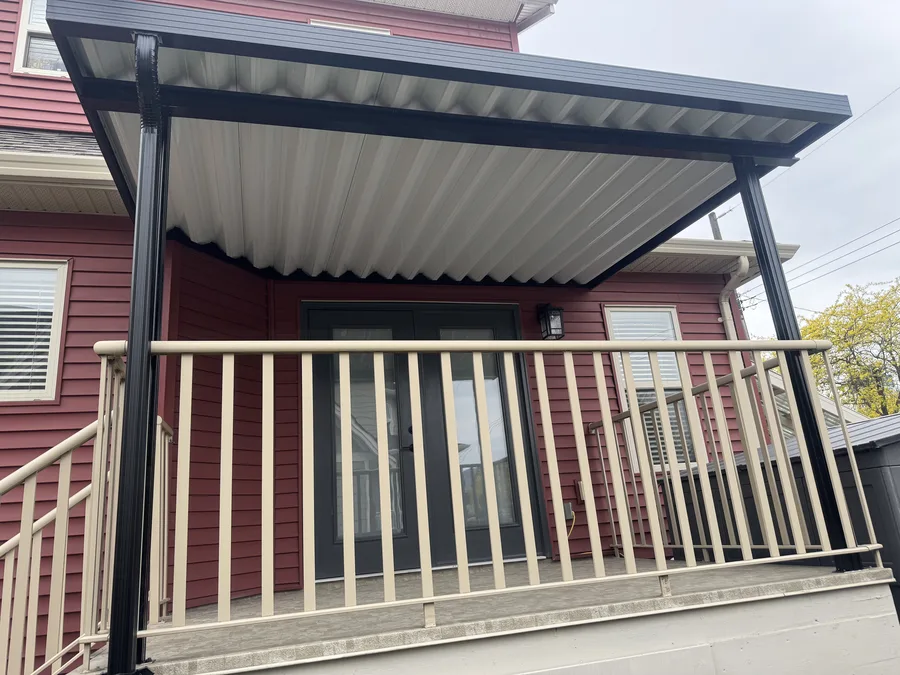
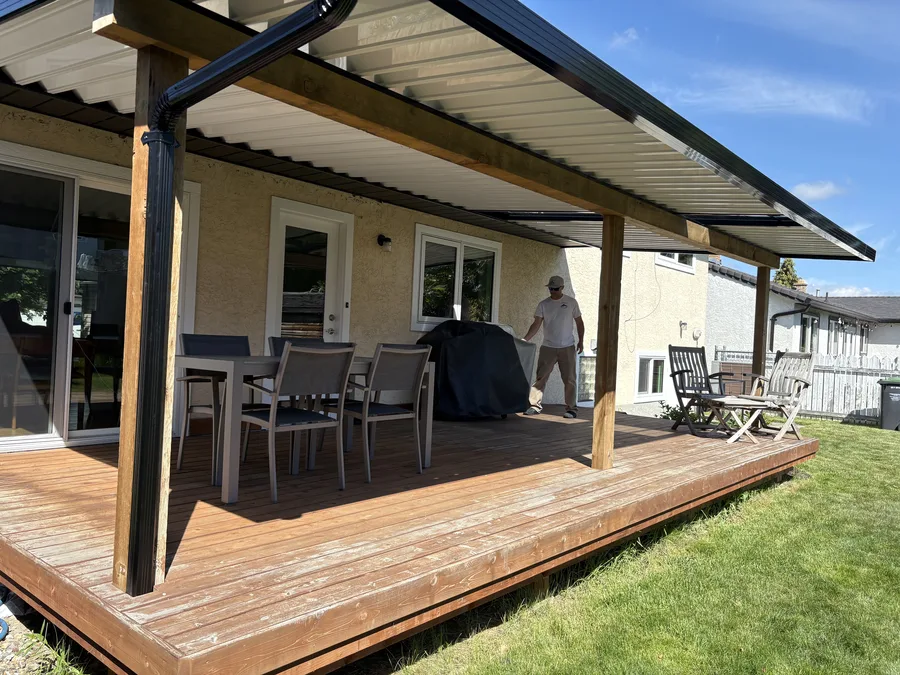
A few we’ve built recently — every one custom-made in West Kelowna and installed by our own crew.
Aluminum vs Wood Patio Cover Questions
How long do aluminum patio covers last?
Most of our aluminum patio covers last for decades, backed by a 3-year leak warranty and a 10-year materials warranty. Aluminum won’t rot, warp, or attract carpenter ants the way wood can. A wood cover, by comparison, typically needs a major rebuild within 10 to 15 years even with good upkeep.
Are aluminum patio covers good?
Yes, for most Okanagan homes. They handle our dry heat, heavy snow, and wildfire risk better than wood, and they don’t ask for real maintenance beyond an occasional hose-off. The only trade-off is that real wood grain is still real wood grain. Our powder-coated wood-tone finishes close that gap for most homeowners.
Is aluminum cheaper than wood over the life of the cover?
Upfront, aluminum and wood usually land in a similar range. Over ten years, aluminum comes out ahead because wood needs ongoing staining, sealing, and the occasional rot repair that never really stops. A maintenance-free aluminum cover is done costing you money the day it’s installed.
Can an aluminum patio cover look like real wood?
Yes. Our powder-coated finishes include wood-tone colours with a textured grain that reads as real wood from a few feet away. It won’t weather, grey, or crack the way an actual wooden patio cover will, and it keeps that look for decades instead of a season or two.
Do aluminum patio covers handle Okanagan snow and fire risk better than wood?
Yes to both. We size every aluminum structure for local snow loads, and since aluminum doesn’t absorb moisture, it won’t suffer the freeze-thaw rot that hits wood at the post bases. Aluminum’s also non-combustible, which matters a lot after the wildfire seasons we’ve had here.
Is a wood patio cover ever the better choice?
In specific cases, yes. A heritage or craftsman home that needs architecturally accurate wood details might be worth the upkeep. If you genuinely enjoy maintaining outdoor structures as a hobby, wood can be rewarding too. For most Okanagan homeowners who just want to use their patio instead of maintaining it, we still think aluminum wins.
Takes under 60 seconds · Your information is never shared.
Prefer to talk to someone? Call (250) 215-7513
Ready to Choose Aluminum?
Designed, made, and installed in the Okanagan by our own crew. 1,500+ patios built since 2005, 4.9 stars across 32 Google reviews.
Serving Kelowna, West Kelowna, Vernon, Penticton, Lake Country & Salmon Arm