

Awning vs Patio Cover: Why Aluminum Wins in the Okanagan
Awning vs patio cover, the short answer: if you want shade that survives an Okanagan winter without being taken down every fall, skip the awning. A permanent aluminum patio cover costs more upfront, but it’s built to handle our wind, snow and sun without you lifting a finger.
We design, manufacture and install every cover ourselves out of our West Kelowna shop, and most aluminum covers go up in a single day.
Awning vs Patio Cover: The Real Difference
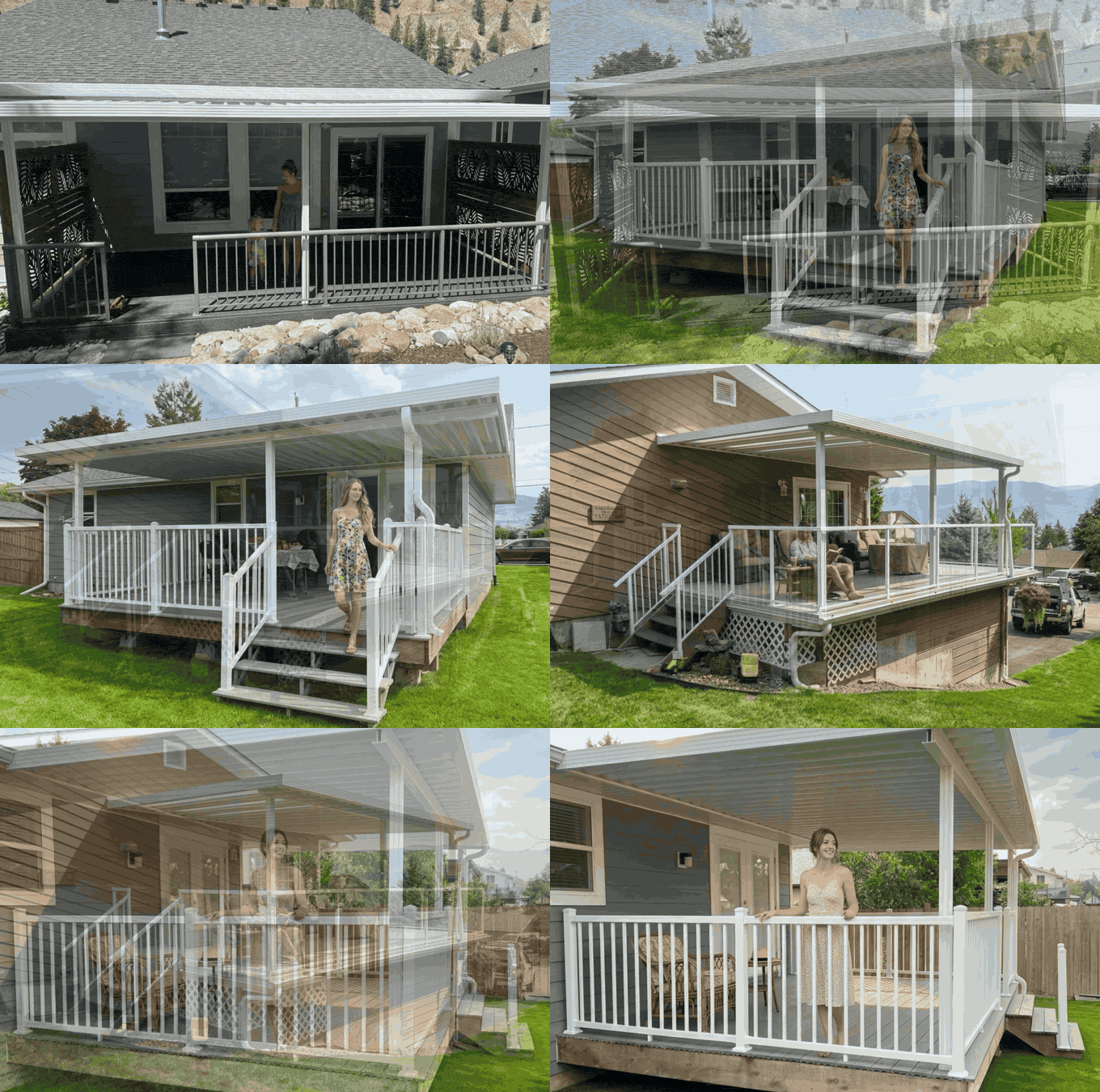
An awning is a fabric, or sometimes rigid, canopy that attaches to your house and folds back against the wall when you don’t need it. A patio cover doesn’t fold anywhere. It’s a fixed aluminum structure with posts and a solid roof, built to stay up through every season.
Canopies for Patios Are Built for Seasonal Shade
Canopies for patios, retractable awnings, roll out shades, they’re all designed to deploy when you want sun relief and tuck away when the weather turns. That’s a fine system if you’re only using the patio on calm summer afternoons and you’re home to work the crank or remote.
The problem is Okanagan weather doesn’t wait for you to get home. A gust can come up in minutes, and if the fabric’s still extended, something tears.
Aluminium Patio Covers Don’t Need Babysitting
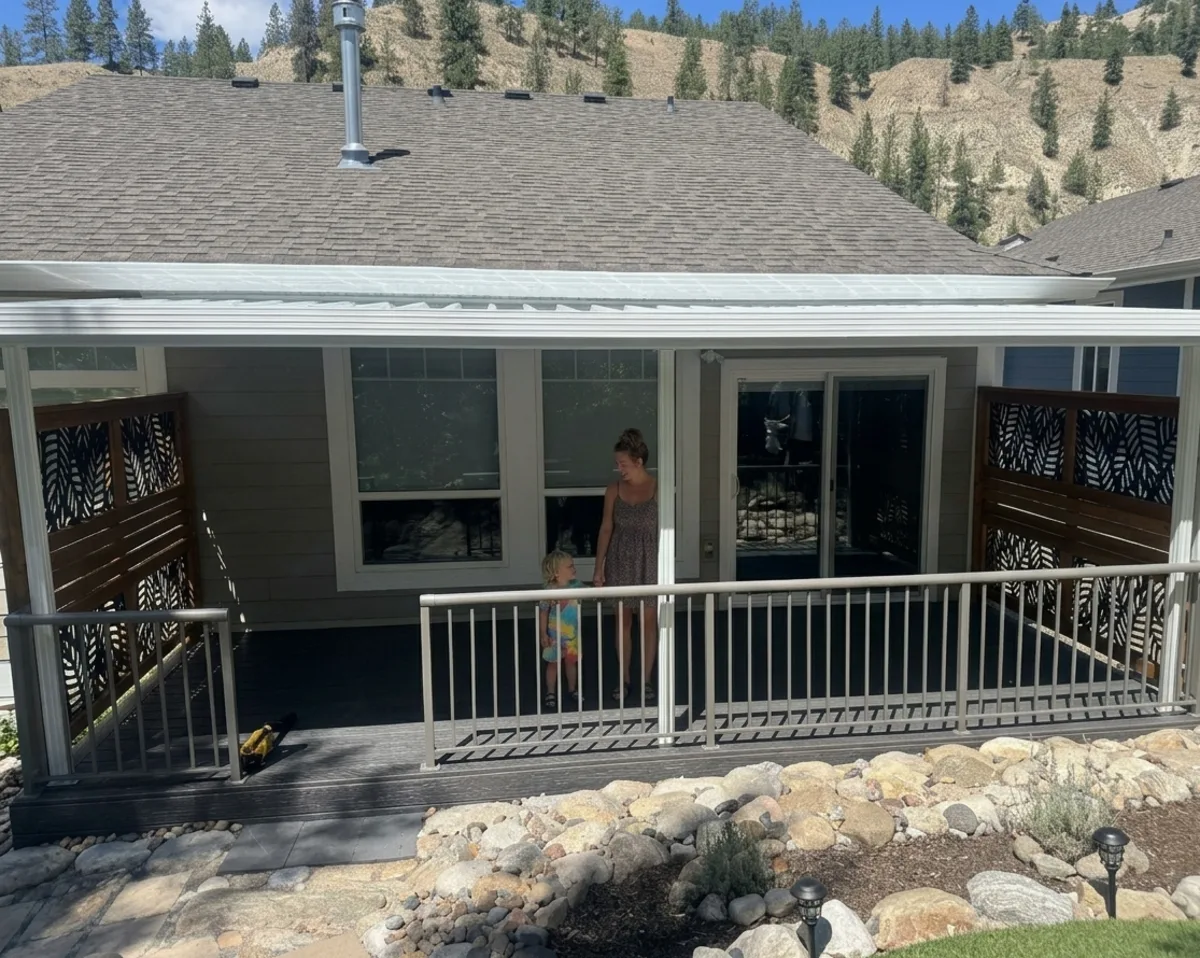
An aluminium patio cover sits on heavy-gauge posts with a powder-coated aluminum roof. There’s nothing to extend, retract or forget outside. It handles sun, rain and snow the same way your house roof does, because that’s basically what it is.
We manufacture the aluminum ourselves in our West Kelowna shop, and most covers go up in one day. There’s no motor, no fabric and no seasonal routine to remember.
| Factor | Awning | Aluminum Patio Cover |
|---|---|---|
| Structure | Retractable fabric or roll out canopy | Fixed aluminum roof on posts |
| Wind | Must be retracted or it tears | Stays put |
| Snow | Not built for snow load | Built for Okanagan snow |
| Seasonal routine | Retract, clean, store | None |
| Warranty | Varies by fabric brand | 3-year leak, 10-year materials |
| Typical install | A few hours | Usually one day |
Will a Waterproof Sun Shade Survive Our Wind and Snow?
This is where the decision usually gets made for people. Our weather doesn’t do “mostly calm.” It swings fast, and whatever’s on your patio needs to handle that swing without you watching the forecast every day.
Sun Setter and Other Retractable Mechanisms Fail in Wind
Sun Setter style awnings and similar retractable units rely on a spring arm or motor to hold the fabric taut. Okanagan gusts test that mechanism hard, and once an arm bends or a joint lets go, the whole thing sags or tears. A patio cover has no arm to bend, because there’s nothing to extend.
Even Metal Canopies Aren’t Rated for Snow Load
Even metal canopies and aluminum-framed awnings built to resist wind usually carry thin fabric or acrylic panel on top, and that covering still isn’t built to hold wet Okanagan snow. Ours are different. We use solid aluminum roof panels built to shed snow and rain the way a house roof does.
Why Patio Shelters Like Awnings Need a Seasonal Take Down
Fabric patio shelters need to come down, or at least fully retract, before the snow flies, and that’s not optional. Leave an awning extended through an Okanagan winter and you’re gambling the fabric and the arms against the first heavy snowfall.
A patio cover skips that whole routine. We hose the aluminum off once a year and that’s about it.
Canvas Canopies Fade and Tear Faster Than You’d Think
Canvas canopies and acrylic fabric both take a beating from Okanagan UV. Colour fades, stitching weakens, and most fabric needs replacing well before the frame does. Fabric patio covers, whatever brand or style, carry that same recurring cost. An aluminum roof just doesn’t have it.
Mistakes We Get Called to Fix
- Leaving the awning out overnight. Afternoon calm doesn’t mean overnight calm. A lot of torn fabric happens while homeowners are asleep.
- Assuming a motor means it’s weatherproof. A motorized arm still needs to be retracted before wind or snow hits, unless it has its own wind sensor.
- Mounting oversized fabric on undersized hardware. A wide awning span on brackets sized for a narrower one is how brackets pull out of the wall.
- Skipping proper footings on a patio cover. We see this on other contractors’ jobs. Posts without real footings shift within a year or two.
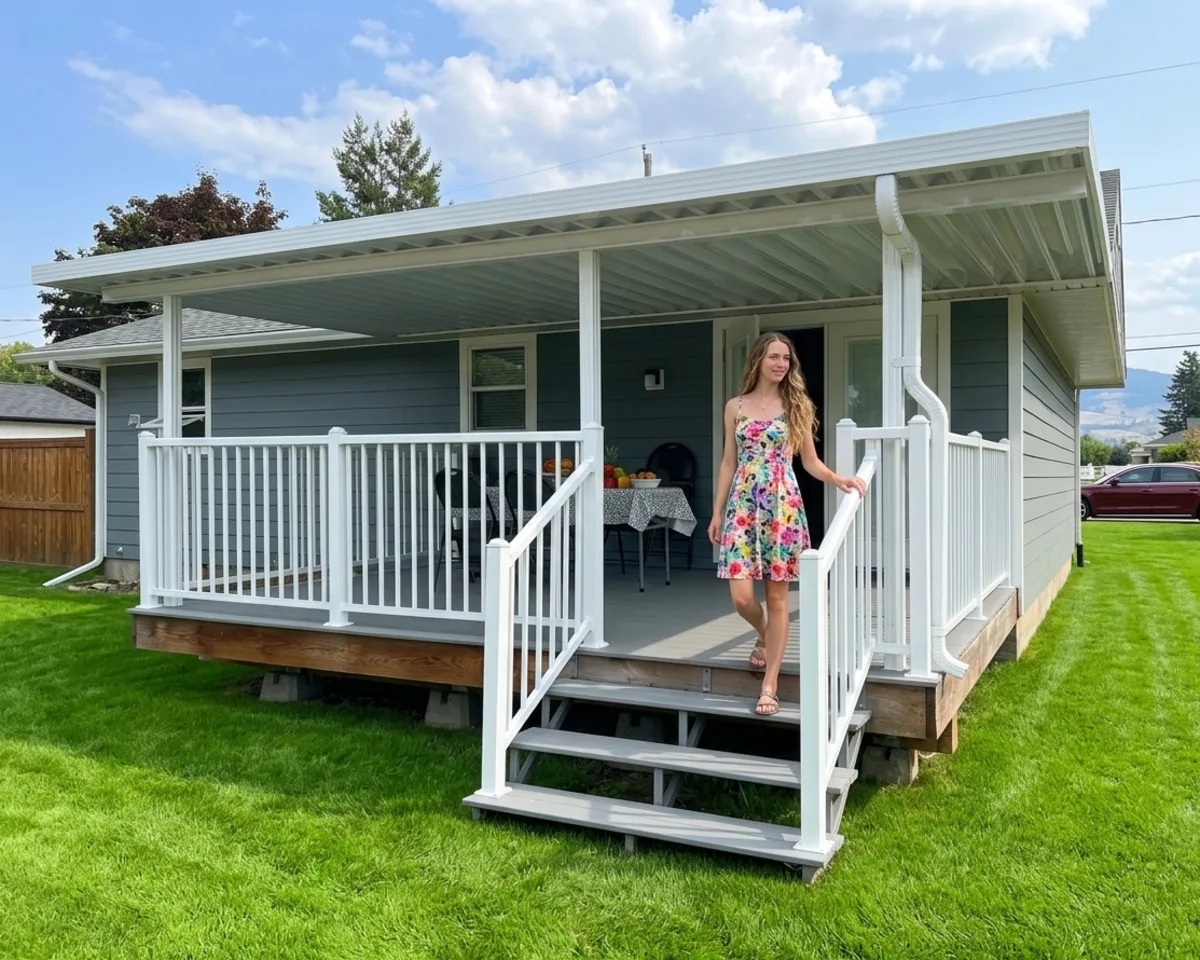
What About Door Canopies, Porch Canopies and Window Canopies?
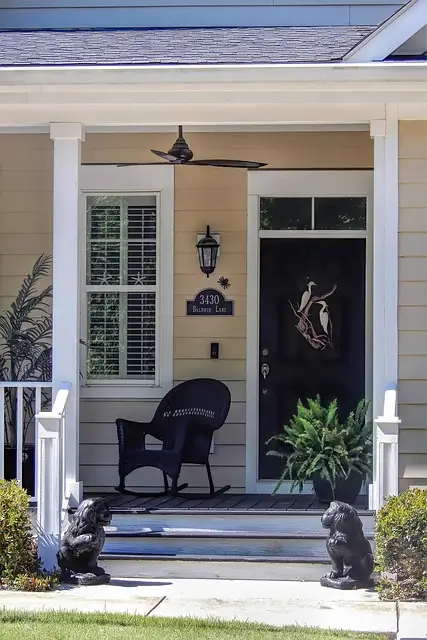
Not every shade question is really an awning versus patio cover question. A lot of homeowners calling us actually want something smaller, like a door canopy over an entryway or a small window canopy over a kitchen sill.
We don’t build those small fixed canopies ourselves. That’s a different product for a different spot on the house. What we build are full patio covers, 3-season rooms and deck railings for the outdoor living space itself.
Porch Coverings Solve a Different Problem Than a Patio Cover
Porch coverings over a front entry are about keeping rain off the doorstep for a few seconds while you find your keys. A patio cover is about turning the whole backyard into usable space for months at a time. They’re not really competing products, even though they both get called “canopies for houses” in a general search.
If You Want Open Pergola Shade Covers Instead
Some homeowners want dappled light rather than full shade. We can build an open-slat aluminum pergola section next to, or instead of, a solid roof, so you get some sun through and some shade without any fabric to manage.
Patio Coverings for Shade or a Permanent Cover: Which Fits You?
Be honest about how you actually use the space. If your patio only matters for a few summer weekends and you don’t mind retracting fabric before every windstorm, an awning will do the job for a while.
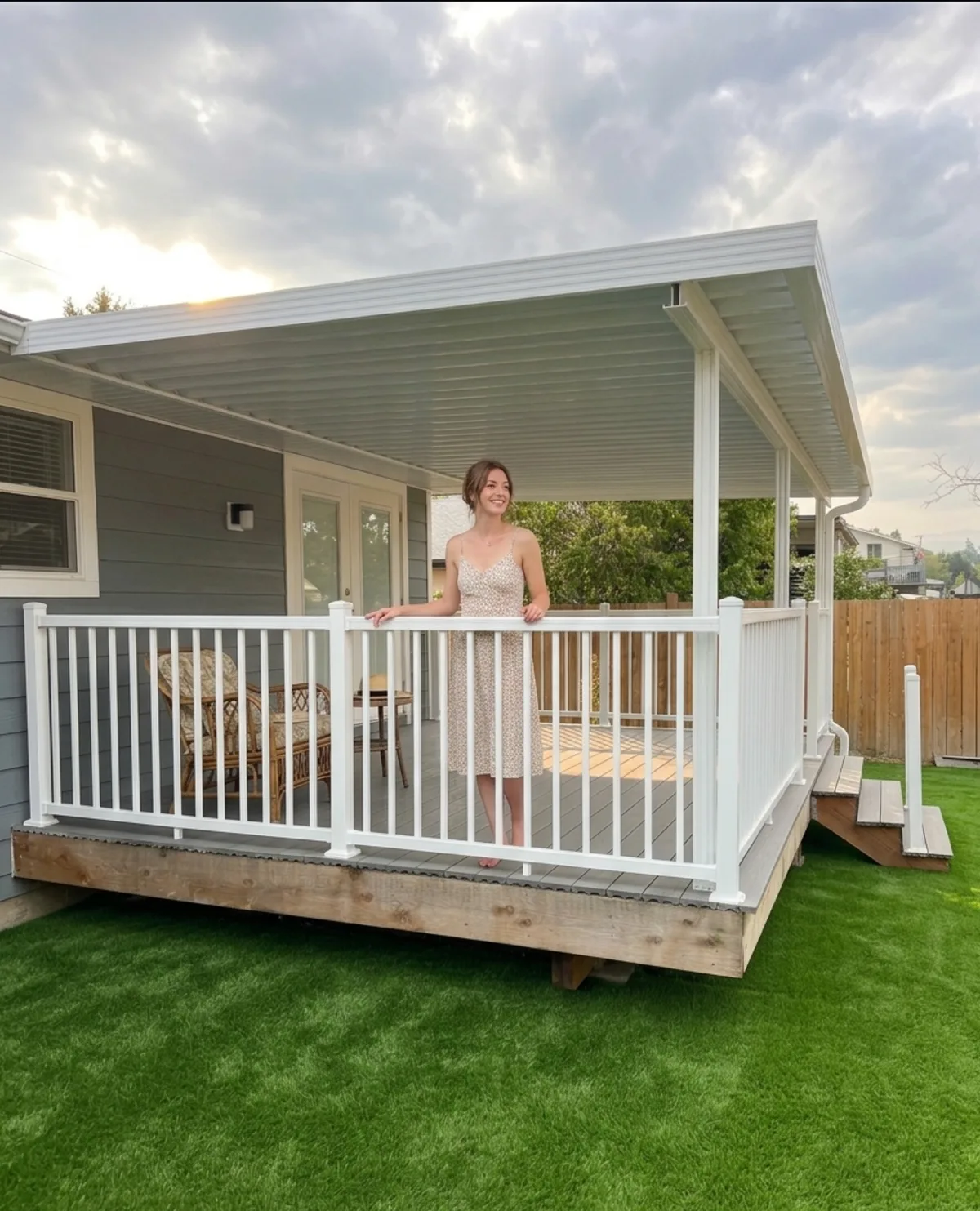
If you want the patio usable from April through October, or longer under a cover, without checking a weather app before you leave the house, a patio cover is the one that holds up.
| What You Want | Go With |
|---|---|
| Flexible shade you can retract on a whim | An awning |
| Protection that works while you’re at work or asleep | A patio cover |
| Something that survives Okanagan snow | A patio cover |
| A small canopy over a door or porch step | A door or porch canopy, not a patio cover |
| Dappled light instead of full shade | An open aluminum pergola section |
| Year-round use with almost no upkeep | A patio cover |
See real builds in the aluminum patio covers gallery, or if you already know you want the permanent option, book a free on-site quote and we’ll measure your space in person.
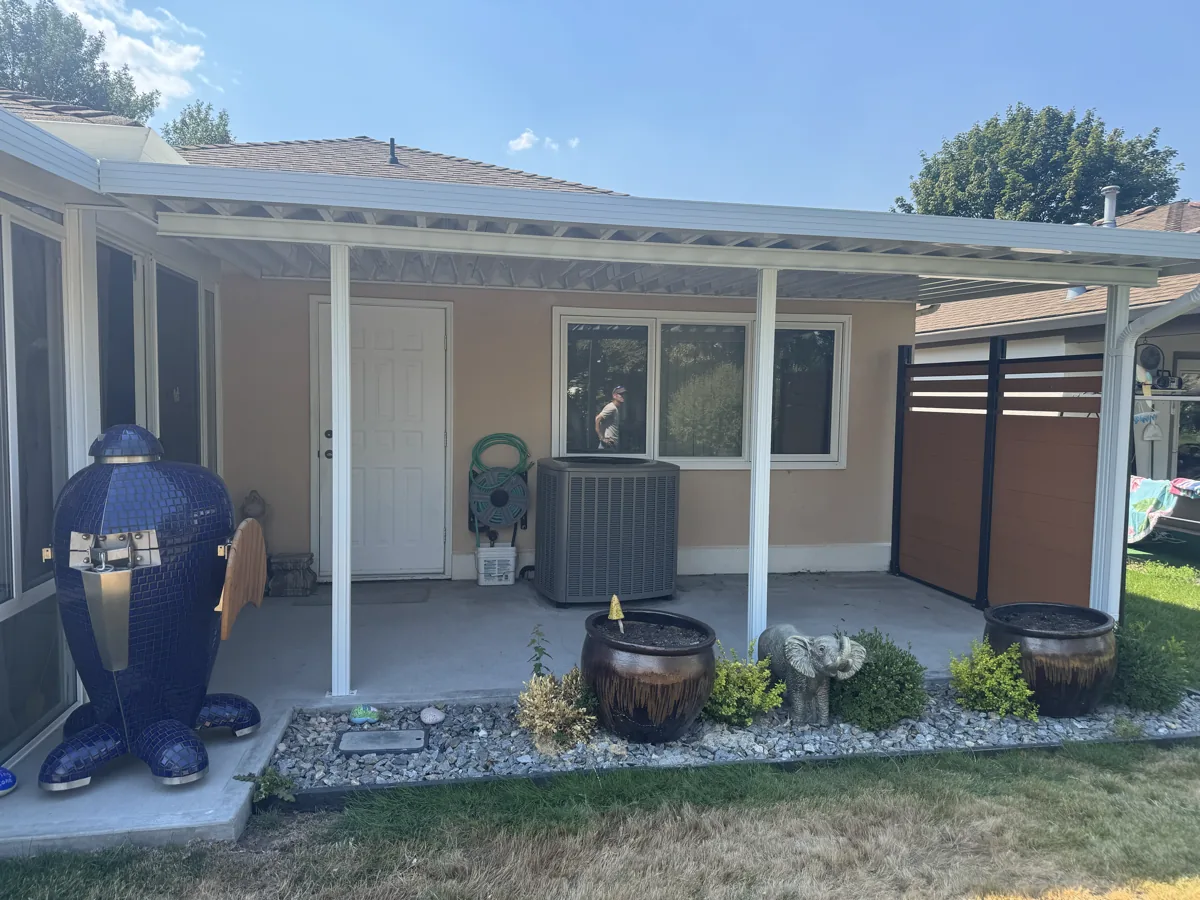
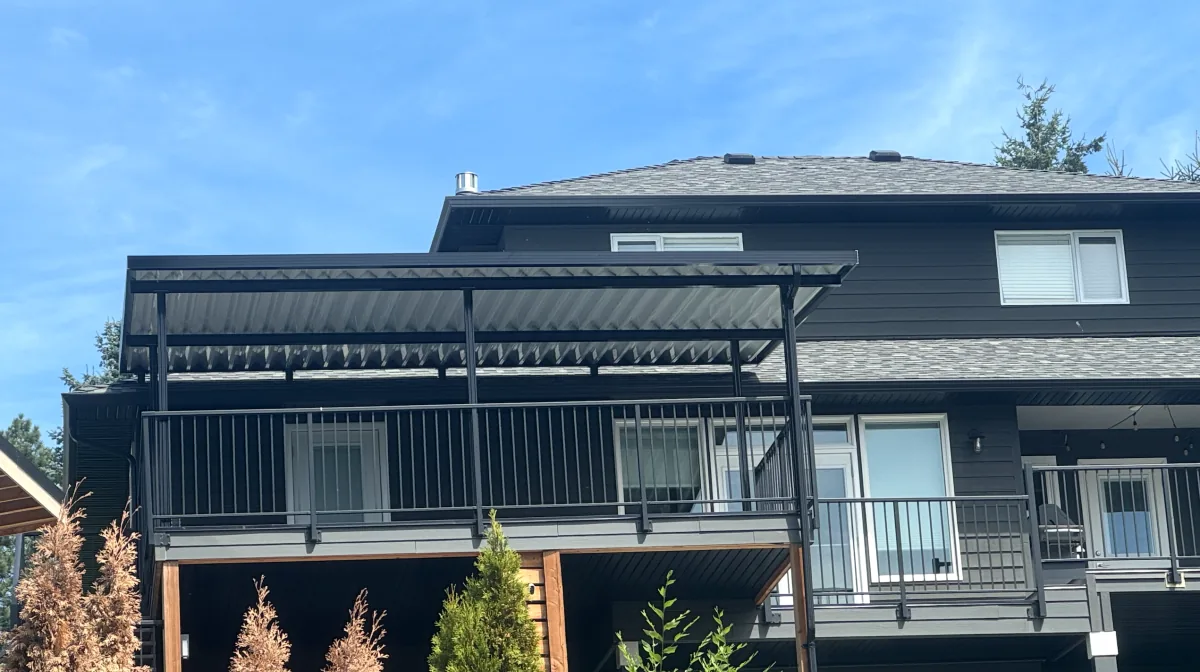
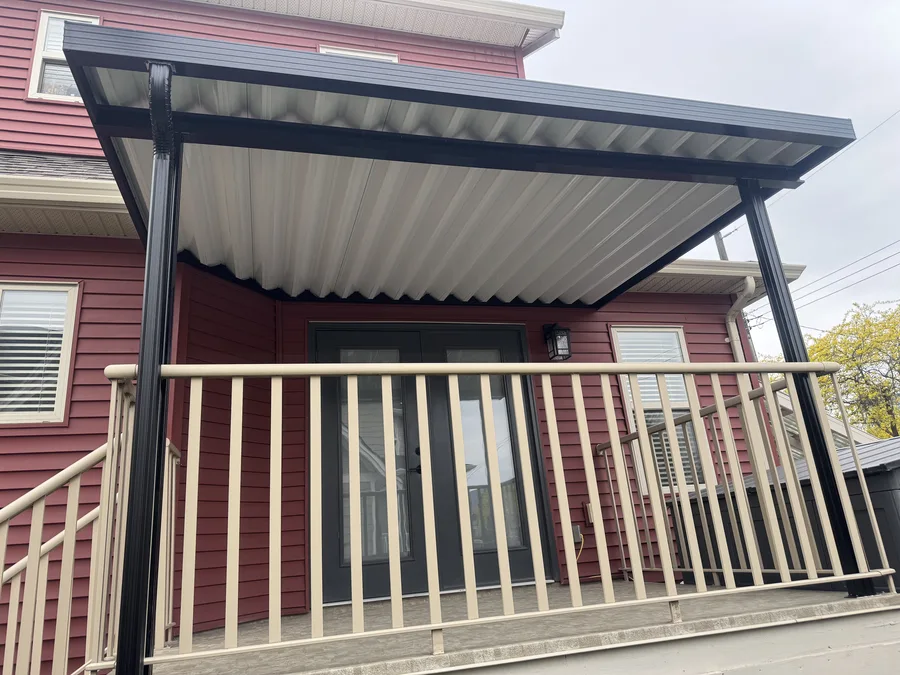
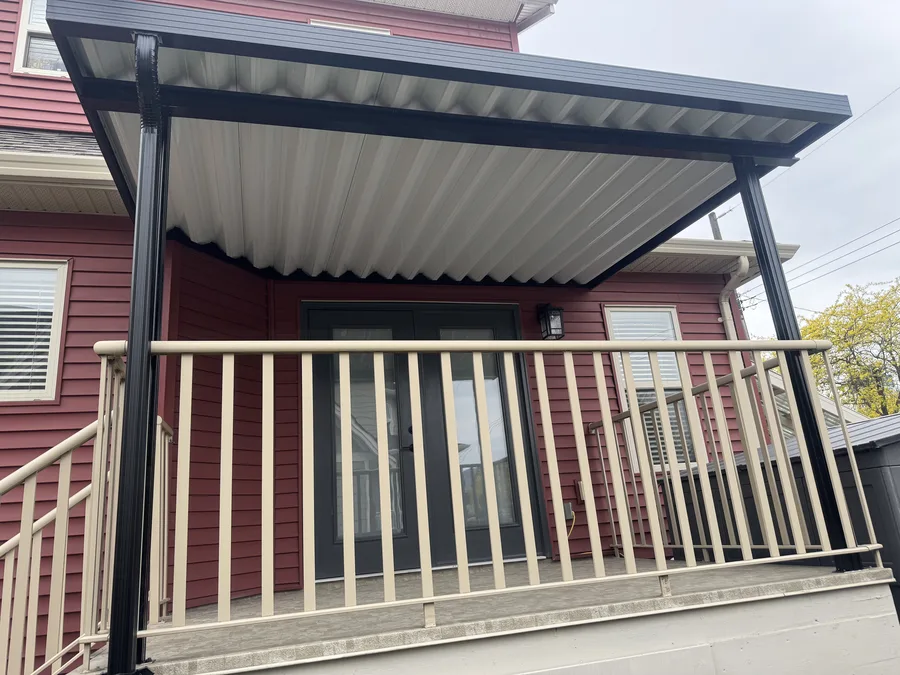
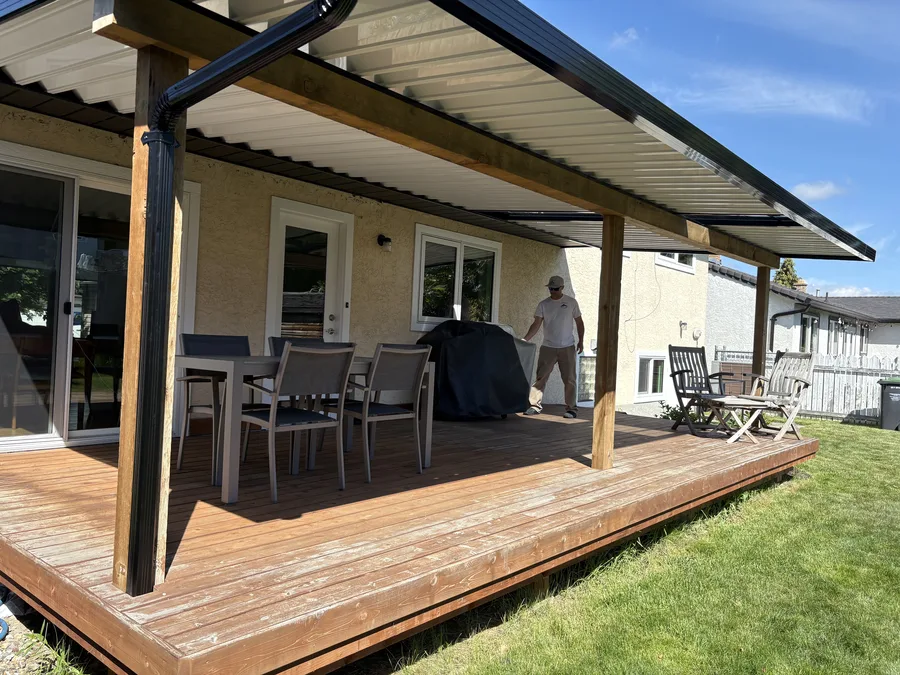
Recent Patio Cover Projects
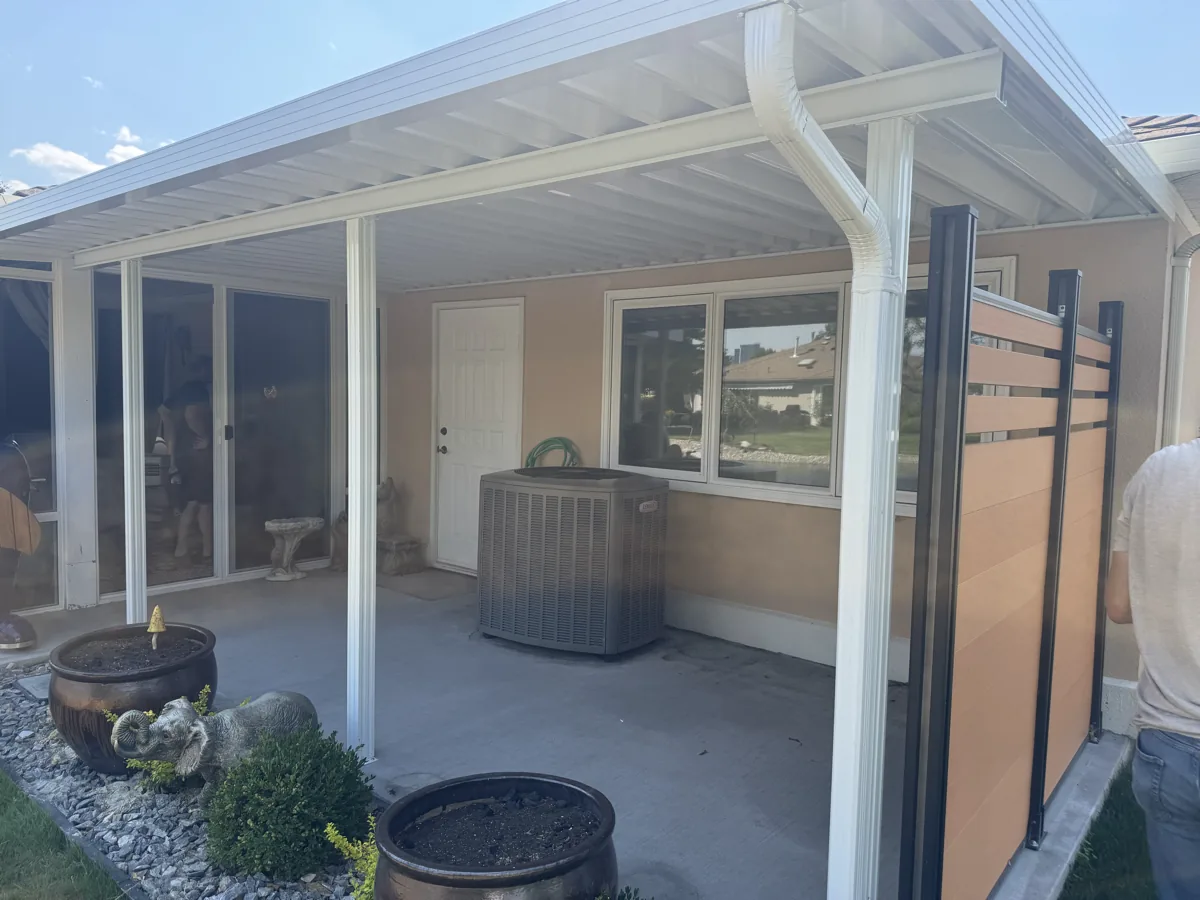
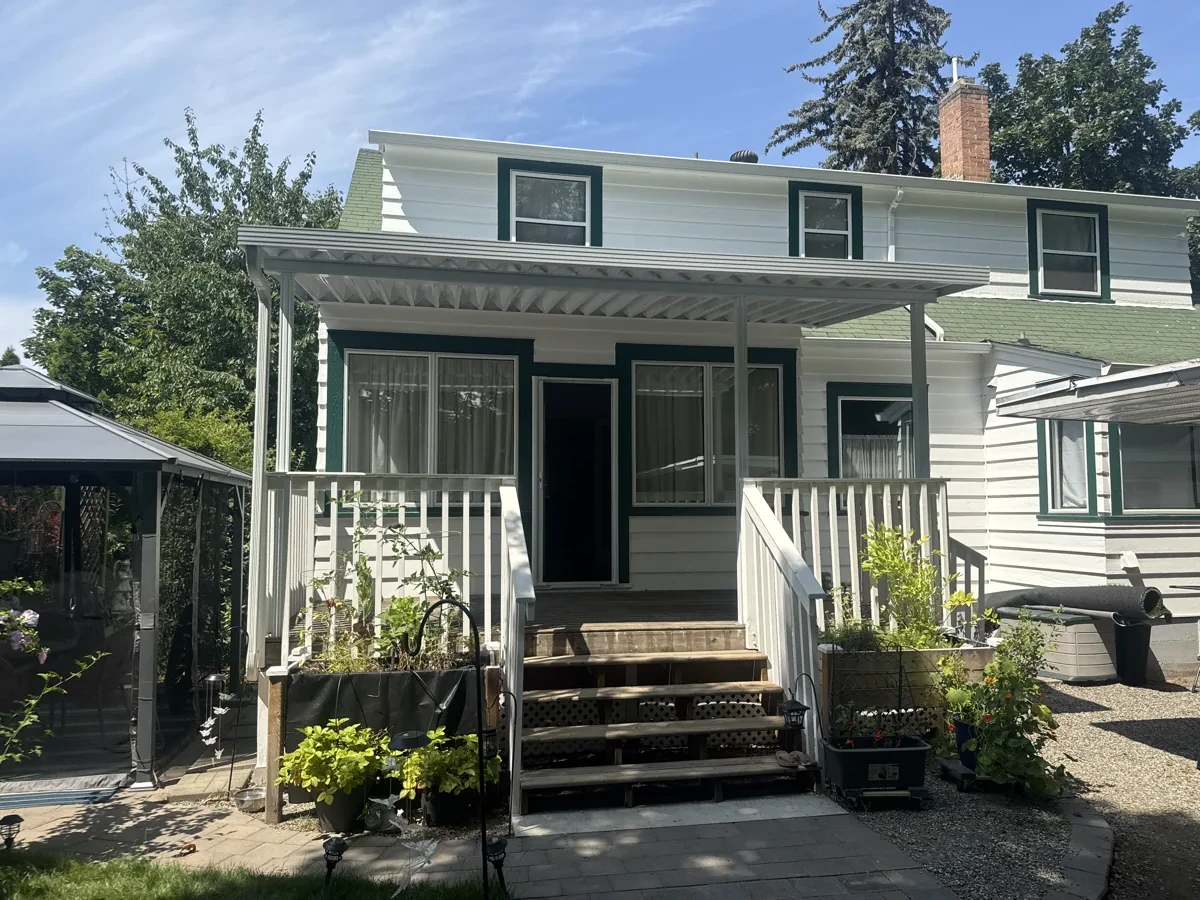
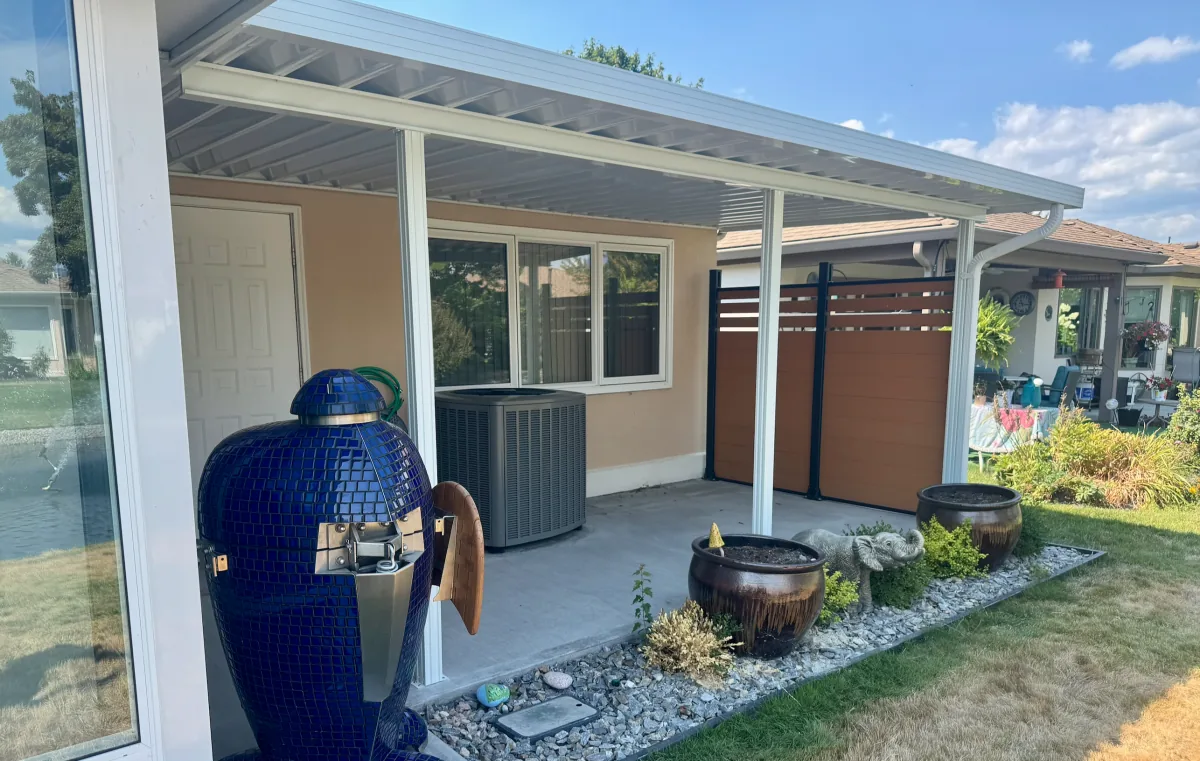
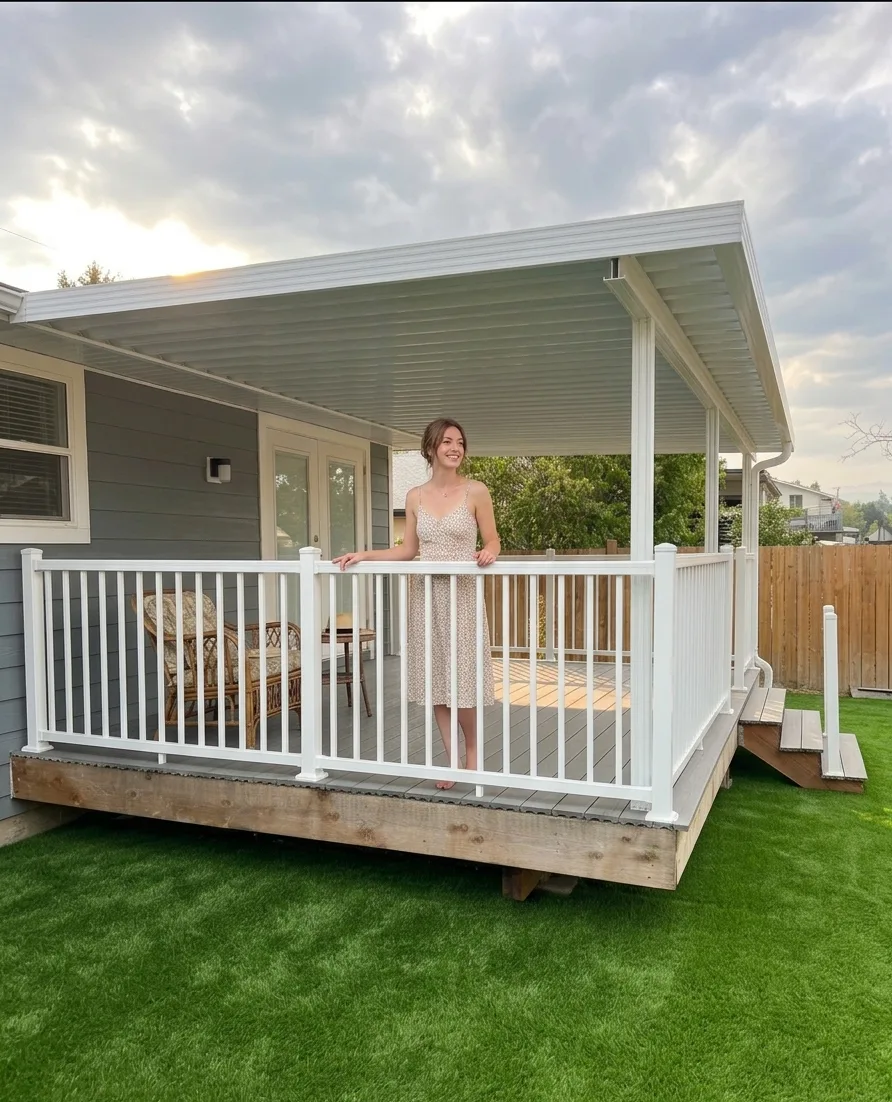
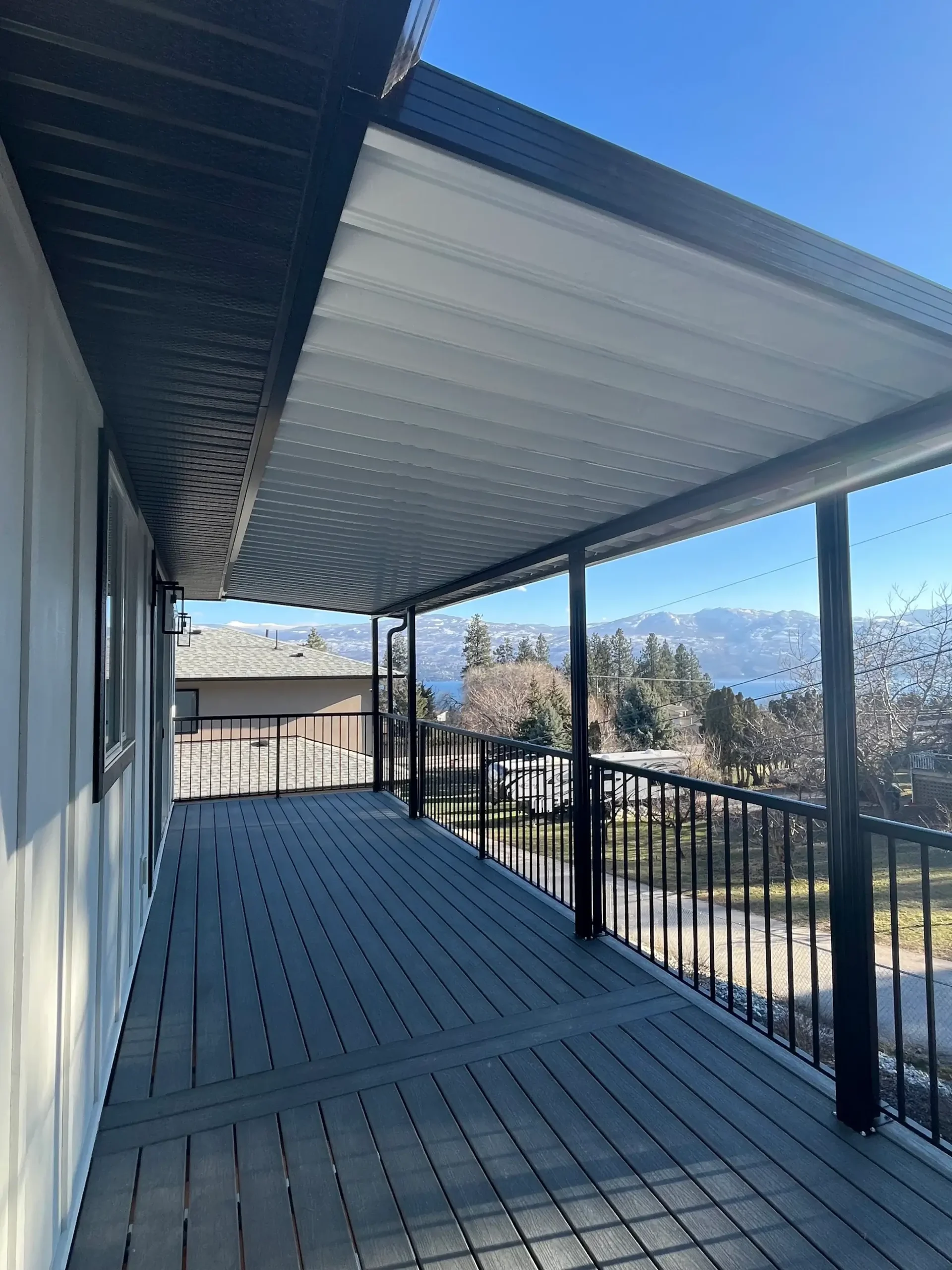
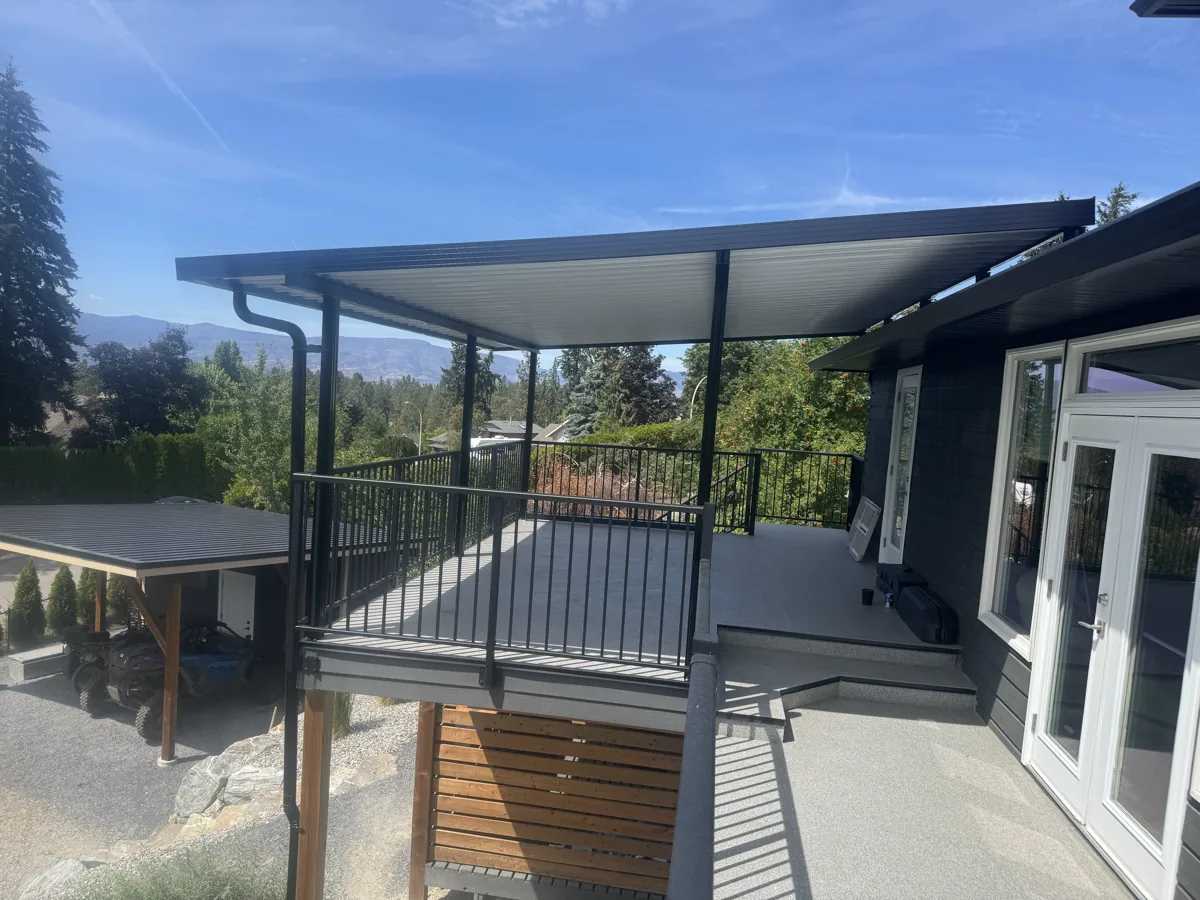
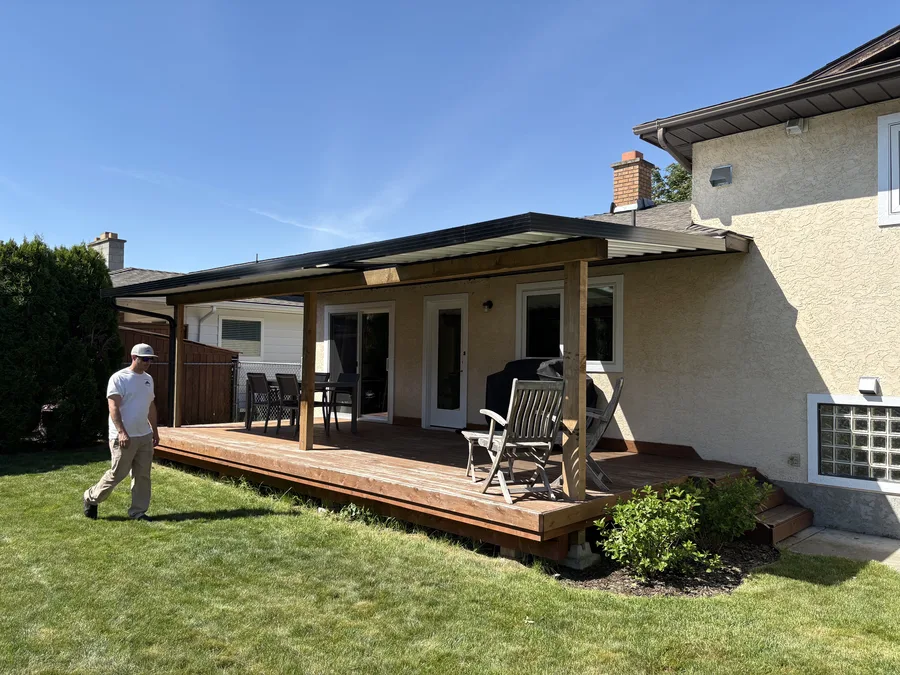
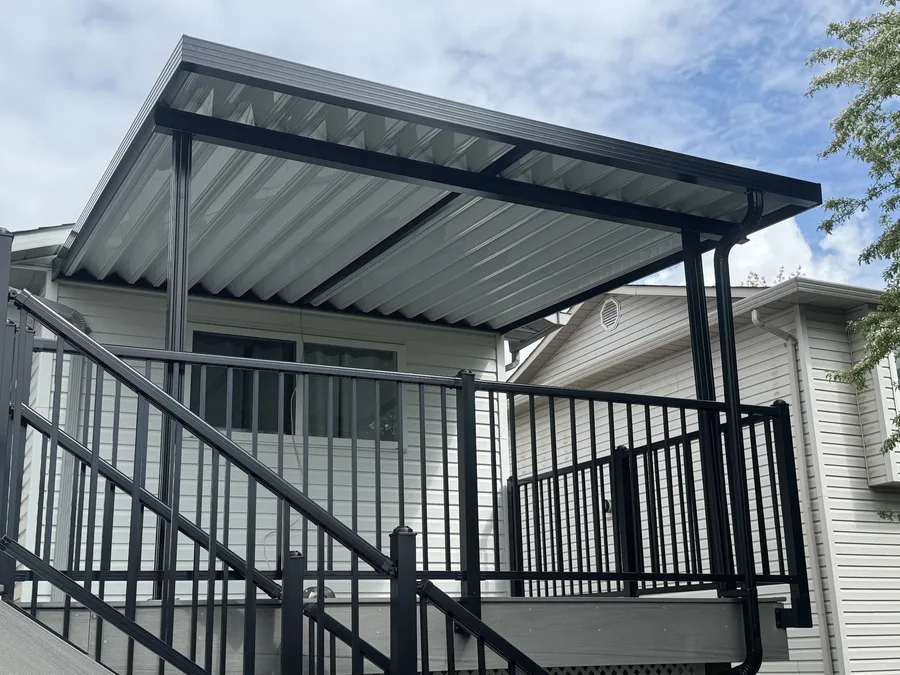
A few we’ve built recently — every one custom-made in West Kelowna and installed by our own crew.
Awning vs Patio Cover Questions
Are waterproof patio canopies suitable for all weather conditions?
Not usually, no. Most waterproof patio canopies keep light rain off, but they’re not built to carry wind loads or wet snow the way a solid aluminum roof is. If you need something that works in every Okanagan season, a patio cover is the safer bet.
Can a retractable awning handle an Okanagan winter?
No, and we wouldn’t recommend trying it. Wet, heavy snow will collapse fabric that’s rated for sun and light rain, and most retractable arms aren’t built for that load either. An aluminum patio cover carries snow the way a house roof does.
What’s the real difference between a patio covering and a canopy?
A canopy, including most patio covering kits, is usually fabric on a lightweight frame that’s meant to come down or retract. A patio cover is a fixed aluminum structure with posts and footings that stays up year round. One’s seasonal, the other isn’t.
Do metal canopies hold up better than fabric awnings?
The frame does, but the covering on most metal canopies is still thin fabric or acrylic panel, so you get similar snow and wind limits to a fabric awning. Our patio covers use solid aluminum roof panels instead, so the whole structure, not just the frame, is built for winter.
Will I need to take a patio cover down for winter the way I do an awning?
No. That’s the whole point of a permanent cover. We build it to stay up and handle snow, so there’s nothing to retract, store or remount every spring.
Do you install awnings, door canopies or porch canopies?
No, we build patio covers, 3-season rooms and deck railings, not awnings or small fixed canopies. If what you actually want is a full, permanent outdoor living space, that’s exactly what we design, manufacture and install ourselves.
Takes under 60 seconds · Your information is never shared.
Prefer to talk to someone? Call (250) 215-7513
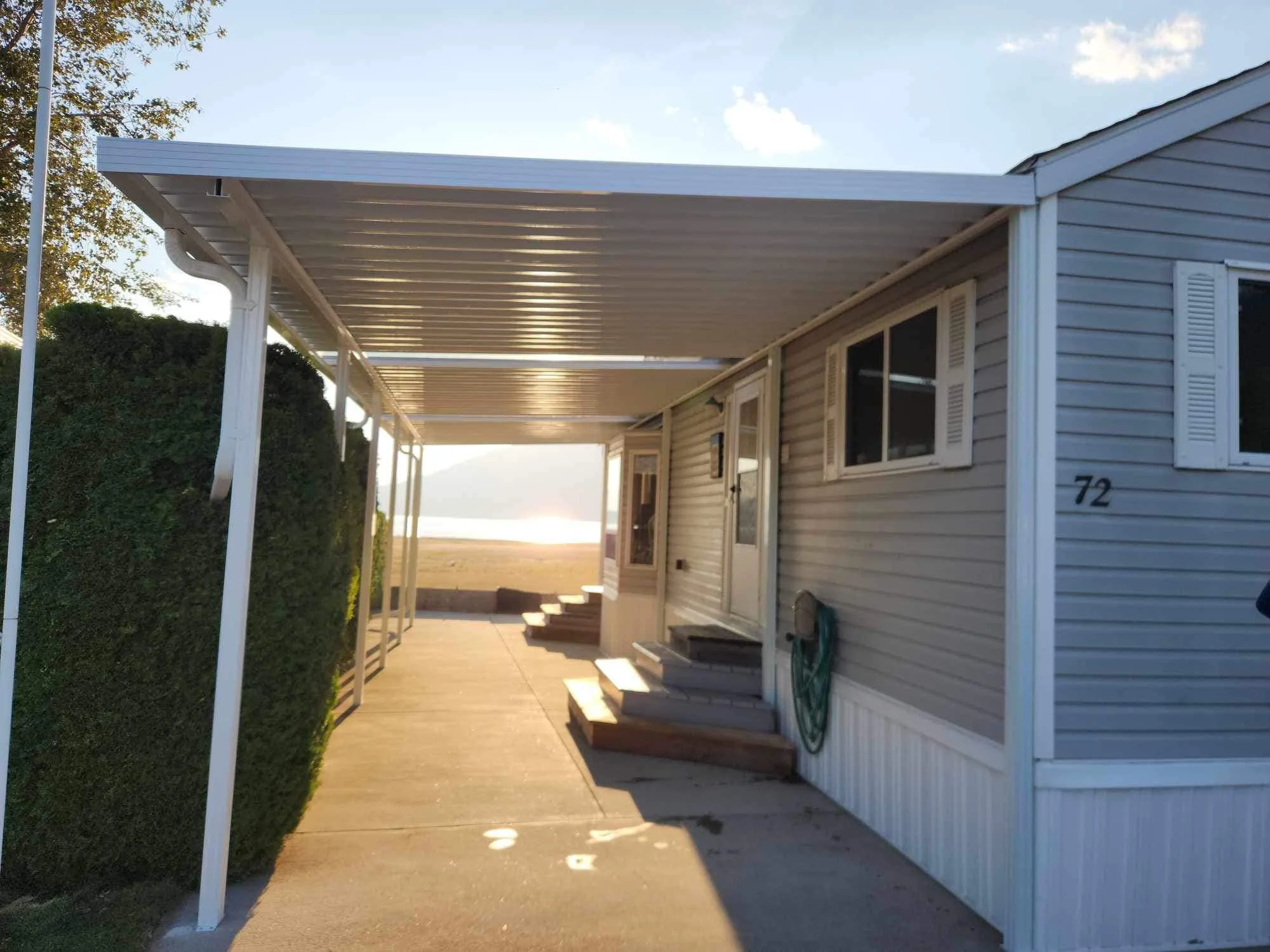
Ready to Replace That Awning?
Designed, made and installed in the Okanagan by our own crew. 1,500+ patios built since 2005, 4.9 stars across 32 Google reviews.
Serving Kelowna, West Kelowna, Vernon, Penticton, Lake Country & Salmon Arm