

Best Patio Covers for Heavy Snow: What Actually Works in the Okanagan
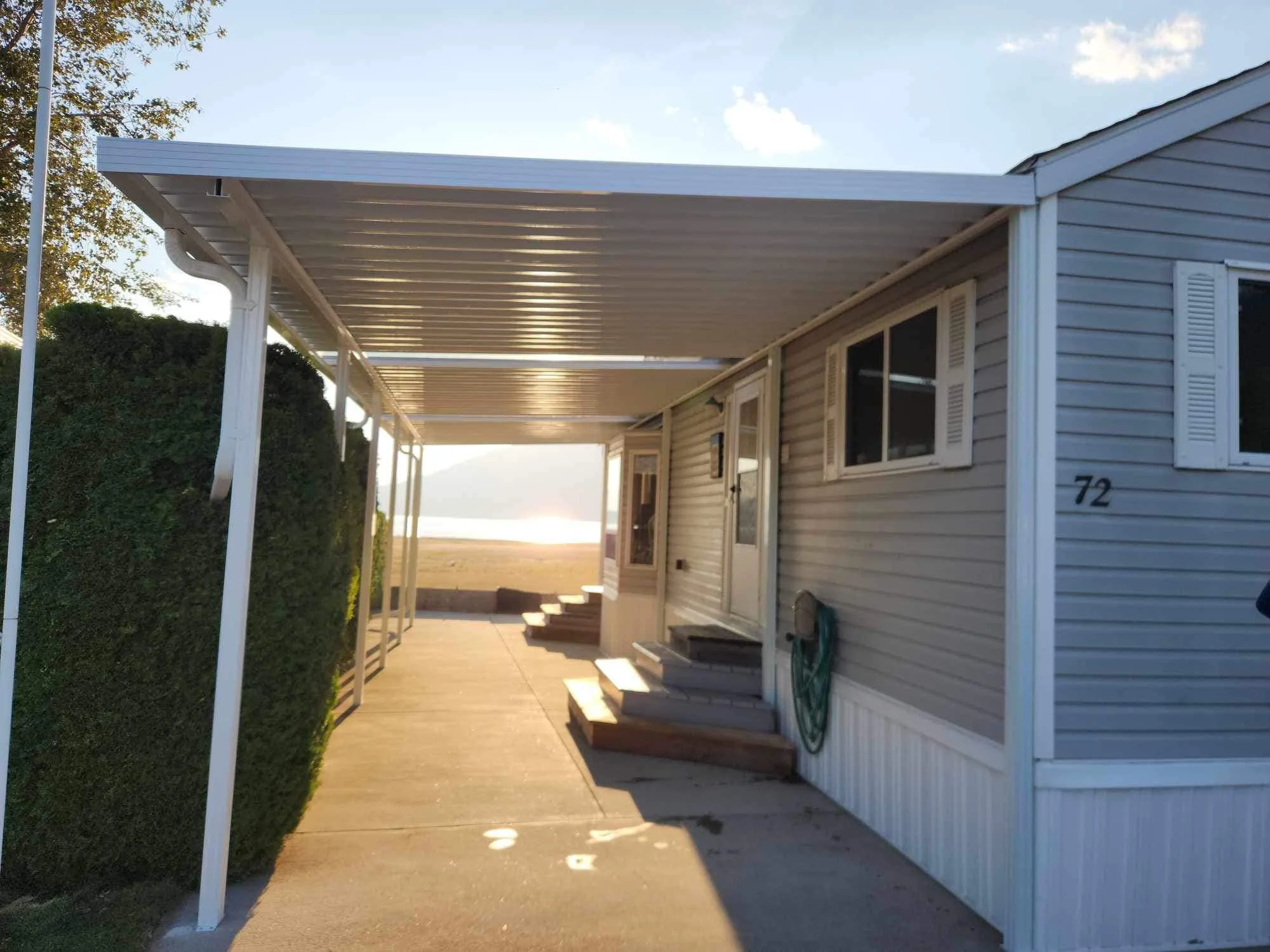
The best patio cover for snow is a solid aluminum roof built above your actual patio cover snow load, not the code minimum. Steeper slope, heavier beams, no wood. That sheds Okanagan snow and lasts decades. Thin kits and flat wood covers are what we get called to replace.
Every cover we build is designed and made in our West Kelowna shop and installed by our own crew, usually in a single day.
Understanding Patio Cover Snow Load in the Okanagan
Snow load is how much weight a structure can safely carry overhead. Okanagan winters can drop 20 to 40 centimetres of wet, heavy snow overnight, nothing like the dry powder they get in the Rockies. BC’s building code accounts for local snow load, so a cover here has to be built for it, not for a lighter climate. Codes are minimums, not recommendations.
The Weight Difference That Matters
A foot of light, fluffy powder is relatively light. That same foot of heavy, wet snow off Okanagan Lake weighs several times more. On a 500 square foot cover, one foot of wet snow means nearly 10,500 pounds overhead, roughly the weight of three pickup trucks.
Glass Roofs in Heavy Snow: What Tempered Glass Can Take
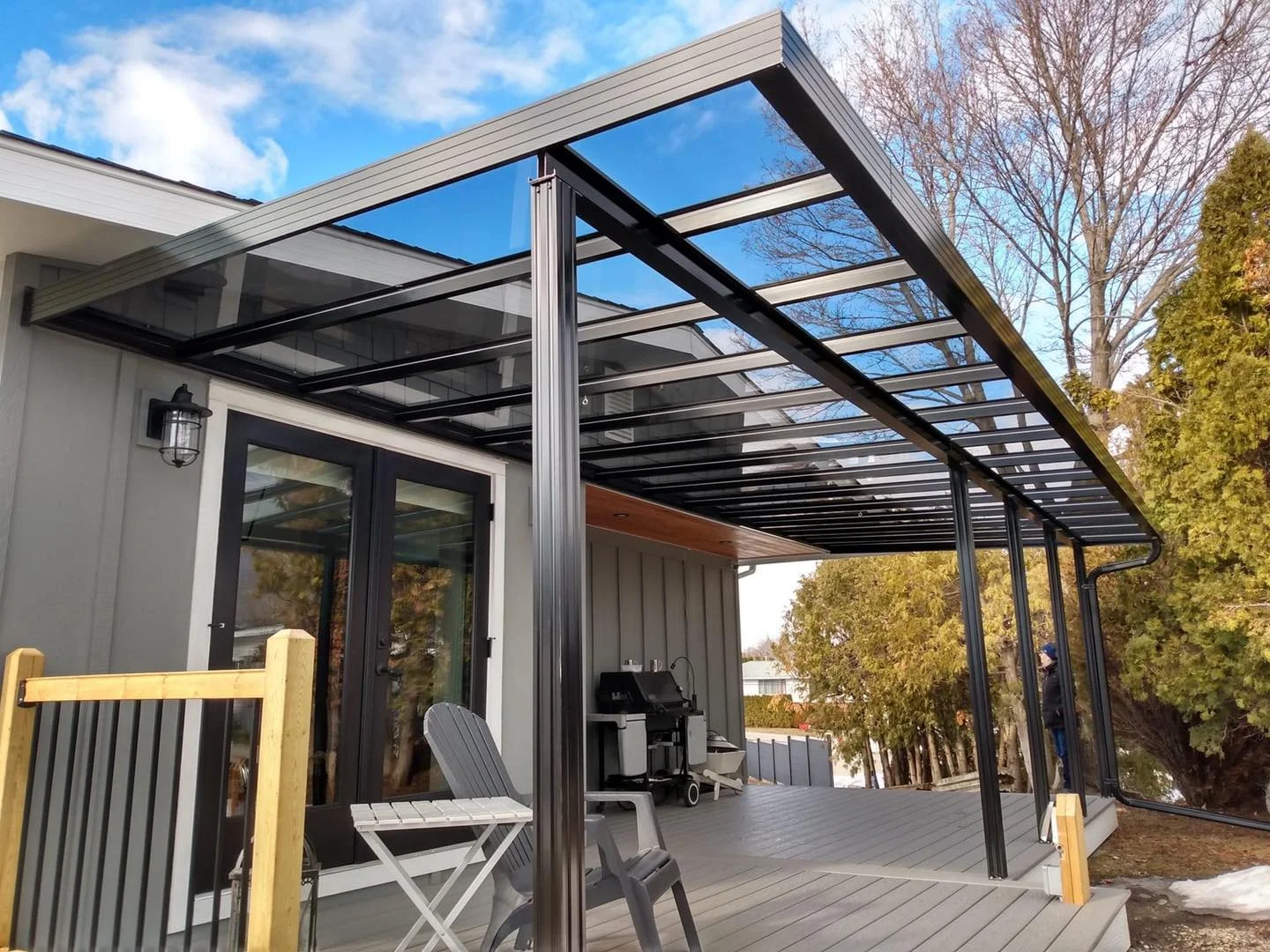
Tempered glass in a heavy-gauge aluminum frame, sloped to shed, carries snow the same way a solid aluminum roof does: slope moves the weight off before it stacks up, and the frame still needs sizing for your roof span. Full numbers are in our glass cover snow load guide.
Why Minimum Code Isn’t Always Enough
Codes set the floor, not the ceiling. They’re based on average conditions, not the once-every-few-years storm that dumps everything at once. A cover built right to the minimum might still work at full capacity during a heavy event. Margin above the minimum costs little upfront and buys real peace of mind.
| Cover type | Snow load capacity | How it sheds snow | Best for |
|---|---|---|---|
| Solid aluminum | High | Sloped roof, no seams | Most Okanagan homes |
| Glass (tempered) | High | Sloped roof, smooth surface | View decks, balconies |
| Wood | Medium, varies widely | Depends on pitch and framing | Budget projects, more upkeep |
| Steel | Very high | Sloped roof, heavy frame | Commercial, extreme loads |
| DIY kit / thin panel | Low, built for other climates | Often flat, snow sits | Not recommended here |
Aluminum vs Wood vs Steel: Finding the Best Patio Cover for Snow
Material affects load capacity, maintenance, and lifespan. Here’s how the main options hold up for Okanagan conditions.
Which Cover Handles Snow Load in BC?
The answer doesn’t change much by region: match the material and slope to your real load, not the lightest option on the shelf.
Aluminum: The Practical Winner
For most homes here, aluminum patio covers hit the sweet spot. They don’t crack, warp, or go brittle in the cold, and snow slides off easily once the cover is properly sloped. Aluminum also carries heavy snow without massive footings or oversized posts, so the install stays straightforward.
Wood: More Work, More Risk
Wood has the look some homeowners want, but in snow country it demands attention. Moisture causes cracking and rot, and skipping a season of staining shows fast. Unless significantly overbuilt, wood typically carries less load than aluminum, and the maintenance never stops.
Steel: When Nothing Else Will Do
Steel carries the highest load here, which fits a commercial span or extreme climate. For a residential patio it’s usually overkill: stronger footings, ongoing rust prevention, and a cost well above aluminum.
Patio Covers for Winter: Mistakes We Get Called to Fix
Every winter we get calls from homeowners whose cover didn’t survive a heavy snowfall. Almost every failure traces back to one of five problems, all catchable before the first flake fell.
Five Mistakes We Get Called to Fix
- Undersized beams. Looks solid from the ground, then the first real snow shows the beams were spec’d for a lighter climate. Common with online DIY kits.
- Shallow post footings. Posts need to go deep enough to stay put through freeze-thaw cycles, or they shift over successive winters and weaken the structure.
- Not enough slope. Flat or near-flat covers accumulate snow instead of shedding it. Every inch that stays up there adds weight.
- Ice dams at the edge. Snow on top melts, runs down, and refreezes at the edge, trapping water and adding weight right where you don’t want it.
- Age and material fatigue. Wood rots, fasteners loosen, and a cover that passed inspection years ago might be working at half capacity today.
Design Features That Matter for a Winter Patio Cover
The right material with the wrong design still fails. These details decide whether your cover sheds snow or turns into a collection platform.
Slope and Beam Sizing
Minimum pitch for shedding water is about a quarter inch of drop per foot. For snow, go half an inch to a full inch per foot, or a steeper 6:12 pitch in heavy spots. Beam and post sizing scales with that slope and your roof span, which is why we size every build to the specific project.
Your Furniture Stays Out All Winter
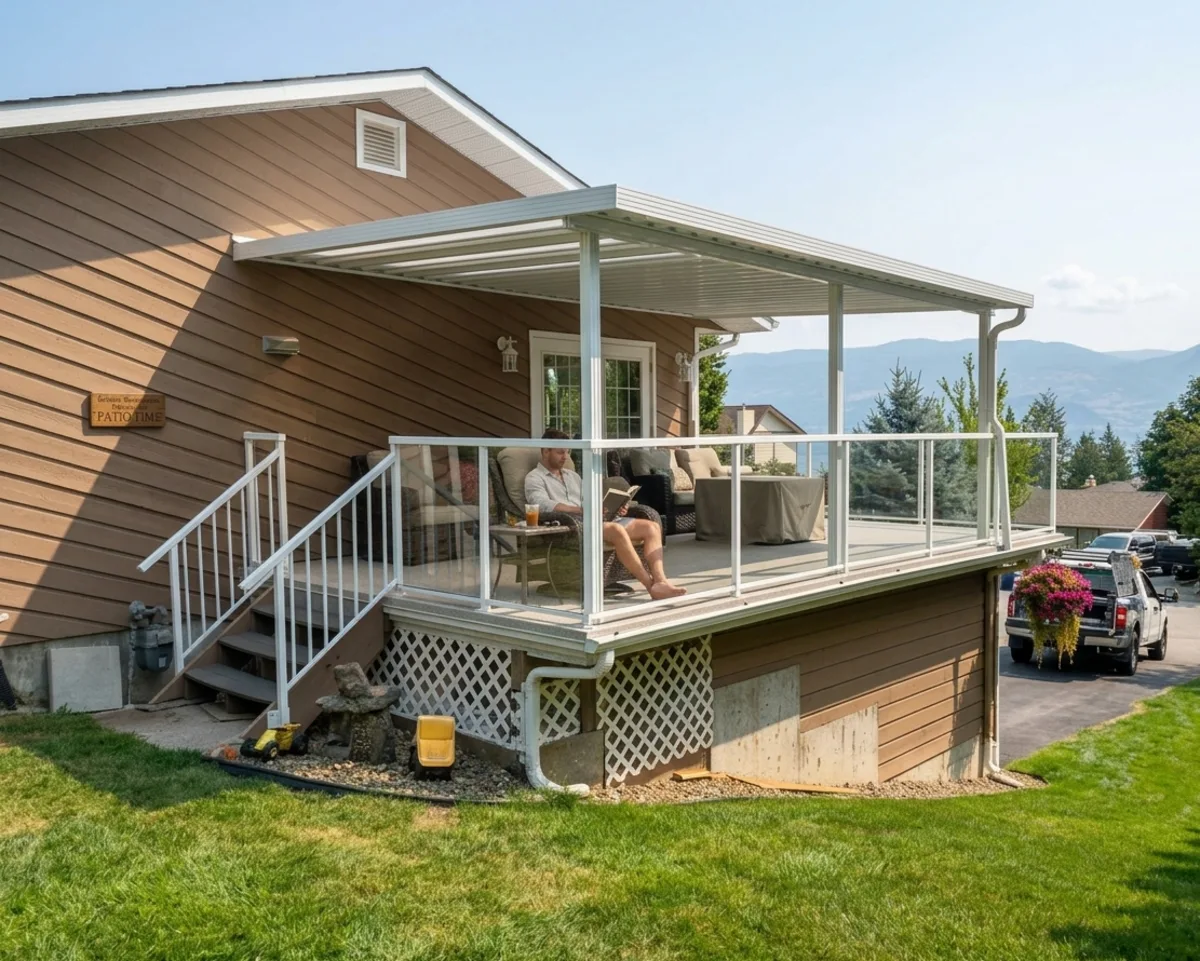
A sloped, solid roof keeps cushions and fabric dry all winter without a separate cover.
Chairs stay under the roof instead of wrapped in plastic or dragged into the garage every October.
A structural cover protects everything underneath at once, furniture included, for the whole season.
Planters and garden sets on the patio stay dry too, with nothing extra to buy or store.
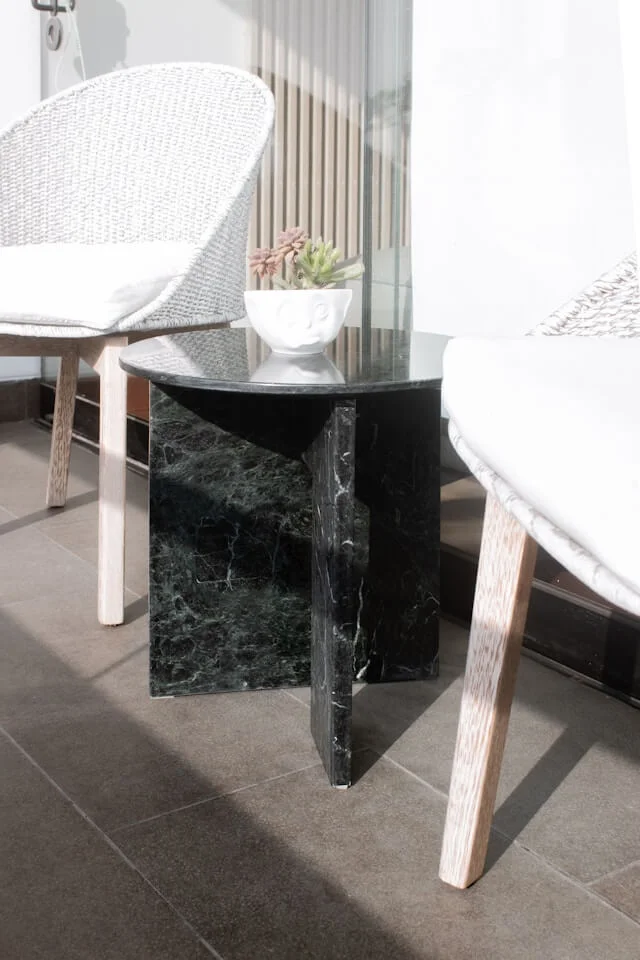
The table stays dry and usable right through winter under a properly built cover.
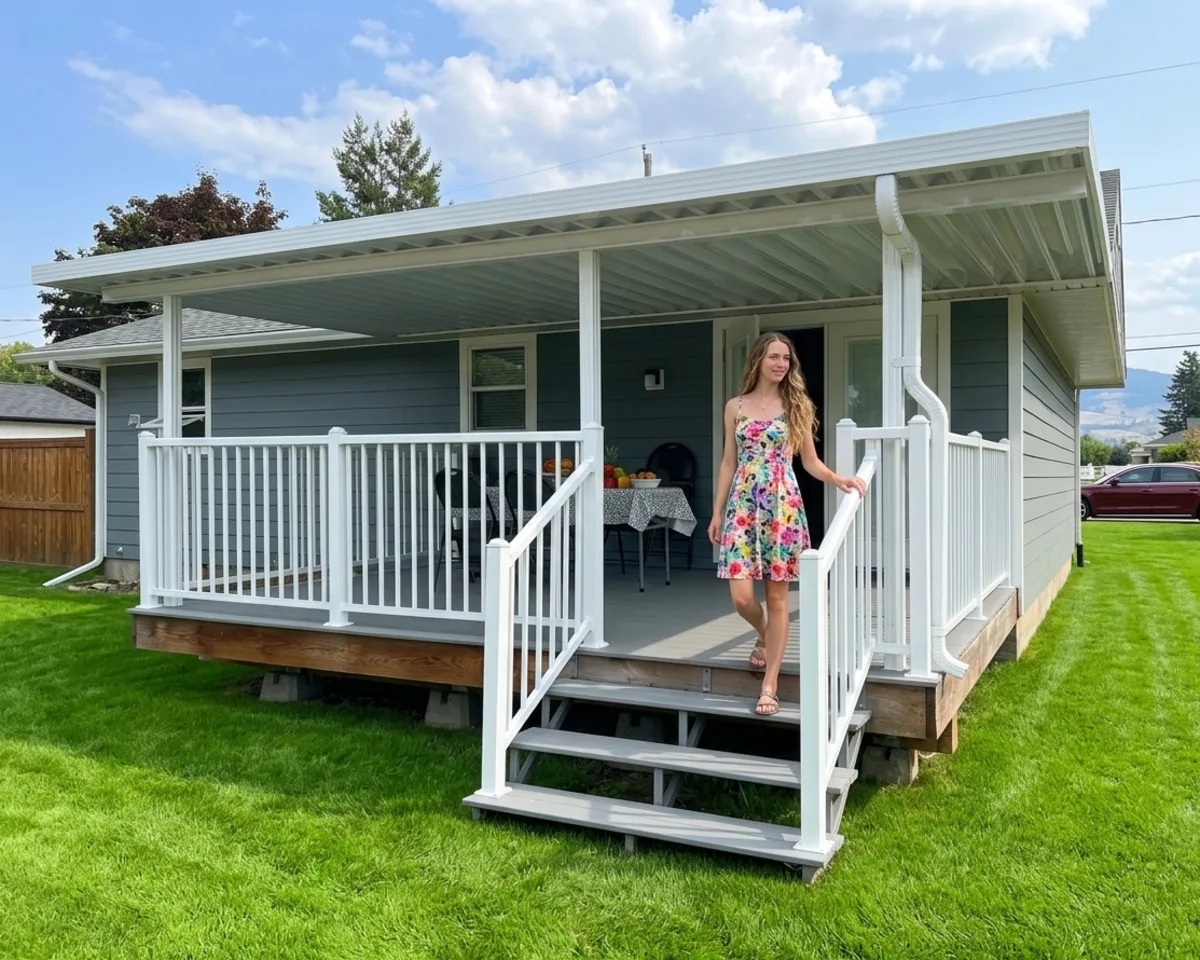
A patio cover keeps sun, rain, and snow off the space, but it isn’t heated. If you want a room you can sit in comfortably through the coldest months, that’s a true 4-season sunroom, insulated and built for year-round use. A covered patio still stretches your usable season well into spring and fall.
How to Choose Your Snow Load Patio Cover
Matching your cover to local conditions isn’t guesswork. Start with your building department, since Okanagan communities vary a little and your address has its own code minimum. Higher ground tends to mean more snow than the lakefront, so decide how much margin above that minimum you want. Whether you’re sizing against an Okanagan winter or a Twin Falls one, it comes down to material, slope, and margin above code.
| Your location/deck | Go with |
|---|---|
| Lakefront, lower elevation | Solid aluminum, standard margin above code |
| Higher elevation or exposed hillside | Solid aluminum, extra margin and steeper pitch |
| Lake or mountain view you don’t want to lose | Tempered glass roof, sloped and sized the same way |
| Flat or near-flat existing structure | Replace it. Flat covers accumulate snow by design |
| Want furniture dry without a separate cover | Solid aluminum roof over the whole seating area |
| Might want it enclosed down the road | Aluminum cover now, sized to carry a 4-season sunroom later |
Recent Cover Projects
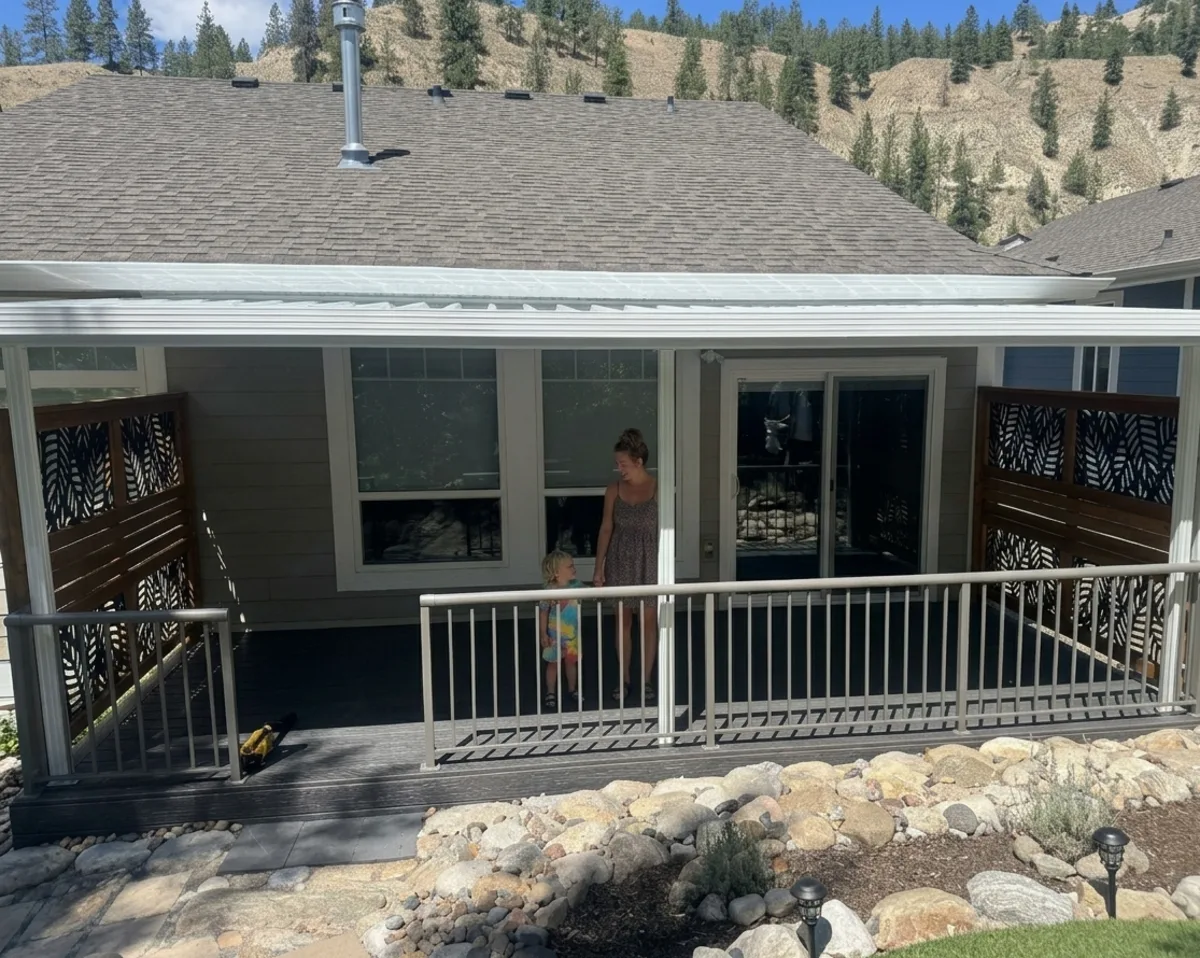
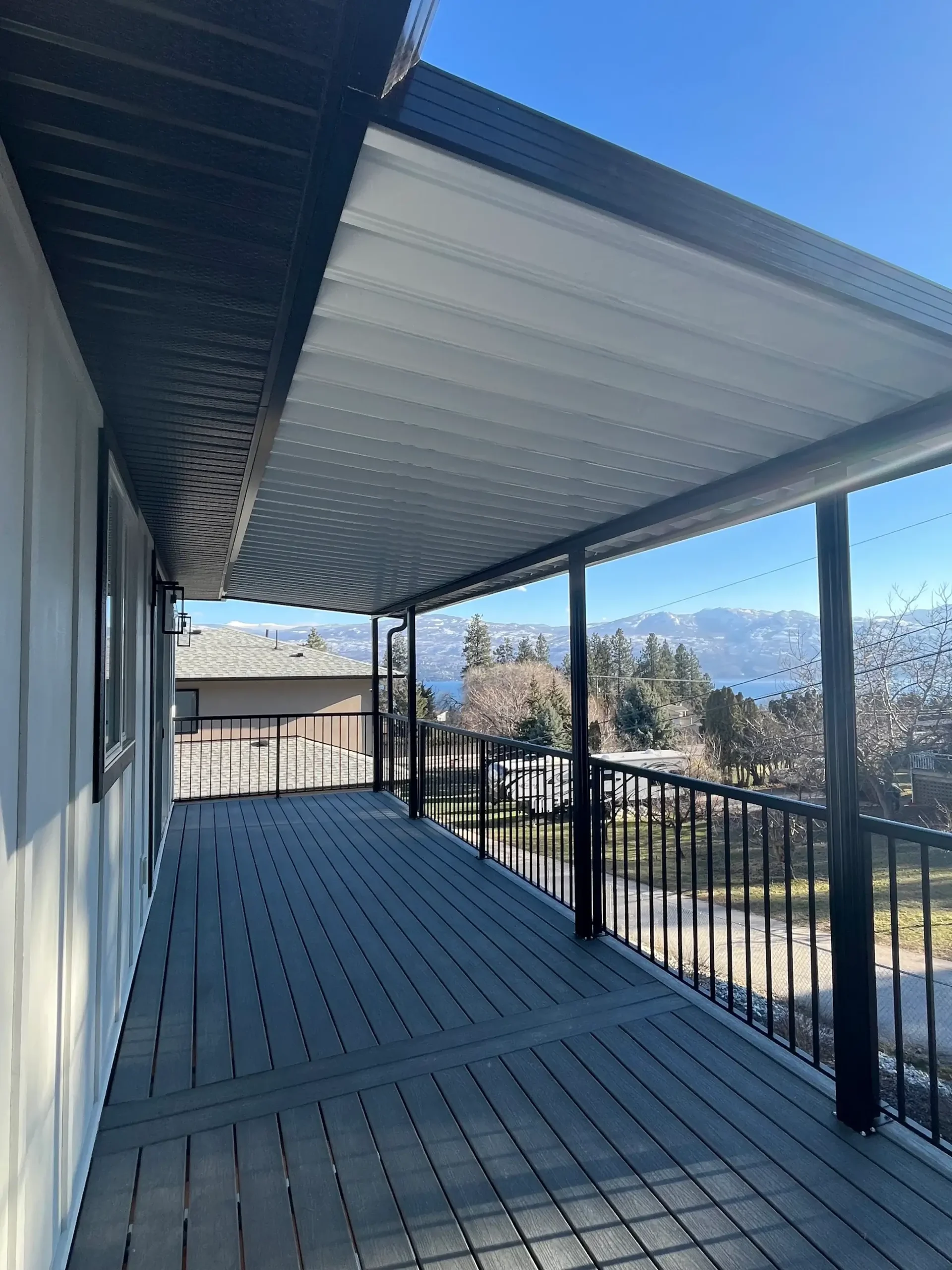
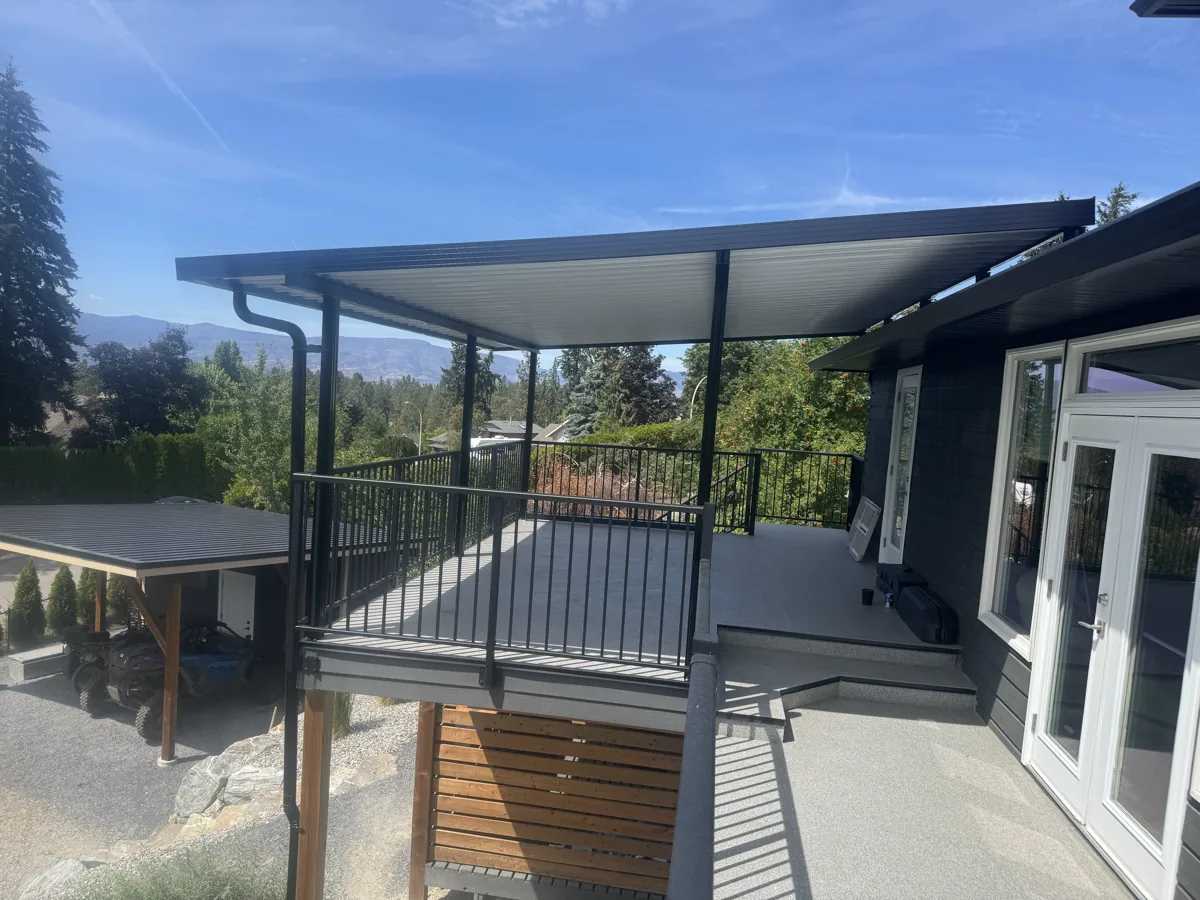
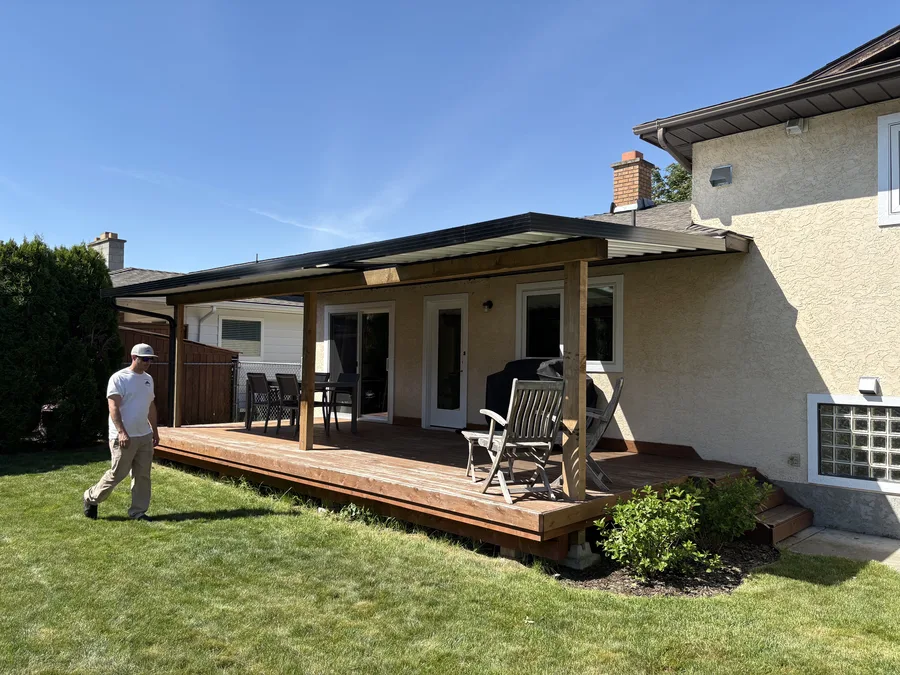
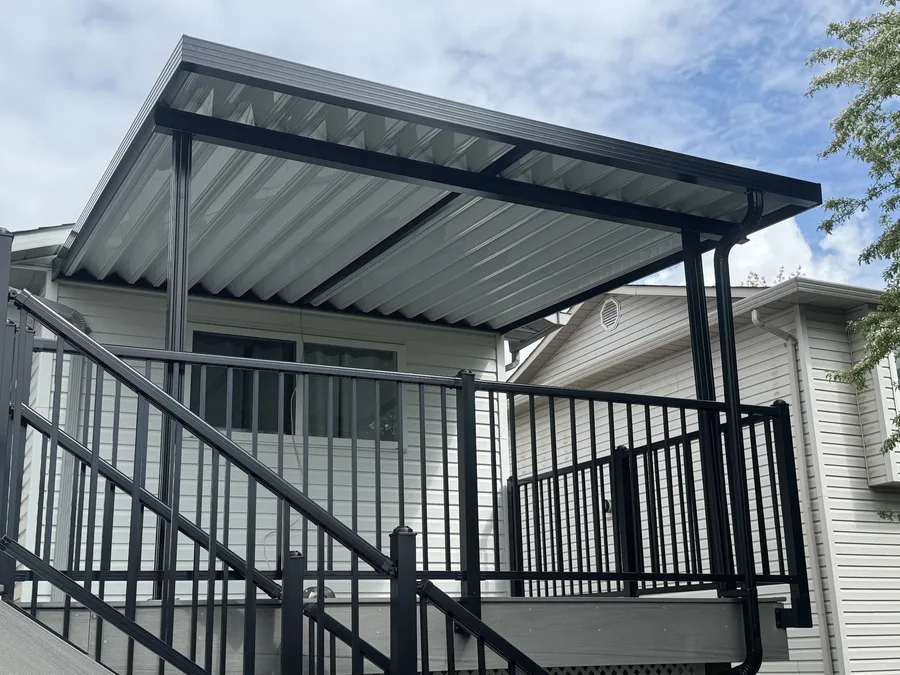
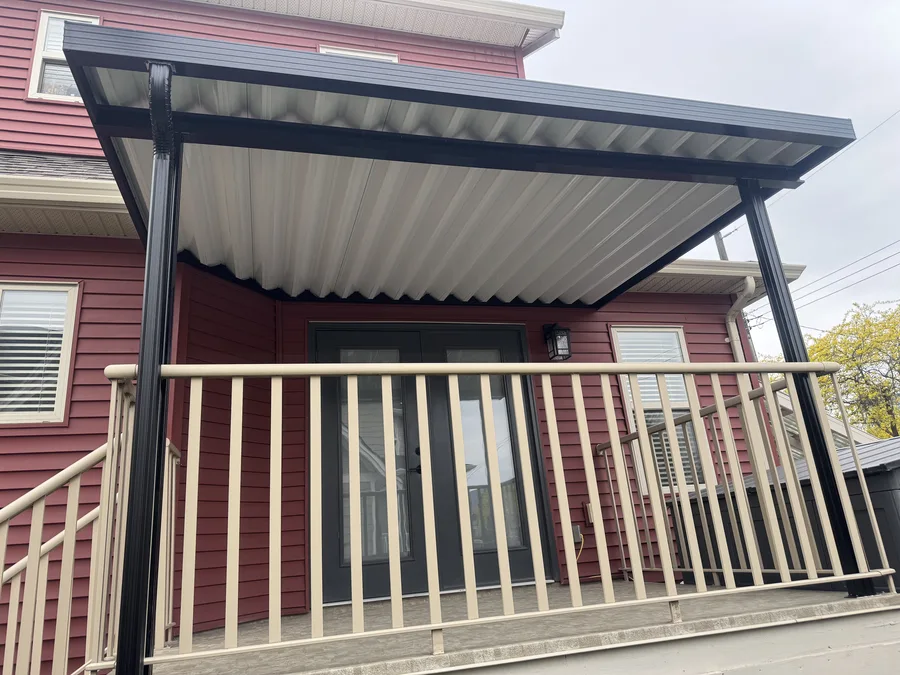
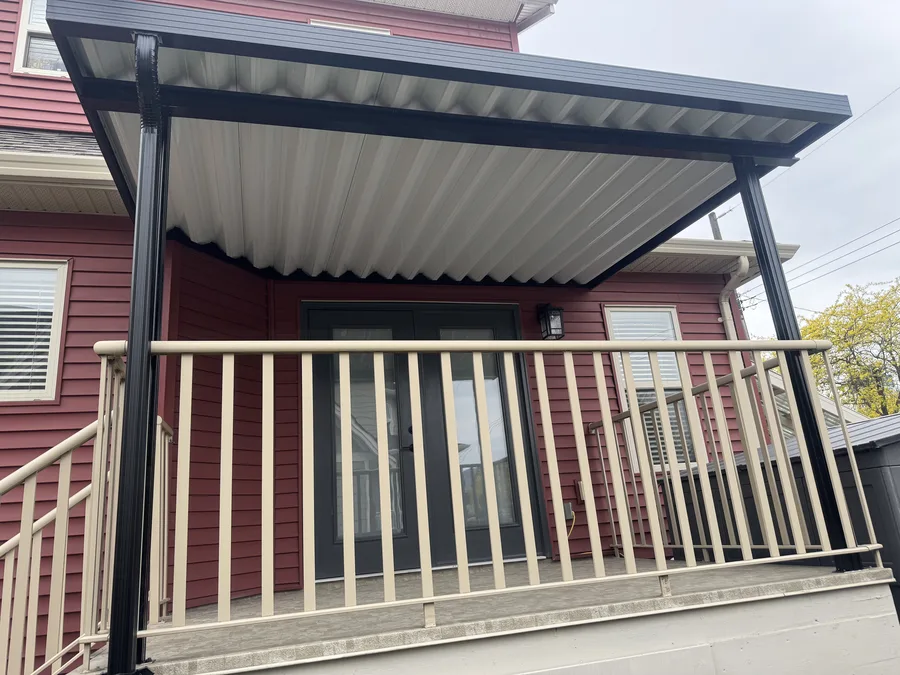
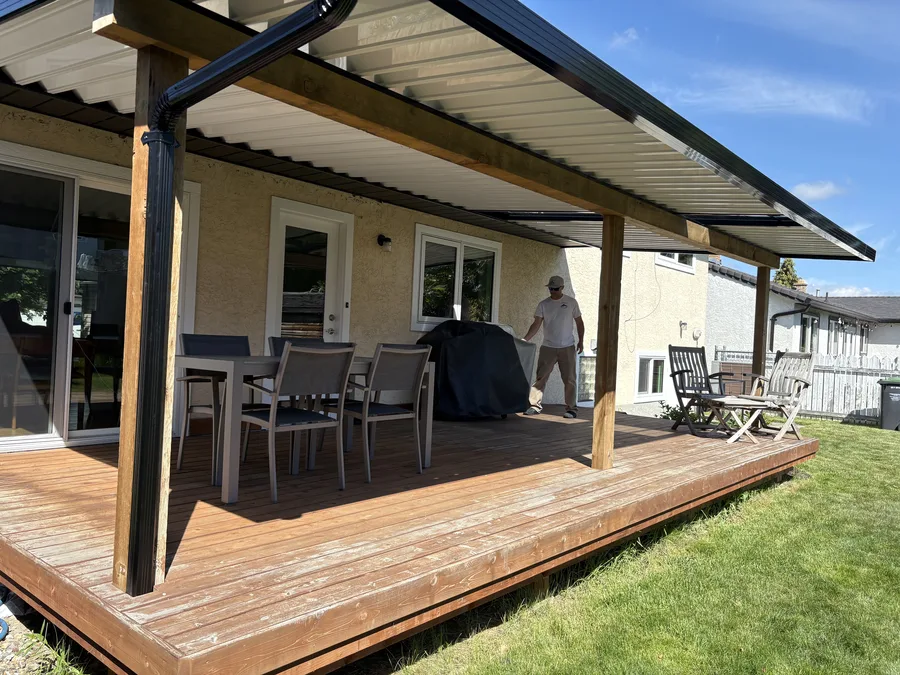
A few we’ve built recently — every one custom-made in West Kelowna and installed by our own crew.
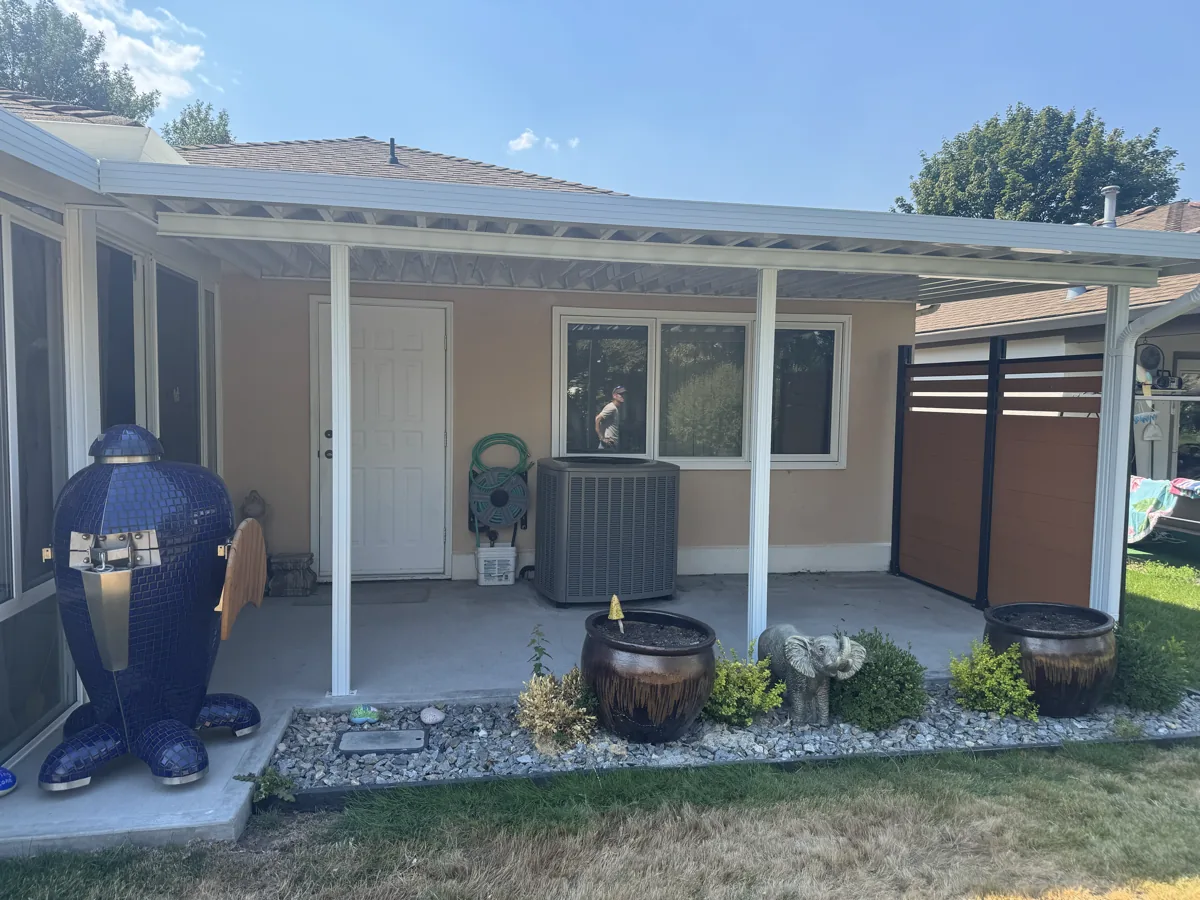
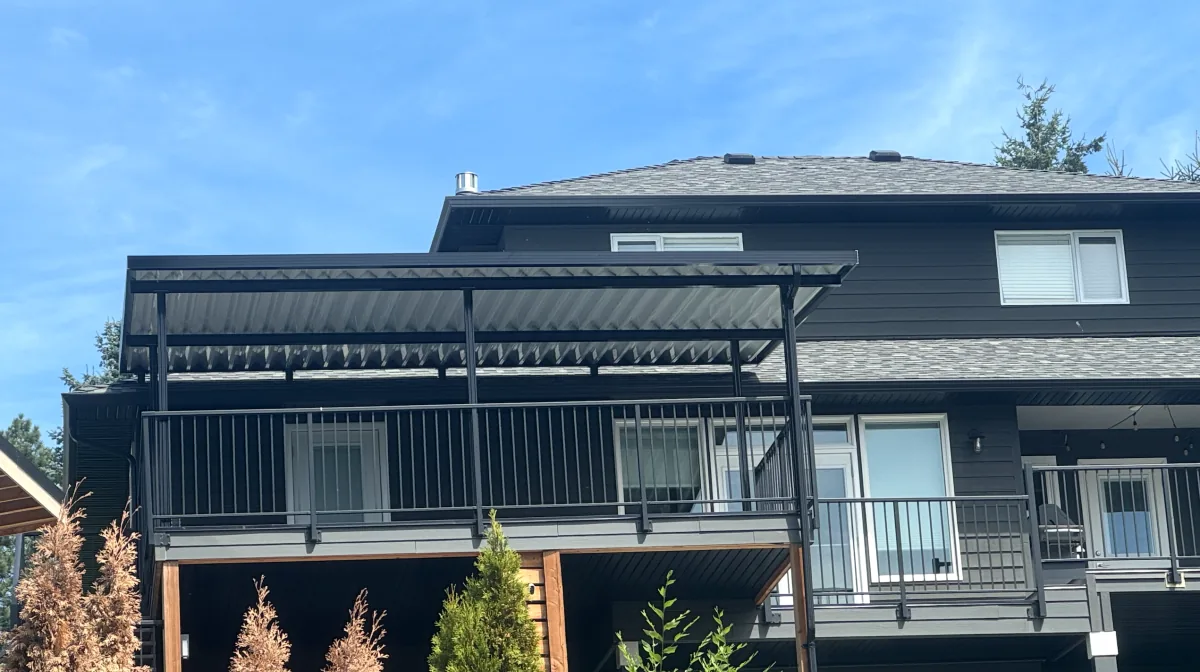
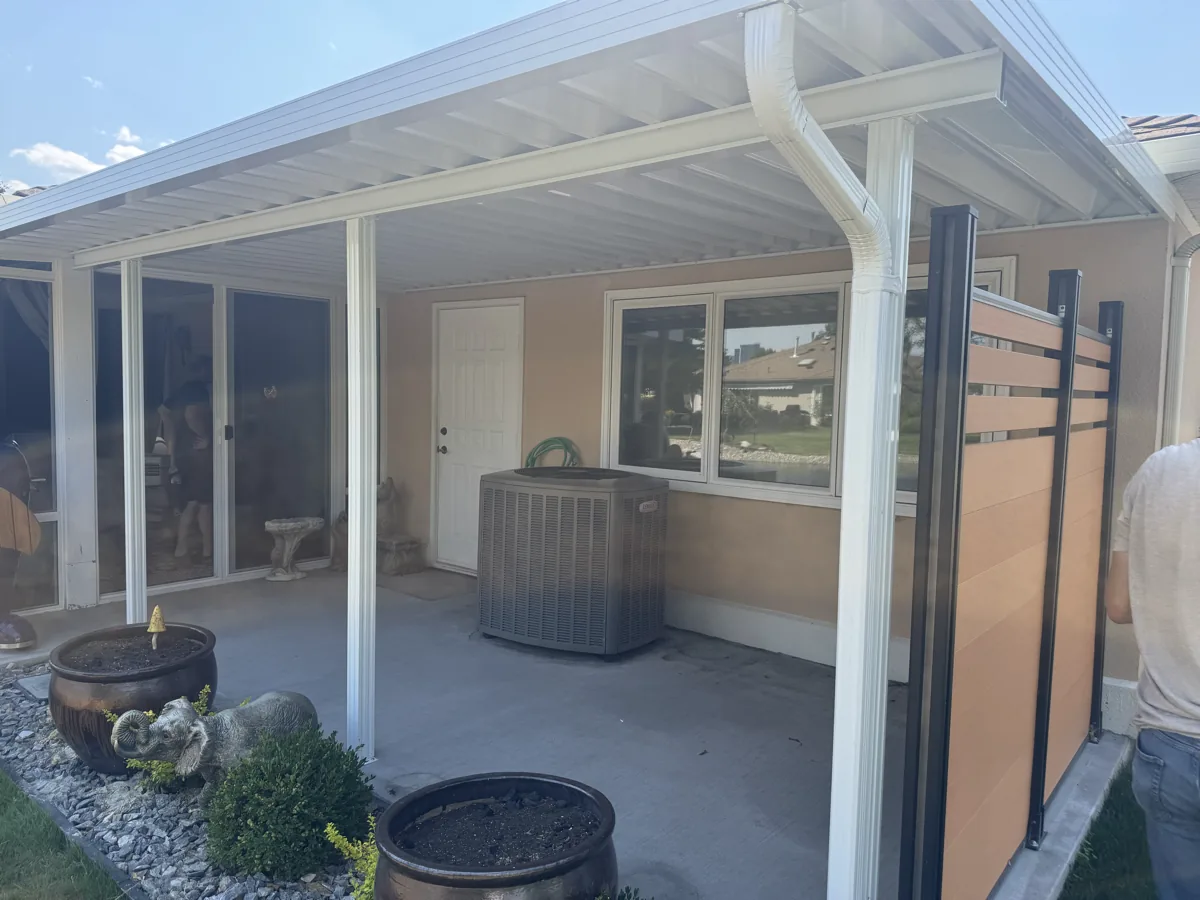
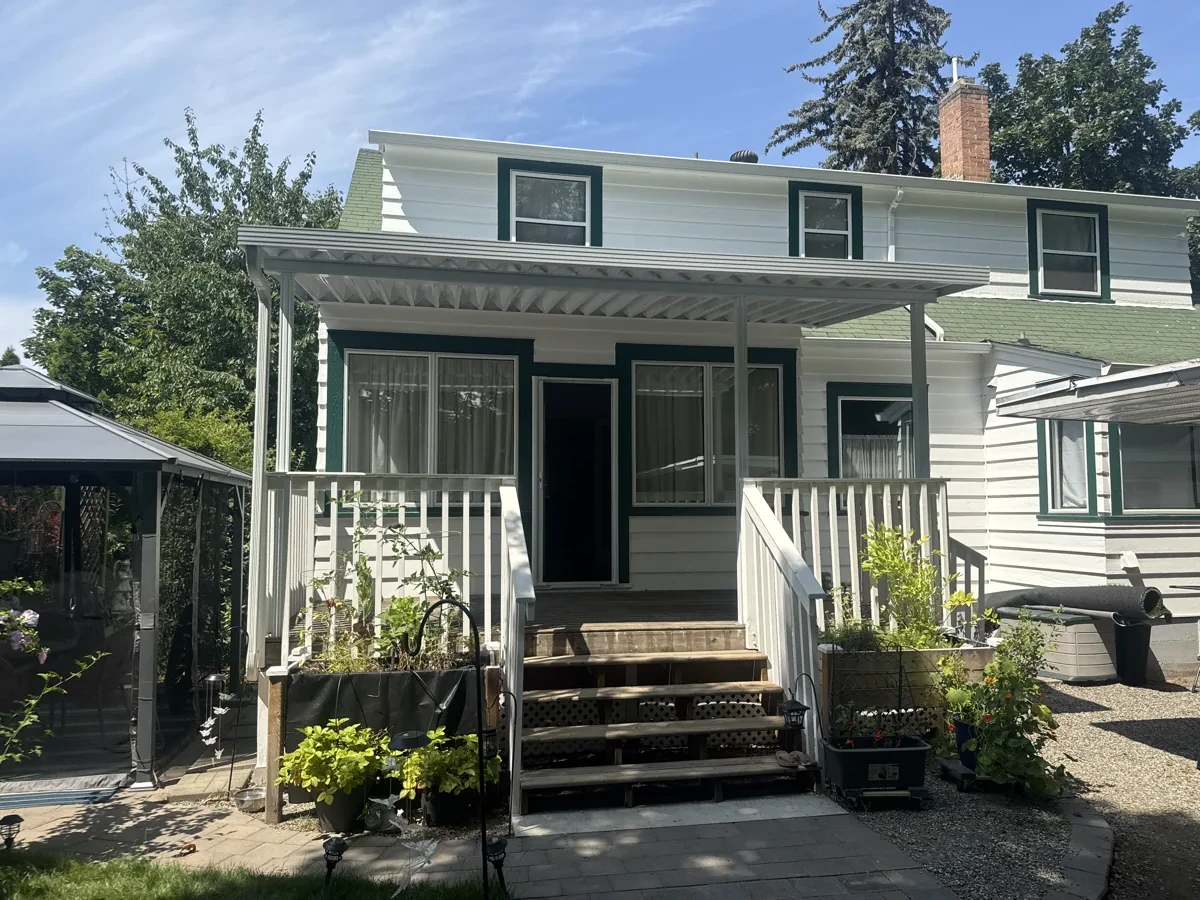
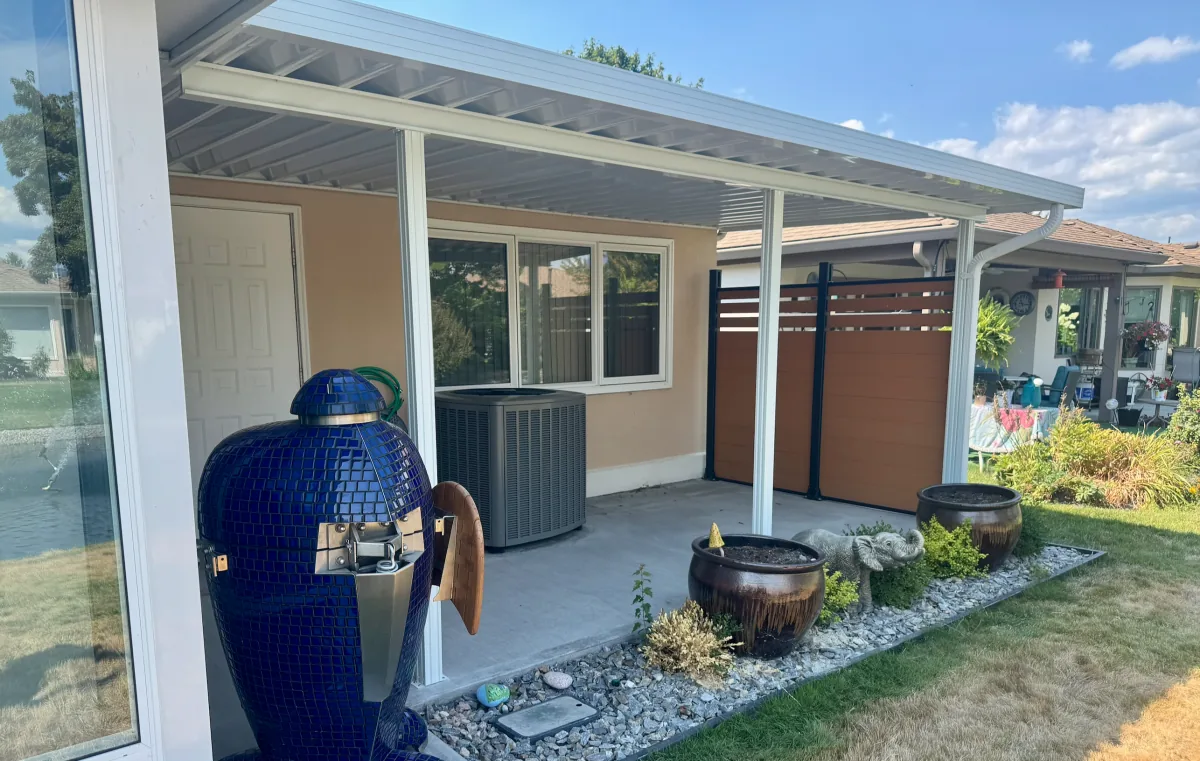
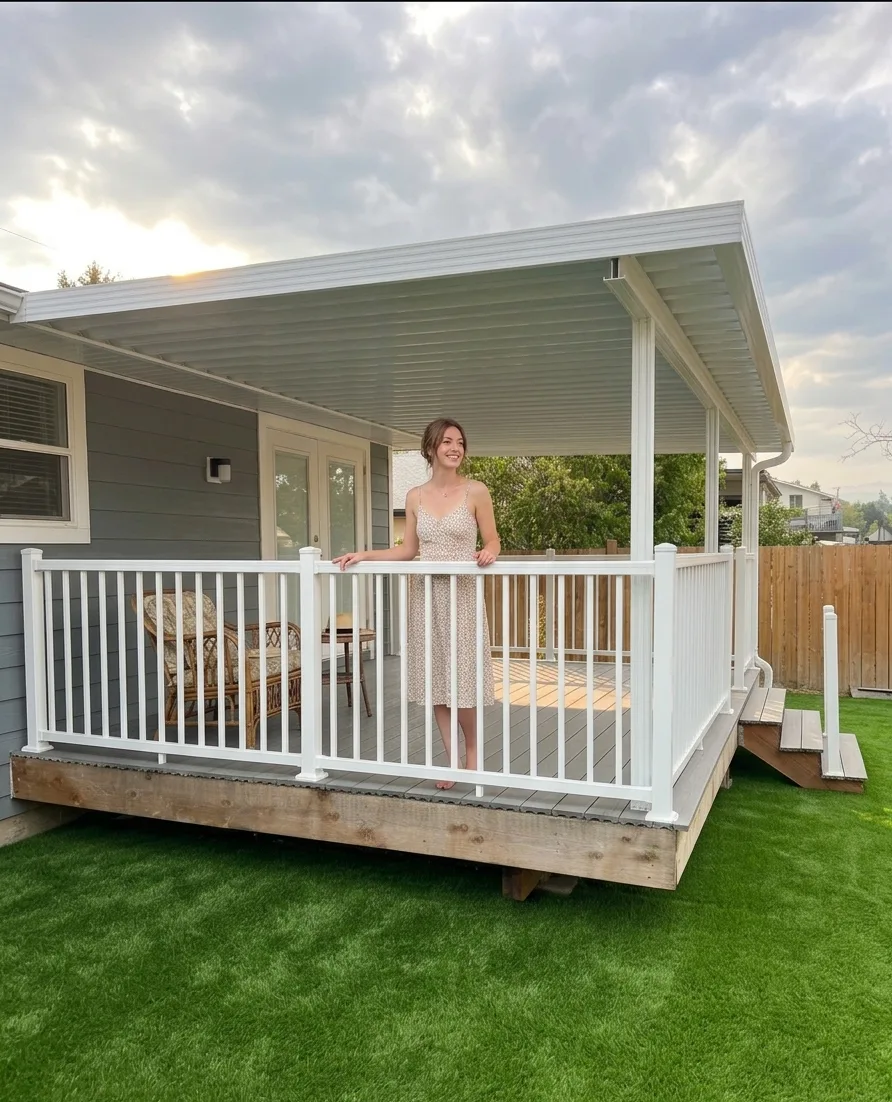
See more builds in the project gallery, or read patio covers for rain and snow in BC. Questions? Get in touch.
Frequently Asked Questions
How well does the cover handle heavy snow loads?
It depends on how the cover is built and sloped. Our covers are over-built for BC winters to handle the Okanagan’s heavy, wet snow with a comfortable margin. We size each one for your location and roof span rather than to a one-size-fits-all number.
What is the snow load?
Snow load is the weight a roof or cover has to safely carry from accumulated snow. It’s measured per square foot and set as a code minimum for your area, with higher elevations generally carrying a higher number than the lakefront.
Can patio glazing handle snow loads?
Yes. Tempered glass in a heavy-gauge aluminum frame, properly sloped, sheds snow the same way a solid aluminum roof does. The frame still has to be sized for the span, same as any other cover.
Do patio covers need snow cleared off them in winter?
If your cover is built for local conditions, occasional clearing is good practice but usually not urgent. Clear it if accumulation gets exceptionally heavy or starts to look excessive for the structure. A roof rake is safer than climbing up with a ladder.
Do I need a permit for a patio cover in Kelowna?
It depends on the size and how the cover attaches. Many of our covers go up with no permit hassle at all, and when a project does need one, we tell you exactly what it needs up front. Either way, our covers are built to local snow load and structural codes.
Can I retrofit an existing cover to carry more snow?
Sometimes. Adding support posts or reinforcing beams can raise load capacity on some structures. Retrofitting often costs nearly as much as proper replacement though, and the results aren’t always as reliable as a purpose-built cover. A proper assessment tells you which way makes sense for your situation.
Takes under 60 seconds · Your information is never shared.
Prefer to talk to someone? Call (250) 215-7513
Ready for a Snow-Ready Patio Cover?
Designed, made and installed in the Okanagan by our own crew. 1,500+ patios built since 2005, 4.9 stars across 32 Google reviews.
Serving Kelowna, West Kelowna, Vernon, Penticton, Lake Country & Salmon Arm