

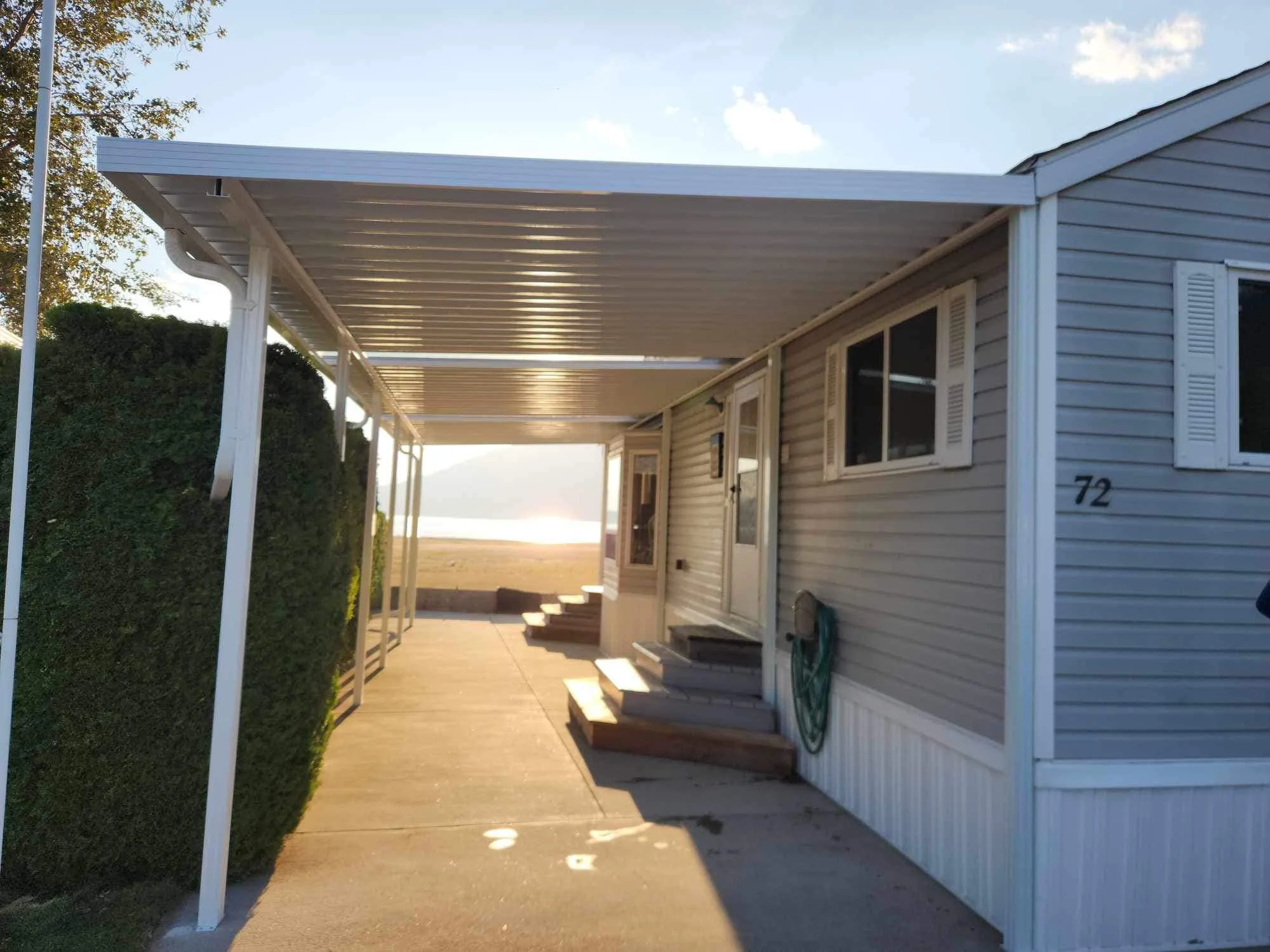
Best Patio Covers for Heavy Snow: What Actually Works in the Okanagan
Okanagan winters can drop 20 to 40 centimetres of wet, heavy snow overnight. That kind of load separates patio covers that last decades from ones that end up as expensive firewood by spring.
I’ve seen plenty of covers buckle under their first real winter here. The problem isn’t usually the snow itself – it’s covers built for California sunshine getting installed in Kelowna. Different climate, different requirements.
Kelowna’s building code requires structures rated for 1.8 kPa ground snow load – that works out to about 37.6 pounds per square foot. But codes are minimums, not recommendations. For a cover that handles real Okanagan winters without drama, you need to understand what actually matters: materials, engineering, and proper design.
This guide breaks down everything you need to know about choosing a patio cover that won’t leave you scrambling after the first big dump of the season.
Understanding Snow Load Ratings
Snow load is simply how much weight a structure can safely support per square foot. It sounds straightforward until you realize that snow isn’t just snow – the stuff that falls in the Okanagan is completely different from the powder they get in the Rockies.
The Weight Difference That Matters
Here’s where most people get surprised: a foot of light, fluffy powder weighs about 3 pounds per square foot. That same foot of heavy, wet snow – the kind we get off Okanagan Lake – can weigh up to 21 pounds per square foot. That’s a seven-fold difference.
When that wet snow lands on your patio cover, things add up fast. Take a 500 square foot cover. One foot of wet snow means nearly 10,500 pounds sitting overhead. That’s roughly the weight of three pickup trucks.
Why Minimum Code Isn’t Always Enough
Building codes set the floor, not the ceiling. They’re calculated based on average conditions, not the once-every-few-years storm that dumps everything at once. A cover rated right at code might technically pass inspection, but it’ll be working at full capacity during heavy snow events.
Adding a safety margin – going from a 40 PSF requirement to a 50 PSF rated cover – costs relatively little upfront but buys significant peace of mind. It’s the difference between a structure working hard and one barely breaking a sweat.
Why Some Patio Covers Collapse (and Others Don’t)
Every winter I get calls from homeowners whose covers didn’t make it through a heavy snowfall. The failures almost always trace back to the same handful of problems – issues that could have been caught before the first flake fell.
The Hidden Reasons Covers Fail
- Undersized beams: They look fine from the ground. Everything seems solid. Then the first real snow hits and you discover the beams were spec’d for a lighter climate. This is common with DIY kits ordered online – they’re often designed for regions with much lower snow requirements.
- Improper post anchoring: Posts need to go deep enough to stay put through freeze-thaw cycles. Shallow footings shift and settle over successive winters, gradually weakening the whole structure. By the time you notice, the damage is done.
- Insufficient slope: Flat or near-flat covers accumulate snow instead of shedding it. Every inch that stays up there adds weight. A proper slope lets snow slide off before it builds up to dangerous levels.
- Ice dam formation: When snow on top melts slightly, runs down, and refreezes at the edge, you get ice dams. These trap water, add concentrated weight, and can work moisture into places it doesn’t belong.
- Age and material degradation: Wood rots. Fasteners loosen. What passed inspection fifteen years ago might be operating at half capacity today. Regular checks matter.
The common thread? Engineering corners got cut somewhere. Either the cover wasn’t designed for local conditions from the start, or installation didn’t follow specs, or maintenance got ignored.
Aluminum vs Wood vs Steel: Which Material Handles Snow Best?
Material choice affects everything from load capacity to maintenance requirements to how long your cover lasts. Here’s how the main options stack up for Okanagan conditions.
| Factor | Aluminum | Wood | Steel |
|---|---|---|---|
| Snow Load Capacity | High (40-50 PSF common) | Medium (varies widely) | Very High |
| Weight | Light | Heavy | Very Heavy |
| Maintenance | Minimal (soap & water) | High (annual stain/seal) | Medium (rust prevention) |
| Lifespan | 20-30+ years | 10-15 years | 25-40 years |
| Cold Weather | Excellent | Cracks/warps | Excellent |
| Cost | Mid-High | Low-Mid | High |
| Best For | Most Okanagan homes | Budget projects | Commercial/extreme loads |
Aluminum: The Practical Winner
For most residential projects in the Okanagan, aluminum patio covers hit the sweet spot. They don’t crack, warp, or become brittle when temperatures drop. Snow slides off easily when the cover is properly sloped. And they’re essentially maintenance-free – an occasional rinse with the garden hose is about all they need.
The strength-to-weight ratio works in your favour too. Aluminum delivers high load ratings without requiring massive footings or overbuilt support posts. That keeps installation costs reasonable while still meeting or exceeding local snow load requirements.
Wood: More Work, More Risk
Wood appeals to people who want that traditional pergola look. Fair enough – it does look good. But in snow country, wood covers demand attention.
Moisture exposure causes cracking, splitting, and eventually rot. You’re looking at yearly maintenance: sanding, staining, sealing. Skip a season and you’ll see the consequences. And unless you significantly overbuild the structure, wood covers typically have lower load capacities than their aluminum equivalents.
If you’re committed to wood, budget for heavier framing than standard specs suggest, and plan on treating it like a full-time hobby project.
Steel: When Nothing Else Will Do
Steel offers the highest load capacity available. If you’re covering a commercial space or dealing with extreme snow loads, it’s the go-to choice.
For residential projects, steel is usually overkill – and brings complications. The weight requires significantly stronger footings. Rust prevention is ongoing work in our wet winters. And costs run substantially higher than aluminum for equivalent coverage.
Insulated vs Non-Insulated Patio Covers for Winter
Beyond material choice, the question of insulation makes a real difference for Okanagan applications. Insulated aluminum patio covers have foam-core panels sandwiched between aluminum skins – and that construction affects both snow performance and year-round comfort.
Why Insulated Covers Handle Snow Better
The foam core creates a thermal break between the top surface and the ceiling. When it’s freezing above and warmer below, non-insulated covers conduct that temperature difference right through the panel. That’s how you get condensation dripping onto furniture and ice dams forming at edges.
Insulated panels interrupt that heat transfer. The top stays cold (so snow doesn’t partially melt and refreeze), while the underside stays comfortable. It’s a small thing that solves multiple problems at once.
Structural benefits matter too. Insulated panels are inherently stiffer than hollow ones. They span longer distances with fewer support posts, which means cleaner sight lines and more flexible layouts. Available ratings typically run from 20 PSF through 40 PSF and higher – plenty for Okanagan requirements.
The Temperature Bonus
Beyond snow handling, insulated covers keep the space underneath 15 to 20 degrees warmer than non-insulated alternatives. That extends your usable season on both ends – you can enjoy the patio earlier in spring and later into fall.
They’re also significantly quieter during hail and heavy rain. If you’ve ever sat under a non-insulated metal cover during a downpour, you know exactly what I mean.
When Non-Insulated Makes Sense
Non-insulated covers cost less upfront. For mild climates or purely decorative applications, they work fine. But for Okanagan installations where snow performance and year-round use matter, insulated covers pay back their premium through better performance and longer useful life.
Design Features That Matter for Snow
The right material with the wrong design still fails. These details determine whether your cover sheds snow gracefully or turns into a snow collection platform.
Slope and Pitch
Flat covers are snow magnets. Every flake that lands stays put until it melts or you shovel it off. The solution is simple: slope.
Minimum pitch for shedding water is about a quarter inch drop per foot of projection. For snow, you want more – half an inch to a full inch per foot works well. In heavy snow areas, consider a steeper 6:12 pitch (six inches of drop for every twelve inches horizontal).
Steeper slopes shed snow automatically. Shallower slopes accumulate weight. It’s physics, and fighting physics never works out.
Integrated Drainage
Where does the water go? Melting snow needs somewhere to drain. Proper gutter systems channel water away from the foundation instead of dumping it right at your doorstep.
Position downspouts where they can discharge well away from the house. For areas with severe ice concerns, heated gutter cables prevent freeze-ups that block drainage entirely.
Beam and Post Sizing
Bigger beams carry bigger loads. Wider posts support more weight. The relationship between post spacing, beam size, and load capacity involves real engineering.
For example: 3-inch insulated panels might span up to 12 feet 7 inches at a 20 PSF rating, but only 8 feet 7 inches at 50 PSF. Shorter spans with more posts are stronger than longer spans with fewer posts – there’s no free lunch.
Attachment Method
Attached covers tie into the house structure, typically via a ledger board bolted to the wall. This connection point needs proper flashing to prevent water infiltration and sufficient anchoring to handle snow loads transferred to the house.
Freestanding covers support themselves entirely on posts. They need beefier footings since there’s no house connection sharing the load. Neither approach is inherently better – the right choice depends on your specific situation and preferences.
How to Choose the Right Snow Load Rating
Matching your cover to local requirements isn’t guesswork. Here’s how to figure out what you actually need.
Step 1: Check Local Requirements
Start with code minimums. Kelowna requires 1.8 kPa, which translates to 37.6 PSF. Other Okanagan communities have similar requirements, though specifics vary. Your local building department can tell you exactly what applies to your address.
Step 2: Factor in Elevation
Higher ground means more snow. If you’re up in the hills rather than down by the lake, expect heavier accumulations. The code minimum for your municipality might not reflect microclimates at higher elevations.
Step 3: Add a Safety Margin
This is where practical sense beats minimum compliance. If code says 37.6 PSF, a 40 PSF rated cover just barely meets the requirement. A 50 PSF cover gives you 33% extra capacity for the storms that exceed averages.
Step 4: Consider Your Maintenance Style
Will you clear snow after every storm? Or would you rather let the cover handle whatever falls? Higher ratings mean less worry about keeping up with accumulation. Lower ratings work fine if you’re committed to regular clearing.
Step 5: Get Professional Verification
Building departments can provide exact PSF requirements for your specific property. For permitted work, they’ll verify that your planned installation meets requirements before signing off. Even for projects that might not strictly require permits, a professional assessment catches issues before they become expensive problems.
Frequently Asked Questions
How much snow can a typical aluminum patio cover hold?
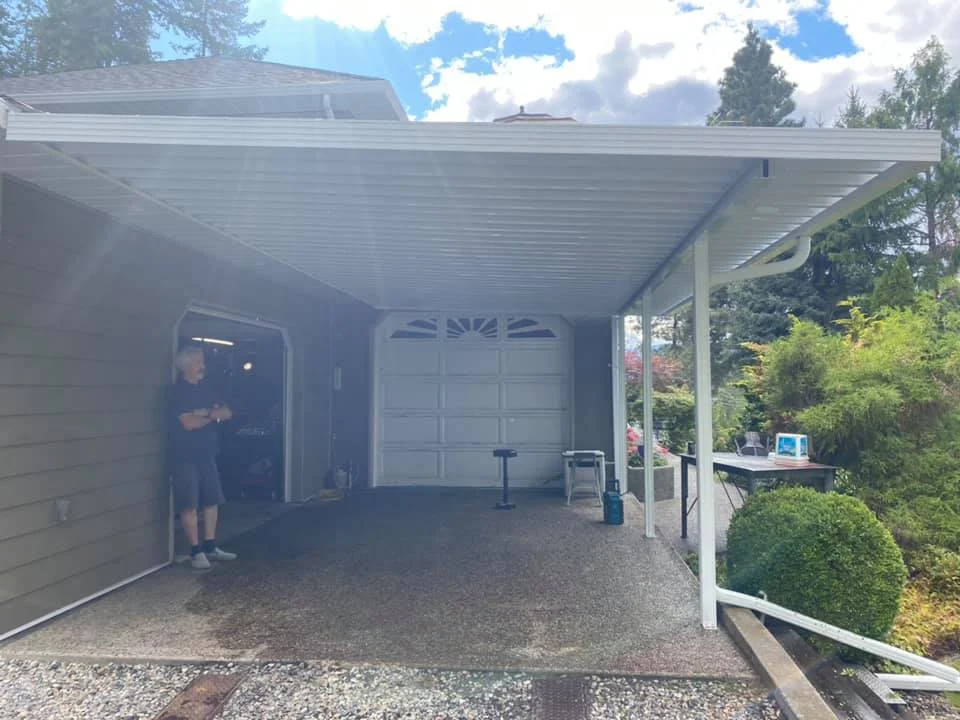
Standard aluminum patio covers come rated from 20 to 50 PSF. For Kelowna and the Okanagan, I recommend 40 PSF minimum to handle our heavy, wet snow with a comfortable safety margin. Premium insulated covers often reach 50 PSF or higher.
Do I need a permit for a patio cover in Kelowna?
Yes, most patio covers over 10 square feet require a building permit in Kelowna. The permit process ensures your cover meets local snow load requirements and structural codes. Skipping permits can create problems when you sell or if something goes wrong with insurance claims.
Should I remove snow from my patio cover?
If your cover is properly rated for local conditions, occasional clearing is good practice but usually not urgent. Remove snow if accumulation approaches your cover’s rated capacity – for example, if you have a 40 PSF rated cover and snowfall has been exceptionally heavy. A roof rake makes this easier and safer than climbing ladders.
What’s the difference between ground snow load and roof snow load?
Ground snow load measures the weight of snow on flat ground. Roof or cover snow load accounts for factors like slope, wind exposure, and how snow accumulates on elevated surfaces. Roof loads are typically lower than ground loads because sloped surfaces shed snow and wind removes some accumulation.
How long do aluminum patio covers last in snowy climates?
Quality aluminum covers with appropriate snow load ratings typically last 20 to 30 years or more with minimal maintenance. Unlike wood, aluminum doesn’t crack, warp, rot, or become brittle in cold weather. The main enemies are physical damage and neglected drainage systems.
Can I convert my existing patio cover to handle more snow?
Sometimes. Adding support posts or reinforcing beams can increase load capacity on some structures. But retrofitting often costs nearly as much as proper replacement, and results aren’t always as reliable as purpose-built covers. A professional assessment can tell you whether upgrading makes sense for your specific situation.
What happens if my patio cover isn’t rated for my area’s snow load?
Underrated covers sag, bend, or collapse under heavy snow. This creates obvious safety hazards and typically voids warranties. For permitted work, an underrated cover won’t pass inspection. Even without permits, insurance may not cover damage to or caused by a structure that didn’t meet code requirements.
The Bottom Line
Choosing a patio cover that handles Okanagan winters comes down to three things: the right material, proper engineering, and smart design.
For most homes in this area, insulated aluminum covers rated at 40 PSF or higher deliver the best combination of performance, longevity, and value. They shed snow effectively, require almost no maintenance, and last decades without the rot, warping, or cracking that plagues wood alternatives.
The specifics of your project – size, attachment method, slope requirements, local code details – determine exactly what configuration makes sense. That’s where professional engineering and installation pay off. A properly designed and built cover handles whatever winter throws at it without drama.
Ready to Install a Snow-Ready Patio Cover?
Get a free quote from Okanagan Patio Covers. We build covers engineered specifically for BC winters – locally owned, built for our climate.
Get Your Free Quote
Ready to Start Your Project?
Get a free, no-pressure quote. We’ll help you choose the right patio cover for your backyard and budget.
Serving Kelowna, West Kelowna, Vernon, Penticton, Lake Country & Salmon Arm