

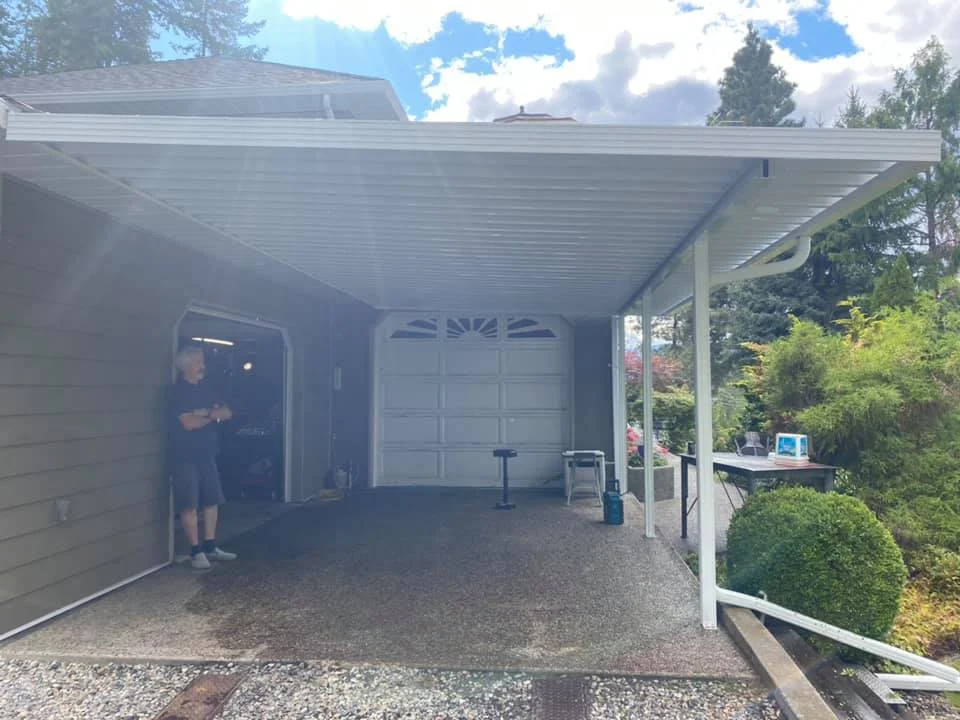
Do You Need a Permit for a Patio Cover in BC? A Complete Guide for Okanagan Homeowners
Before you invest in an aluminum patio cover for your Okanagan backyard, there’s one question you need to answer first: do you need a building permit? The short answer is yes, most patio covers in BC require a permit. But there’s more to it than a simple yes or no, and getting this wrong can cost you thousands in fines, removal orders, or problems when you sell your home.
When Do You Need a Permit for a Patio Cover in BC?
Here’s the deal: under the BC Building Code, a patio cover is considered a structure. That means it falls under the same regulations as any other addition to your home. While some small detached structures can slip by without a permit, most functional patio covers will need one.
You’ll definitely need a permit if your patio cover:
- Attaches to your home — Any structure that bolts to your house via a ledger board modifies the existing building, which triggers permit requirements
- Has a solid roof — Solid panels (aluminum, glass, or polycarbonate) are treated differently than open pergolas
- Exceeds 10 square metres (107.6 sq ft) — That’s roughly a 10×10 foot footprint, which most useful patio covers exceed
- Requires footings or foundation work — Posts need proper footings per BC Building Code Section 9.15
- Sits in a sensitive area — Flood zones, hillsides, or development permit areas have stricter rules
The BC Building Code Appeal Board (BCAB Decision 1783) specifically addressed aluminum patio canopies, confirming they fall under the Building Code’s scope. Even if your cover will bear on an existing concrete slab, proper footings may still be required.
Patio Cover Permit Requirements by Okanagan Municipality
Permit requirements aren’t identical across the Okanagan. Each city and the Regional District has its own application process, fees, and review timelines. Here’s what you need to know for the major areas we serve.
Kelowna Permit Requirements
The City of Kelowna requires permits for all building alterations and additions, including patio covers. Their Building Permits and Inspections department handles applications. Kelowna offers a Fast Track program for some residential projects, which can speed up approval for straightforward installations.
Contact: Visit kelowna.ca/homes-building or stop by City Hall
West Kelowna Requirements
West Kelowna follows similar requirements to Kelowna. All additions and alterations need permits. Their Building Services department is generally responsive and can provide pre-application guidance if you’re unsure whether your project qualifies.
Contact:westkelownacity.ca
Vernon Permit Requirements
Vernon requires permits for decks and accessory buildings, which includes patio covers. They provide a helpful checklist for accessory building and deck applications that outlines exactly what drawings and documents you’ll need.
Contact:buildingcounter@vernon.ca or 250-550-3500
Penticton Requirements
Penticton has one of the clearer policies: attached decks 2 feet or more above grade, or any deck supporting a roof, requires a permit. The good news? They offer a Residential Xpress (RXp) permit program for eligible projects with a 1-14 business day review window. They also provide free pre-application meetings, which I’d recommend taking advantage of.
Contact: 250-490-2571 or buildinginfo@penticton.ca
Regional District of Central Okanagan (RDCO)
If your property is outside city limits (like parts of Lake Country, Joe Rich, or the rural areas), you’ll deal with the RDCO. Their main exemption: accessory buildings under 10 square metres (107.6 sq ft) don’t require permits. But attached structures and anything over that threshold does. Retaining walls over 1.2m also need permits, which matters if your patio cover involves any grading work.
Contact: 250-469-6211 or inspections@rdco.com
| Municipality | Contact | Notes |
|---|---|---|
| Kelowna | kelowna.ca/homes-building | Fast Track program available |
| West Kelowna | westkelownacity.ca | Pre-application guidance offered |
| Vernon | 250-550-3500 | Checklist available online |
| Penticton | 250-490-2571 | Xpress permits: 1-14 days |
| RDCO | 250-469-6211 | Under 10m² may be exempt |
What Size Patio Cover is Exempt from Permits?
You’ve probably heard about the “10 square metre rule” and wondered if it applies to your project. Here’s the reality: this exemption typically applies only to detached structures, not patio covers attached to your home.
The 10m² breakdown:
- 10 square metres = approximately 107.6 square feet
- That’s roughly a 10 ft x 10 ft cover
- Most practical patio covers (12×16, 14×20, etc.) exceed this threshold
Even if your cover is small enough to qualify for the size exemption, it may still need a permit if:
- It attaches to your home (modifies existing structure)
- It’s in a designated development permit area
- It violates setback requirements
- It exceeds height restrictions for your zone
The bottom line? A 10×10 cover is pretty tight for most outdoor living spaces. If you’re building something big enough to actually use, plan on getting a permit. See our patio cover cost guide for size recommendations that maximize your outdoor space.
The Permit Application Process
Getting a permit isn’t as intimidating as it sounds. Most residential patio cover permits are straightforward. Here’s the typical process:
Step 1: Pre-Application Consultation (Recommended)
Many municipalities offer free pre-application meetings. A building official will review your concept plans and identify any potential issues before you invest in detailed drawings. Penticton is particularly good about this. Taking 30 minutes upfront can save weeks of back-and-forth later.
Step 2: Prepare Your Documents
You’ll typically need:
- Site plan showing property boundaries and where your cover will go
- Construction drawings with dimensions and materials
- Setback measurements from property lines
- Engineering calculations for larger structures
- Product specifications for your aluminum system
Step 3: Submit Your Application
Most Okanagan municipalities now accept online submissions. You’ll pay the application fee at this stage. Keep copies of everything you submit.
Step 4: Review Period
Expect 2-4 weeks for typical residential projects. Penticton’s Xpress program can cut this to 1-14 business days for eligible projects. Complex installations or those in development permit areas take longer.
Step 5: Approval and Construction
Once approved, you’ll receive your permit. Post it on site where inspectors can see it. Schedule inspections as required (usually footings and final). The final inspection confirms everything was built to plan.
How Much Does a Patio Cover Permit Cost?
Permit fees vary by municipality and are usually calculated as a percentage of your project value. For a typical residential patio cover, expect to pay somewhere between $100 and $500. It’s not nothing, but it’s a small fraction of your total project cost.
| Municipality | Typical Permit Cost | Notes |
|---|---|---|
| Kelowna | $150 – $400 | Based on project value |
| Vernon | $100 – $350 | Includes 2 inspections |
| Penticton | $100 – $300 | Xpress permits available |
| RDCO | $150 – $400 | Plus $45 property info request |
Note: Contact your local building department for current fee schedules. These figures are typical ranges and may have changed.
Additional fees may apply for development variance permits (if you have setback issues), multiple inspections, or expedited review. Factor these into your budget when planning. See our complete patio cover cost breakdown for budgeting help.
What Happens If You Build Without a Permit?
I’ll be direct: building without a permit is a bad idea. The short-term savings aren’t worth the long-term headaches. Here’s what you’re risking:
Fines and Penalties
BC municipalities can impose fines of $500 to $10,000 per offence. Some jurisdictions charge up to $10,000 per day for ongoing violations. The “work without permit” penalty often doubles the original permit fee. You’ll also face stop work orders until you get proper permits in place.
Removal Orders
The municipality can require complete removal of unpermitted work. All costs come out of your pocket, and you might also be responsible for the municipality’s legal fees if they had to pursue enforcement.
Title Notifications
A notice can be placed on your property title identifying unpermitted work. This is visible to potential buyers, mortgage lenders, and insurers. It’s a red flag that can significantly impact your property value.
Insurance Problems
This is the one that catches most people off guard. Insurance companies may deny claims related to unpermitted structures. If your cover collapses and damages your home? Not covered. If someone is injured? You could be personally liable. The insurance implications alone make permits non-negotiable.
Sale Complications
When you sell your home, buyers’ inspectors flag unpermitted work. Lenders may refuse to finance properties with unpermitted structures. You’ll often need to obtain retroactive permits (expensive and not guaranteed) or remove the work entirely before the sale can close.
Do Aluminum Patio Covers Need Special Permits?
Aluminum patio covers follow the same permit requirements as covers made from other materials. There’s no special “aluminum exemption.” In fact, the BC Building Code Appeal Board specifically addressed this in Decision BCAB 1783, confirming that aluminum patio canopies fall under the BC Building Code’s scope.
What the appeal board clarified:
- Footing requirements in Section 9.15 apply to aluminum covers
- You can’t simply set posts on an existing concrete slab without proper footings
- Structural requirements must be met regardless of material
The advantage of professional installation: When you work with an experienced installer, your aluminum patio cover comes with engineered systems designed specifically to meet BC code requirements. The installer handles the permit process, proper footings and connections are included in the installation, and you get warranty protection that depends on proper permitting.
Frequently Asked Questions
Do I need a permit for a pergola in BC?
Open pergolas without solid roofing may have fewer requirements than fully covered structures, but don’t assume you’re in the clear. If your pergola attaches to your home or exceeds 10 square metres, permits are typically required. Even freestanding pergolas may need permits depending on your municipality and the specific location on your property. The safest approach is always to check with your local building department before starting construction.
Can I get a permit after building my patio cover?
Yes, retroactive permits are possible, but they come with complications. Expect to pay penalty fees, often double the original permit cost. You may also need to expose structural elements (like footings) for inspection, which can mean tearing up finished work. In some cases, modifications are required to bring the structure up to code. It’s always cheaper and easier to get the permit first.
How long does patio cover permit approval take?
In the Okanagan, typical residential patio cover projects are reviewed within 2-4 weeks. Penticton’s Residential Xpress (RXp) program can process eligible applications in 1-14 business days. Complex projects, those in development permit areas, or applications requiring variances take longer. A pre-application meeting can help identify potential delays before you submit.
Do I need an engineer for my patio cover?
For standard residential aluminum patio covers, engineering is often provided by the manufacturer as part of the product specifications. This stamped engineering documentation satisfies most municipal requirements. Custom designs, unusually large installations, or complex structural situations may require a separate structural engineer’s stamp. Your installer or building department can advise whether additional engineering is needed for your specific project.
What setbacks apply to patio covers?
Setback requirements vary by zone and municipality, so you’ll need to check your specific property’s zoning. Common requirements include 1.5 metres from side property lines and 7.5 metres from rear lanes or alleys. Attached patio covers must also comply with the main building’s setbacks. Corner lots often have additional restrictions. If your ideal location violates setbacks, you may need to apply for a development variance permit, which adds time and cost to the process.
Can my neighbour complain about my patio cover?
If you build without permits or violate setbacks, neighbours can report violations to the municipality, which may trigger enforcement action. Properly permitted structures that meet all code requirements are protected — your neighbour may not like your new cover, but if it’s legal, there’s not much they can do about it. This is another reason permits matter: they provide documentation that your structure was built legally and to code.
Does Okanagan Patio Covers handle permits?
Yes, we assist customers with permit applications throughout the Okanagan Valley, including Kelowna, West Kelowna, Vernon, Penticton, Lake Country, and Salmon Arm. We know what each building department requires and have established relationships that help smooth the process. During your free consultation, we’ll discuss permit requirements for your specific project and include permit coordination in our scope of work.
Getting Started with Your Patio Cover Project
So yes, most patio covers in BC require building permits. But that shouldn’t stop you from enjoying your outdoor space. With the right approach — and the right installer — the permit process is just another step in creating the backyard you want.
Working with a professional installer who understands Okanagan building codes makes everything easier. We’ve navigated the permit process with Kelowna, Vernon, Penticton, West Kelowna, Lake Country, and RDCO building departments dozens of times. We know what they want to see, and we build relationships that help your project move through smoothly.
Our free consultations include permit guidance specific to your property and municipality. We’ll assess your site, discuss what’s realistic within code requirements, and provide a detailed quote that accounts for all costs — including permits.
Ready to Start Your Patio Cover Project?
Get a free, no-pressure consultation. We’ll help you understand permit requirements for your specific project and provide a detailed quote with 3D visualization.
Get Your Free Quote
Ready to Start Your Project?
Get a free, no-pressure quote. We’ll help you choose the right solution for your backyard and guide you through the permit process.
Serving Kelowna, West Kelowna, Vernon, Penticton, Lake Country & Salmon Arm