

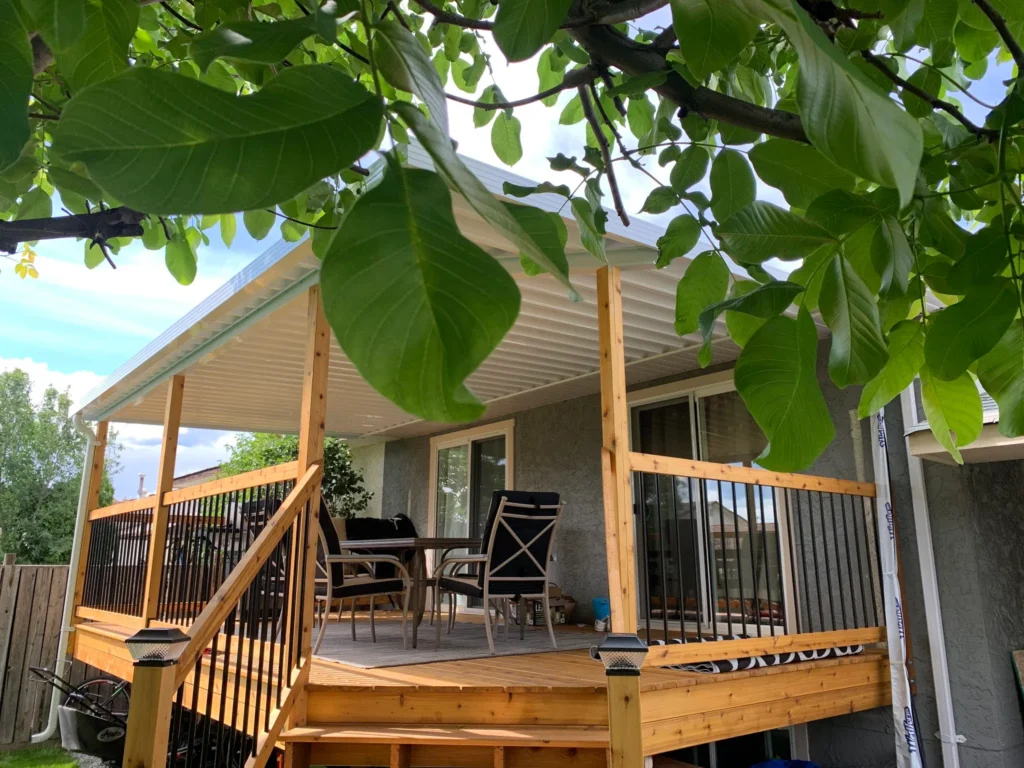
Glass vs Aluminum Railings in BC (2026 Comparison): Costs, Durability & Best Uses
You’re standing on your deck looking at the lake, and all you can think is “I want to see MORE of this view.” That’s when the glass vs aluminum railing debate becomes real. Here’s what actually matters when choosing between these two options in BC’s climate.
The Honest Cost Breakdown
Let’s cut to the chase. The price difference between glass and aluminum railings is massive, and it’s usually the first thing that determines which direction you go.
Glass Railing Costs (2026 BC Pricing)
- Frameless glass panels: $200-$400 per linear foot installed
- Semi-framed glass (aluminum channels): $150-$280 per linear foot
- Spigot-mounted glass: $180-$350 per linear foot
For a typical 40-foot deck perimeter, you’re looking at $6,000 to $16,000 depending on the system and installation complexity. Corners, gates, and stairs add another 20-30% to the total.
Aluminum Railing Costs (2026 BC Pricing)
- Powder-coated aluminum picket: $50-$100 per linear foot installed
- Horizontal cable aluminum: $80-$150 per linear foot
- Premium aluminum systems (Fortress, TimberTech): $120-$200 per linear foot
Same 40-foot deck? You’re spending $2,000 to $8,000. Even the premium aluminum systems come in well below entry-level glass.
Long-Term Value Comparison
Here’s where it gets interesting. Glass railings don’t automatically add more resale value just because they cost more. What matters is context:
- Waterfront or view properties: Glass can add $10,000-$25,000 to resale value by maximizing sightlines
- Standard residential lots: Aluminum often delivers better ROI since the view isn’t the selling point
- Modern architecture: Both work well; choose based on design preference
- Traditional homes: Aluminum (especially black or bronze) tends to fit better aesthetically
| Cost Factor | Glass Railings | Aluminum Railings |
|---|---|---|
| Material cost per LF | $150-$400 | $50-$150 |
| 40ft deck total | $6,000-$16,000 | $2,000-$8,000 |
| Installation difficulty | Expert-only (adds cost) | DIY-friendly |
| Maintenance cost/year | $100-$300 (cleaning) | $20-$50 (wash only) |
| Resale value boost | High (view properties) | Moderate (all homes) |
BC Building Code Requirements
Both glass and aluminum railings need to meet the same BC Building Code requirements. Here’s what actually applies (not the stuff people think applies):
Guard Height Requirements
- Residential decks (single-family homes): 36 inches (914mm) minimum from deck surface to top of railing
- Commercial or multi-unit residential: 42 inches (1,067mm) minimum
- Stairs and landings: 36 inches minimum measured vertically from stair nosing
Glass-Specific Code Requirements
If you’re going with glass, BC code requires:
- Tempered safety glass minimum: Must be marked with permanent identification
- Laminated glass for guards: Required in most jurisdictions (two layers bonded with PVB interlayer so the glass stays in the frame if broken)
- Minimum thickness: 1/2″ (12mm) laminated tempered glass is standard for guards
- Load requirements: Must withstand 200 lbs horizontal load at top rail (same as aluminum)
Aluminum-Specific Code Requirements
- Picket spacing: 4″ maximum gap (to prevent child access)
- Load capacity: 200 lbs horizontal force at top rail, 50 lbs at any point on infill
- Climbability: No horizontal rails between 6″ and 27″ from deck surface (prevents kids from climbing)
Both systems need to be engineered for snow load in BC. We get 6+ feet of snow in some areas, and railings need to handle the weight without deflection.
Durability & Lifespan in BC Climate
BC weather is brutal on outdoor structures. We get everything: freeze-thaw cycles, coastal salt air, UV exposure, wildfire smoke residue, and heavy snow loads. Here’s how glass and aluminum hold up long-term.
Glass Railing Lifespan: 25+ Years
What holds up:
- Tempered glass itself is nearly indestructible in normal use
- UV-resistant and doesn’t fade or discolor
- Salt air and moisture don’t damage the glass surface
- No expansion/contraction issues like metal or wood
What breaks down:
- Gaskets and seals: PVC or rubber gaskets dry out and crack after 10-15 years (replaceable)
- Aluminum posts/channels: Coastal areas see corrosion at fasteners and base plates
- Spigots (glass clamps): Stainless steel holds up, but cheaper zinc-plated versions corrode
- Impact damage: One rock from a lawnmower and you’re replacing a $600-$1,200 panel
Aluminum Railing Lifespan: 20-30 Years
What holds up:
- Powder-coated aluminum resists rust (aluminum doesn’t rust, it oxidizes into a protective layer)
- Quality systems (Fortress, Vista, Westbury) have lifetime warranties on finish
- Withstands UV, snow load, and temperature swings without warping
- Damage is repairable—replace a single picket instead of a whole panel
What breaks down:
- Powder coat finish: Scratches and chips expose bare aluminum (though it won’t rust)
- Coastal corrosion: Salt air eats fasteners and brackets if you don’t use marine-grade stainless
- Fading: Black powder coat can fade to charcoal gray after 15-20 years in high UV areas
- Fastener backup: Screws loosen over time from freeze-thaw cycles
Maintenance Requirements
This is where the rubber meets the road. Both systems need maintenance, but the type and frequency are completely different.
Glass Railing Maintenance
Monthly (or you’ll hate it):
- Rinse with hose to remove dust, pollen, and bird droppings
- Squeegee after rinsing to prevent water spots (especially with hard water)
- Wipe down with microfiber cloth and glass cleaner on visible areas
Quarterly:
- Deep clean with vinegar solution or commercial glass cleaner (both sides of panels)
- Inspect gaskets for cracking or separation
- Check base shoe/channel for debris buildup (leaves, dirt)
Annually:
- Tighten all spigot clamps and base plate fasteners
- Apply silicone sealant to any gaps in gaskets
- Inspect aluminum posts for corrosion at fastener points
Real talk on glass cleaning: If you have lake or ocean views, you’re cleaning glass panels every 2-4 weeks or they look terrible. Water spots, dust, and pollen stick to glass like glue. If you’re not into maintenance, glass will frustrate you.
Aluminum Railing Maintenance
Annually (that’s it):
- Wash with soap and water (garden hose + car wash soap works fine)
- Inspect fasteners and tighten any loose screws
- Check post anchors for movement or rust staining
Every 5 years:
- Touch up powder coat scratches with matching paint pen
- Replace any corroded stainless steel fasteners (coastal areas)
That’s it. Aluminum is genuinely low-maintenance. A quick wash once a year keeps it looking decent for decades.
| Maintenance Task | Glass | Aluminum |
|---|---|---|
| Cleaning frequency | Every 2-4 weeks | Once a year |
| Effort per cleaning | 30-60 min (both sides) | 15 min (hose down) |
| Special products needed | Glass cleaner, squeegee, microfiber cloths | Dish soap, garden hose |
| Inspection needs | Quarterly gasket/clamp check | Annual fastener check |
| Long-term repairs | Replace gaskets every 10-15 years | Touch up powder coat chips |
Aesthetics & View Preservation
This is the main reason people choose glass—and the main reason others avoid it. Let’s talk about what you’re actually getting visually.
Glass Railings: Unobstructed Views
Where glass wins:
- Waterfront properties: Nothing blocks the sightline to the lake, ocean, or mountains
- Small decks: Glass makes a compact space feel open instead of caged in
- Modern architecture: Frameless glass matches contemporary home design perfectly
- Privacy without blocking light: You can see out, but neighbors can’t see in from certain angles
Where glass can look wrong:
- Traditional/rustic homes: Glass feels out of place on log cabins, craftsman homes, or heritage-style builds
- Wooded lots with no view: If you’re looking at trees 15 feet away, the glass panels just show… more trees. You’re paying for clarity you don’t need.
- Dirty glass looks worse than dirty aluminum: Streaks and water spots are visible from inside the house
Aluminum Railings: Modern or Traditional Flexibility
Where aluminum wins:
- Design versatility: Vertical pickets for traditional look, horizontal cable for modern, or mixed designs
- Color options: Black, bronze, white, gray, beige—matches any exterior color scheme
- Partial view obstruction: You still see the view, but with a subtle “frame” effect from pickets
- Blends into surroundings: Black aluminum disappears visually against dark backgrounds (forests, shadows)
Where aluminum falls short:
- Blocks sightlines when seated: If you’re in a deck chair, pickets or cables cross your view at eye level
- No “wow factor” for buyers: Aluminum is functional and attractive, but doesn’t make buyers say “I need this”
- Can look dated: White vinyl-coated aluminum screams 1990s (powder-coated black or bronze is the modern move)
Safety Considerations
Both systems are code-compliant and safe when installed correctly. But there are real differences in how they perform in edge-case scenarios.
Glass Railing Safety Features
What makes glass safe:
- Tempered glass shatters into small cubes (not shards): If it breaks, you get pebble-sized pieces instead of jagged daggers
- Laminated glass stays in frame when broken: The PVB interlayer holds cracked glass together like a car windshield
- No climbability: Smooth vertical surface—kids and pets can’t use it as a ladder
- Full height barrier: No gaps for small children or pets to squeeze through
Real-world safety concerns:
- Impact damage: A well-thrown rock, hailstorm, or falling branch can shatter a panel. Laminated glass helps, but replacement is $600-$1,200 per panel.
- Invisibility: Birds fly into glass panels regularly (especially on sunny days when they reflect sky or trees). Some homeowners add UV decals to prevent this.
- Slippery when wet: Top rails on frameless glass get slick in rain (not a huge issue, but worth noting)
Aluminum Railing Safety Features
What makes aluminum safe:
- 4″ picket spacing: Meets code to prevent small children from squeezing through
- No breakage risk: Aluminum bends under extreme force but doesn’t shatter
- Visible barrier: No one walks into an aluminum railing by accident
- Graspable top rail: Easy to grab for stability (especially for elderly or mobility-impaired users)
Real-world safety concerns:
- Horizontal cables can be climbed: Kids treat cable railings like ladder rungs. If you have young children, vertical pickets are safer.
- Gaps between pickets: Small toys, phones, and other items fall through to the ground below
- Sharp edges on cheap systems: Budget aluminum pickets can have rough-cut edges. Quality systems have rounded/deburred edges.
Installation Complexity
This is a major cost differentiator and a key factor if you’re considering DIY.
Glass Railing Installation: Expert-Only
Why glass requires a pro:
- Heavy panels: 1/2″ laminated glass weighs 12-15 lbs per square foot. A 6ft x 3.5ft panel is 250+ lbs. You need two people and proper lifting equipment.
- Zero tolerance for error: Glass panels are custom-cut to exact dimensions. If your post spacing is off by 1/4″, the panel won’t fit. No field adjustments.
- Specialized tools: Glass drills, spigot torque wrenches, and laser levels are required for frameless systems
- Liability: If you crack a panel during install, you’re out $600-$1,200. Pros carry insurance for this.
Typical installation timeline: 2-4 days for a 40-foot deck (post installation, glass panel fitting, final adjustments).
Aluminum Railing Installation: DIY-Friendly
Why aluminum is easier:
- Lightweight components: Aluminum posts and pickets are easy to handle solo
- Forgiving tolerances: Most systems allow 1/4″ to 1/2″ adjustment in post spacing
- Pre-cut kits available: Measure your deck, order a kit with pre-cut rails and pickets, assemble like IKEA furniture
- Common tools only: Drill, level, saw, and wrench—no specialty equipment
Typical installation timeline: 1-2 days for a 40-foot deck if you’re handy. First-timers might take a weekend.
Permitting and Inspections
Both systems require building permits in most BC municipalities. Key differences:
- Glass railings: Often require engineered drawings stamped by a P.Eng (adds $500-$1,500 to project cost). Inspectors scrutinize glass installations heavily.
- Aluminum railings: Many pre-engineered systems (Fortress, Vista) include ICC-ES evaluation reports that satisfy inspectors without custom engineering.
Which Should YOU Choose?
Forget the sales pitch. Here’s the decision framework that actually works:
Choose Glass Railings If:
- You have a view worth paying for: Lake, ocean, mountains, valley vistas—something you want to see unobstructed
- Budget isn’t the top concern: You’re okay spending 2-3x more for aesthetics
- You’re committed to maintenance: Cleaning glass every 2-4 weeks doesn’t bother you
- Modern architecture: Your home is contemporary, and glass fits the design language
- Small deck footprint: Glass makes a small space feel bigger and more open
- Resale value matters (view property): Buyers pay a premium for homes with maximized sightlines
Choose Aluminum Railings If:
- Budget is a priority: You want a quality railing without the premium price
- Low maintenance is key: Once-a-year cleaning sounds way better than monthly glass scrubbing
- No significant view: You’re looking at trees, neighbors, or a fence line—clarity doesn’t matter
- Traditional or rustic home: Aluminum (especially bronze or black) fits the style better than glass
- DIY installation: You want to save on labor and tackle the project yourself
- Durability in harsh climates: Heavy snow loads and freeze-thaw cycles (interior BC) favor aluminum’s flexibility
Decision Scenarios (Real Examples)
Scenario 1: Kelowna lakefront deck, $80K budget for outdoor project
Answer: Glass. The view is the selling point. Spend $12K on glass railings and $68K on the rest. Buyers will pay $25K+ more for a home with unobstructed lake views.
Scenario 2: Vernon suburban deck, $8K total railing budget, wooded lot
Answer: Aluminum. You’re looking at trees and neighbors. Save $4K-$6K vs. glass, put that money toward deck furniture or a pergola.
Scenario 3: West Kelowna hillside home, partial view of the valley
Answer: Hybrid system. Glass panels on the valley-facing side (where you sit), aluminum pickets on the house-facing side. Saves 40% vs. all-glass, still maximizes the view that matters.
Scenario 4: Penticton condo, 2nd-floor balcony with lake view, strata restrictions
Answer: Check strata bylaws first. Many condos require uniform railing appearance. If allowed, go glass—balconies are small, and the view is everything in a condo.
Hybrid Systems (Best of Both Worlds)
You don’t have to choose one or the other. Hybrid systems combine glass panels in high-visibility areas with aluminum pickets everywhere else. This is the secret move that saves 30-50% vs. all-glass while keeping the views that matter.
How Hybrid Systems Work
- Glass panels: Install where you sit (dining area, lounge chairs, hot tub sightlines)
- Aluminum pickets: Use on sides of the deck, stairs, and utility areas
- Uniform posts: Same aluminum post system for both glass and picket infills—keeps a cohesive look
Cost Savings Example (40ft Deck Perimeter)
All-glass system: $12,000 (40 LF × $300/LF average)
Hybrid system:
- 16 LF glass panels (view side): 16 × $300 = $4,800
- 24 LF aluminum pickets (other sides): 24 × $80 = $1,920
- Total: $6,720 (saves $5,280 vs. all-glass)
Design Tips for Hybrid Railings
- Use the same top rail finish: Powder-coated aluminum top rail on both glass and picket sections ties the design together
- Plan glass panels around furniture placement: Measure where chairs and tables actually sit, then place glass panels accordingly
- Avoid single isolated glass panels: Looks choppy. Group glass panels in runs of 2-4 sections minimum.
- Consider lighting: LED strip lighting under the top rail works on both glass and aluminum sections
Frequently Asked Questions
Are glass railings worth it?
Glass railings are worth it if you have a view you want to maximize and you’re okay with the maintenance. For waterfront or hillside properties, glass can add $10,000-$25,000 to resale value. For standard residential lots without significant views, aluminum delivers better ROI at a fraction of the cost.
Do glass railings get dirty?
Yes, glass railings show dirt, water spots, pollen, and bird droppings very clearly. In BC’s climate, expect to clean glass panels every 2-4 weeks to keep them looking good. Hard water areas (like the Okanagan) develop mineral spots that require vinegar or specialized cleaners to remove. Aluminum railings hide dirt much better and only need washing once a year.
Are glass railings safe for children?
Yes, when properly installed. Laminated tempered glass is required by BC Building Code for guards, which means the glass stays in the frame even if broken. The smooth vertical surface also prevents climbing, unlike horizontal cable railings. The main child-safety concern is birds flying into glass panels, which can be mitigated with UV decals.
Which is better glass or aluminum railing?
Neither is universally “better”—it depends on your priorities. Glass is better for maximizing views, modern aesthetics, and resale value on waterfront properties. Aluminum is better for budget-conscious projects, low maintenance, DIY installation, and traditional home styles. For many homeowners, a hybrid system (glass where you sit, aluminum elsewhere) offers the best balance.
How much do glass railings cost per linear foot?
In BC (2026 pricing), glass railings cost $150-$400 per linear foot installed, depending on the system. Frameless glass panels run $200-$400/LF, semi-framed systems cost $150-$280/LF, and spigot-mounted glass is $180-$350/LF. Add 20-30% for corners, gates, and stairs. A typical 40-foot deck perimeter costs $6,000-$16,000 for glass railings.
Is glass railing more expensive than aluminum?
Yes, glass railings cost 2-3x more than aluminum. Glass runs $150-$400 per linear foot installed, while aluminum costs $50-$150 per linear foot (standard systems) or up to $200/LF for premium brands like Fortress. For a 40-foot deck, glass costs $6,000-$16,000 vs. $2,000-$8,000 for aluminum.
How long do glass railings last vs aluminum?
Glass railings last 25+ years with proper maintenance. The glass itself is nearly indestructible, but gaskets and seals need replacement every 10-15 years. Aluminum railings last 20-30 years, with quality powder-coated systems (Fortress, Vista) carrying lifetime warranties on the finish. In coastal BC areas, glass has the edge due to no metal corrosion; in interior BC, both perform equally well.
Do aluminum railings rust in rain?
No, aluminum doesn’t rust—it oxidizes into a protective layer that prevents further corrosion. Powder-coated aluminum railings are highly resistant to rain, snow, and moisture. However, in coastal BC areas with salt air, fasteners and brackets can corrode if you don’t use marine-grade stainless steel hardware. The aluminum itself won’t rust even after decades of exposure.
How often do glass railings need cleaning?
Glass railings need cleaning every 2-4 weeks to prevent water spots, pollen, and dust buildup. In the Okanagan and other hard water areas, you’ll see mineral deposits quickly. Plan for monthly rinsing with a squeegee and quarterly deep cleaning with glass cleaner or vinegar solution on both sides of the panels. Neglecting maintenance for more than a month makes water spots much harder to remove.
Can I install glass railings myself?
Not recommended unless you’re an experienced contractor. Glass panels weigh 250+ lbs each, require exact measurements (no field adjustments), and need specialized tools like glass drills and torque wrenches. If you crack a panel during installation, you’re out $600-$1,200. Most insurance and building codes require professional installation. Aluminum railings, on the other hand, are DIY-friendly with common tools.
Which railing is better for resale value?
Glass railings add more resale value ($10,000-$25,000) on waterfront and view properties where sightlines are a major selling point. On standard residential lots without significant views, aluminum railings offer better ROI because they’re attractive and durable without the premium cost. The key is context: glass wins when the view is the feature; aluminum wins when functionality and cost matter more.
Can I mix glass and aluminum in one railing system?
Yes, hybrid systems are increasingly popular and save 30-50% vs. all-glass. Use glass panels where you sit (to maximize views) and aluminum pickets on sides, stairs, and utility areas. The key is using the same aluminum post system for both infills and matching the top rail finish. This approach gives you unobstructed views where it matters while keeping costs reasonable.
Not Sure Which Railing System Is Right for You?
We install both glass and aluminum railings across the Okanagan. Let’s walk your deck, talk through your priorities (view, budget, maintenance), and design a system that actually fits your needs—whether that’s all-glass, all-aluminum, or a hybrid.
Ready to Start Your Project?
Get a free, no-pressure quote. We’ll help you choose the right solution for your backyard.
Serving Kelowna, West Kelowna, Vernon, Penticton, Lake Country & Salmon Arm