

Sunroom vs 3-Season Room: What’s the Difference in BC?
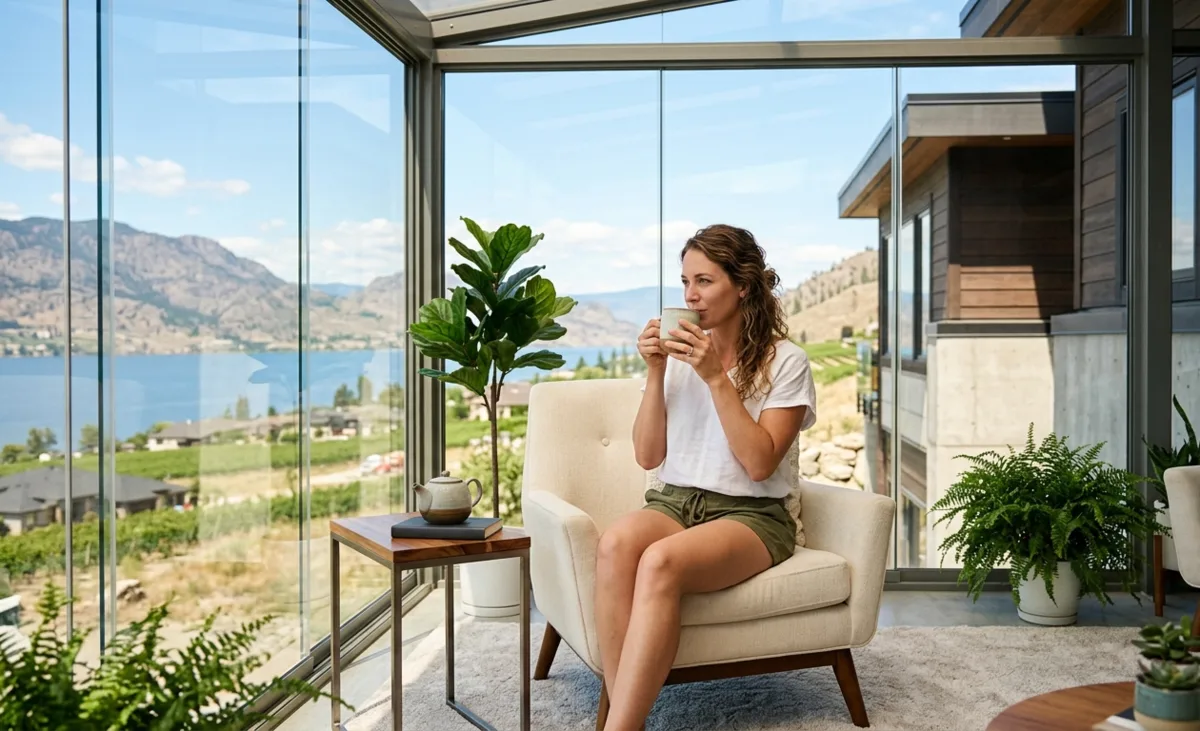
Sunroom vs 3-season room, the quick answer: a 3-season room is screens and glass, no insulation, built for April through October. A 4-season sunroom is fully insulated and heated for year-round BC winters. If you need it warm in January, you want 4-season.
Tempered safety glass, in-house design and manufacturing, our own install crew in West Kelowna. Same team builds both room types, so the only real question is which one fits how you’ll use the space.
Sunroom vs 3 Season Room: The Quick Answer
Here’s the short version. A 3-season room is an enclosed patio with screens or glass walls and no insulation, built for spring through fall. A 4-season sunroom is a fully insulated, heated room addition you can sit in during a January cold snap. Everything else, the permits, the foundation, the windows, follows from that one difference.
| Factor | 3-Season Room | 4-Season Sunroom |
|---|---|---|
| Use Period | April to October | Year-round |
| Heating | None (portable only) | Tied to home HVAC |
| Insulation | None | Full wall and roof |
| Windows | Screen or single-pane glass | Double or triple-pane thermal |
| Foundation | Existing deck or patio, usually | Frost-protected foundation |
| Permit Level | Standard building permit | Building plus electrical permit |
A 3-season room gets you screens or single-pane glass, period. A 4-season sunroom gets thermal windows, full wall and roof insulation, and a tie-in to your home’s heating system. One is for the warm months. The other is a real room you can use in December.
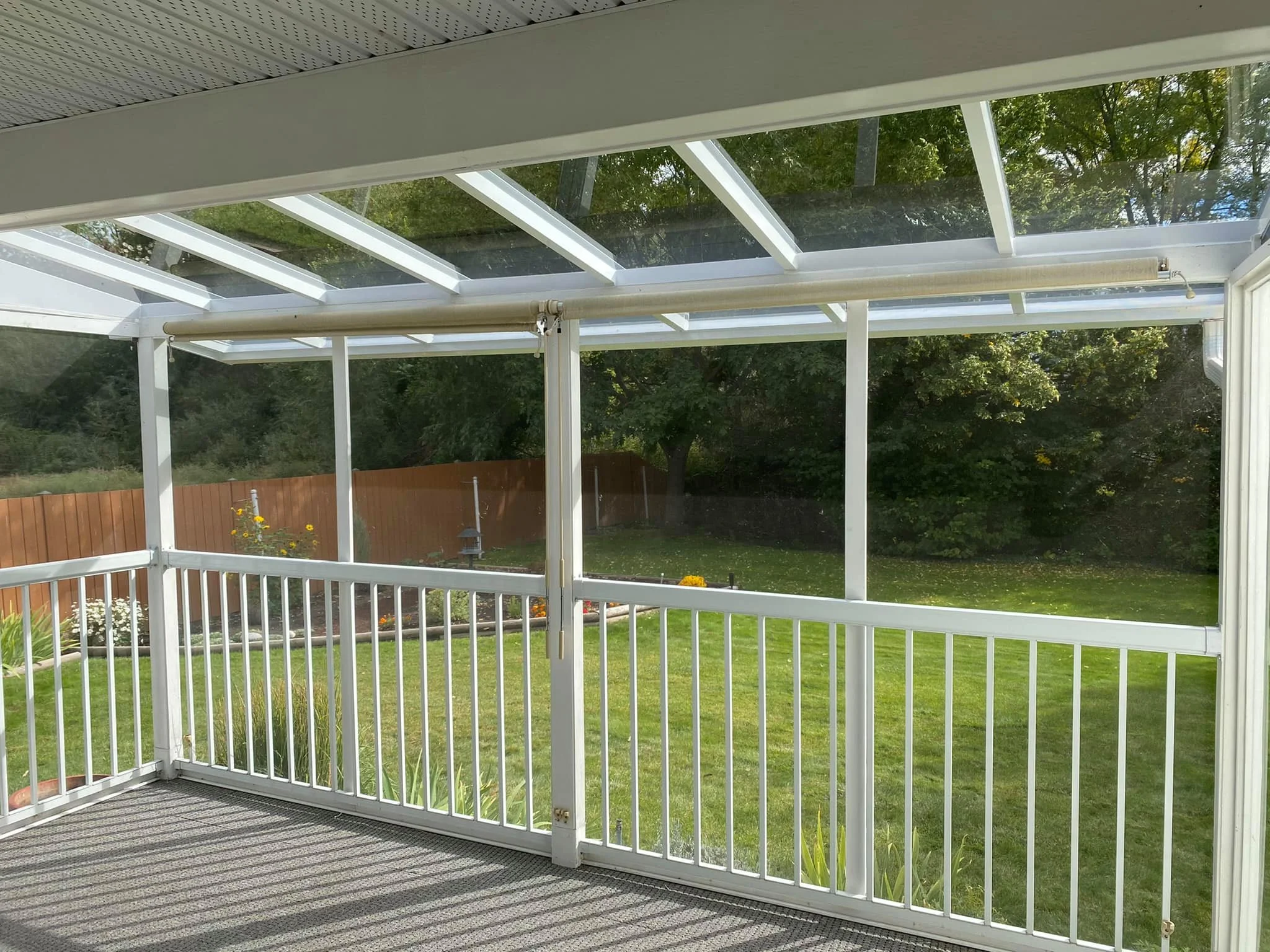
3 Season Sunrooms: Screens, Glass, No Insulated Walls
What Is a Sun Room, Really?
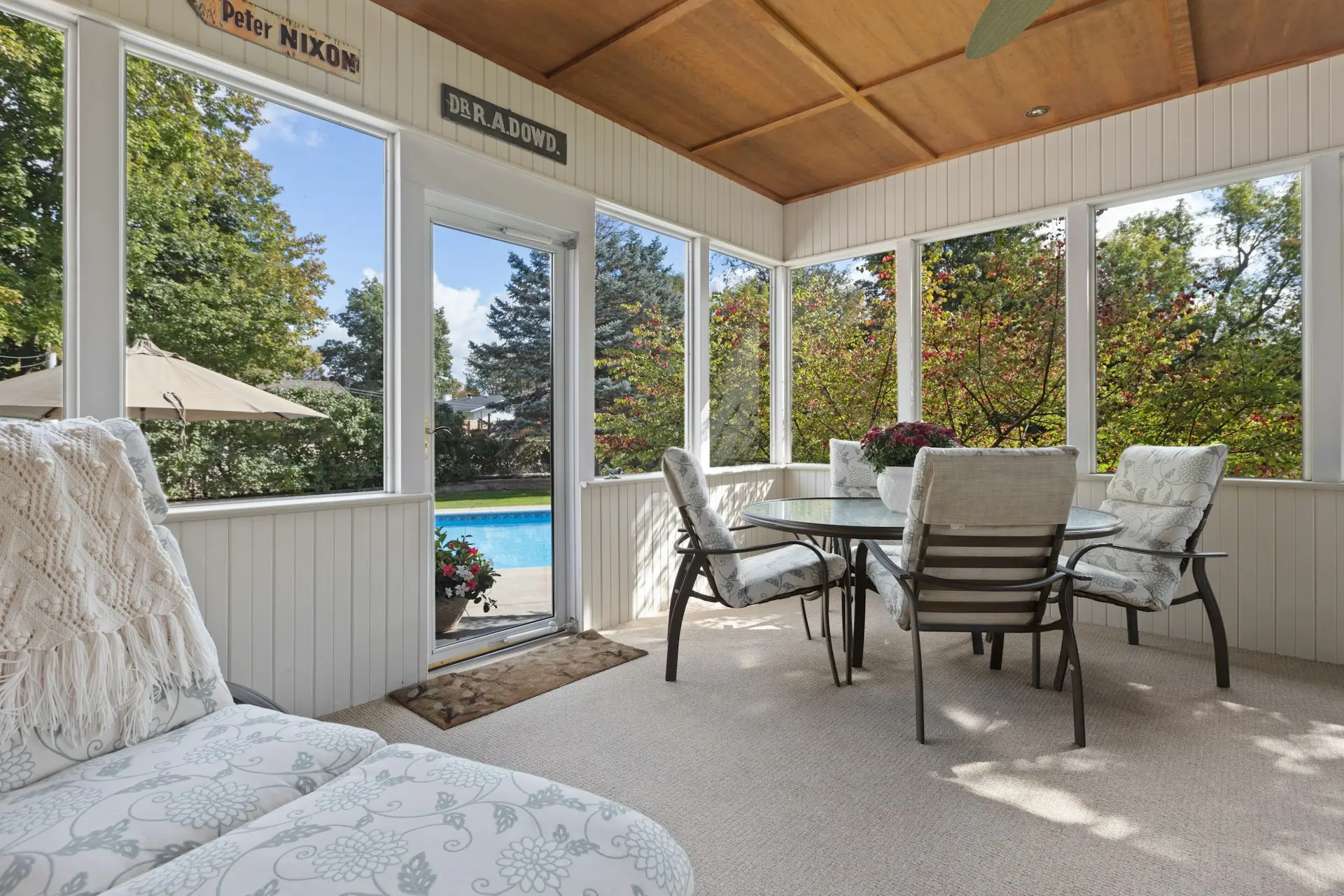
A sun room, a 3-season room, a screen room, call it what you want. The industry isn’t consistent, which is most of the confusion. What actually matters is whether it has insulation and heat. On the 3-season side, ours don’t. You get walls, a roof, and a break from bugs and rain, built right over your existing deck or patio in most cases.
Three Season Porch vs Screen Room
Not every 3-season build looks the same. Here’s what we actually put up:
- Screen rooms: mesh walls, maximum airflow, the lightest option for bug and light-wind protection.
- Glass rooms: single-pane vinyl or aluminum-framed glass, more weather protection than a screen.
- Hybrid panels: screens swap for glass panels when the weather turns, flexible at a moderate build cost.
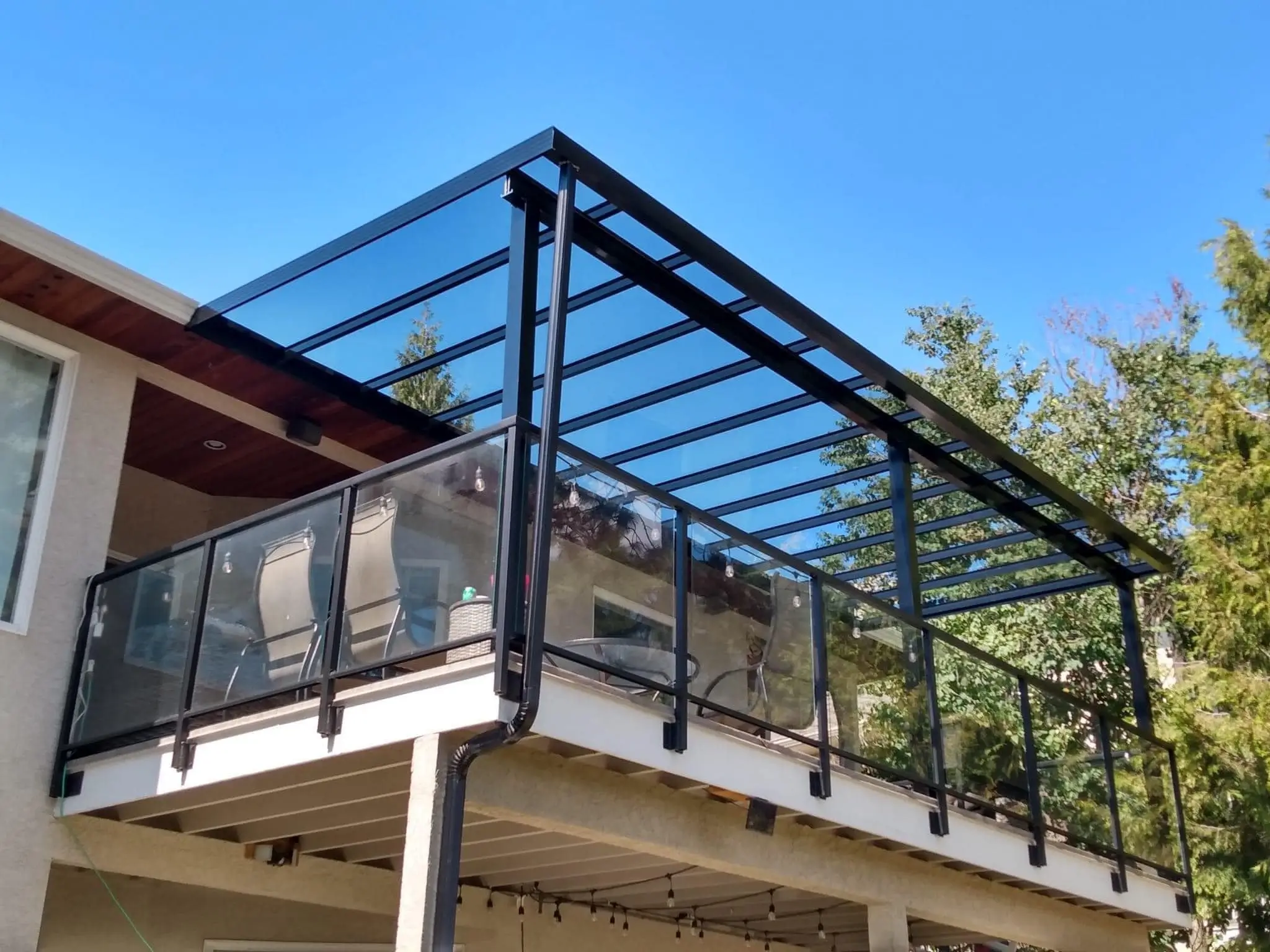
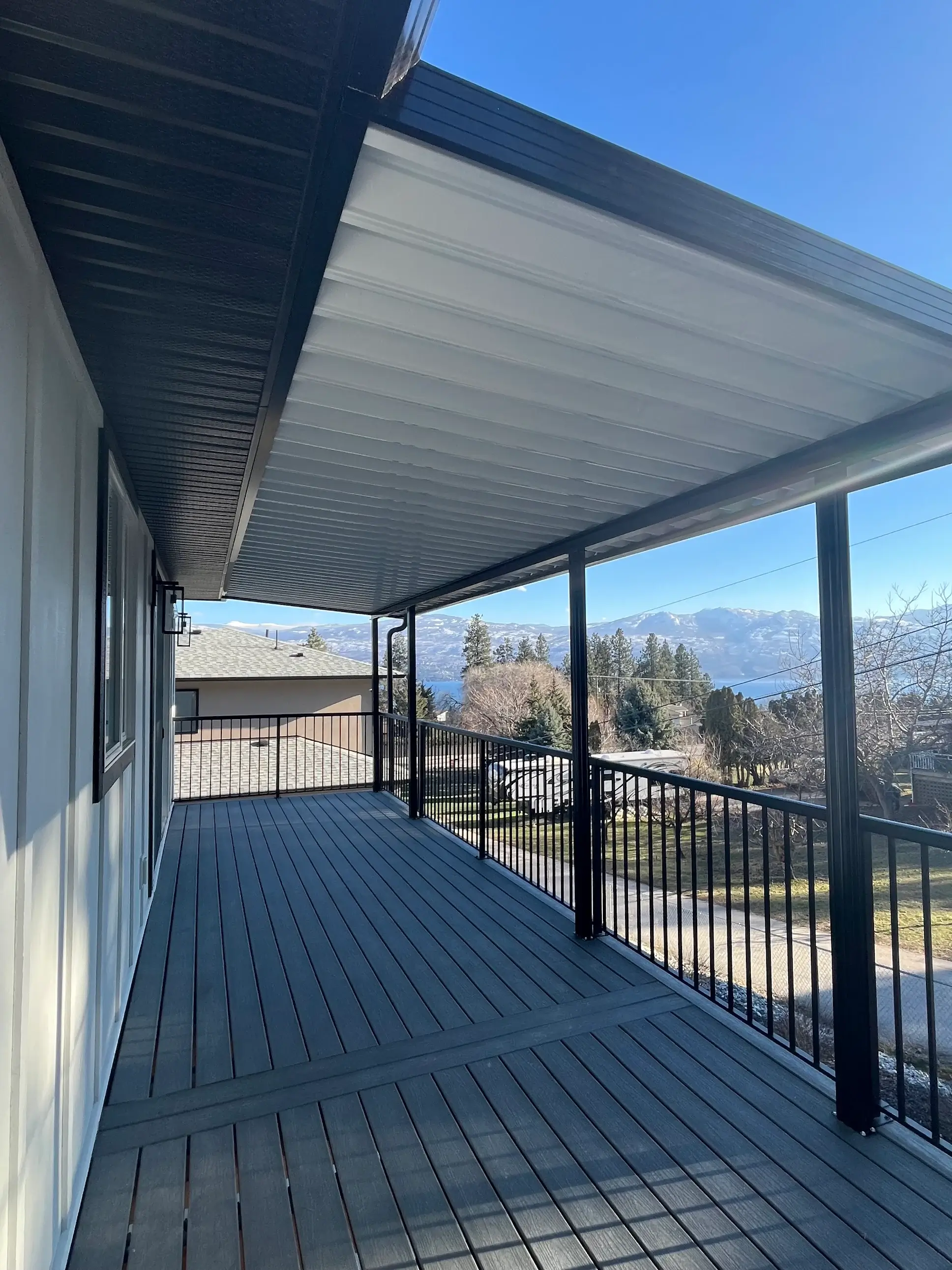
- Solid aluminum roof over glass or screen walls: the one most Okanagan homeowners end up choosing. Low maintenance, handles our snow load.
3 Season Room Design Mistakes We Get Called to Fix
- Building on a deck that can’t carry the load. Check the deck first, not after the frame is up.
- Screens only, no glass option. You lose weeks of shoulder-season use you could have kept with glass panels.
- No plan for a later upgrade. If a 4-season conversion is even possible for you, say so at the quote stage.
- Assuming a space heater fixes it. It helps on an 8°C October evening. It does nothing at -10°C with no insulation in the walls.
Four Season Sunrooms and British Columbia Winters
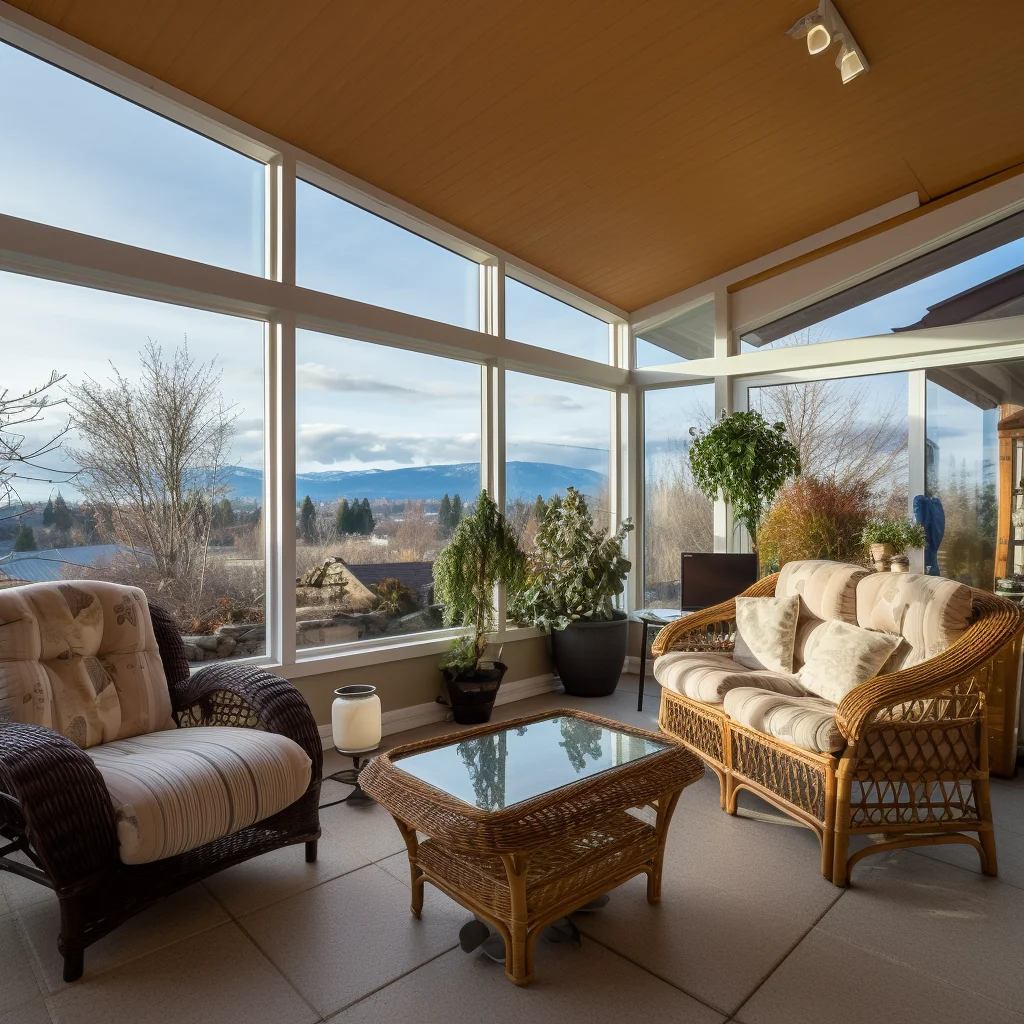
A 4-season sunroom is a real room addition. Insulated walls, an insulated roof, double or triple-pane windows, and a connection to your home’s heating and cooling. You can sit in it at -20°C and barely notice. The construction is nothing like a 3-season build: it needs a frost-protected foundation and insulation that meets BC Building Code.
Three Season Solarium vs 4-Season Sunroom
People use solarium, sunroom and 3-season room like they mean the same thing. They don’t. A solarium usually means a glass roof. A sunroom can mean either a 3-season enclosure or a fully insulated 4-season room, so the name alone tells you nothing. Ask one question instead: is it insulated and heated? If yes, it’s 4-season. If no, it’s 3-season, whatever the sign in the showroom calls it.
Why 3 Season Rooms Can’t Handle a BC Winter
The Okanagan isn’t the coast. We sit at -10°C to -20°C for stretches most winters, and an uninsulated room goes from pleasant to unusable fast once that hits. A properly built 4-season room holds 20°C+ inside on a -15°C night. That takes full wall insulation, roof insulation, insulation under the floor, and windows rated for the cold, not just a heavier jacket.
Permits for a Three Season Room Addition in BC
Both room types usually need a permit, but the process isn’t the same for each. A lot of homeowners find this out partway through planning, which is the wrong time to find out.
3 Season Room on Deck: What Changes
Building on an existing deck or slab is the fastest path, but the city may still want to confirm the deck can carry the added structure before signing off. An attached build needs a standard building permit either way. Expect roughly 2 to 4 weeks for approval in most Okanagan municipalities.
3 Season Deck Enclosures: Freestanding vs Attached
A freestanding enclosure over 10 square metres needs the same building permit as an attached one. The 4-season side adds an electrical permit, sometimes plumbing too, plus staged inspections at footing, framing, insulation and final. Budget 4 to 8 weeks for a 4-season approval, longer than the 3-season side.
3 Season Patio or 4 Season Sunroom: Which Fits Your Home
Here’s the honest limitation: we can’t tell you which one is right without seeing your deck, your sun exposure, and how you actually plan to use the space. What we can tell you is how homeowners usually land on one or the other.
| Your situation | Go with |
|---|---|
| You entertain April through October and that’s it | 3-season room |
| You want the room usable on a January night | 4-season sunroom |
| Your existing deck is solid and can carry a roof | 3-season room, built on the deck |
| You’re planning a true home addition | 4-season sunroom |
| You might want to insulate it down the road | 3-season room on upgradeable aluminum framing |
| Resale value in the next few years matters most | 4-season sunroom, it adds heated square footage |
Three Season Room With Deck: The Hybrid Upgrade Path
Some homeowners build 3-season now and upgrade later. If that’s the plan, tell us before we build. We’ll use heavy-gauge aluminum that can accept thermal windows down the road, set the foundation right the first time, and leave room for HVAC runs. Our opinion: if there’s a real chance you’ll want year-round use within five years, build the 4-season room now. Converting later means paying for the 3-season structure twice, once now and once when you rebuild it into a sunroom.
Not sure which column you’re in? Send us a photo of your deck through our contact page and we’ll tell you straight which one we’d build, 3-season or 4-season.
Recent Sunroom Projects
A few we’ve built recently — every one custom-made in West Kelowna and installed by our own crew.

Sunroom and 3-Season Room Questions
Are sunrooms insulated?
Not always. A 3-season sunroom has screens or single-pane glass and no insulation, so it’s built for spring through fall. A 4-season sunroom has full wall and roof insulation plus thermal windows, which is what lets you use it in a BC winter. The word “sunroom” alone doesn’t tell you which one you’re getting, so always ask.
Is a 3 season room considered living space?
Not in the way a heated room counts. Most municipalities and appraisers treat an unheated 3-season room as bonus outdoor living space, not conditioned square footage. A 4-season sunroom, because it’s insulated and heated, usually does count as true living space. That distinction matters if resale value is part of your decision.
What is the difference between 3 season and 4 season sunroom?
A 3-season sunroom has screens or glass walls, no insulation and no heat, comfortable from roughly April through October. A 4-season sunroom is fully insulated, connected to your home’s heating and cooling, and usable at -15°C outside. The construction differs too: a 4-season room needs a frost-protected foundation, where a 3-season room often sits on your existing deck.
Does a three season room add value?
It can, though not as much as a true 4-season addition. A well-built 3-season room improves buyer appeal because outdoor living space is a priority for Okanagan buyers. A cheap enclosure that leaks or looks thrown together can hurt you more than help, so build quality matters as much as room type.
What is a patio room?
It’s usually just another name for a 3-season room, an enclosed patio with screens or glass and no heat. Some companies use it for a fully enclosed sunroom too, which is exactly the kind of inconsistent naming that confuses homeowners. Ask about insulation and heat before you ask what it’s called.
What’s the difference between a solarium and a sunroom?
A solarium typically has a glass roof, while a sunroom has a solid roof and glass walls. Solariums let in more light but run hotter in an Okanagan summer, often 35°C+ under a glass roof. Most of our clients choose a solid roof for temperature control, with a skylight strip if they want the extra light.
Do I need a permit for a 3-season room addition in BC?
Yes, in almost every case. Attached rooms and freestanding enclosures over 10 square metres both need a building permit from your municipality. If you’re building on an existing deck, expect the city to confirm the deck can handle the added structure before they sign off.
Takes under 60 seconds · Your information is never shared.
Prefer to talk to someone? Call (250) 215-7513
Ready for a 3-Season Room or 4-Season Sunroom?
Designed, made and installed in the Okanagan by our own crew. 1,500+ patios built since 2005, 4.9 stars across 32 Google reviews.
Serving Kelowna, West Kelowna, Vernon, Penticton, Lake Country & Salmon Arm