

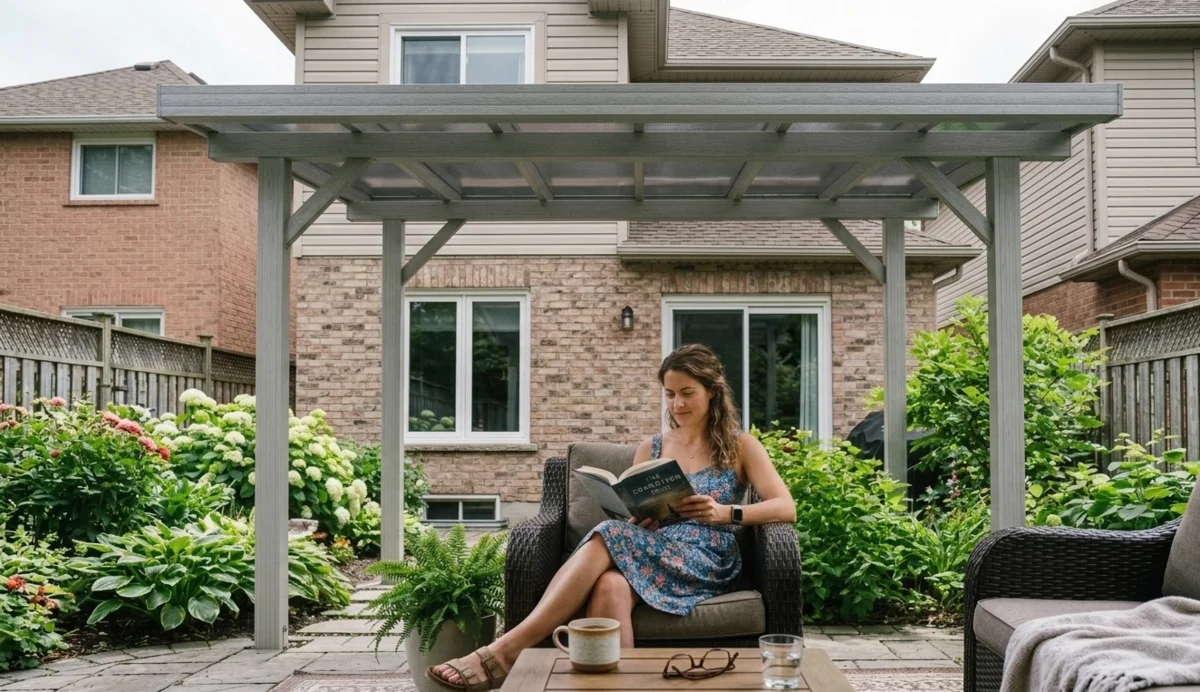
How Long Do Aluminum Patio Covers Last? Complete Durability Guide
You’re about to spend several thousand dollars on a patio cover. Fair question: how long will it actually last? Here’s the straight answer, plus everything that affects durability in the Okanagan climate.
Quick Answer: Expected Lifespan
That’s the short version. But “lifespan” isn’t one number. Your cover has multiple components, and they age differently. Here’s the breakdown:
Component-by-Component Lifespan
| Component | Typical Lifespan | Notes |
|---|---|---|
| Aluminum structure | 40-50+ years | Doesn’t rust or rot |
| Powder coating | 15-25 years | Climate-dependent |
| Hardware (screws, bolts) | 20-30 years | Stainless steel lasts longest |
| Gutters/flashing | 20-30 years | Aluminum, matches structure |
| Electrical (if any) | 15-25 years | Standard wiring lifespan |
Notice the pattern? The aluminum itself outlasts everything else. That’s why we focus on aluminum construction. When people ask about patio cover lifespan, they’re usually worried about structural failure. With aluminum, that’s essentially off the table.
Compared to Other Materials
| Material | Structural Life | Maintenance Required | BC Climate Suitability |
|---|---|---|---|
| Aluminum | 25-40+ years | None to minimal | Excellent |
| Wood | 15-25 years | Annual sealing | Good with maintenance |
| Vinyl | 10-20 years | None | Fair (UV degradation) |
| Steel | 20-30 years | Rust prevention | Fair (rust risk) |
| Fabric/Canvas | 5-10 years | Regular replacement | Poor for year-round |
Wood can last a long time too, but you’ll be out there every year with stain and sealant. Miss a season or two, and you start seeing rot. Aluminum doesn’t care if you ignore it for a decade.
Why Aluminum Lasts So Long
This isn’t marketing fluff. There’s actual science behind aluminum’s durability, and understanding it helps you make an informed decision.
The Science of Aluminum Durability
When aluminum meets air, something interesting happens. The surface instantly forms a thin layer of aluminum oxide. This oxide layer is incredibly hard, about 9 on the Mohs hardness scale (diamonds are 10). More importantly, it’s self-healing. Scratch it, and a new oxide layer forms within milliseconds.
This self-protection means aluminum can’t rust in the traditional sense. Steel rusts because iron oxide (rust) is porous and flaky. It keeps exposing fresh metal. Aluminum oxide is dense and bonds tightly to the surface. It’s a permanent shield.
Other advantages:
- No organic material: Can’t rot, won’t attract insects or mold
- UV stable: The core aluminum is unaffected by sun exposure
- Lightweight strength: High strength-to-weight ratio reduces structural stress
- Non-magnetic: Won’t attract lightning or interfere with electronics
6061-T6 Aluminum Explained
Not all aluminum is equal. Most quality patio covers use 6061-T6 alloy, and those numbers actually mean something:
- 6061: The alloy composition. Contains magnesium and silicon, which improve corrosion resistance and machinability.
- T6: The heat treatment. “T6” means solution heat-treated and artificially aged for maximum strength.
Why does this matter for your patio cover? Because some budget manufacturers use inferior alloys or non-heat-treated aluminum. It’s still aluminum, but it’s weaker and may not handle Okanagan snow loads as well over time. When getting quotes, ask what alloy the cover uses. Reputable installers will know.
Powder Coating: The Real Variable
Here’s where it gets interesting. The aluminum structure will outlast your mortgage, but the finish won’t stay pristine forever. Powder coating is the variable most people should actually think about.
What is Powder Coating?
Powder coating isn’t paint. It’s a dry powder applied electrostatically and then baked at 400°F or higher. This process creates a finish that’s 2-5 times thicker than paint and chemically bonded to the aluminum surface.
Advantages over paint:
- More durable and chip-resistant
- Better UV resistance
- Doesn’t peel or flake like paint can
- Environmentally friendly (no solvents)
- Consistent coverage in hard-to-reach areas
Powder Coating Lifespan by Climate
Environment matters more than anything for coating longevity. Here’s what to expect in different climates:
| Environment | Expected Lifespan | Notes |
|---|---|---|
| Okanagan (dry, moderate) | 20-25 years | Ideal conditions |
| Coastal BC (salt air) | 12-18 years | Salt accelerates wear |
| Alberta (extreme cold) | 15-20 years | Thermal stress |
| Arizona (extreme UV) | 10-15 years | UV degradation |
Signs Your Powder Coating is Aging
Powder coating doesn’t fail overnight. It degrades gradually, and early signs are purely cosmetic:
- Chalking: Surface feels powdery when you rub it. First sign, cosmetic only.
- Fading: Color lightens over time, especially darker colors.
- Micro-cracking: Hairline cracks visible under magnification.
- Peeling: Coating separates from aluminum. Rare, and usually indicates poor original application.
Important distinction: cosmetic aging doesn’t mean structural problems. A faded cover still protects the aluminum underneath. You’re not going to wake up one day to a collapsed structure because the color faded.
Refinishing Options
When powder coating shows significant wear (typically 15-25 years), you have options:
- Option 1: Leave it. Still protective, just cosmetic. Most common choice.
- Option 2: Sand and repaint. $800-2,000 depending on size. Lasts 10-15 years.
- Option 3: Strip and re-powder coat. $1,500-3,500. Like-new finish.
- Option 4: Replace panels only. $2,000-5,000 if specific sections are damaged.
Okanagan Climate Factors
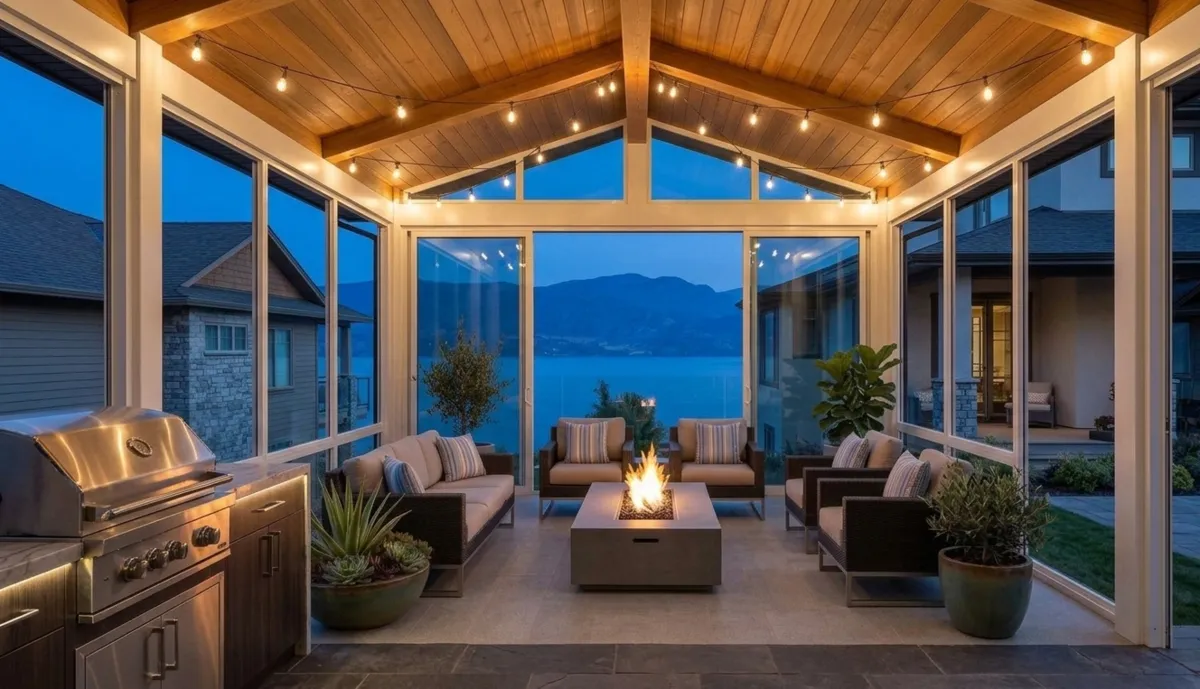
Living in the Okanagan gives you some natural advantages for outdoor structure longevity. Here’s what helps and what to watch for:
What Helps Aluminum Last Here
| Factor | Impact | Why |
|---|---|---|
| Dry climate | Positive | Less moisture means less corrosion opportunity |
| Freshwater lakes | Positive | No salt spray degradation |
| Moderate UV | Neutral | Some fading over decades, but not extreme |
| Snow loads | Neutral | Structure engineered for 40 PSF |
| Temperature swings | Minor negative | Some expansion/contraction at fastener points |
The Okanagan is essentially the sweet spot for aluminum structures. You get enough sun to enjoy your outdoor space but not the brutal UV of a desert climate. You get winter, but not the heavy snowfall of mountain communities. And critically, you don’t have the salt air that wrecks metal on the coast.
Snow Load Considerations
Snow is the main structural concern for Okanagan patio covers. But it’s a solved problem if the cover is engineered correctly.
- Kelowna ground snow load: 40 PSF (~1.9-2.0 kPa) per BC Building Code
- Properly engineered covers: Handle 40+ PSF without stress
- Overloading risk: Only if snow exceeds design load AND isn’t cleared
- Best practice: Clear accumulations over 12″ (rare in Kelowna proper)
Lake Proximity
Living near Okanagan Lake, Wood Lake, or Kalamalka Lake? You might wonder if the water affects durability. Short answer: not really.
- Not saltwater: No salt corrosion concern whatsoever
- Slightly higher humidity: Minimal impact on aluminum
- Beach sand: Rinse occasionally to prevent surface scratches
- Overall: Lake proximity doesn’t significantly affect lifespan
Compare this to oceanfront properties in Victoria or Vancouver where salt spray is a constant factor. You’re in a much better situation for outdoor metal structures here.
What Can Shorten Lifespan
Let’s be honest about what can go wrong. Understanding failure modes helps you avoid them.
Installation Issues (Most Common Problem)
Here’s an uncomfortable truth: most premature patio cover failures are installation problems, not material failures. The aluminum is fine. The installation wasn’t.
| Problem | Impact | Prevention |
|---|---|---|
| Poor footing design | Structural movement over time | Engineered footings per BC Building Code |
| Inadequate anchoring | Loosening over years | Proper ledger attachment to house |
| Wrong hardware | Corrosion at connection points | Stainless steel hardware throughout |
| No slope for drainage | Water pooling on roof | Minimum 1/4″ per foot slope |
Environmental Damage
Nature can cause issues, but the Okanagan is relatively gentle:
| Risk | Likelihood (Okanagan) | Prevention |
|---|---|---|
| Tree impact | Low-moderate | Trim overhanging branches annually |
| Hail damage | Low | Aluminum dents but doesn’t crack or fail |
| Wildfire smoke | Cosmetic only | Cleaning removes residue completely |
| Animal damage | Very low | Not a realistic concern for aluminum |
Maintenance Neglect (Minimal Impact)
Here’s where aluminum differs dramatically from wood. Neglect has minimal consequence:
- No cleaning for 5 years? Cosmetic dirt only. Structure is fine.
- Never cleaning gutters? May cause overflow issues, but no structural damage.
- Ignoring minor scratches? Self-oxidizing aluminum seals itself.
Compare this to a wood structure where skipping a year of sealing can start rot processes. Aluminum’s forgiveness is one of its biggest practical advantages.
Maximizing Your Cover’s Lifespan
You don’t need to maintain aluminum like wood, but a little attention goes a long way.
Annual Maintenance (5 Minutes)
This is overkill for structural purposes, but it keeps things looking good:
- Visual inspection for loose hardware
- Check gutter drainage (clear debris if needed)
- Look for any unusual movement or sounds
- Inspect where cover meets house
Deep Clean (Every 2-3 Years, 30 Minutes)
- Rinse with garden hose
- Soft brush with mild soap (dish soap works)
- Rinse thoroughly
- Check hardware tightness
- Don’t use a pressure washer on powder coating (can damage finish)
- Don’t use abrasive cleaners (scratches coating)
- Don’t hang heavy items without proper hardware
- Don’t modify structure without consulting installer
Hardware Upgrades
If your cover was installed with standard zinc hardware, consider upgrading:
- Switch to stainless steel (304 or 316 grade)
- Cost: $50-150 for DIY replacement
- Impact: Adds 10+ years to hardware lifespan
This is the single highest-value maintenance action you can take. Zinc hardware will corrode eventually. Stainless steel essentially won’t.
Warranty Considerations
Typical Warranty Coverage
| Component | Standard Warranty | Premium Warranty |
|---|---|---|
| Structure | 20 years | Lifetime |
| Powder coating | 10 years | 15-20 years |
| Hardware | 5 years | 10 years |
| Labor | 1-2 years | 5 years |
What Voids Warranties
Read the fine print. Common exclusions include:
- DIY installation without engineering approval
- Structural modifications after installation
- Failure to meet local building codes
- Acts of God (major storms, earthquakes)
- Neglecting to register warranty within required timeframe
Our Warranty
At Okanagan Patio Covers, we stand behind our installations:
- Structure: Lifetime warranty on structural integrity
- Powder coating: 20-year warranty against defects
- Workmanship: 5-year labor warranty
Real-World Examples
Theory is useful, but real examples tell the story better.
20-Year-Old Cover in Kelowna
- Condition: Powder coating slightly faded, structure perfect
- Maintenance done: Cleaning every 2-3 years
- Estimated remaining life: 15-20+ years
- Owner feedback: “Looks dated but works perfectly. No regrets.”
10-Year-Old Cover in Vernon
- Condition: Like new, darker color shows minimal fading
- Maintenance done: Annual rinse only
- Estimated remaining life: 25+ years
- Owner feedback: “Best investment we made for the backyard.”
These aren’t cherry-picked success stories. This is what properly installed aluminum covers look like after a decade or two in the Okanagan. The structure doesn’t fail. The coating slowly ages. And owners generally have zero regrets.
Frequently Asked Questions
Do aluminum patio covers rust?
No. Aluminum doesn’t contain iron, so it cannot rust. Rust is specifically iron oxide, and aluminum doesn’t form it. Instead, aluminum forms a thin oxide layer that protects against corrosion. This self-sealing property is why aluminum is used in marine and aerospace applications where rust resistance is critical. Your aluminum patio cover will never rust, regardless of how much rain or snow it sees.
How long does powder coating last on aluminum?
In the Okanagan’s dry climate, powder coating typically lasts 20-25 years before showing significant fading. Coastal areas with salt air see 12-18 years. Desert climates with extreme UV might see 10-15 years. The coating is primarily cosmetic. Even faded, it still protects the aluminum underneath. When powder coating does age, you can repaint for $800-2,000 or re-powder coat for $1,500-3,500.
Will my aluminum patio cover last longer than wood?
Yes, significantly. Aluminum lasts 25-40+ years with essentially no maintenance. Wood structures require annual sealing and staining, and typically last 15-25 years with diligent care. Skip a year of maintenance with wood, and rot can start. Over a 30-year period, wood costs more due to maintenance supplies, time, and potential replacement. Aluminum’s upfront cost is higher, but lifetime cost is lower.
Does snow damage aluminum patio covers?
Not if properly engineered. Covers built to BC Building Code (40 PSF snow load) handle normal Okanagan snowfall without stress. The structure is designed for our climate. As a precaution, clear heavy accumulations over 12 inches, though this is rare in Kelowna proper. Snow doesn’t damage properly designed aluminum. It’s not an ongoing concern.
Can I paint an aluminum patio cover instead of re-powder coating?
Yes, and it’s a cost-effective option. Quality exterior paint over properly prepared aluminum lasts 10-15 years and costs $800-2,000 vs $1,500-3,500 for re-powder coating. Most homeowners choose paint for the cost savings. If you want a like-new factory finish, re-powder coating is the premium option. But paint works well and buys you another decade or more.
What’s the difference between cheap and quality aluminum covers?
Several factors: alloy type (6061-T6 vs inferior alloys), powder coating thickness (2-5 mils vs thinner), engineering for local snow loads (40 PSF for Kelowna), and hardware quality (stainless steel vs zinc). Cheap covers may fail at connection points, fade faster, or not handle Okanagan winters as well. Always ask about alloy type, coating thickness, and local engineering when comparing quotes.
Invest in Durability
We use 6061-T6 aluminum with premium powder coating. Every cover is engineered for Okanagan snow loads with stainless steel hardware standard. Get your free quote and learn exactly what we include.
Get Your Free Quote


Ready to Start Your Project?
Get a free, no-pressure quote. We’ll help you choose the right solution for your backyard.
Serving Kelowna, West Kelowna, Vernon, Penticton, Lake Country & Salmon Arm