

Awnings vs Patio Covers: The Definitive Comparison Guide for Okanagan Homeowners (2026)
Deciding between an awning and a patio cover comes down to one question: do you want seasonal shade or year-round protection? For Okanagan homeowners dealing with intense summer sun, spring windstorms, and wet snow, the answer matters more than you might think.
I’ve installed hundreds of both over the years. Awnings have their place – they’re affordable, retractable, and look great over a deck or window. But when customers ask me what I’d put on my own home here in the Okanagan, I tell them the same thing every time: a permanent patio cover handles our weather reality.
This guide breaks down everything you need to know about awnings versus patio covers – costs, durability, maintenance, permits, and which option makes sense for your specific situation. No sales pitch, just the information you need to make a decision that holds up for the next two decades.
What’s the Real Difference? (Structural & Functional)
Before we get into specifics, let’s clarify what we’re actually comparing. The terms get thrown around loosely, but the structural difference is significant.
Awnings: Extendable Canopies
Awnings are fabric or rigid canopies that attach to your home’s exterior wall. The key feature is that most modern awnings retract – either manually with a hand crank or automatically with a motor. When extended, they provide shade over a deck, patio, or window. When retracted, they fold back against the house.
Think of an awning as deployable shade. It’s there when you want it, tucked away when you don’t. That flexibility is the main selling point.
Patio Covers: Permanent Structures
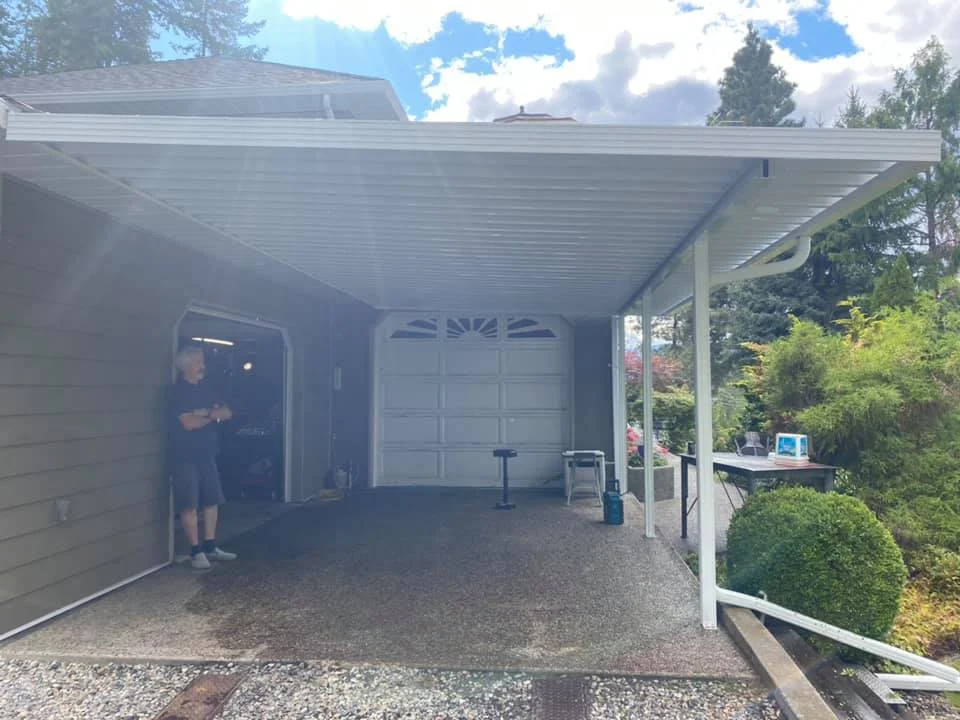
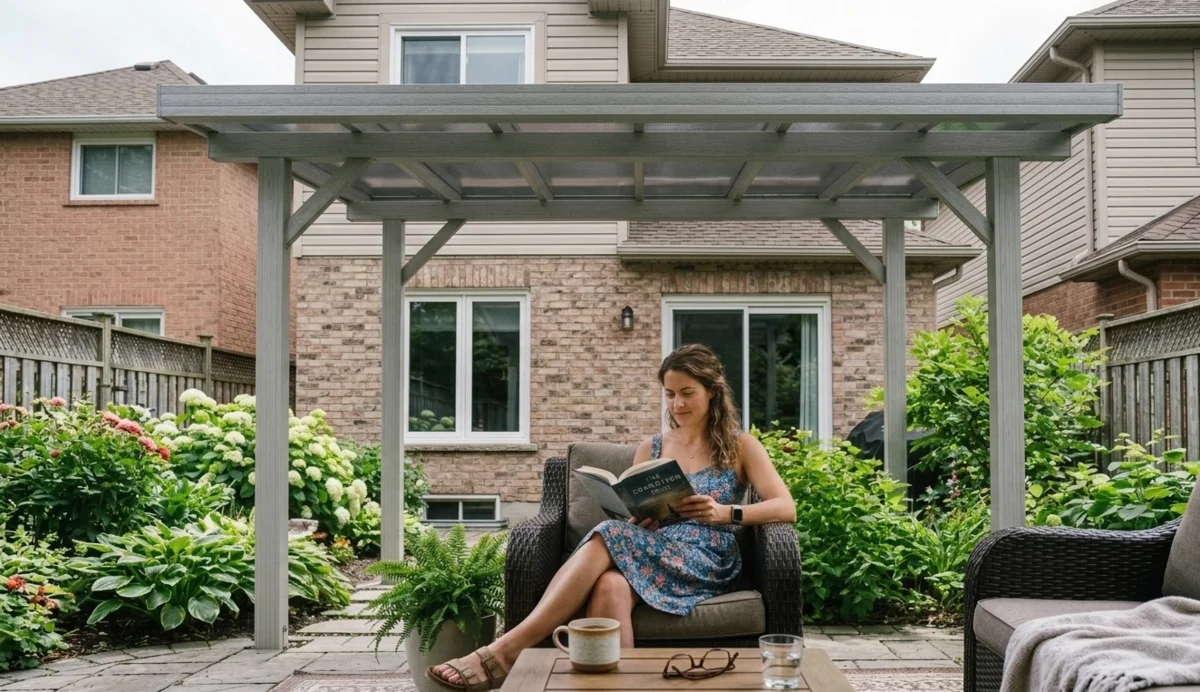
Patio covers are fixed structures with solid roofs supported by posts. They don’t move, fold, or retract. Once installed, a patio cover becomes a permanent extension of your home – essentially an outdoor ceiling that handles whatever the weather throws at it.
The construction is fundamentally different too. Patio covers typically involve engineered beams, proper footings, and roofing materials designed to shed water and handle snow loads. They’re built to last decades, not seasons.
Types of Awnings
If you’re leaning toward an awning, here’s what’s available. Each type has trade-offs in cost, convenience, and durability.
Manual Retractable Awnings
The simplest option. A hand crank extends and retracts the fabric. They’re reliable because there’s nothing electronic to fail – just a mechanical system that works until the fabric wears out.
The downside is obvious: you have to be there to operate it. When a surprise windstorm hits while you’re at work, that awning stays extended. That’s how fabric tears happen.
Motorized Retractable Awnings
Add a motor and suddenly convenience jumps significantly. Remote control operation means you can extend or retract from inside the house. Premium systems include wind and sun sensors that automatically retract when conditions get risky.
Motorized systems cost 30-40% more than manual – but in the Okanagan, I’d argue they’re worth it. Our afternoon winds can come up fast. An automatic sensor that retracts your awning before damage occurs pays for itself the first time it saves your fabric.
Cassette/Roll-Out Awnings
These retract into a protective housing (cassette) when not in use. The enclosure shields the fabric from UV exposure and moisture when stowed, extending fabric life noticeably. If you’re investing in a quality awning, the cassette design is the smart upgrade.
Fixed Awnings
Stationary awnings that don’t retract. They’re less common for patios and more typical over windows or entrances. Without the ability to retract, fixed awnings face all the weather challenges of a patio cover but without the structural engineering to handle them. I rarely recommend these for patio applications in BC.
Types of Patio Covers (Material Deep Dive)
Patio covers come in several material options, each with different lifespans, maintenance requirements, and costs. Here’s the honest breakdown.
Aluminum Patio Covers
Aluminum dominates the Okanagan market for good reason. It won’t rust, rot, crack, or warp. Snow slides off. Rain drains cleanly. The sun doesn’t fade it. Maintenance is essentially non-existent – an annual hose-down is about all it needs.
Modern aluminum covers come in various finishes that mimic wood grain, so you don’t sacrifice aesthetics for durability. Lifespan runs 30+ years with minimal attention.
Vinyl Patio Covers
Vinyl sits in the middle ground – more durable than wood, less expensive than premium aluminum, with a clean modern look. It handles moisture well and doesn’t require painting or sealing.
The trade-off is longevity. Vinyl covers typically last 20-30 years before UV exposure starts breaking down the material. Still a solid lifespan, but not quite the multi-generational durability of quality aluminum.
Wood Patio Covers
Wood delivers warmth and traditional beauty that no synthetic can truly replicate. If aesthetics are your top priority and you’re prepared to maintain it, wood can look stunning.
But let’s be clear about what “maintain” means: annual inspection for cracks and splits, re-staining or sealing every 2-3 years, and potentially more frequent work in areas with heavy moisture exposure. In BC’s wet climate, wood covers demand attention. Lifespan runs 10-20 years depending on maintenance commitment – and the lower end is more realistic for hands-off homeowners.
Polycarbonate Panels
A hybrid approach: polycarbonate panels let light through while blocking rain. You get a brighter space underneath compared to solid aluminum, plus genuine weather protection.
These work well for certain applications – covered walkways, areas where you want natural light, or as skylights within a larger aluminum cover. They’re more scratch-prone than solid panels and can show dirt more readily, but for the right situation, they’re excellent.
| Material | Lifespan | Maintenance | Weather Performance | Cost/sq ft (CAD) |
|---|---|---|---|---|
| Aluminum | 30+ years | Minimal | Excellent | $20-$50 |
| Vinyl | 20-30 years | Low | Good | $25-$80 |
| Wood | 10-20 years | High | Fair | $30-$60 |
Cost Breakdown (CAD Pricing)
Let’s talk numbers. These are installed costs – materials plus professional installation – based on current 2026 pricing in the Okanagan market.
| Option | Type/Size | Installed Cost (CAD) |
|---|---|---|
| Manual Retractable Awning | Fabric, 12×10 ft | $600 – $3,000 |
| Motorized Awning | Fabric, 12×10 ft | $1,500 – $6,000 |
| Aluminum Patio Cover | 14×14 ft | $5,600 – $14,000 |
| Vinyl Patio Cover | 14×14 ft | $7,000 – $16,800 |
| Wood Patio Cover | 14×14 ft | $11,760 – $23,520 |
The price gap between awnings and patio covers is obvious. An entry-level awning costs a fraction of a patio cover. But that comparison misses half the picture.
The True Cost Calculation
Awning fabric typically needs replacement every 5-10 years. In the Okanagan’s strong UV environment, lean toward 5-7 years. That’s $800-$2,000 per replacement for quality fabric. Over a 30-year period, you might replace fabric four to six times – adding $3,200 to $12,000 to your total investment.
Meanwhile, that aluminum patio cover installed for $10,000 is still doing its job 30 years later with zero major maintenance costs. It handles weather conditions that would destroy an awning. And it adds measurable value to your property.
Durability in BC Weather (Sun, Rain, Snow, Wind)
This is where the awning-versus-patio-cover question really gets decided. Our weather isn’t gentle, and whatever you install needs to handle the full range of conditions.
Heavy Rain
Patio covers shed water like a roof should – it runs off, into gutters, away from your patio. You can sit under a solid cover in a downpour and stay completely dry.
Awnings handle light rain acceptably. Moderate to heavy rain? The fabric sags with water weight, water pools in low spots, and eventually drips through or around the edges. Not exactly the dry patio experience.
Spring and Fall Winds
Okanagan winds can be brutal – especially those afternoon gusts that come up without warning. Awnings must be retracted in wind or they’ll tear, twist, or rip right off the mounting hardware. If you’re not home when the wind starts, you’re gambling.
Patio covers don’t care about wind. They’re engineered structures that stay put. A properly built cover treats a windstorm like any other Tuesday.
Winter Snow
This is the deal-breaker for awnings in BC. Wet, heavy Okanagan snow will collapse a fabric awning. It’s not a question of if – it’s when. The fabric isn’t designed for that kind of load, and the mounting hardware wasn’t engineered for it either.
Patio covers with proper snow load ratings (40+ PSF for our area) handle snow as a normal operating condition. Snow slides off, or it sits there until it melts – either way, the structure handles it without drama.
UV Exposure
Our bright summers fade fabric awnings faster than you’d expect. Quality acrylic fabrics hold up better than cheap polyester, but all fabric eventually fades and weakens under UV bombardment. Plan on 5-8 years before the fabric looks tired.
Aluminum panels come with factory finishes designed for UV exposure. They don’t fade, crack, or degrade. Twenty years from now, an aluminum cover looks essentially the same as when it was installed.
Extended Damp Season (October-March)
Six months of intermittent moisture means mold, mildew, and algae issues for fabric awnings. Even when retracted, trapped moisture in the cassette can cause problems. Cleaning becomes a regular task just to keep things presentable.
Aluminum and vinyl shed moisture cleanly. No mold growth, no mildew stains, no algae. They just drain and dry.
Lifespan Reality
- Awning fabric: 5-10 years before replacement needed
- Quality aluminum patio cover: 30+ years with minimal maintenance
Maintenance Comparison
What does ongoing ownership actually look like? The maintenance burden differs significantly between awnings and patio covers.
Awning Maintenance
- Cleaning: Minimum twice per year. Scrub the fabric with mild soap and water to remove dirt, pollen, mold, and algae. Let it dry completely before retracting – putting away a wet awning creates mold issues.
- Fabric inspection: Check for tears, fraying edges, loose stitching, and UV degradation. Small problems caught early are easier to fix than big problems caught late.
- Motor check: For motorized units, annual inspection of motor function, lubrication of moving parts, and verification that sensors work properly. Budget $50-$200 annually for professional maintenance.
- Replacement cycle: Plan to replace fabric every 5-10 years. The frame usually lasts longer, but fabric is the wear item.
Patio Cover Maintenance
- Cleaning: Once per year, hose down the panels to remove accumulated dirt and debris. That’s it for aluminum.
- Structural inspection: Annual check of posts, fasteners, and connections. This takes ten minutes and rarely reveals anything requiring action.
- Gutter cleaning: If your cover has gutters, clear leaves and debris seasonally – same as your house gutters.
- Wood covers: The exception to easy maintenance. Re-sealing every 2-3 years, annual inspection for cracks and rot, and prompt repair of any moisture damage.
- Aluminum: Virtually zero ongoing maintenance beyond the annual rinse.
Permit Requirements in Okanagan & BC
Both awnings and patio covers typically require permits in BC municipalities. Here’s what to expect.
Patio Cover Permits
Patio covers are classified as structural additions in most municipalities. You’ll need a building permit that includes review of your plans, inspection of footings and framing, and final sign-off when complete.
The permit process ensures your cover meets structural requirements for snow loads, wind loads, and safe construction practices. It also keeps your homeowner’s insurance valid – unpermitted structures can create coverage problems.
Awning Permits
Requirements vary more for awnings. Some municipalities classify them as temporary structures with simplified permit processes. Others require full building permits just like patio covers. Always check with your local building department before purchasing.
Timeline and Cost
Permit processing typically adds 2-4 weeks to your project timeline. Fees range from $100-$500 depending on your municipality and project scope. Not significant in the overall project cost, but factor it into your schedule.
Which One Is Right for You?
After all the comparisons, here’s the decision framework. Be honest about your priorities and situation.
Choose an Awning IF:
- You want flexible shade that you can extend or retract seasonally
- Budget is tight and $1,500-$6,000 is your realistic ceiling
- You only need protection from sun and light rain
- You don’t mind biannual cleaning and regular maintenance
- You’re comfortable replacing fabric every 5-10 years
- You primarily use your patio in summer months only
Choose a Patio Cover IF:
- You want all-weather protection from rain, snow, and wind
- You live in the Okanagan or similar BC climate (real winters, wind, spring rain)
- You want 30+ years of durability from your investment
- You prefer low maintenance (aluminum requires almost none)
- You plan to use your patio year-round, not just summer
- You want to add genuine resale value to your property
The Comparison at a Glance
| Factor | Awnings | Patio Covers |
|---|---|---|
| Initial Cost | $600 – $6,000 | $5,600 – $24,000 |
| Lifespan | 5-15 years | 20-50+ years |
| Maintenance | High (2x/year) | Low (annual) |
| Rain Protection | Light only | Full |
| Snow Protection | No | Yes |
| Wind Resistance | No (must retract) | Yes |
| Installation Time | 1-2 days | 3-7 days |
| Property Value Impact | Minor | Significant |
| Okanagan Verdict | Seasonal use only | Professional choice |
Frequently Asked Questions
Do I need a permit for an awning or patio cover in the Okanagan?
Yes, both typically require permits in most Okanagan municipalities. Patio covers are always classified as structural additions requiring building permits. Awnings may have simplified requirements in some areas but check with your local building department first. Permit fees typically run $100-$500, and processing adds 2-4 weeks to your timeline.
Can a retractable awning handle Okanagan winters?
No. Spring winds and wet snow will damage or collapse fabric awnings – it’s a matter of when, not if. Awnings must be retracted anytime wind or snow is possible, which in the Okanagan means they’re essentially unusable from October through April. If you want year-round coverage, a patio cover is the only realistic option.
How often do awning fabrics need to be replaced?
Every 5-10 years depending on UV exposure and maintenance. In the Okanagan’s bright, dry summers, expect 5-7 years before fabric looks faded and tired. Quality acrylic fabrics last longer than cheap polyester. Budget $800-$2,000 per replacement for quality fabric on a standard residential awning.
What’s the cheapest patio cover material?
Looking at cost per square foot, aluminum ($20-$50) and wood ($30-$60) have similar upfront costs, with vinyl ($25-$80) in the middle. But the true cost calculation includes maintenance: wood needs regular sealing ($200-400 every 2-3 years) and has a shorter lifespan. Over 20+ years, aluminum delivers the best total value because maintenance costs are essentially zero.
Can I retract a motorized awning manually if the motor breaks?
Most motorized awnings include a manual override – usually a removable crank handle that fits into a socket on the mechanism. However, relying on this isn’t ideal. Regular motor maintenance ($50-$200 annually) prevents most failures. If your motor dies, replacement typically runs $400-$800 installed.
Will a patio cover shade my patio the same as an awning?
Solid patio covers provide complete shade – no direct sunlight reaches the space underneath. For variable shade (partial sun when you want it), consider a louvered patio cover where the panels rotate to control light and airflow. You lose the ability to fully retract for open-sky moments, but you gain weather protection and adjustable shade year-round.
How much does a patio cover add to home value?
Patio covers typically return 50-80% of their cost in added home value. A $15,000 patio cover might add $8,000-$12,000 to your resale value – plus it makes your home more attractive to buyers. Awnings have minimal impact on resale value because buyers know they’re temporary and high-maintenance.
The Bottom Line
Awnings and patio covers serve different purposes, and the Okanagan climate makes that distinction crystal clear. Awnings work for seasonal shade on a budget – they’re fine for summer use if you’re willing to maintain them and replace the fabric periodically.
But for homeowners who want year-round outdoor living, genuine weather protection, and a solution that lasts decades without constant attention, patio covers are the professional choice. The upfront investment is higher, but you’re buying a permanent improvement to your home rather than a temporary accessory.
Our weather – the snow, the wind, the rain, the UV – tests everything we install. Choose the option that’s built to handle it.
Ready to Compare Options for Your Home?
Get a free quote from Okanagan Patio Covers. We’ll walk through both options, show you material samples, and help you choose the solution that fits your home and budget.
Get Your Free Quote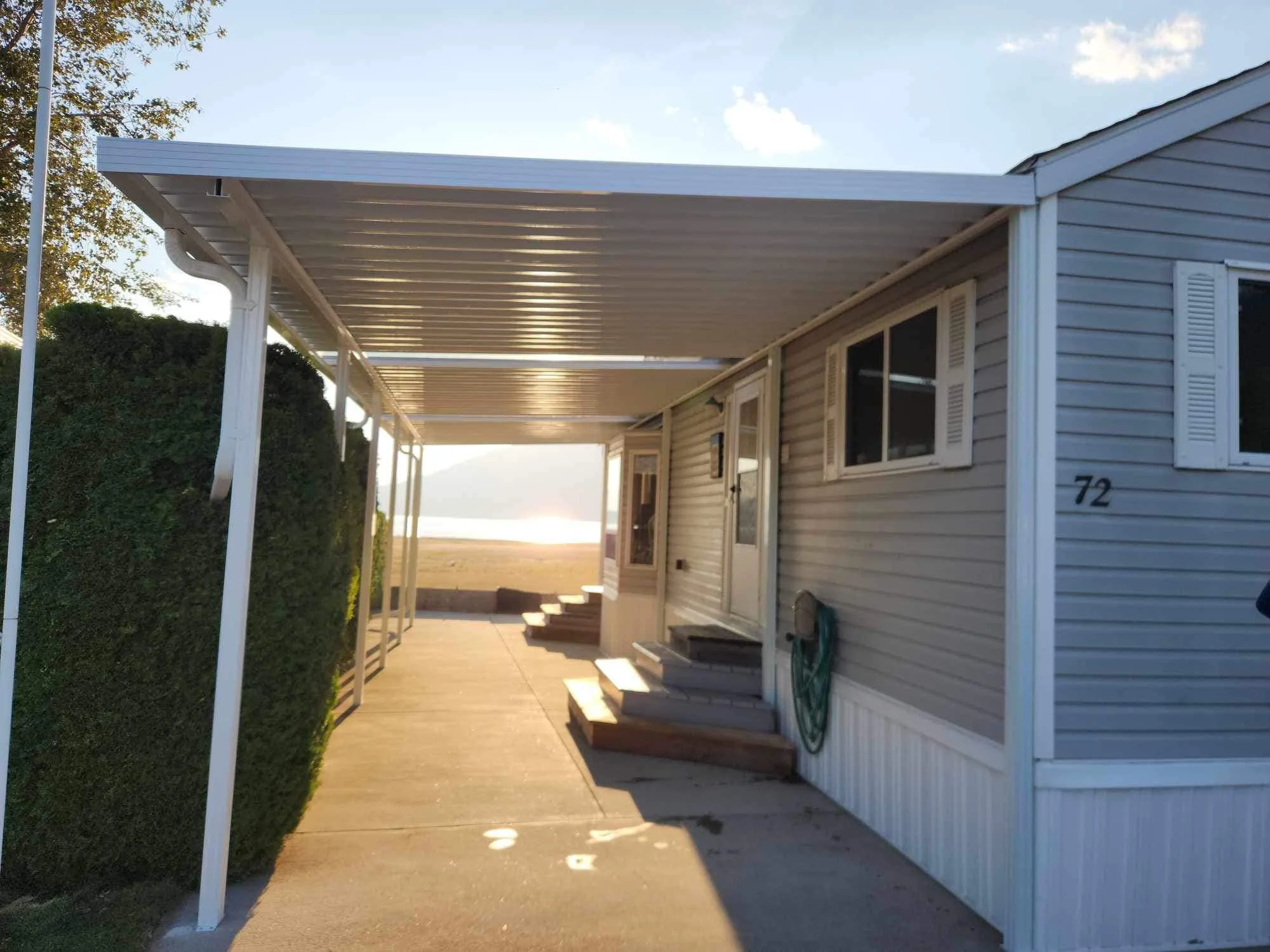
Ready to Start Your Project?
Get a free, no-pressure quote. We’ll help you choose the right patio cover for your backyard and budget.
Serving Kelowna, West Kelowna, Vernon, Penticton, Lake Country & Salmon Arm