

Covered Patio Design Ideas: 7 Styles to Match Your Home’s Architecture (2026)
Your patio cover should look like it was always part of your home. Not something bolted on as an afterthought. The right design extends your living space while respecting your home’s architectural DNA – whether that’s clean modern lines, warm farmhouse charm, or Mediterranean elegance.
I’ve installed patio covers on every style of home you’ll find in the Okanagan. Ranch houses from the 1970s. Glass-forward contemporary builds. Heritage farmhouses. Each one demands a different approach if you want the result to feel cohesive rather than awkward.
This guide walks through seven distinct patio cover styles, current color trends for 2026, and how to match your cover to your home’s existing architecture. Whether you’re starting from scratch or replacing an aging structure, you’ll finish knowing exactly what direction makes sense for your property.
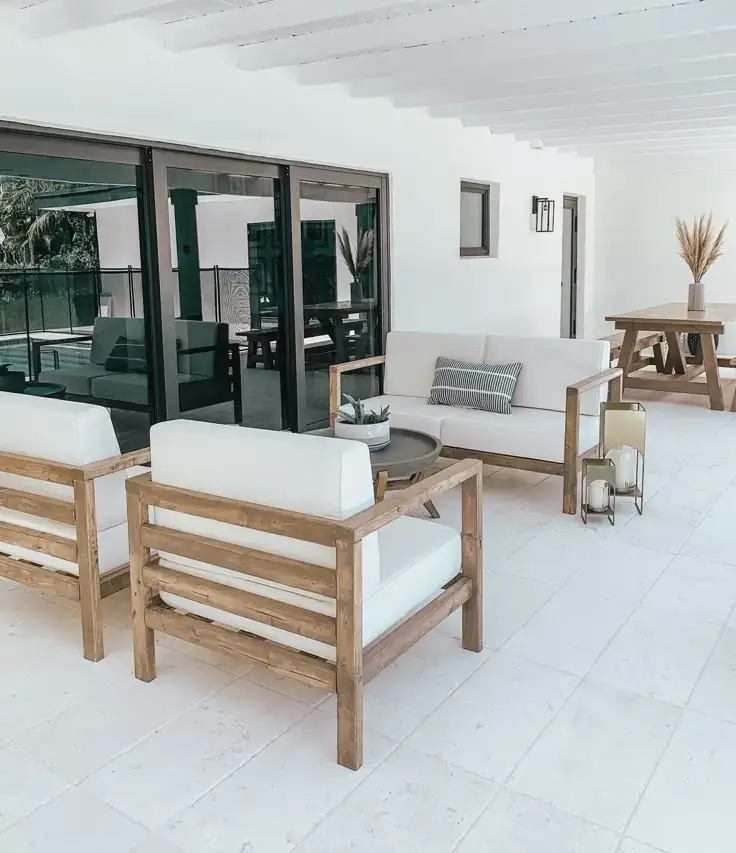
Modern & Contemporary Patio Covers
Modern homes demand modern covers. That means flat roofs, minimal ornamentation, and clean lines that emphasize horizontal planes. The whole point of contemporary architecture is restraint – every element should be intentional, nothing decorative for its own sake.
Design DNA
Contemporary patio covers strip things down to essentials. Flat-roof aluminum structures with powder-coated finishes. Sharp detailing at connection points. Beams and posts with consistent proportions that create visual rhythm without fuss.
The absence of ornamentation is the design. Where traditional covers might use decorative corbels or scrollwork, modern covers rely on proportion, material quality, and precise execution to carry the aesthetic.
Color Palette
Charcoal and matte black dominate the modern palette. Bronze and graphite gray work as alternatives when you want warmth without losing the contemporary feel. Avoid white – it reads too traditional. Avoid glossy finishes – they fight the understated vibe.
The best modern covers use the same finish as the window frames or metal accents on the house. That continuity makes the addition feel integrated rather than applied.
Best Applications
- Mid-century modern homes: The flat roof lines of 1950s-60s architecture pair naturally with flat-roof covers. Match the post proportions to existing carport or overhang details.
- Glass-forward contemporary: When the house features floor-to-ceiling windows, the patio cover needs to stay minimal to avoid competing with that transparency.
- Minimalist new builds: Homes designed in the last decade typically use this vocabulary already. The cover becomes an extension of the existing design language.
For more on modern aluminum cover options, see our custom aluminum patio covers page.
Farmhouse & Rustic Designs
Farmhouse style has dominated home design for a decade and shows no signs of fading. It’s warm, approachable, and forgiving – which makes it popular with homeowners who want character without the maintenance headaches of actual historic preservation.
Design DNA
Farmhouse patio covers lean on pergola-style construction. Visible beam structures, often with decorative lattice or open-slat tops that filter rather than block light. The frame should look substantial – chunky posts and deep beams that suggest hand-built craftsmanship even when factory-manufactured.
Traditional pergolas use wood. Cedar looks beautiful for about three years, then starts the slow decline into gray weathering, checking, and eventually rot. The maintenance never ends. For people who love the look but not the upkeep, Alumawood and similar wood-grain aluminum products deliver the aesthetic without the rot risk.
Color Palette
White and cream dominate farmhouse exteriors, and patio covers should follow suit. Off-white painted lattice adds period charm while keeping maintenance simple. Warm cedar tones work for more rustic interpretations. Soft gray bridges farmhouse into transitional territory.
The key is warmth. Cool whites and grays push toward modern. Warm whites with yellow undertones, cream, and natural wood tones read as farmhouse.
Decorative Elements
Farmhouse style embraces ornamentation that would look wrong on a contemporary home. Consider:
- Decorative lattice: Classic grid patterns or more elaborate designs that cast interesting shadow patterns
- Climbing plants: Jasmine, wisteria, or grape vines softening the structure over time
- Exposed beam ends: Decorative rafter tails extending beyond the main structure
- String lights: Edison bulbs on wire add casual evening ambiance
Best Applications
- Farmhouse renovations: Older homes getting updated with modern farmhouse interiors benefit from covered outdoor spaces that continue the style
- Cottage-style homes: Smaller homes with cottage character work well with pergola covers that add visual interest without overwhelming the scale
- Craftsman bungalows: The exposed-beam aesthetic of craftsman architecture translates naturally to pergola-style covers
Browse our project gallery to see farmhouse-style installations.
Mediterranean & Spanish Colonial
Mediterranean architecture draws from Spanish, Italian, and North African influences – stucco walls, tile roofs, arched openings, and ornamental ironwork. Patio covers for these homes need to respect that rich visual vocabulary.
Design DNA
The defining feature of Mediterranean patio covers is the arch. Arched support beams, arched openings, curved decorative elements. Where modern and farmhouse covers use straight lines almost exclusively, Mediterranean designs embrace curves as a primary element.
Columns matter too. Decorative columns – whether fluted, carved, or wrapped in stucco to match the house – replace simple posts. These can be structural or purely decorative sleeves over aluminum posts.
Exposed rafter tails and decorative corbels add authenticity. The goal is craftsmanship that looks hand-built, detailed, and substantial. Mediterranean architecture isn’t minimalist – it celebrates surface treatment and ornament.
Color Palette
Earth tones dominate. Terra cotta, warm sand, ochre, deep olive. These colors pull from the natural materials traditional Mediterranean homes used – clay tiles, stucco, native stone.
Natural wood stains work well. Dark walnut or warm cedar tones complement stucco and tile. Avoid pure white – it’s too stark. Cream or sand-tinted white fits the palette better.
Material Considerations
Traditional Mediterranean patio covers used wood and tile. The clay barrel tiles you see on roofs would extend to covered patios. For modern installations without the tile weight and maintenance, aluminum frames can support the visual style while powder-coated finishes deliver earth-tone colors.
Stucco-wrapped columns hide structural posts while matching house exterior. This detail alone transforms a generic cover into something that feels original to the home.
Best Applications
- Spanish colonial homes: The obvious match – covered outdoor spaces are central to Spanish colonial living
- Hacienda-style properties: Larger homes with courtyard layouts benefit from covered connecting spaces
- Tuscan-influenced builds: Italian-inspired homes share the Mediterranean vocabulary
Industrial & Transitional
Industrial style emerged from converted warehouse and loft living. Exposed structure, raw materials, visible connections. It’s honest about construction in a way that traditional styles often hide.
Design DNA
Black steel dominates industrial patio covers. Exposed beams with visible welds. Posts that show their structural logic. The aesthetic celebrates engineering rather than disguising it.
Mixed materials work well – steel frames with reclaimed wood infill, metal posts with wood beam wraps. The combination softens the industrial edge while maintaining authenticity.
Color Palette
Black steel is the default. Weathered gray, copper accents, and oxidized metal finishes add variety. Raw concrete flooring or pavers continue the material language at ground level.
This is the one style where rust isn’t necessarily a problem – controlled weathering on steel creates character. Corten steel, which develops a stable rust patina, works beautifully for industrial applications if you’re willing to accept the maintenance.
Key Details
- Visible connections: Bolts, welds, and brackets become decorative elements
- Edison bulb lighting: Exposed filament bulbs on metal fixtures suit the aesthetic
- Cable railings: Steel cables and metal posts for any elevated sections
- Reclaimed wood: Weathered lumber adds warmth and texture contrast
Best Applications
- Loft conversions: Urban homes in converted industrial buildings need outdoor spaces that respect the original architecture
- Modern urban homes: New construction in cities often uses industrial vocabulary
- Mixed-use properties: Live-work spaces where the indoor-outdoor boundary blurs
Transitional & Modern Farmhouse
Modern farmhouse splits the difference between contemporary clean lines and traditional warmth. It’s arguably the most versatile style – fitting almost any home that falls somewhere between stark minimalism and ornate traditional.
Design DNA
Square shaker-style posts with minimal ornamentation. Flat or low-pitched roofs with subtle detail – perhaps a simple fascia treatment rather than exposed rafters. The lines stay clean, but materials and proportions add warmth.
The hybrid nature shows in material combinations. Aluminum frames with wood accent trim. White structure with warm metal details. Each element reads as intentional rather than random.
Color Palette
Soft whites, warm grays, natural wood tones, sage green. The key word is “warm” – every color choice should lean toward yellow undertones rather than blue. Even the grays should feel like greige rather than cool pewter.
Two-tone treatments work well. White posts and beams with natural wood ceiling or trim creates visual interest without complexity.
Why It Works Everywhere
Modern farmhouse succeeds because it doesn’t commit fully to either traditional or contemporary. A slightly modern home gains warmth. A slightly traditional home gains freshness. Only strongly stylized homes – pure mid-century modern, authentic Victorian, bold Mediterranean – resist the modern farmhouse influence.
Best Applications
- Updated ranchers: 1970s-80s homes getting refreshed with modern farmhouse interiors
- Transitional new builds: Homes designed to avoid dating quickly
- Ambiguous existing styles: When the house doesn’t strongly commit to any single aesthetic
See our custom aluminum options for modern farmhouse configurations.
Polycarbonate & Glass Hybrid Covers
Some situations call for maximum light transmission. Polycarbonate and glass roof panels deliver covered protection while maintaining brightness underneath – a significant advantage over solid aluminum panels.
Design DNA
Glass and polycarbonate covers share a contemporary feel by default. The transparency demands clean framing – chunky structural elements would overpower the lightness. Slim aluminum profiles in charcoal or black complement the panels without competing.
Thermal polycarbonate panels represent a fast-growing segment. These multi-wall panels block 99% of UV while allowing light transmission. They insulate better than single-layer glass and cost significantly less, though the appearance differs – they’re translucent rather than transparent.
Material Options
- Clear polycarbonate: Maximum light, minimal UV protection unless coated
- Frosted/tinted polycarbonate: Softer light, better privacy, reduced glare
- Thermal polycarbonate: Multi-wall construction with insulating properties
- Tempered glass: Premium appearance, excellent clarity, higher cost
- Laminated glass: Safety glass for overhead applications
Color Palette
Charcoal and black frames dominate. Bronze works for warmer contexts. White frames can work but tend to read as sunroom rather than patio cover.
Panel tints range from clear through bronze, gray, and opaque white. The right choice depends on sun exposure – south-facing installations often benefit from tinted panels that reduce heat buildup.
Hybrid Approaches
Pure glass roofs can get hot. Full solid roofs can get dark. Hybrid designs mix panel types – perhaps a glass section over the dining area for light with a solid insulated section over the sitting area for comfort. Skylights in solid roof sections deliver similar benefits.
Best Applications
- North-facing patios: Where light is already limited, transparent covers maintain brightness
- Plant-friendly spaces: When you want covered protection without killing shade-intolerant plants
- Modern homes: Contemporary architecture pairs naturally with glass and polycarbonate
Learn more about glass patio cover options.
Retractable Screen & Hybrid Rooms
Retractable screen systems represent the fastest-growing segment in outdoor living for 2026. They answer a simple question: what if you could have open-air living when you want it and full protection when you need it?
Design DNA
Motorized retractable screens integrate with patio cover structures to create flexible outdoor rooms. Screens disappear into overhead housings when retracted, preserving sight lines and open-air feel. When extended, they provide insect protection, wind buffering, and privacy.
The systems work with most cover styles – modern, farmhouse, transitional. The screen housings tuck against beams or into fascia details. Good installations hide the mechanism when not in use.
Technology Integration
Smart controls have transformed screen systems. Wi-Fi connectivity allows app-based operation – extend screens from your phone before mosquitoes arrive at dusk. Wind sensors automatically retract screens during high gusts. Voice assistant integration through Alexa or Google Home adds convenience.
Some systems combine screens with lighting zones. A single app controls ambient lighting, screen position, and even integrated audio. The outdoor room becomes as controllable as any interior space.
Screen Options
- Insect mesh: Fine weave blocks bugs while maintaining airflow and visibility
- Solar shade: Reduces UV and heat transmission while preserving views
- Privacy screen: Opaque materials block sight lines from neighbors
- Clear vinyl: Weather protection with full visibility – essentially portable windows
Best Applications
- Bug-prone areas: Near water, gardens, or wooded areas where insects are unavoidable
- Variable weather regions: Where you want the option to enclose during rain or wind
- Privacy-challenged properties: Close neighbors or elevated sight lines
- Extended-season use: When you want to push into shoulder seasons without permanent enclosure
Color Trends for 2025-2026
Color trends in outdoor structures lag interior design by a year or two. What’s happening in living rooms and kitchens now shows up on patios and outdoor spaces soon after. Here’s where things are heading.
The Big Shift: Cool to Warm
The cool gray dominance of the 2010s is officially over. Design has swung decisively toward warm earth tones – the colors you’d find in a desert landscape or Mediterranean village. This shift affects everything from paint to powder-coat finishes.
Trending Colors
- Soft olives and sage greens: The color of the year according to multiple sources. Organic, calming, works with almost any home exterior.
- Buttery beiges and warm taupes: The new neutrals. Where gray used to go, warm beige takes over.
- Terra cotta and sand: Earth tones that reference natural materials – clay, stone, sand.
- Stone and warm charcoal: For those who still want dark without going pure black. Think charcoal with brown undertones.
- Bold accents: Oxblood red, deep olive, rust – used sparingly on trim or details.
Finish Matters
The same color reads completely differently in matte versus gloss. Matte finishes dominate current preferences – they photograph better, hide fingerprints and dust, and feel more sophisticated. Satin finishes work as a middle ground. High gloss has fallen out of favor except for specific modern applications.
Color Strategy
Match your patio cover color to existing elements:
- Window frames: If your windows are bronze or black aluminum, matching the cover creates continuity
- Trim and fascia: The cover can extend your home’s trim color outward
- Hardscape: Stone colors in your patio or pathway can inform cover color choices
- Landscape: Green covers work when surrounded by plantings; earth tones work with stone and gravel
Attached vs Freestanding Comparison
Before choosing a style, you need to decide how your cover connects – or doesn’t – to your home. Both approaches have legitimate advantages.
| Factor | Attached | Freestanding |
|---|---|---|
| Cost | Lower – shares structural support with house | Higher – requires full independent structure |
| Permitting | More complex – affects house envelope | Simpler – treated as accessory structure |
| Placement | Fixed to house wall location | Anywhere in yard – pool area, garden, etc. |
| Utilities | Easy – direct access from house | May need underground runs for electric |
| Home Risk | Waterproofing at attachment point required | Zero risk to house envelope |
| Resale Value | Higher – extends living space directly | Good – adds outdoor amenity |
| Best For | Direct extension of living area, door access | Pool areas, gardens, flexible layouts |
When Attached Works Best
If your patio cover will function as an extension of indoor living space – accessed directly through sliding or French doors – attached makes the most sense. The connection creates flow between inside and outside. It also costs less since one wall of the structure is essentially the house itself.
When Freestanding Works Best
Pool covers, garden pavilions, or outdoor kitchens away from the house all suit freestanding construction. You get complete flexibility in placement and avoid any roof penetrations or flashing details on the house itself. If waterproofing concerns you, freestanding eliminates that variable entirely.
How to Match Patio Cover to Your Home
The difference between a patio cover that looks “right” and one that looks “added on” usually comes down to a few key alignments. Here’s the process that works.
Step 1: Study Your Roofline
The strongest visual cue your house provides is roof geometry. Work with it, not against it.
- Flat roof home: A pitched patio cover looks wrong. Go flat or very low slope.
- Pitched roof: Match the pitch angle or use a complementary pergola style.
- Complex rooflines: Simplify – don’t try to replicate every gable and hip.
Step 2: Match Material Language
Materials communicate style. Your house already speaks a language – continue it outside.
- Stone and stucco exterior: Earth-tone finishes, possibly Mediterranean influence
- Wood siding: Wood-grain aluminum or actual wood details
- Glass and metal modern: Aluminum or polycarbonate – keep it clean
- Brick traditional: White or cream covers, possibly with decorative detail
Step 3: Echo Trim Details
Small details matter more than most people realize. Look at your home’s trim elements and reference them.
- Decorative trim: Consider pergola or lattice styles that add visual interest
- Clean simple trim: Flat fascia, minimal detail on the cover
- Post style: Square posts for craftsman or modern. Turned or detailed posts for traditional.
Step 4: Consider Color Harmony
Pull colors from existing elements rather than introducing something completely new.
- Siding color: Can the cover match or complement?
- Trim color: Often the best choice for cover finish
- Roof color: Especially relevant for solid-roof covers
- Landscape colors: Mature plantings provide context
Trending Design Features (2026)
Beyond style and color, specific features are driving patio cover design this year. These upgrades transform basic covers into fully functional outdoor rooms.
Lighting Integration
- Recessed LED strips: Built into beams during fabrication for clean appearance
- Dimmable zones: Multiple circuits for task, ambient, and accent lighting
- Solar-powered systems: Off-grid options for freestanding structures
- Smart controls: App-based, voice-activated, or automated scheduling
Smart Home Integration
- Wi-Fi connected lighting: Integrate with home automation systems
- Motorized louvers: Adjustable roof panels that sync with weather or time
- Voice control: Alexa and Google Home compatibility
- Bluetooth audio: Speakers built into structure
Climate Comfort
- Ceiling fans: Integrated into structure for airflow
- Misting systems: Cooling for hot summer days
- Radiant heaters: Extend usable season into fall and spring
- Motorized screens: Wind and insect protection on demand
Skylight Options
Solid roof covers don’t have to be dark. Polycarbonate skylights cut into insulated panels deliver natural light without the full heat gain of glass roofs. Position skylights away from seating areas to avoid direct sun on people while still brightening the space.
Frequently Asked Questions
Do I need a permit for a patio cover?
Yes, in most BC municipalities. Patio covers over a certain size – typically 10 square meters – require building permits. The permit process ensures your cover meets structural codes, setback requirements, and lot coverage limits. Check with your local building department before starting any project. Permits protect you during resale and insurance claims.
What’s the difference between aluminum and wood patio covers?
Aluminum offers durability and zero maintenance – no painting, sealing, or rot repair. Wood provides warmth and traditional aesthetics but requires annual maintenance (staining or sealing every 2-3 years) and eventually needs replacement. Alumawood products split the difference – aluminum structure with wood-grain texture and color.
Can I add lighting and a ceiling fan to my patio cover?
Yes, and it’s best done during initial construction. Wiring can be run through hollow aluminum beams for a clean look. Retrofit is possible but messier – wires may need external conduit or surface mounting. Plan electrical early and have runs inspected before covering.
How long does patio cover installation take?
Most residential patio cover projects take 1-3 days for actual installation once materials arrive. Total timeline including permits, engineering (if required), and material ordering typically runs 2-4 weeks. Complex custom projects with special finishes or integrated systems may take longer.
What’s the best material for extreme heat or cold?
Aluminum handles both extremes well – it doesn’t crack, warp, or become brittle. For heat, aluminum conducts warmth away and cools quickly after sunset. For cold and snow, aluminum maintains structural integrity and sheds snow when properly sloped. Insulated aluminum panels add thermal break between the hot top surface and comfortable underside.
Should I choose attached or freestanding?
Attached covers cost less and create seamless indoor-outdoor flow – ideal for patio doors and direct living space extension. Freestanding offers placement flexibility (pool areas, gardens, away from house) and simpler permitting. Freestanding also eliminates any roof penetration concerns. Choose based on intended use and location.
How do I match my patio cover to my home’s style?
Study your home’s roofline and match the geometry – flat roofs pair with flat covers, pitched roofs with sloped or pergola styles. Match materials (aluminum with modern glass homes, wood-look with traditional). Echo trim colors and details. The cover should share at least one major element with the house to look intentional rather than added on.
The Bottom Line
The right patio cover style depends entirely on your home’s existing architecture. A sleek flat-roof aluminum structure looks perfect on a contemporary home and completely wrong on a Spanish colonial. A rustic pergola enhances farmhouse charm but fights mid-century modern lines.
Start with your home’s design language. Identify the rooflines, materials, trim details, and colors that define its character. Then choose a cover style that speaks the same vocabulary. Get the proportions right, match at least one or two key elements, and the addition will look like it was always meant to be there.
For Okanagan installations, aluminum covers – whether modern flat-roof, traditional pergola style, or somewhere in between – deliver the best combination of durability, flexibility, and long-term value. The finish options, powder-coat colors, and design configurations available today mean there’s an aluminum solution for virtually any architectural style.
Ready to Design Your Perfect Patio Cover?
Get a free design consultation from Okanagan Patio Covers. We’ll help you choose the right style, materials, and features for your home’s architecture.
Get Your Free Quote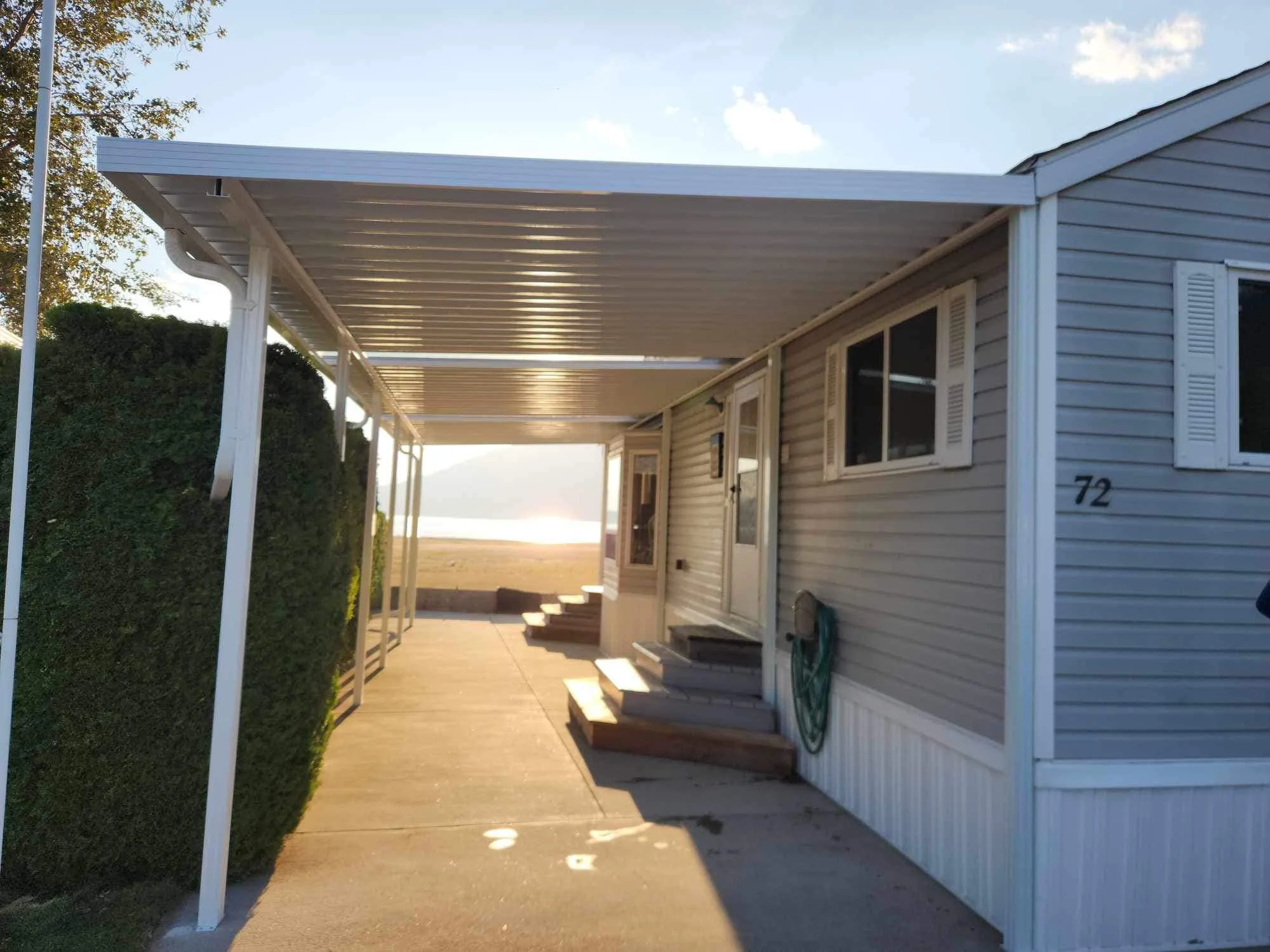
Ready to Start Your Project?
Get a free, no-pressure quote. We’ll help you choose the right patio cover for your backyard and budget.
Serving Kelowna, West Kelowna, Vernon, Penticton, Lake Country & Salmon Arm