

Sunroom Cost Guide 2026: 3-Season vs 4-Season Pricing for BC Homes
Real sunroom costs in British Columbia: 3-season rooms run $10,000 to $30,000, while 4-season sunrooms range from $25,000 to $80,000 or more. The difference comes down to insulation, heating systems, and whether you want year-round use or just spring-through-fall enjoyment.
I’ve been building sunrooms across the Okanagan for over a decade, and the most common question homeowners ask is simple: “What’s this actually going to cost me?” The honest answer is that it depends – on size, materials, season rating, and where in BC you’re building.
This guide breaks down real-world pricing from recent projects, explains exactly what drives costs up or down, and helps you figure out which type of sunroom makes sense for your budget and lifestyle. No vague ranges or national averages that don’t apply here – just the numbers you need to plan your project.
Whether you’re looking at a basic screen room to keep the bugs out or a fully insulated four-season addition that functions like another room in your house, you’ll find the information you need to make an informed decision.
Average Sunroom Costs in Canada & BC (2025-2026)
Let’s start with the numbers that actually matter. These ranges reflect real project costs in British Columbia over the past year, not outdated national averages from American sources.
| Room Type | Size Range | Budget | Standard | Premium |
|---|---|---|---|---|
| 3-Season Room | 100-200 sq ft | $10-15K | $15-22K | $22-30K |
| 4-Season Room | 120-250 sq ft | $25-35K | $40-60K | $60-80K+ |
| Screen Room | 100-180 sq ft | $8-15K | $15-20K | $20-28K |
What These Categories Mean
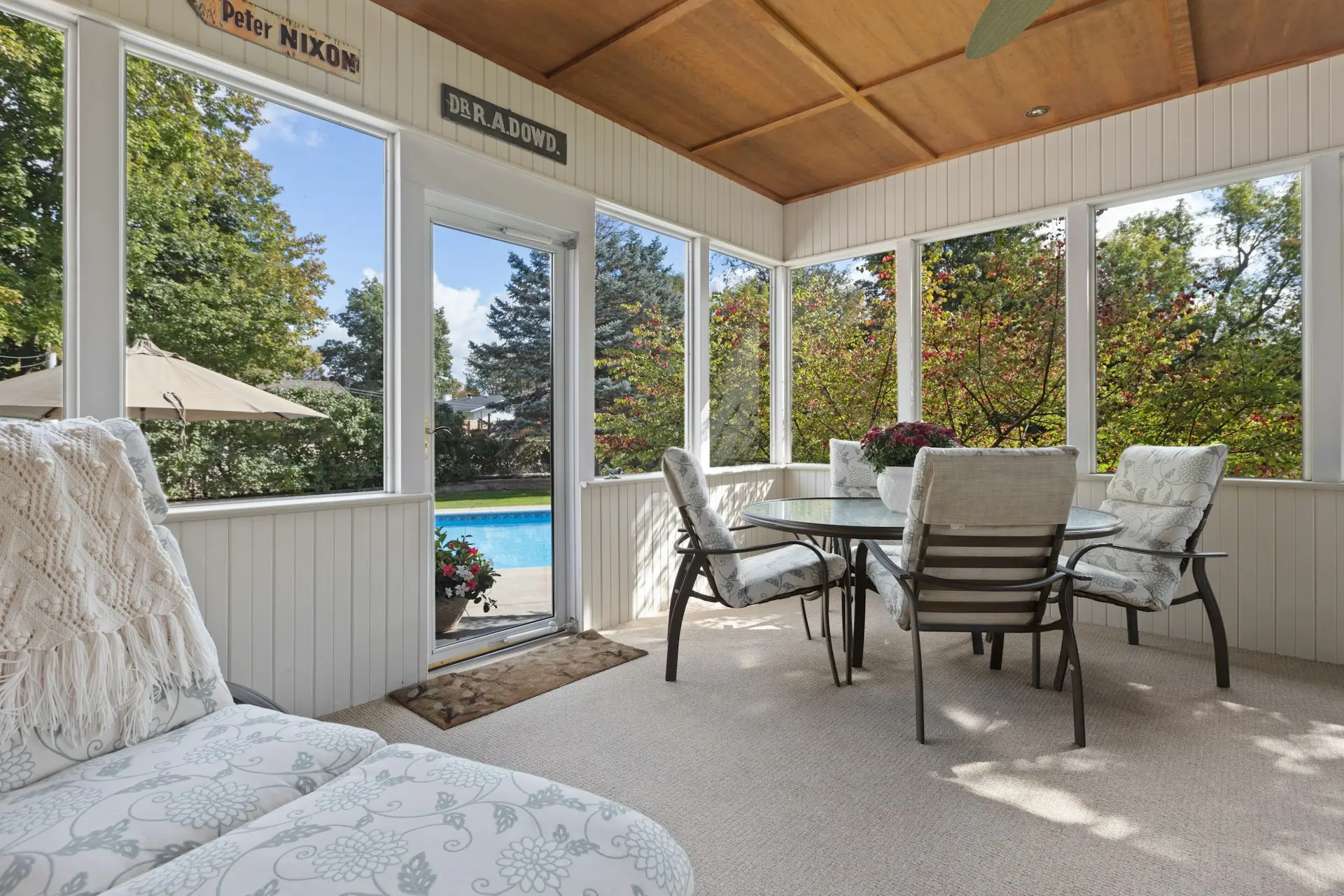
Three-season rooms are designed for use from roughly April through October in BC. They typically feature single-pane glass or large window panels, minimal insulation, and no heating system. When temperatures drop below freezing, these rooms become uncomfortable to use – but for the warmer months, they’re a cost-effective way to enjoy the outdoors without dealing with bugs and rain.
Four-season rooms are true home additions. They’re built with double or triple-pane insulated glass, full wall and ceiling insulation meeting BC building code, and integrated heating and cooling systems. These rooms maintain comfortable temperatures year-round and can be used exactly like any other room in your house – home office, dining room, family room.
Screen rooms are the most affordable option. They’re essentially covered outdoor spaces with screen mesh instead of glass. Perfect for summer entertaining when you want airflow but need protection from mosquitoes and other insects. Not suitable for rain or cold weather use.
Budget vs Standard vs Premium
The difference between budget and premium isn’t just about quality – it’s about what’s included and how customized the build is.
Budget builds typically use prefabricated kit systems with standard sizes, basic vinyl frames, single-pane glass (for 3-season), and minimal site work. They get the job done but offer limited customization.
Standard builds include better quality materials, more flexibility in sizing, aluminum or aluminum-clad frames, and proper integration with your existing home structure. This is where most of our projects fall.
Premium builds feature high-end glazing systems, custom architectural design, premium frame materials, enhanced roof structures, and often include electrical, plumbing, or specialty features like heated floors.
3-Season vs 4-Season Sunroom: What’s the Real Difference?
This is where I see homeowners make expensive mistakes. Some try to save money with a 3-season room thinking they’ll “just add heating later.” That doesn’t work. The structural and material differences between these two types are fundamental, not just add-ons.
| Feature | 3-Season | 4-Season | Cost Difference |
|---|---|---|---|
| Glazing | Single glass | Double/triple insulated | +$4-8K |
| Insulation | Minimal/none | Full wall + roof | +$3-6K |
| Heating | None | HVAC ductless/mini-split | +$3-6K |
| Cooling | Ventilation only | A/C included | +$2-4K |
| Structural | Basic | Reinforced (BC snow load) | +$1-2K |
The Real-World Usage Difference
Here’s what I tell every client: in BC, especially the Okanagan and Interior, a 3-season room sits essentially empty from November through March. That’s five months of the year when you’ve got an unusable space attached to your house.
If you’re paying $20,000 for a room you can only use 7 months per year, your cost-per-use is significantly higher than paying $50,000 for a room you use every single day. Run those numbers before deciding.
A 4-season sunroom becomes your favourite room in the house during winter – natural light, outdoor views, warmth. That’s when you actually appreciate it most. A 3-season room becomes a storage area or sits there collecting dust until spring.
Can You Convert 3-Season to 4-Season Later?
Technically yes, practically no. Converting a 3-season room to 4-season means:
- Replacing all glazing – single-pane windows can’t just have another pane added
- Opening up walls – to add insulation that wasn’t designed for
- Reinforcing structure – original framing may not handle the added load
- Running new electrical – for heating/cooling systems
- Often replacing roof panels – to meet insulation requirements
By the time you’re done, you’ve typically spent more than if you’d built a 4-season room from the start. The only time conversion makes sense is when you’re essentially rebuilding the room anyway.
Cost Per Square Foot Breakdown by BC Region
Square footage pricing gives you a quick way to estimate your project, but these numbers vary significantly by location. Labour costs, permit requirements, and even material transportation all affect what you’ll pay.
| BC Region | 3-Season $/sq ft | 4-Season $/sq ft |
|---|---|---|
| Vancouver Metro | $150-200 | $280-350 |
| Okanagan/Interior | $120-160 | $220-280 |
| Vancouver Island (Victoria) | $130-190 | $250-320 |
Real Example: 200 Square Foot Sunroom in Kelowna
Let me walk through an actual project quote for a 4-season sunroom in Kelowna. The homeowner wanted a 200 square foot addition off their kitchen with insulated roof panels and a ductless mini-split for heating and cooling.
At the Okanagan average of $250 per square foot, the baseline estimate was $50,000. The final project came in at $52,000 after some foundation work that wasn’t in the original scope. Typical range for this size and spec would be $45,000 to $65,000 depending on site conditions and finishes chosen.
Why Vancouver Costs More
Metro Vancouver’s higher costs reflect several factors:
- Labour rates – Skilled trades command higher wages in the Lower Mainland
- Permit costs – Municipal fees are significantly higher in Vancouver and surrounding cities
- Site access – Tighter lots and limited parking for construction crews adds time and cost
- Engineering requirements – Stricter enforcement of structural requirements
The Okanagan and Interior regions offer better value primarily due to lower overhead costs and more straightforward site conditions on most properties.
Key Cost Factors You Need to Know
Understanding where your money goes helps you make smarter decisions about what’s worth spending on and where you might be able to save. Here’s the typical breakdown for a sunroom project.
Materials (40-50% of Total Cost)
Materials are the largest single cost category. The glazing system alone – the glass panels and their frames – typically runs $8,000 to $20,000 depending on quality and quantity.
Frame materials make a significant difference:
- Vinyl frames: Lowest cost, good insulation value, limited colour options
- Aluminum frames: Mid-range cost, excellent durability, wider colour selection
- Wood frames: Highest cost, best aesthetics for heritage homes, requires ongoing maintenance
Roof structure costs typically run $4,000 to $8,000 depending on span requirements and whether you choose solid insulated panels or glass skylights.
Labour & Installation (30-40%)
Labour costs include everything from site preparation to final finishing.
- Foundation/deck prep: $3,000-$8,000 – varies wildly based on existing conditions
- Installation crew: $6,000-$12,000 – typically 2-4 workers for 1-2 weeks
- Electrical work: $1,500-$3,000 – outlets, lighting, HVAC connections
If your existing deck or patio isn’t level, structurally sound, or properly sized, foundation work can add significantly to costs. This is the most common source of budget overruns – unexpected site conditions that aren’t visible until work begins.
HVAC & Mechanical (10-20%)
For 4-season rooms, climate control is essential. You have two main options:
- Ductless mini-split: $3,000-$6,000 – Self-contained heating and cooling unit mounted on the wall. Most popular choice for sunrooms because it’s efficient and doesn’t require connecting to your home’s existing HVAC system.
- Traditional HVAC extension: $4,000-$8,000 – Extending your home’s existing ductwork into the sunroom. More expensive to install but provides consistent temperature with the rest of your house.
Mini-splits are the clear winner for most sunroom projects. They’re easier to install, more energy-efficient for the space, and don’t put extra load on your home’s existing heating system.
Permits & Engineering (5-10%)
- Building permit: $250-$1,500 depending on municipality
- Structural engineer: $800-$2,000 for stamped drawings
Don’t skip permits thinking you’ll save money. Unpermitted additions create problems when you sell your home, and insurance companies may deny claims related to unpermitted structures. More on this in the permits section below.
Material Choices & Their Impact on Price
The frame material you choose affects not just upfront cost but long-term maintenance, durability, and aesthetics. Here’s how the options compare.
| Material | Cost/Sq Ft | Maintenance | Lifespan | Best For |
|---|---|---|---|---|
| Vinyl | $100-140 | Minimal | 20-30 years | Budget-conscious |
| Aluminum | $120-160 | Low | 25-35 years | Mid-range projects |
| Wood | $160-220 | High (stain every 2-3 yrs) | 15-25 years | Heritage homes |
| Aluminum w/ Vinyl Cladding | $140-180 | Very low | 25-35 years | Best value overall |
Why Vinyl-Clad Aluminum Wins
About 80% of the sunrooms we build use vinyl-clad aluminum frames. Here’s why clients gravitate toward this option:
- Aluminum core provides strength – handles BC snow loads without flexing
- Vinyl exterior eliminates maintenance – no painting, no refinishing, ever
- Good thermal performance – vinyl acts as a thermal break to reduce condensation
- Wide colour selection – matches most home exteriors
- Competitive pricing – better value than pure aluminum or wood
Glazing Options
Glass quality matters more than most homeowners realize. For 4-season rooms, you need insulated glass units (IGUs) – that’s two or three panes of glass with air or gas between them.
- Double-pane clear: Basic insulation, most affordable option for 4-season rooms
- Double-pane Low-E: Special coating reflects heat, reducing heating/cooling costs. Worth the upgrade.
- Triple-pane: Maximum insulation, best for very cold climates or north-facing rooms
- Tinted or reflective: Reduces heat gain in summer, good for south or west-facing rooms
For most Okanagan applications, double-pane Low-E glass provides the best balance of performance and cost. Triple-pane is overkill unless you’re at higher elevation or the room faces north with significant exposure.
Permitting, Inspections & Hidden Costs in BC
Every sunroom built in BC requires a building permit. There are no exceptions for “small” additions or “temporary” structures. If it’s attached to your house, it needs a permit.
| Item | Cost Range | Timing |
|---|---|---|
| Building Permit | $250-$1,500 | 2-8 weeks approval |
| Structural Engineering | $800-$2,000 | 1-2 weeks |
| Foundation Inspection | $300-$600 | During construction |
| Electrical Upgrade | $1,500-$3,500 | If panel capacity insufficient |
The Permit Process
Here’s what to expect when pulling a permit for a sunroom in BC:
- Submit drawings – Site plan showing location, floor plan, and structural details
- Engineering review – Most municipalities require stamped structural drawings
- Application review – Building department checks compliance with codes
- Permit issued – You can begin construction
- Inspections – Foundation, framing, electrical, final inspections during build
- Final approval – Occupancy permit or sign-off issued
Timeline varies dramatically by municipality. Kelowna typically processes permits in 2-4 weeks. Vancouver can take 6-8 weeks or longer.
Hidden Costs to Watch For
Beyond the obvious permit and material costs, these items frequently catch homeowners off guard:
- Electrical panel upgrade: If your panel is at capacity, adding a sunroom circuit may require a new panel ($1,500-$3,500)
- Foundation work: Existing decks often need reinforcement or replacement to support a sunroom structure
- Drainage modifications: Adding a roof may require new gutters and downspout routing
- Interior modifications: You may want or need to modify the door/window between your house and the new sunroom
- Landscaping restoration: Construction equipment can damage lawns and gardens that need repair after
DIY Kits vs Professional Installation
You’ll find plenty of sunroom kits available online promising huge savings. Let me give you an honest assessment of what that actually looks like.
| Factor | DIY Kit | Professional Build |
|---|---|---|
| Material Cost | $2-10K | $8-15K |
| Labour (Your Time) | 40-80 hours | Pro handles |
| Total Out-of-Pocket | $2-15K | $15-35K |
| Warranty Coverage | 0-1 year parts | 5-10 years |
| Resale Impact | 10-20% discount | Full ROI |
The Hidden Costs of DIY
That cheap kit price doesn’t include several things you’ll definitely need:
- Tools: Specialty tools for glass and frame installation can add $500-$1,500
- Permits: You still need permits, engineering, and inspections ($1,000-$3,500)
- Foundation: Kits assume a perfect, level surface – any prep work is on you
- Electrical: You’ll need a licensed electrician regardless ($1,000-$2,500)
- Mistakes: Glass breakage, incorrect measurements, and redo work add up fast
I’ve been called to fix DIY sunroom projects more times than I can count. The most common issues are improper flashing (leading to water leaks), undersized structural members (sagging over time), and poor weathersealing (drafts and moisture problems).
When DIY Makes Sense
I’ll be honest – there are situations where a kit makes sense:
- You’re genuinely skilled: If you’ve built structures before, understand weatherproofing, and have the tools
- Simple screen room: Non-enclosed screen rooms are more forgiving of imperfection
- Temporary use: If this is a 5-year solution before a major renovation, a kit might suffice
- Budget is the only option: A DIY sunroom is better than no sunroom if that’s your situation
Just go in with realistic expectations about the finished product and understand the warranty and resale implications.
Financing Options Available in Canada
A sunroom is a significant investment, and most homeowners finance at least part of the project. Here are your main options in Canada.
| Option | Interest Rate | Term | Best For |
|---|---|---|---|
| Home Equity Loan | 5-8% | 5-10 years | High equity homeowners |
| HELOC | Prime + 0.5-1% | Flexible | Flexible payoff |
| Personal Loan | 7-15% | 3-5 years | Faster approval |
| Manufacturer 0% APR | 0% (12 mo) | 12 months | Paid in full by deadline |
Home Equity Options
If you have significant equity in your home (typically 20% or more beyond your mortgage), home equity financing offers the lowest rates. These are secured loans, meaning your house is collateral.
Home Equity Loan: Fixed interest rate, fixed monthly payments, fixed term. You get a lump sum at closing. Good for a defined project with a set budget.
HELOC (Home Equity Line of Credit): Variable interest rate (tied to prime), flexible draws, pay interest only on what you use. Good if you’re not sure of final costs or want to handle payments flexibly.
Personal Loans
If you don’t have home equity or don’t want to use your house as collateral, personal loans are an option. Rates are higher (7-15% depending on credit score) and terms are shorter, meaning higher monthly payments.
For a $60,000 sunroom financed over 5 years at 10% interest, expect payments around $1,250 per month. At 7% with a home equity loan, that drops to around $1,100 per month – the rate difference adds up significantly over time.
Manufacturer Financing
Some sunroom manufacturers offer promotional financing – typically 0% APR for 12 months. This can be a good deal if you can pay off the full balance within the promotional period. Read the fine print carefully; if you don’t pay in full by the deadline, you often owe all the accrued interest retroactively.
Frequently Asked Questions
Is a sunroom worth the money?
For most homeowners, yes. A well-built 4-season sunroom typically returns 50-60% of its cost when you sell your home. That means a $60,000 investment adds roughly $30,000-$36,000 to your home’s value. But the real value is in daily use – enjoying the space every day for years. If you’ll use the room regularly, the lifestyle benefit far exceeds the financial return calculation.
How long does it take to build a sunroom?
Actual construction typically takes 2-4 weeks once work begins. However, the permit process adds 2-8 weeks before that, depending on your municipality. From initial planning to completion, expect 2-4 months total. Complex projects or busy building departments can extend this timeline.
Do I need a permit for a sunroom in BC?
Yes, always. Any enclosed or semi-enclosed structure attached to your home requires a building permit in BC. Costs range from $250 to $1,500 depending on your municipality. The permit ensures your sunroom meets structural codes, especially snow load requirements, and creates a legal record of the addition for insurance and resale purposes.
What’s the difference between a sunroom and a patio cover?
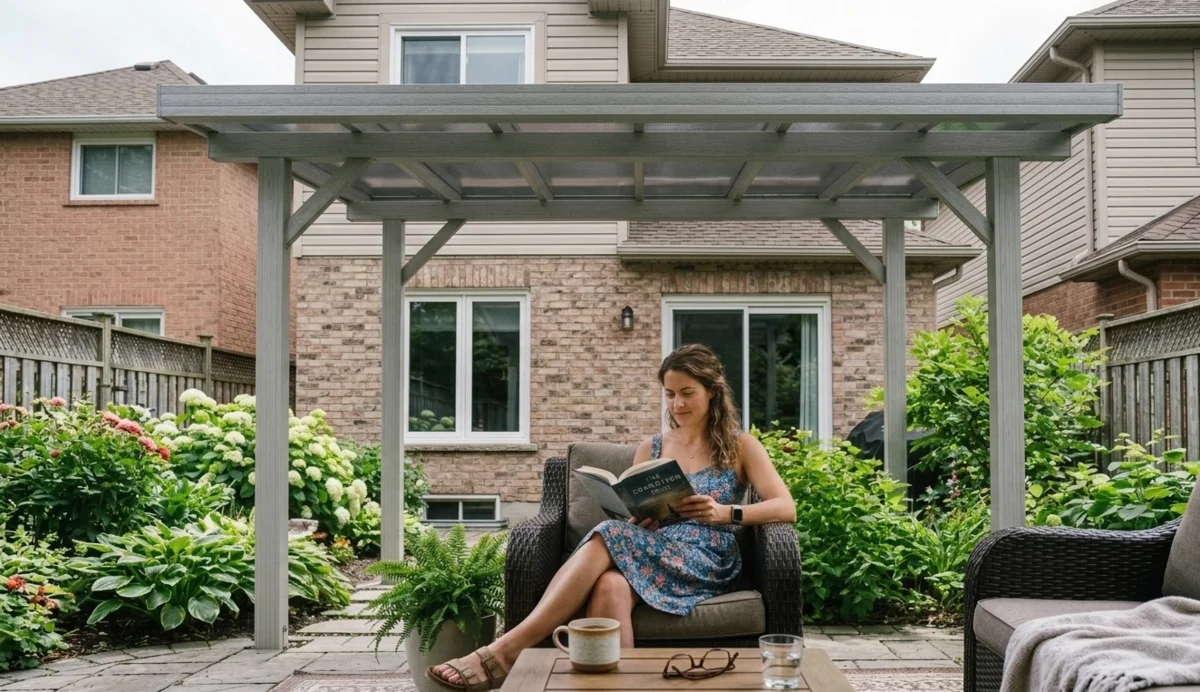
A patio cover is a roof structure with open sides – it provides shade and rain protection but no enclosure. A sunroom is fully enclosed with glass walls. Patio covers typically cost one-third to one-half what a sunroom costs, but they’re only usable in good weather. Sunrooms offer year-round use (especially 4-season versions) at a higher price point.
Can I finance a sunroom?
Yes, several options exist. Home equity loans and HELOCs offer the lowest rates (5-8%) for homeowners with equity. Personal loans (7-15%) work if you don’t want to use your home as collateral. Some manufacturers offer promotional 0% financing for 12 months. A typical $60,000 project financed over 5 years runs $500-700 per month depending on the rate.
How much does it cost to heat a 4-season sunroom?
With a ductless mini-split heat pump (the most common choice), expect annual heating costs of $1,200-$1,800 for a 200 square foot sunroom. That works out to roughly $100-150 per month during winter months. Mini-splits are very efficient, especially in our relatively mild BC climate. Costs will be higher if you use electric baseboard heating instead.
What’s the maintenance cost after installation?
Ongoing maintenance is minimal for a professionally built sunroom. Budget for an annual seal inspection ($200-300 if you hire someone, free if you do it yourself), window cleaning (DIY or $300 per year for professional service), and HVAC service ($400-600 per year for the mini-split). Total annual maintenance runs $600-1,200 depending on how much you outsource versus handle yourself.
The Bottom Line
A sunroom is one of the best investments you can make in your BC home – if you choose the right type for your needs and budget. Three-season rooms make sense if you’re primarily interested in bug-free outdoor living from spring through fall and want to keep costs under $30,000. Four-season sunrooms cost more ($40,000-$80,000) but deliver year-round livable space that functions like any other room in your house.
For the Okanagan specifically, I almost always recommend going 4-season if your budget allows. Our winters are mild enough that you’ll use the space year-round, and the upgrade cost pays for itself in daily enjoyment.
Whatever you decide, get multiple quotes, verify that contractors are licensed and insured, and don’t skip the permit process. A properly built sunroom with all the documentation will serve your family for decades and add real value when it’s time to sell.
Ready to Get a Sunroom Quote?
Get a free, detailed quote for your sunroom project. We build 3-season rooms and 4-season sunrooms throughout the Okanagan – locally owned, built for our climate.
Get Your Free Quote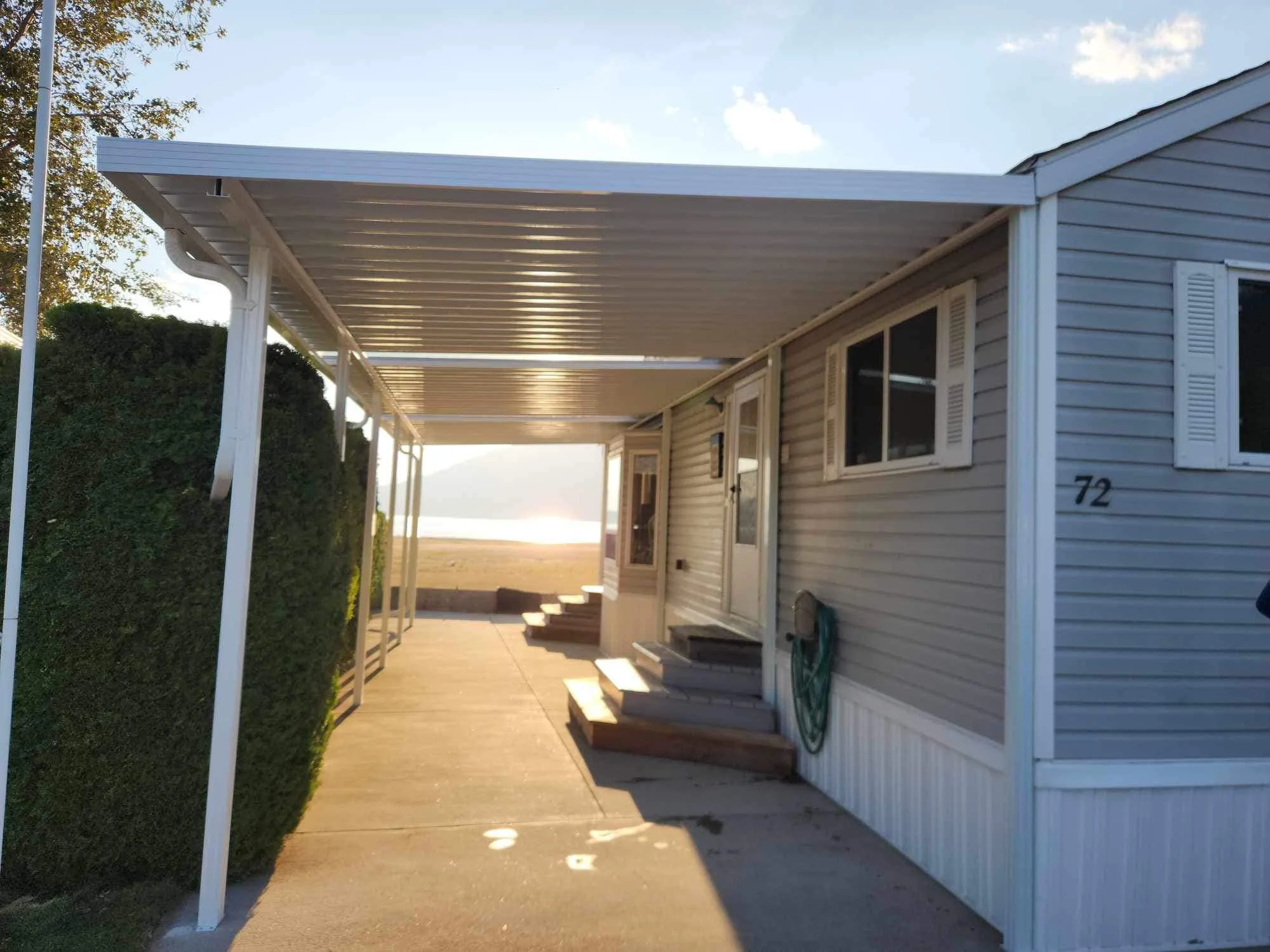
Ready to Start Your Sunroom Project?
Get a free, no-pressure quote. We’ll help you choose the right sunroom type for your home and budget.
Serving Kelowna, West Kelowna, Vernon, Penticton, Lake Country & Salmon Arm