

Glass Deck Railings in the Okanagan: Options, Safety & Installation
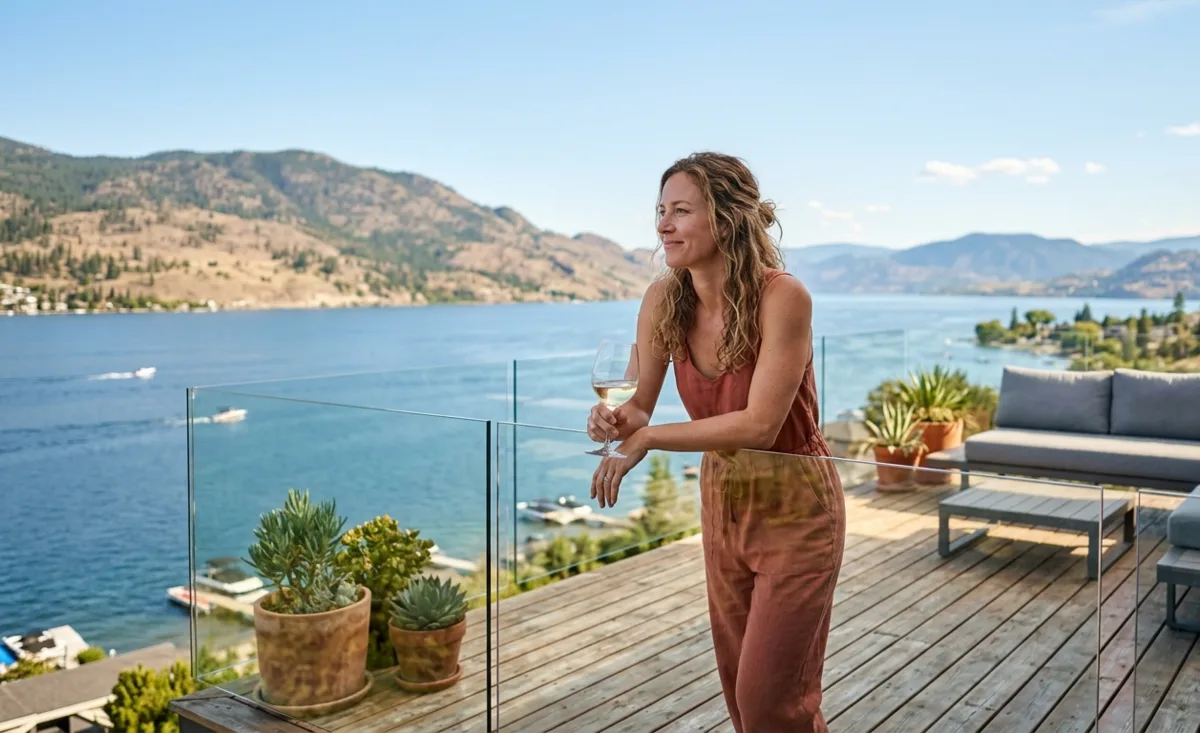
Glass deck railings let you enjoy your view without vertical bars blocking the scenery. For Okanagan homeowners with lake views, mountain vistas, or landscaped backyards, glass creates the premium deck experience that wood or metal pickets simply can’t deliver. This guide covers glass deck railing options, safety requirements, and what to expect from installation.

Why Glass Railings for Decks?
Perfect for View Properties
The Okanagan is known for stunning lake and mountain views. Traditional picket railings create visual noise — dozens of vertical lines breaking up your sightline. Glass railings disappear into the view, letting you see the landscape as if there’s nothing between you and the scenery.
Wind Protection
Unlike open railings that let wind pass through, glass panels create a solid barrier. This makes elevated decks significantly more comfortable during breezy conditions — you get shelter without sacrificing views.
Modern Aesthetic
Glass conveys contemporary, high-end design. It suits modern architecture and lakefront homes, but also updates traditional homes with a clean, architectural look.
Glass Deck Railing Options
Framed Glass Panels
Glass panels set into an aluminum or steel frame with a top rail. This is the most economical glass railing approach.
Best for: Budget-conscious projects, traditional homes, easy installation on existing decks
Pros:
- The most affordable glass option
- Wide range of frame colors
- Top rail provides handrail function
- Fastest installation
Cons:
- Frame is visible, reduces transparency
- More components to maintain
Semi-Frameless
Minimal hardware with small clamps or standoffs holding the glass. Slim profile with reduced visible frame.
Best for: Balancing aesthetics with budget, contemporary homes
Pros:
- Cleaner look than fully framed
- Glass is dominant visual element
- A mid-range option
Cons:
- More expensive than framed
- Still has visible hardware
Frameless/Standoff
Glass panels secured at the base with standoff mounts, channels, or spigots. No frame — just glass with minimal exposed hardware.
Best for: Maximum view impact, premium installations, architectural statements
Pros:
- Maximum transparency — nearly invisible barrier
- Premium, dramatic appearance
- Ultimate view preservation
Cons:
- The premium choice of the three
- Requires thicker glass (1/2″+)
- More precision in installation
At a Glance: Framed vs Semi-Frameless vs Frameless
Framed
Most economical
Best ValueSemi-Frameless
Slim profile
BalancedFrameless
Maximum view
PremiumSafety & Building Code
Tempered Glass Requirements
BC Building Code requires safety glazing for all railing applications. This means:
- Tempered glass: Heat-treated to be 4-5x stronger than regular glass. If broken, shatters into small, relatively safe pieces.
- Laminated glass: Two layers bonded with plastic interlayer. Holds together if cracked. Often required for pool enclosures or elevated applications.
All glass must be marked with manufacturer certification showing it meets CSA A500 safety standard.
BC Building Code Compliance
Height Requirements
- Elevated decks (over 24″): Min 42″ (1070mm)
- Adjacent to stairs: Min 36″ (900mm)
Glass Thickness
- Framed: Min 3/8″ (10mm) tempered
- Frameless: Min 1/2″ (12mm) tempered
Load Resistance
- Infill: 1.0 kN (225 lbs) concentrated
- Top rail: 50 lbs/ft distributed
Many deck railing projects go up with no permit hassle — and we’ll tell you exactly what yours needs so it always meets current BC Building Code.
Height Requirements
The 42-inch minimum for elevated decks is non-negotiable. This is measured from the deck surface to the top of the glass or cap rail. Some municipalities may require taller guards for specific situations — we verify local requirements for every project.
What Goes Into Your Quote
| System Type | Look | Best For |
|---|---|---|
| Framed Glass | Visible frame & top rail | The most economical glass option |
| Semi-Frameless | Slim clamps, minimal frame | Clean looks on a sensible budget |
| Frameless | No frame, nearly invisible | Maximum, uninterrupted views |
Every deck is different. Your number comes down to the system, the glass, the hardware, and your deck’s layout — so we measure on-site and give you one straight, no-obligation quote.
What Affects Your Quote
- System type: Frameless costs roughly double framed
- Glass thickness: Thicker glass for frameless systems costs more
- Glass type: Clear vs tinted vs low-iron vs laminated
- Hardware material: Stainless steel costs more than aluminum
- Deck complexity: Stairs, corners, and angles add labor
- Structural requirements: Some decks need reinforcement
Outdoor vs Interior Glass
Outdoor deck glass is typically a bit more involved than interior glass railings because:
- Thicker glass to handle wind loads
- Stainless steel or marine-grade hardware for corrosion resistance
- More robust mounting to handle thermal expansion
Get Your Free Quote
Every project is different. We’ll measure your deck and provide a detailed, no-obligation estimate.
Request Free QuoteInstallation on Existing Decks
Assessment Process
Before installing glass railings on an existing deck, we evaluate:
- Structural capacity: Can your deck support glass railing loads? Glass panels and posts transfer significant forces to the deck structure.
- Rim joist condition: Posts typically mount to the rim joist. It must be solid, not rotted or deteriorating.
- Deck surface: Surface mount vs fascia mount depends on your deck construction.
- Existing post locations: Do current posts work for glass panel sizing, or do we need new post positions?
Our Installation Process
Site Assessment
We evaluate your deck structure, measure precisely, and discuss style options. 1 visit
Design & Quote
Detailed proposal with specifications, drawings, and transparent pricing. 2-5 days
Permit (only if needed)
Many railing projects go up with no permit hassle. If yours needs one, we keep it simple. Varies
Fabrication
Custom panels and hardware ordered/manufactured. 2-4 weeks
Installation
Professional mounting, leveling, and finishing. 1-2 days
What’s Included
Our installation includes:
- Removal of existing railings (if applicable)
- All posts, hardware, and glass panels
- Professional installation and leveling
- Sealant and finishing details
- Cleanup and debris removal
- Help with any permit your project needs (if required)
Maintenance Tips
Cleaning
Glass railings are low maintenance but do require periodic cleaning to maintain clarity:
- Routine cleaning: Wash with glass cleaner and soft cloth every 2-4 months
- Hard water spots: Use vinegar solution or commercial hard water remover
- Mineral deposits: Non-abrasive cleaner with soft scrub pad
- Bird droppings: Remove promptly to prevent etching
Avoid abrasive cleaners, steel wool, or harsh chemicals that can scratch or damage the glass surface.
Inspections
Annually inspect:
- Hardware tightness (tighten if loose)
- Sealant condition (reseal if cracked)
- Glass condition (chips or cracks)
- Post stability
Longevity
Quality glass deck railings last 25-30+ years. The glass itself doesn’t degrade from weather exposure. Hardware life depends on material — stainless steel outlasts aluminum or painted steel, particularly in wet climates.
Frequently Asked Questions
How much does glass deck railing cost?
Every glass deck railing is custom, so the price comes down to the system you choose (framed, semi-frameless, or frameless), the glass and hardware, and your deck’s size and layout. We measure on-site and give you one straight, no-obligation quote.
Is glass railing good for outdoor decks?
Yes. Glass railings are excellent for outdoor decks, especially view properties. Tempered safety glass handles weather extremes, UV exposure, and impact. They also provide wind protection that open railings don’t offer.
Can you install glass railing on an existing deck?
Usually yes. We assess your deck’s structural capacity to ensure it can support glass railing loads. Most modern decks are adequate. Older or underbuilt decks may need reinforcement before railing installation.
What type of glass is used for deck railings?
Tempered safety glass is standard for deck railings. It’s 4-5 times stronger than regular glass and shatters into small, relatively safe pieces if broken. Laminated glass (two layers bonded together) is used for elevated or pool applications.
How do you maintain glass deck railings?
Clean with glass cleaner and a soft cloth every 2-4 months. Use vinegar solution for hard water spots. Inspect hardware annually for tightness. Avoid abrasive cleaners that can scratch the glass surface.
Are glass deck railings slippery when wet?
The glass surface itself isn’t a walking surface, so slipperiness isn’t relevant. The top rail (if present) may be wet after rain but is typically textured or profiled to provide grip.
Do glass railings block views or enhance them?
Glass railings dramatically enhance views compared to picket or bar railings. Tempered glass is nearly transparent — you see through it, not past it. This is the primary reason homeowners choose glass over other materials.
What’s the building code for glass deck railings in BC?
Glass deck railings must be 42″ minimum height for elevated decks, use tempered or laminated safety glass, and resist specified loads (225 lbs concentrated on infill). Glass must meet CSA A500 safety standard. We ensure all installations comply.
How thick should glass deck panels be?
Minimum 3/8″ (10mm) tempered glass for framed systems. Frameless systems require 1/2″ (12mm) or thicker because the glass is structural. Laminated glass for pool enclosures may need to be even thicker.
Can glass deck railings handle Canadian winters?
Absolutely. Tempered glass handles extreme temperature swings without cracking or damage. Quality hardware (stainless steel or aluminum) resists corrosion from rain, snow, and ice. Glass railings perform excellently in BC’s climate.
Get Your Glass Deck Railing Quote
Transform your deck with glass railings that let you enjoy your view without visual obstruction. We install framed, semi-frameless, and frameless glass deck railings throughout the Okanagan Valley.
Get Your Free Quote
Ready to Start Your Project?
Get a free, no-pressure quote. We’ll help you choose the right solution for your backyard.
Serving Kelowna, West Kelowna, Vernon, Penticton, Lake Country & Salmon Arm