

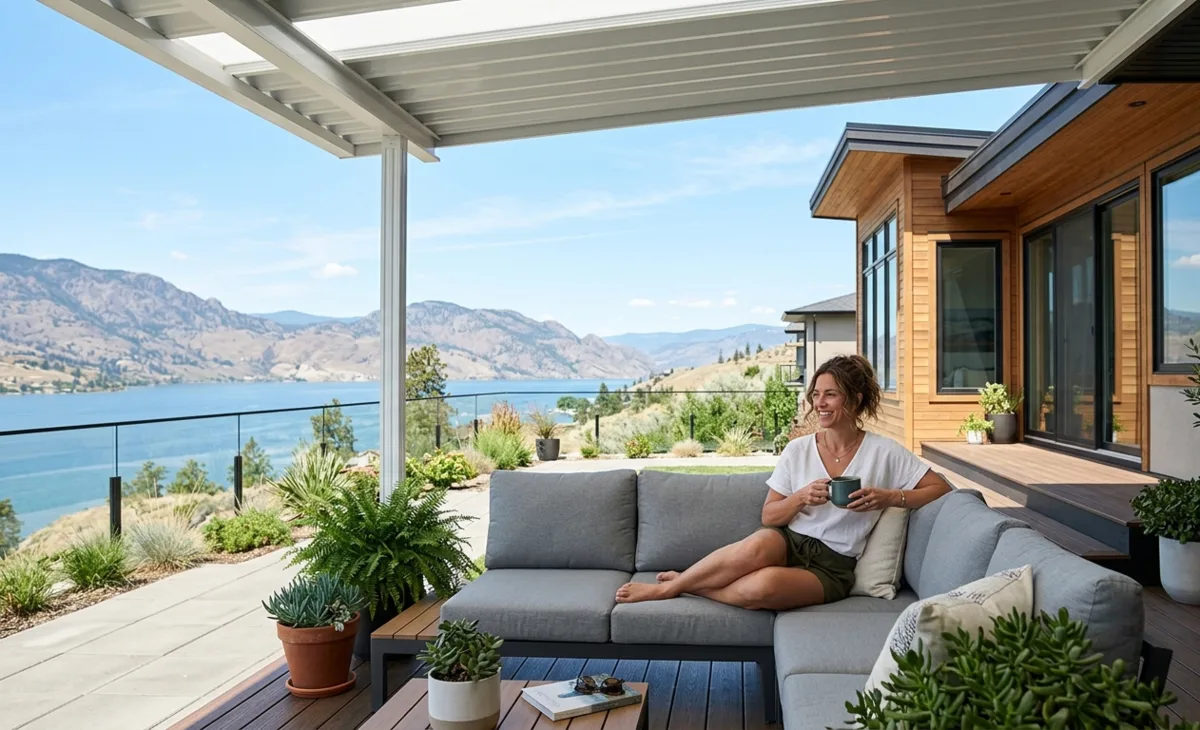
Types of Aluminum Patio Covers: Which One Fits Your Backyard?
Aluminum patio covers come in three roof styles (solid panels, single-skin panels, or aluminum with glass strips), three roof shapes, and two mounting options: attached or freestanding. Add your colour and you’ve picked a type. No insulation involved. That’s a different product entirely.
We design, build and install every type below in-house out of our West Kelowna shop, usually in a single day.
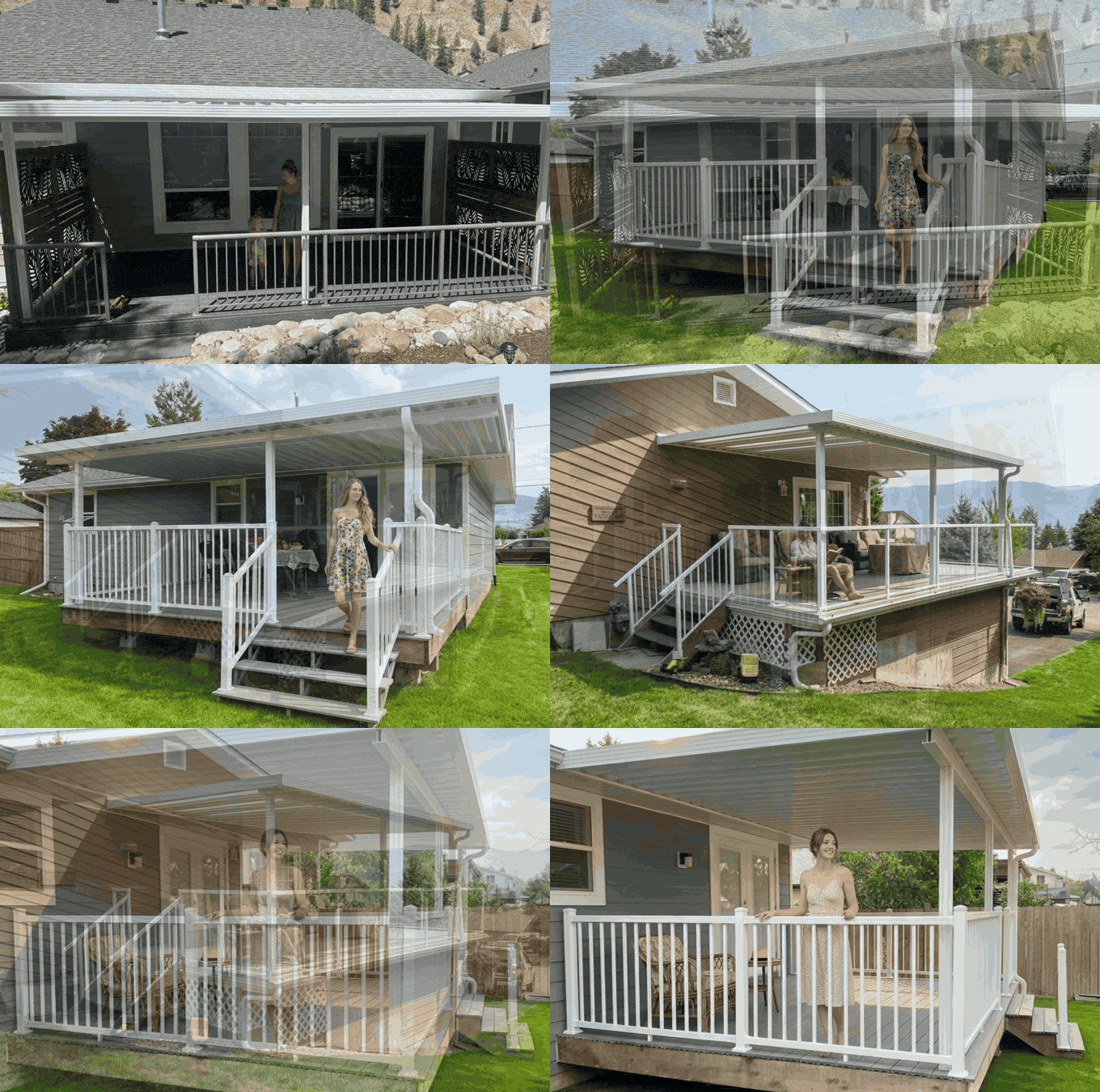
Types of Aluminum Patio Covers by Roof Panel
We design and build aluminum patio covers in three roof styles. Each one changes how the cover looks, how much weather it blocks, and what it’s practical for. Here’s how they stack up before we get into shapes and mounting.
| Panel type | Weather protection | Look | Best for |
|---|---|---|---|
| Solid aluminum panels | Full | Finished ceiling | Year-round living space |
| Single-skin panels | Full | Lighter, thinner profile | Carports, utility covers |
| Aluminum with glass strips | Full | Shade plus daylight | Big decks, kitchen windows |
1. Solid Aluminum Panels
Interlocking panels that lock edge to edge into one continuous, waterproof roof. Water runs to a hidden gutter instead of dripping off the edge. This is what most homeowners picture when they say patio cover, and it’s what we install more than anything else.
2. Single-Skin Aluminum Panels
A lighter aluminum sheet, still fully waterproof, built for spans that don’t need the same structural beef as a solid-pan roof. Carports and equipment covers are the usual home for this one. The tradeoff is a flatter, less finished underside than a solid-pan ceiling.
3. Aluminum With Glass Strips
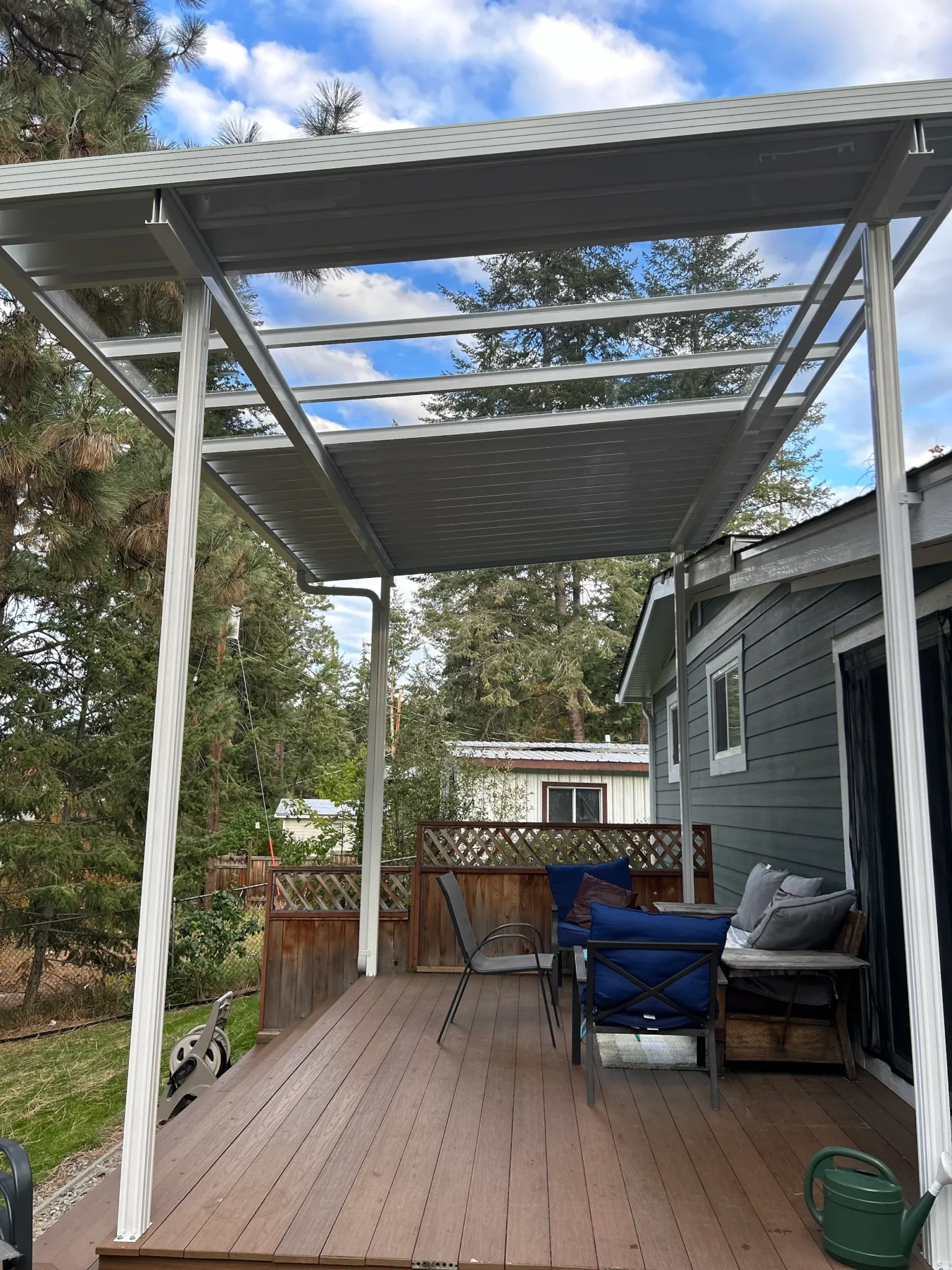
Solid aluminum panels with clear tempered glass dropped in where you want daylight instead of shade. The kitchen window stays bright, the dining table stays shaded. It costs less than an all-glass roof and runs noticeably cooler underneath.
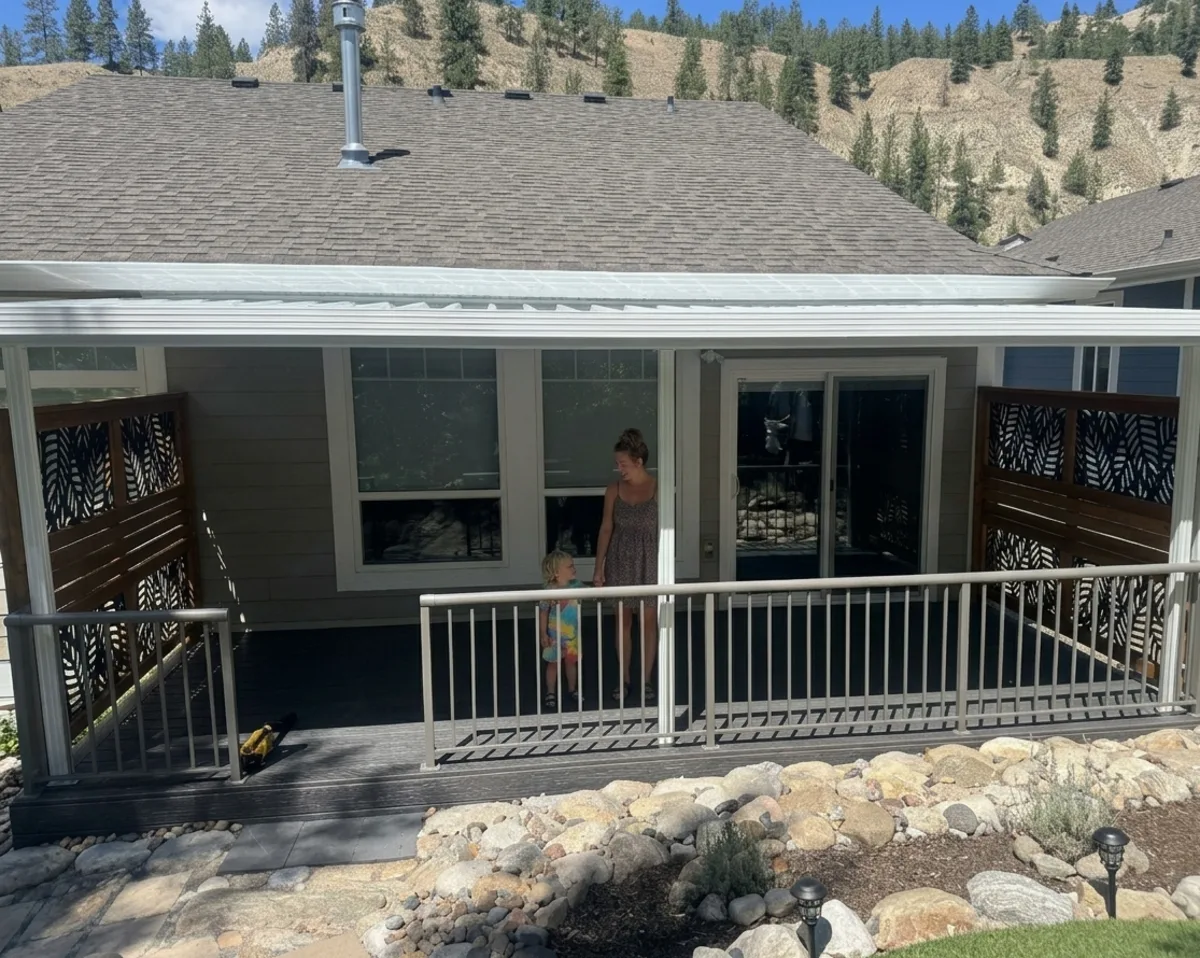
Aluminum Patio Cover Types by Roof Shape
Panel type decides what the roof is made of. Shape decides how it sheds water and how it sits against your house. We build three shapes.
4. Flat or Low-Slope Roof
A nearly level roof with just enough pitch to drain. It sits close to the fascia and gives the cleanest, most modern line against a house. Works on almost any deck as long as there’s a clear path for water to get off the edge.
5. Gable Roof
A peaked roof that matches a traditional roofline. It sheds snow fast off two sides and looks right on a house that already has a steep pitch. Costs a bit more in framing than a flat roof.
6. Lean-To Roof
One continuous slope running away from the house. Simple, strong, and it moves water and snow off in one direction without a ridge to flash and maintain. Our most common shape on attached covers.
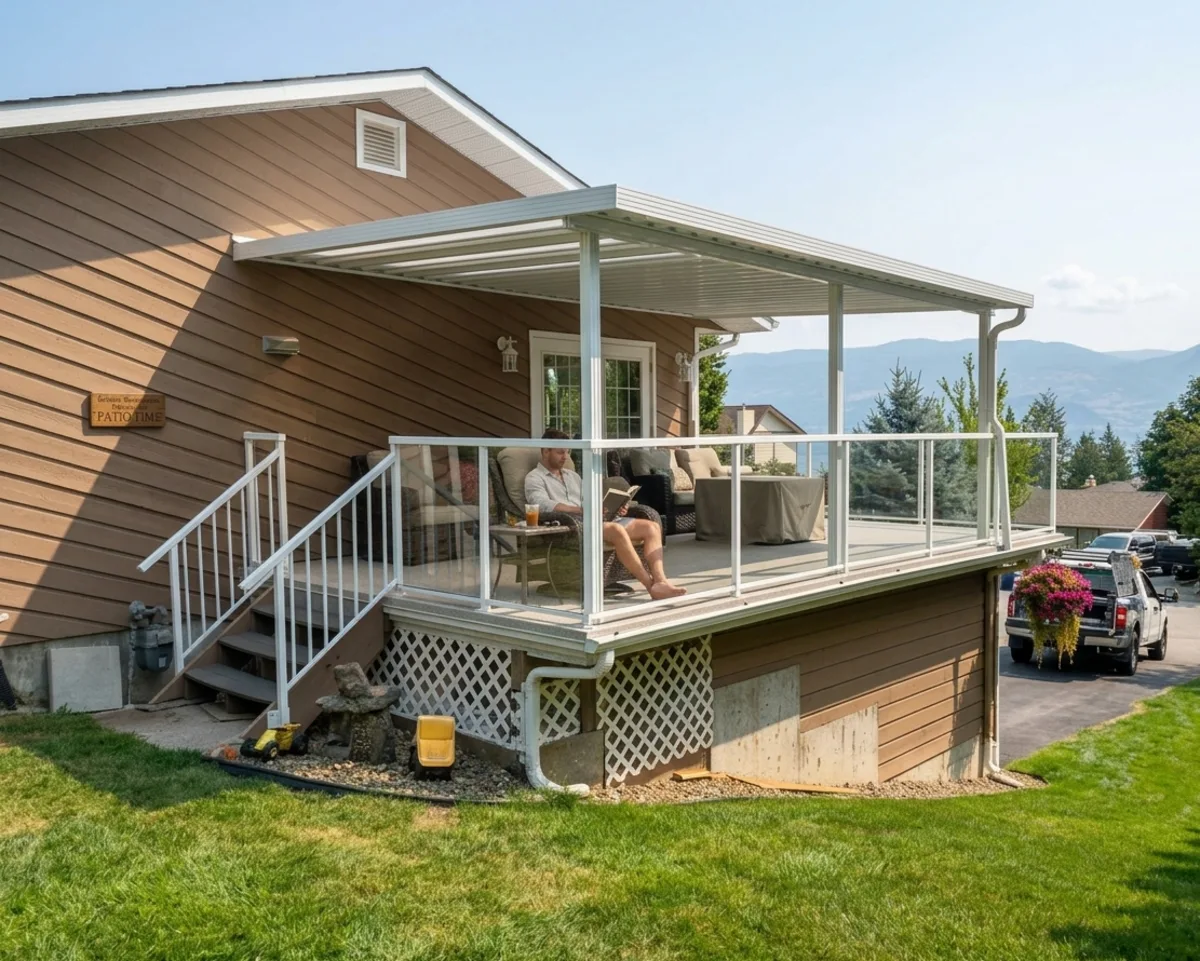
Attached vs Freestanding Aluminum Covers
Panel and shape decide what the roof looks like. This decides how it’s held up. Either style works with any panel type or roof shape above, it’s just a question of where your posts go.
Attached Aluminum Covers
Bolts to the house wall or fascia on one side, with posts carrying the outer edge. You only need posts on one side, which keeps material cost down and gives a clean, built-in look. Proper flashing where it meets the house isn’t optional.
Freestanding Aluminum Covers
Posts on all four corners, no connection to the house at all. We use this over pools, hot tubs, or garden seating areas, or anywhere a homeowner doesn’t want to touch their siding. See the full attached vs freestanding breakdown for the footing and permit differences between the two.
Five Mistakes We Get Called to Fix
- Single-skin panels on a living space. They’re built for carports, not a dining area you want to look finished from underneath.
- A flat roof with no real slope. Even a low-slope roof needs genuine pitch, or water sits and finds a way in.
- Freestanding posts where attached would’ve worked. More concrete, more cost, for a deck that was already against the house.
- A dark colour on a west-facing roof. It soaks up more heat than a lighter shade would in the same spot.
- Picking the shape before the panel. Choose the roof panel first. The shape and mount just follow from there.
Aluminum Patio Cover Materials and Colour Options
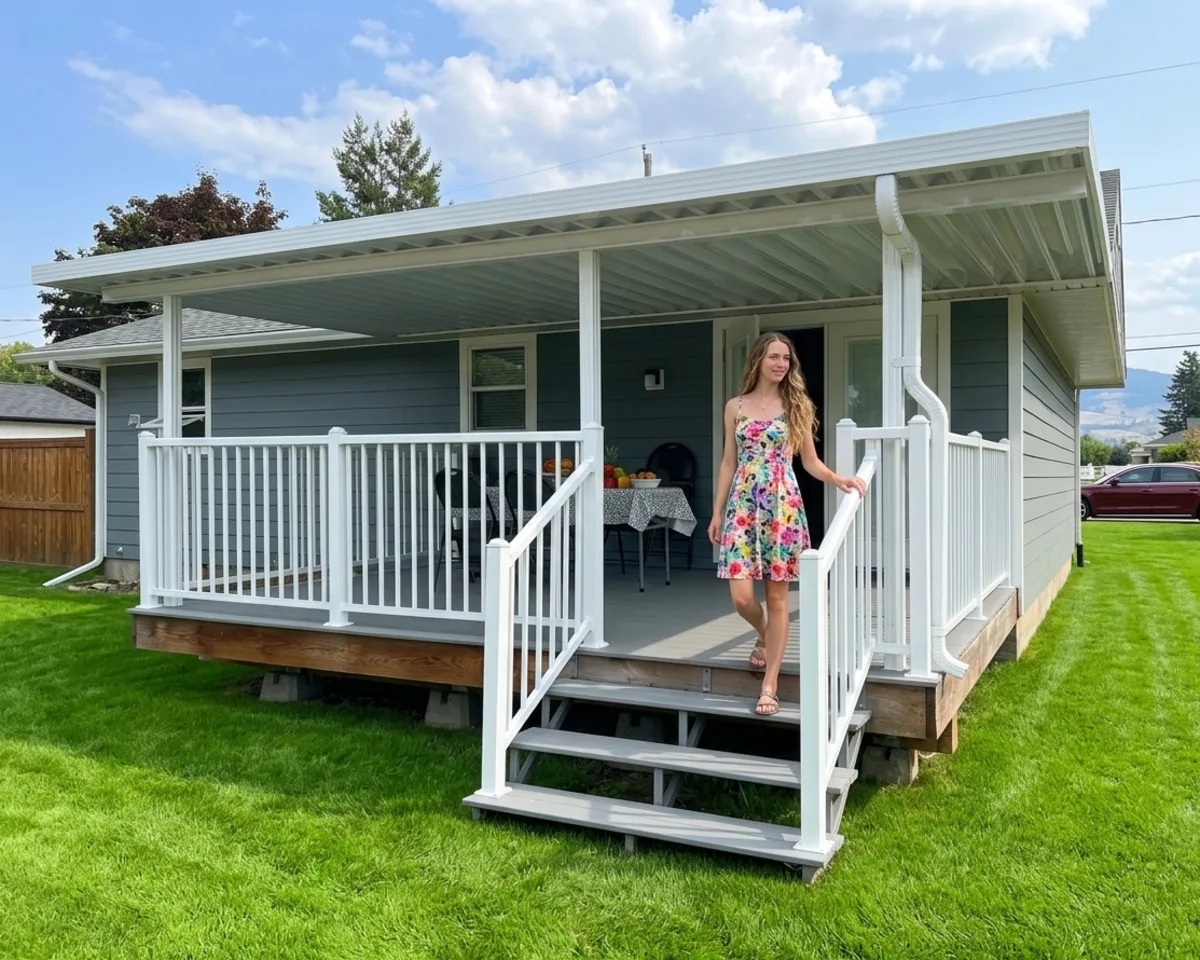
The aluminum itself is heavy-gauge structural material, powder-coated so it won’t rust or peel. Colour and finish are where you make it match your house.
Black, White or Custom Colour Match
White and black cover most requests, but we colour-match to your trim, siding or fence on-site before anything goes into production. Tell us the look you’re after and we’ll find the closest match before we order materials.
Wood-Grain Finish
A powder-coat wood-grain texture over the same aluminum frame, for homeowners who want the warmth of real wood without the yearly stain and re-seal. It weathers the same as any other powder-coat finish we offer.
If you’re weighing a full glass roof against aluminum instead of just the colour, we compare the two head to head in our glass vs aluminum guide.
Which of These Aluminum Patio Cover Types Fits Your Deck?
| Your deck | Go with |
|---|---|
| Faces west and bakes in the afternoon | Solid panels, lighter colour |
| Sits over a kitchen window or dark corner | Aluminum with glass strips |
| Carport, shed roof or storage area | Single-skin panels |
| Already backs onto the house | Attached mount |
| Covers a pool, hot tub or garden area | Freestanding mount |
| Wants a clean, modern line | Flat or low-slope roof |
| Gets a heavy snow load in winter | Gable or lean-to roof |
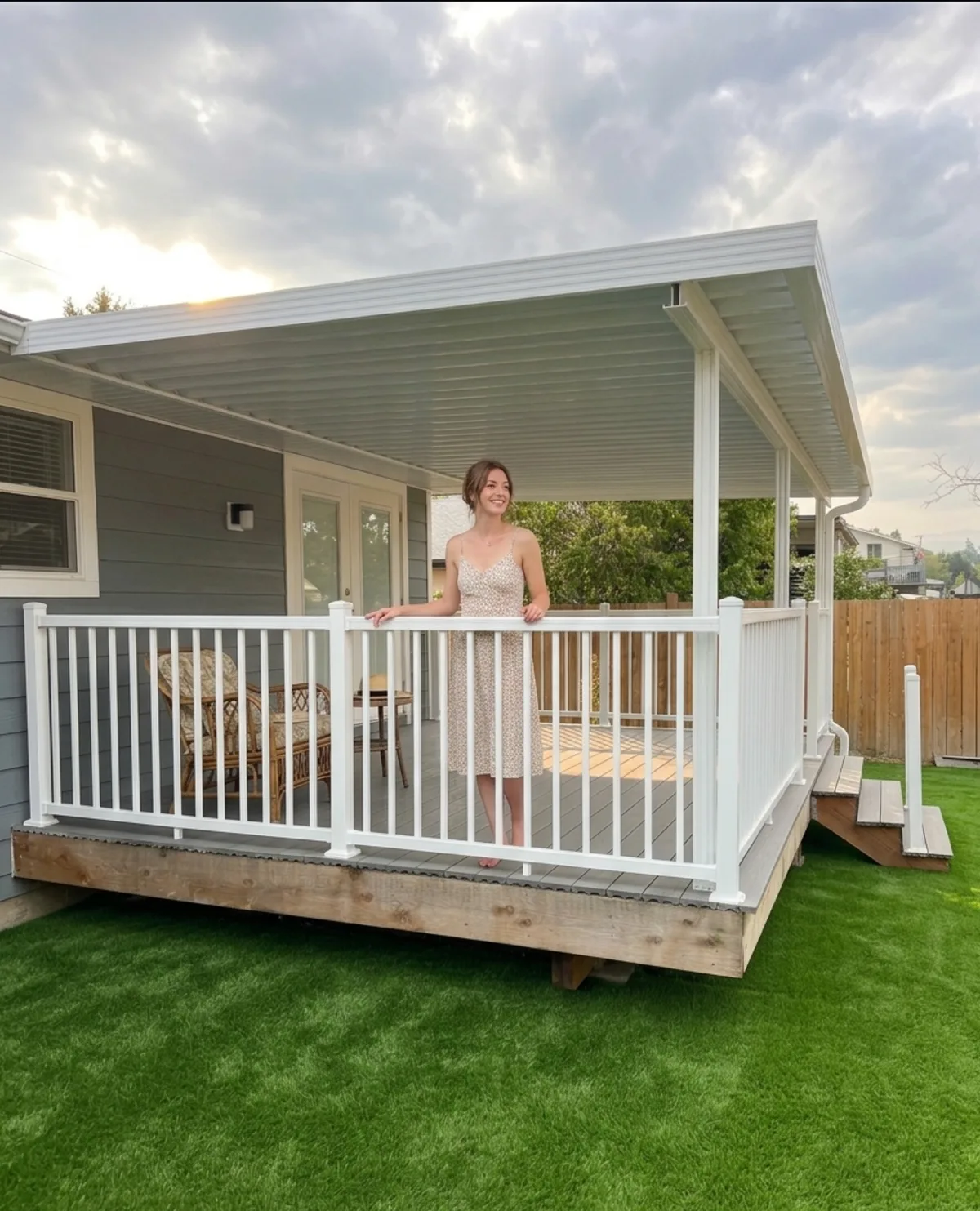
Most backyards end up as one combination: solid panels, attached, lean-to roof, in whatever colour matches the house. If yours doesn’t land on a clean row above, or you’re not even sure which way your deck faces for sun, send us a photo through our contact page and we’ll tell you which type we’d build on it.
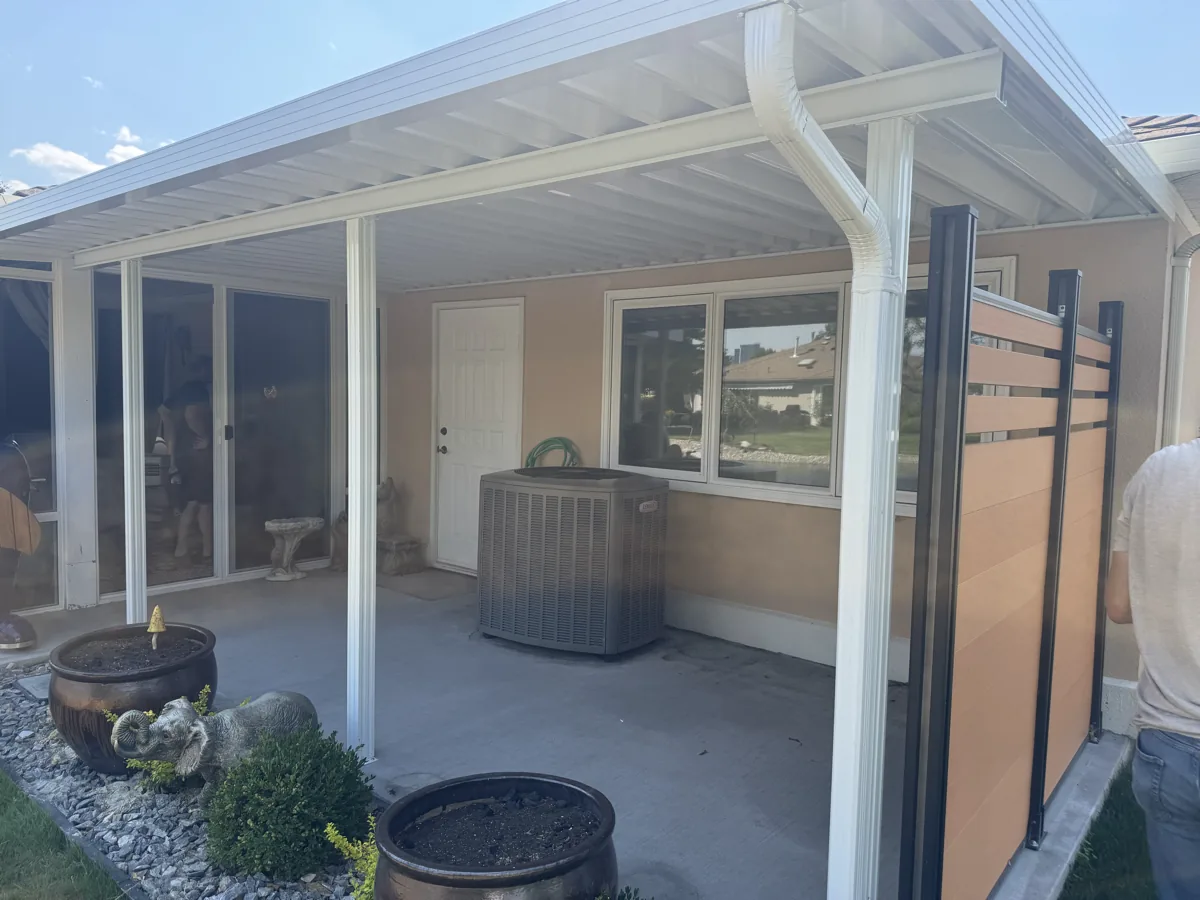
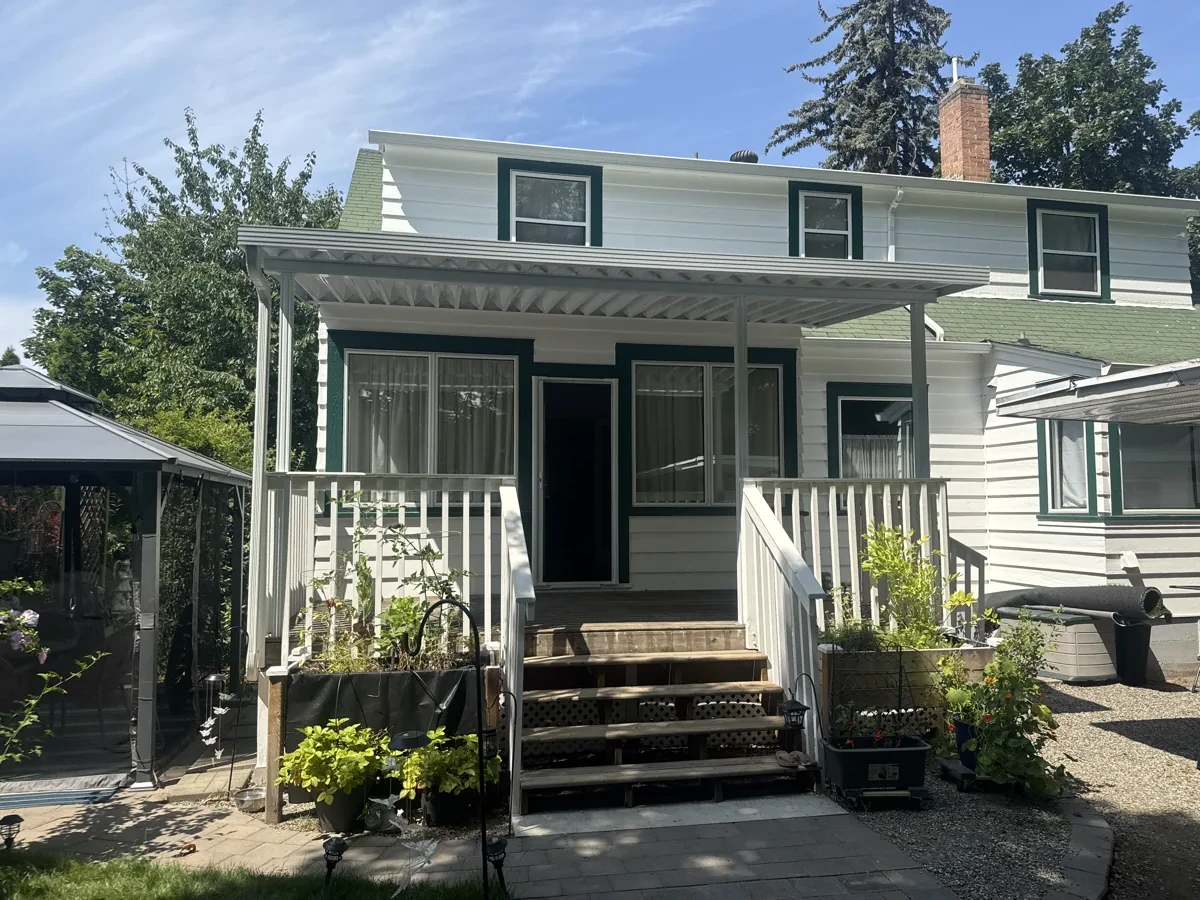
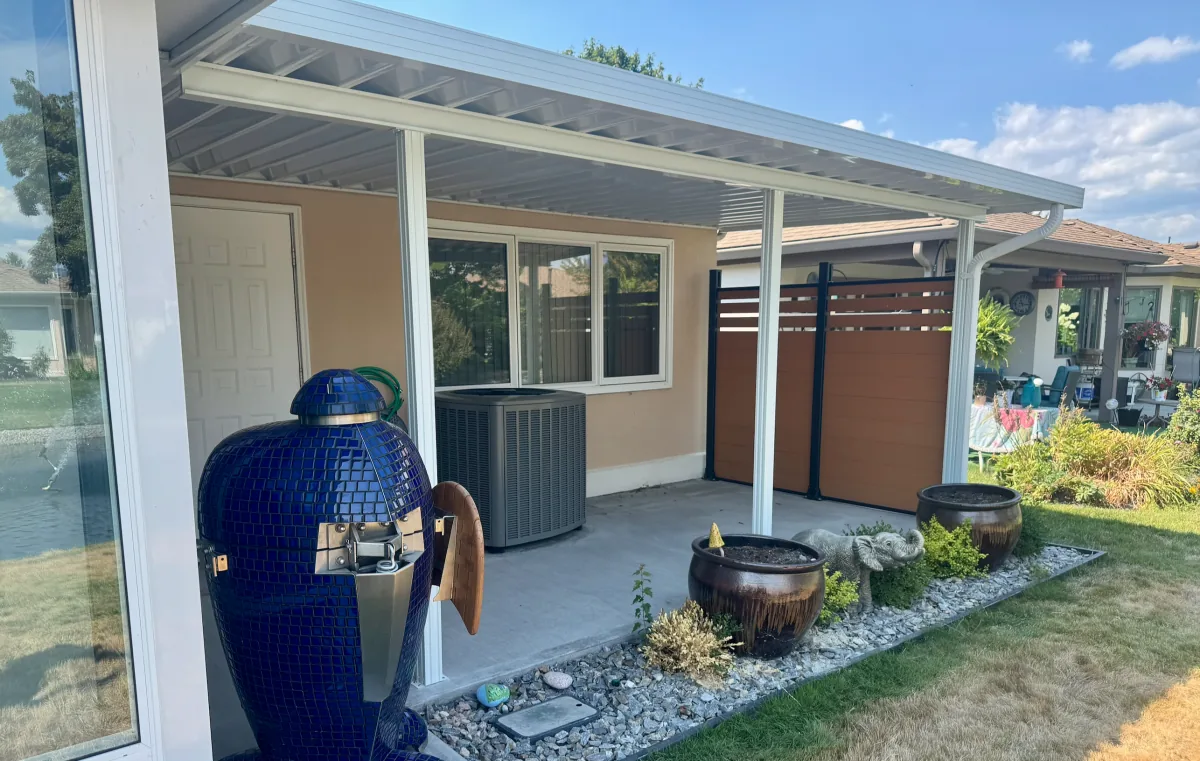
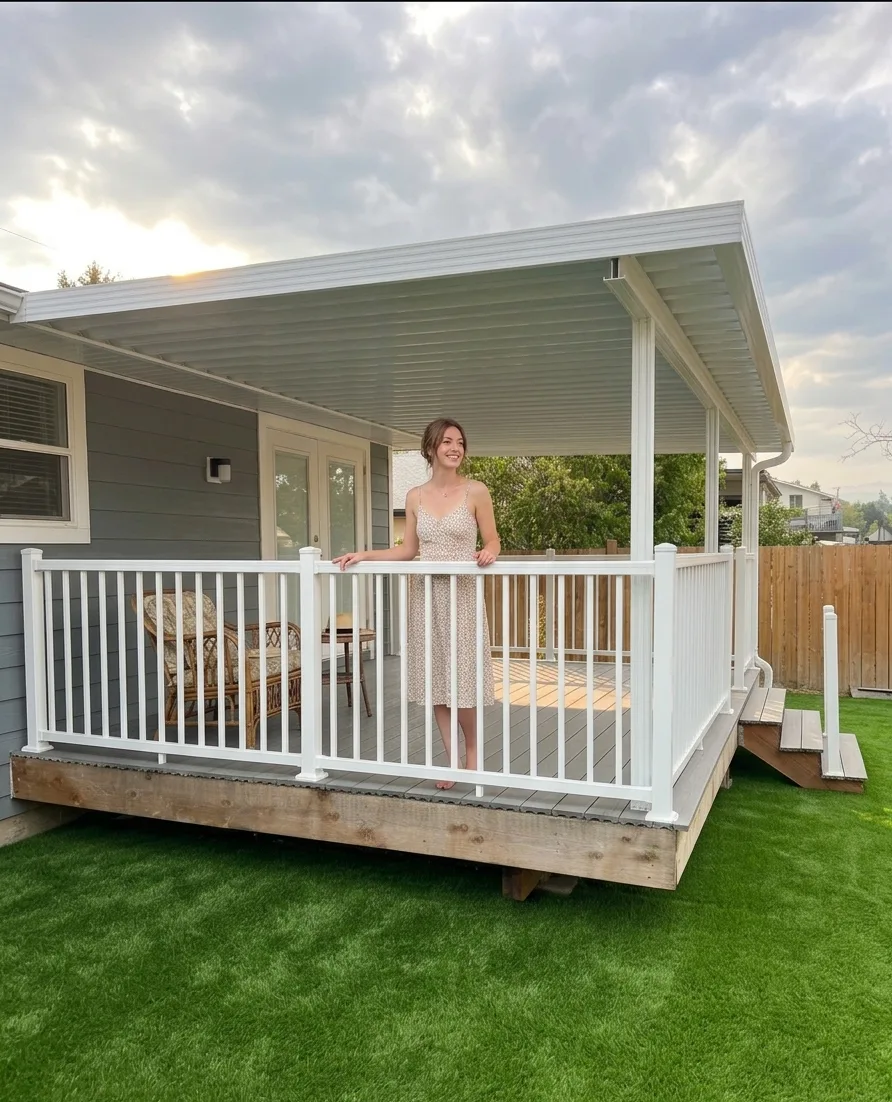
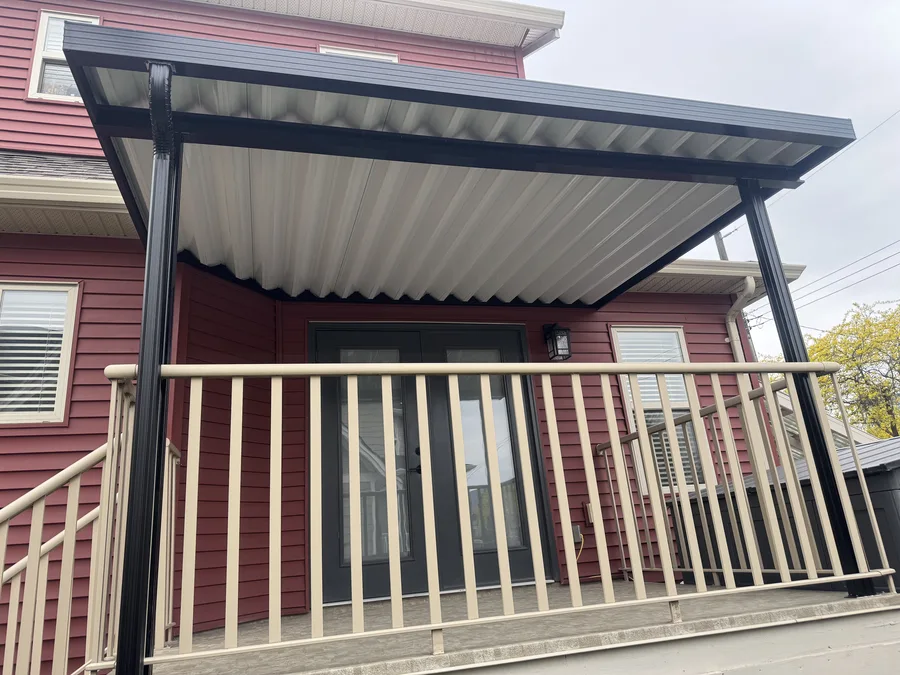
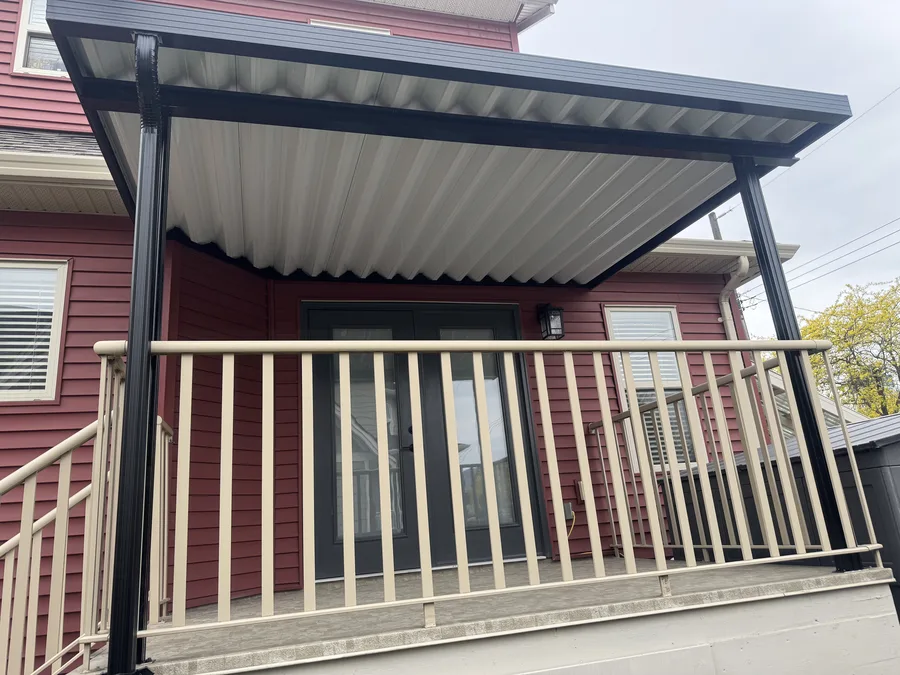
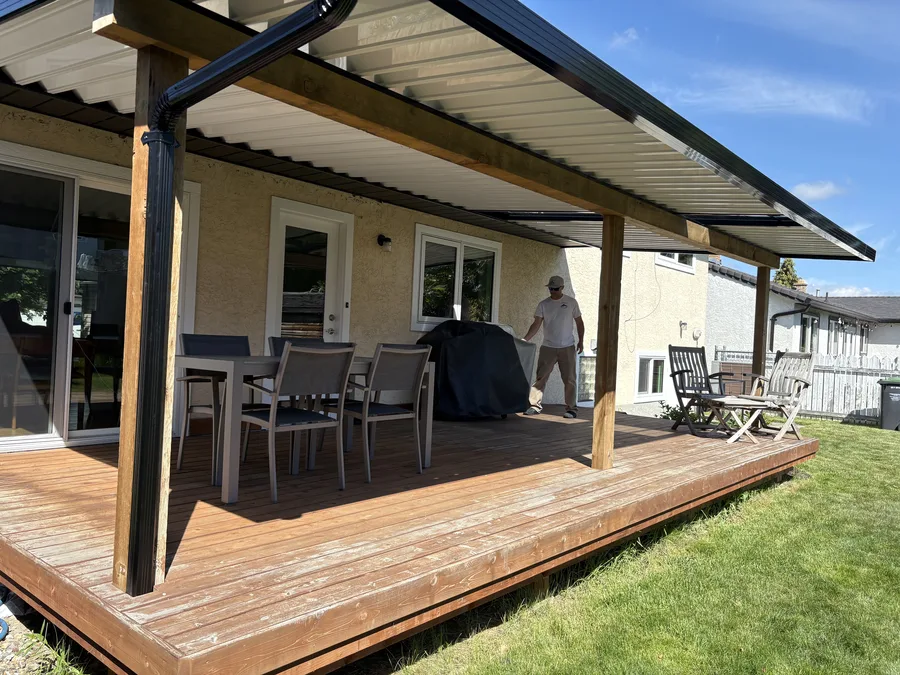
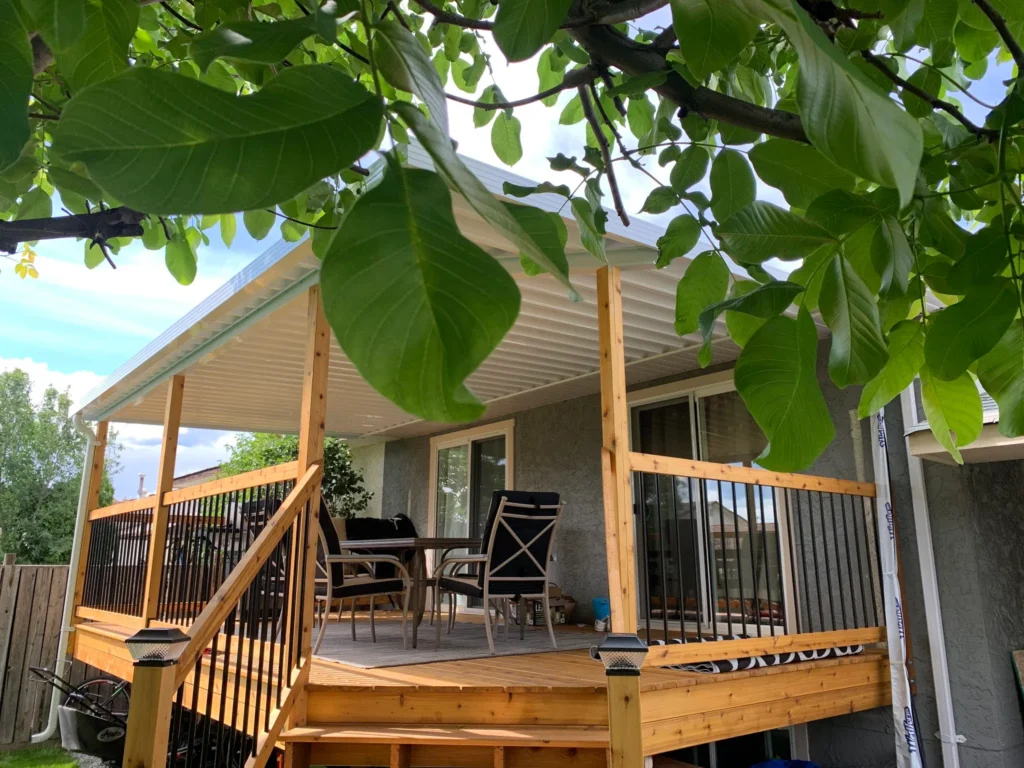
Recent Aluminum Cover Projects
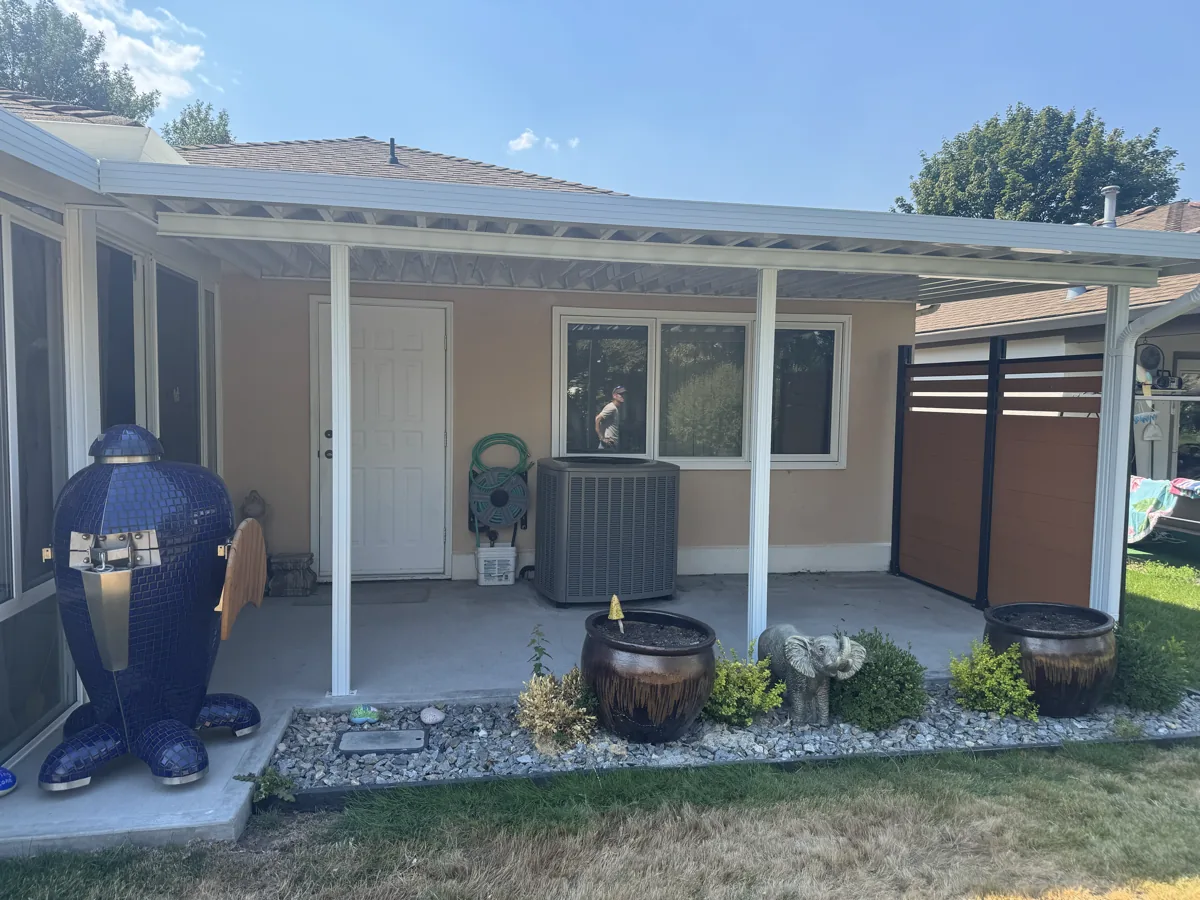
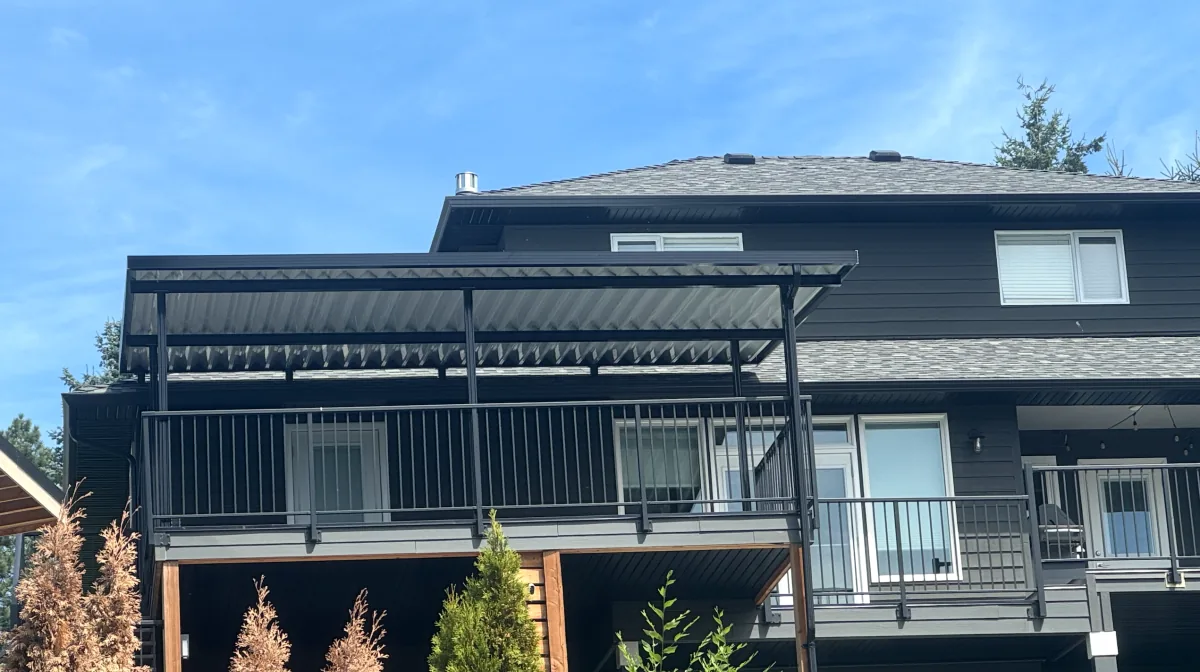
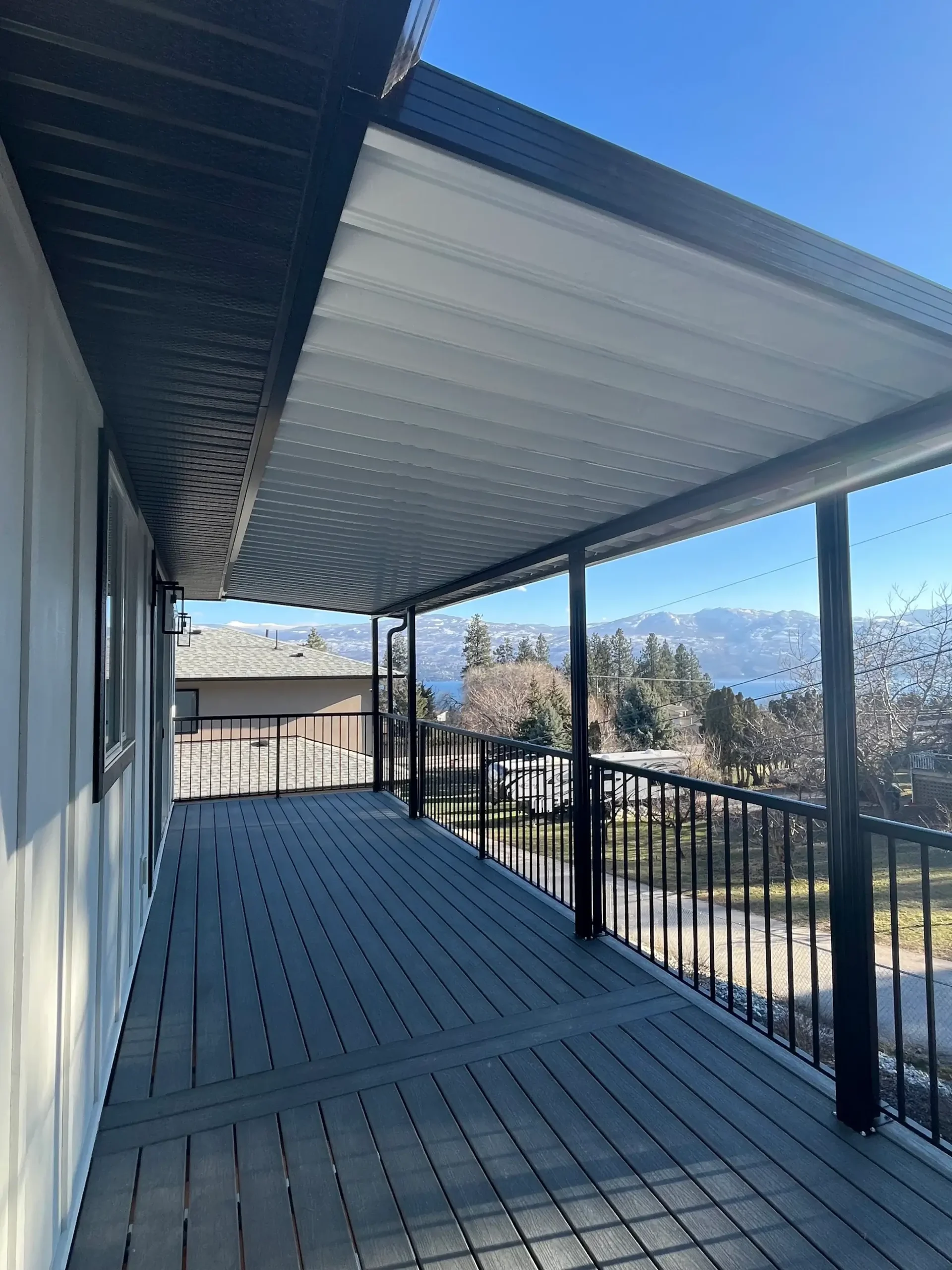
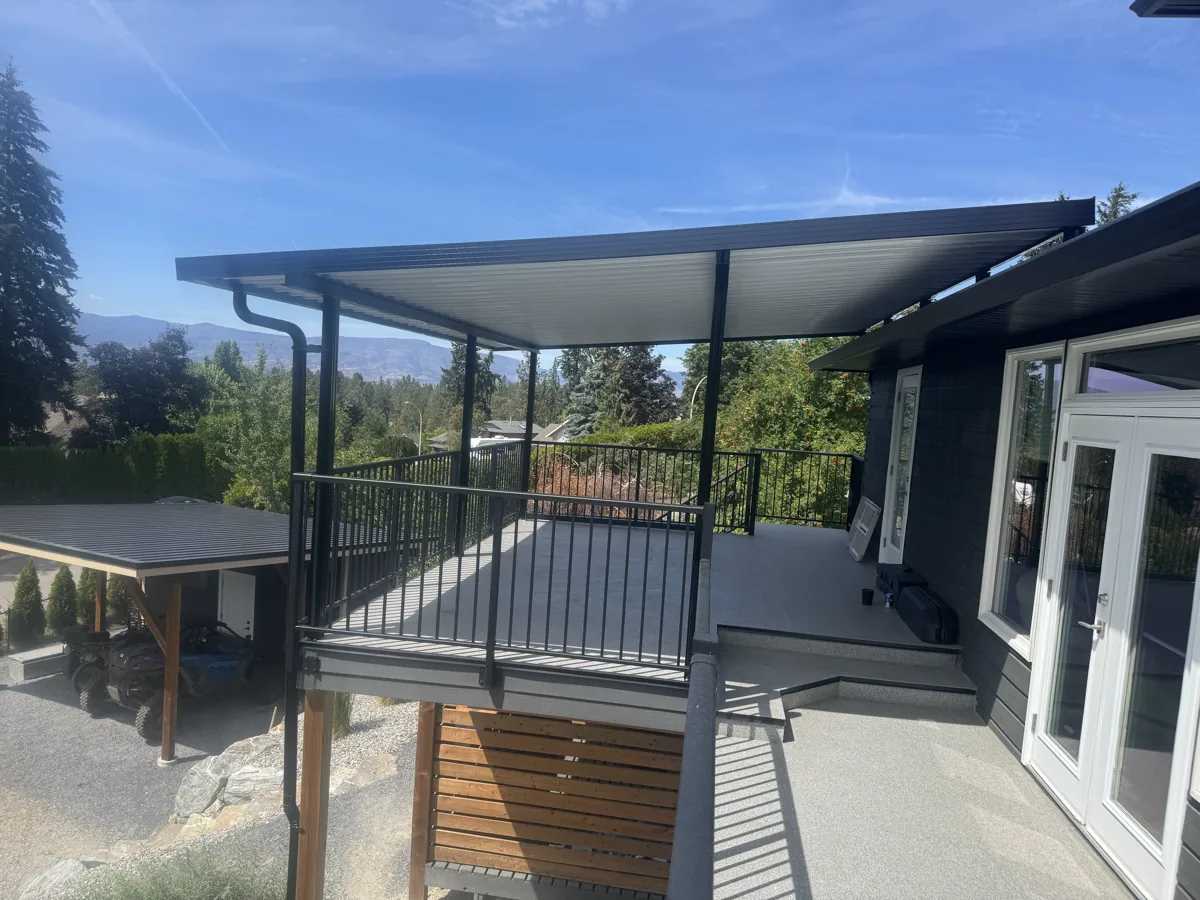
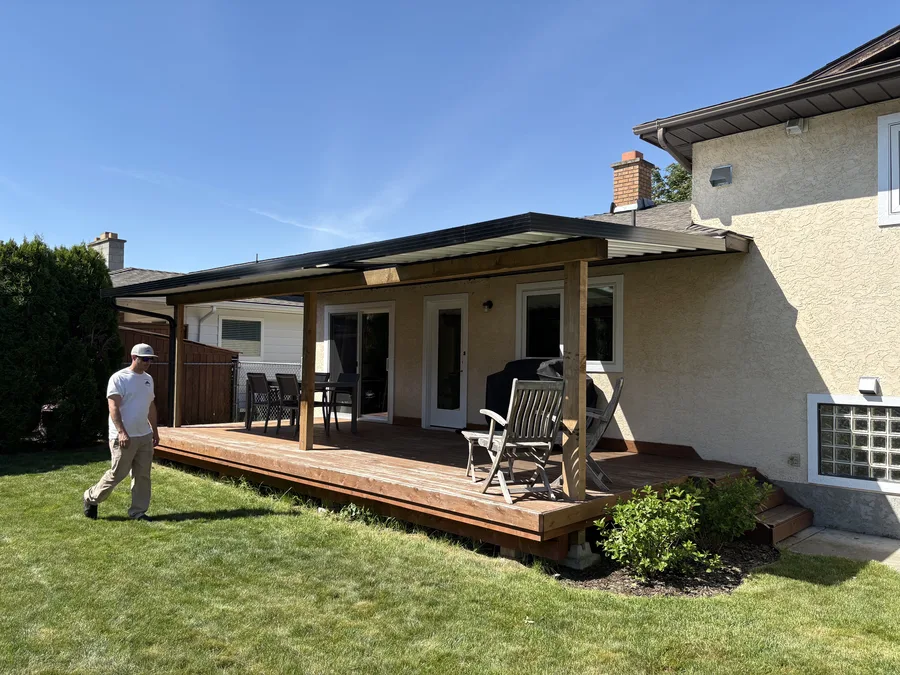
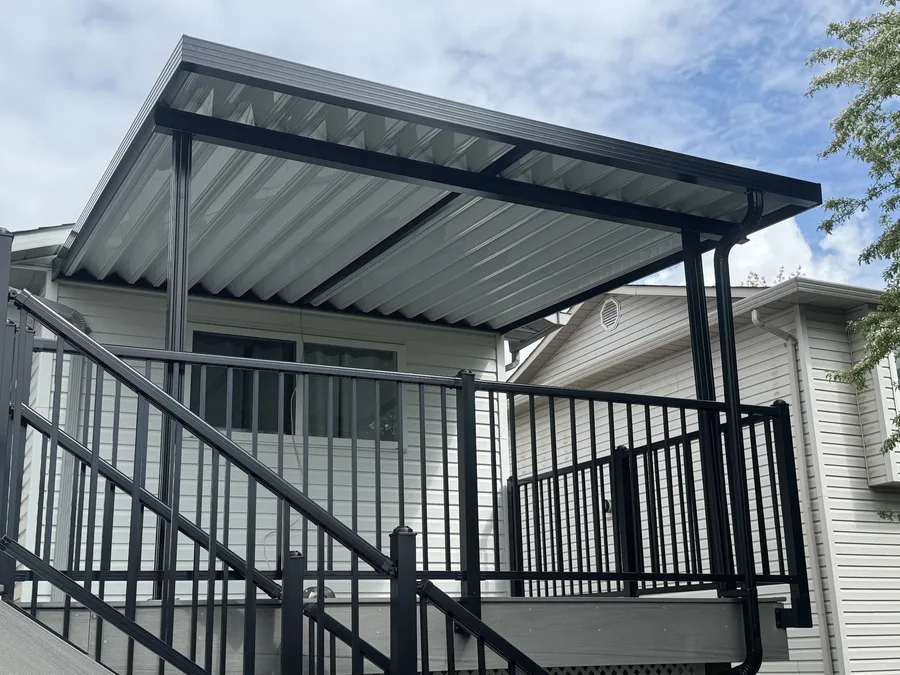
A few we’ve built recently — every one custom-made in West Kelowna and installed by our own crew.
Aluminum Patio Cover Type Questions
What’s the difference between an insulated and non-insulated aluminum patio cover?
Nothing about insulation, really. Every aluminum patio cover we build, solid panels included, is an open-air structure: it blocks sun, rain and snow but the sides stay open, so there’s no true insulation either way. What people usually mean by “insulated” is a solid panel roof versus a lighter single-skin one. If you want a fully enclosed, temperature-controlled room, that’s a 4-season sunroom, not a patio cover.
What’s the difference between solid and single-skin aluminum roof panels?
Solid panels interlock into one continuous, waterproof roof with a finished underside, built for everyday living space. Single-skin panels are a lighter aluminum sheet, still waterproof, but built for carports and utility covers rather than a dining area you want looking finished from below.
Should I choose a flat, gable or lean-to roof for my aluminum cover?
A lean-to suits most attached covers and moves snow off in one direction with the least maintenance. A flat or low-slope roof gives the cleanest, most modern look. A gable matches a steep-pitched house and sheds snow off two sides instead of one. We’ll walk your specific roofline before recommending one.
Is an attached or freestanding aluminum patio cover better for my yard?
Attached is the right call if your patio is already against the house: fewer posts, lower cost, cleaner transition. Freestanding makes more sense over a pool, hot tub or garden area away from the house, or if you’d rather not touch your siding at all.
What colours do aluminum patio covers come in?
Black and white cover most jobs, and we colour-match to your trim or siding on request. We also offer a powder-coat wood-grain finish for a warmer look without the upkeep of real wood.
Can I mix aluminum panels with glass strips on one roof?
Yes, and it’s one of our more common builds. Solid panels go where you want shade, glass strips go over a kitchen window or dark corner where you want daylight instead. The framing ties together in one visit.
Takes under 60 seconds · Your information is never shared.
Prefer to talk to someone? Call (250) 215-7513
Ready for an Aluminum Patio Cover?
Designed, made and installed in the Okanagan by our own crew. 1,500+ patios built since 2005, 4.9 stars across 32 Google reviews.
Serving Kelowna, West Kelowna, Vernon, Penticton, Lake Country & Salmon Arm