

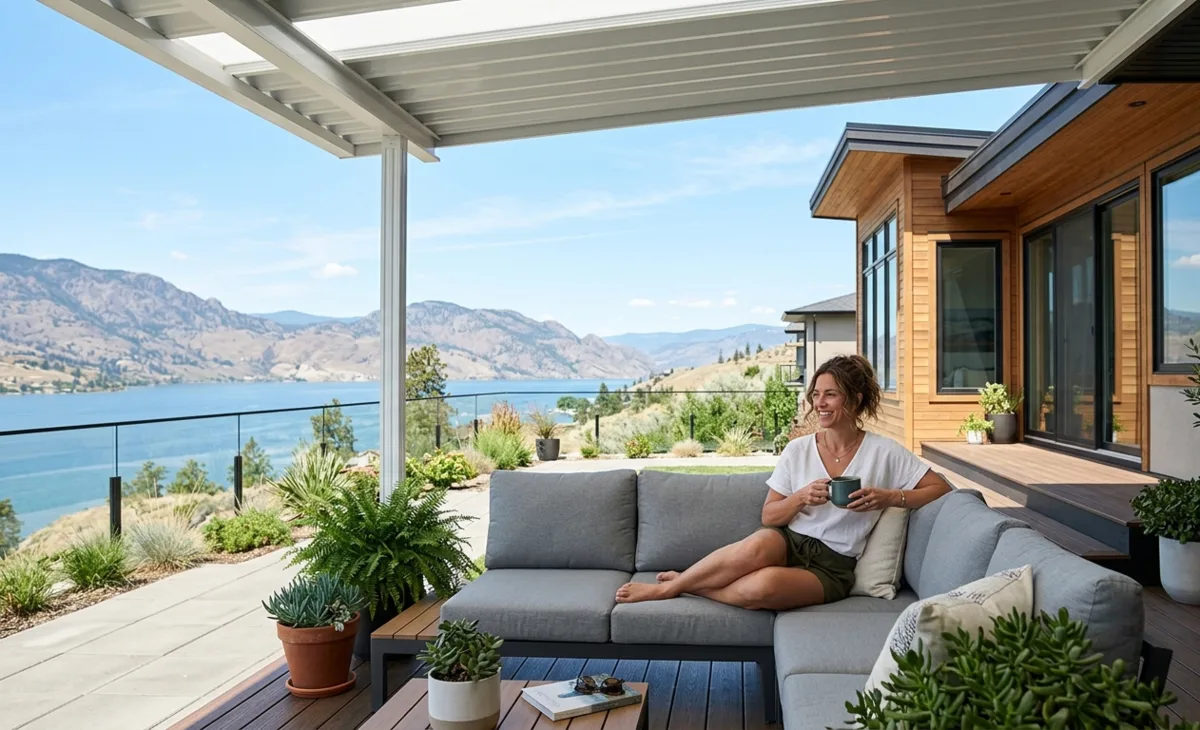
How to Choose a Patio Cover: The Okanagan Buyer’s Guide
How to choose a patio cover comes down to three decisions: match the roof material (aluminum, glass or mixed) to which way your deck faces, pick attached or freestanding for your wall and layout, then size it to the space you’ll actually use. Colour and snow load follow from there.
All of it is designed, made and installed in the Okanagan by our own crew, usually in one day for an aluminum cover.
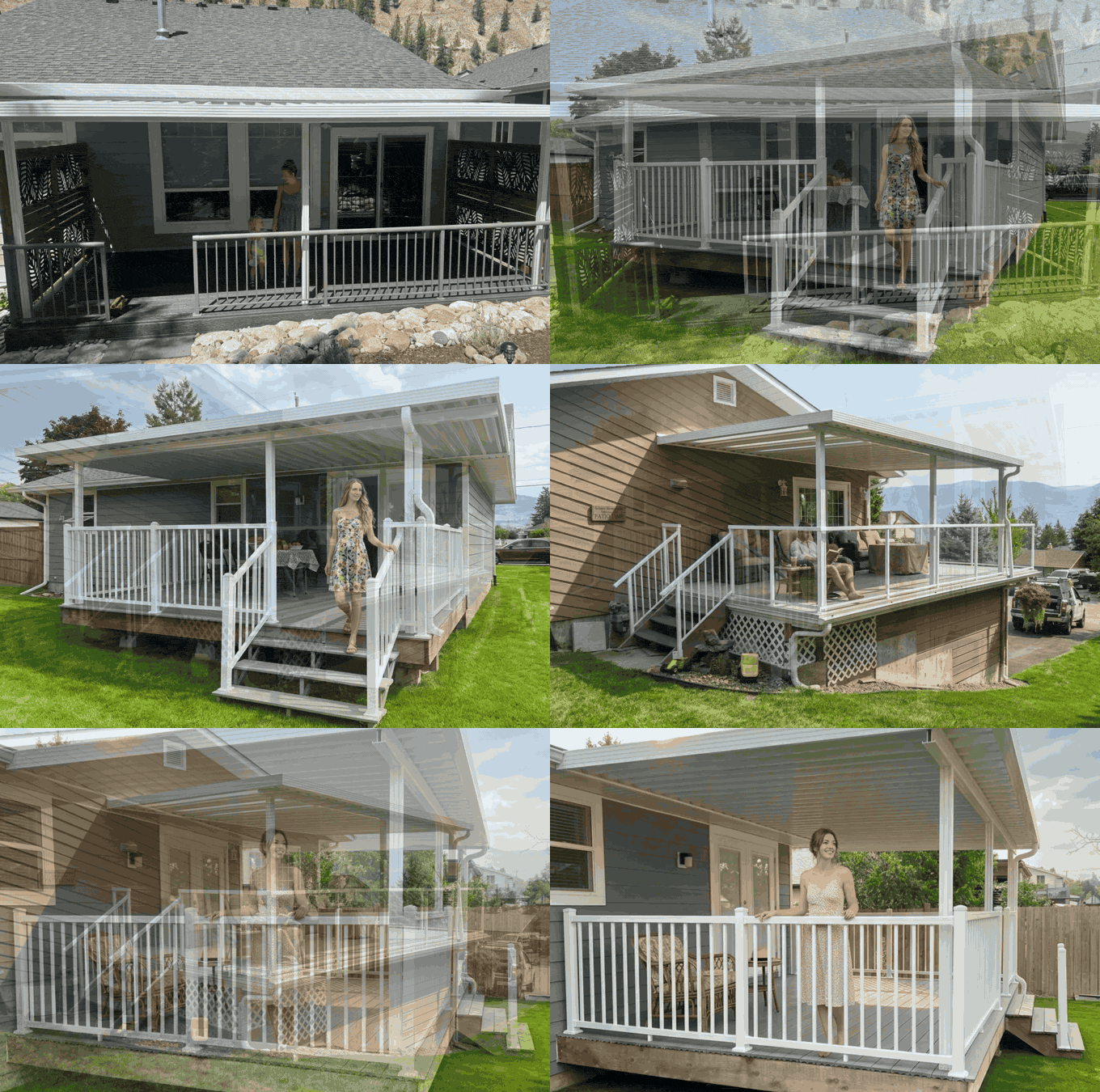
How to Choose a Patio Cover Material: Aluminum, Glass or Mixed
Material is the first fork in the road, and it’s usually decided by light, not looks. We build three roof types: solid aluminum, glass, and a mix of the two. Here’s how we sort homeowners into each one.
Aluminum: Our Most-Built Option
Aluminum is what most Okanagan homeowners end up with. It’s a heavy-gauge structural frame with a powder-coat finish that handles our winters without flinching, and most covers go up in a single day out of our West Kelowna shop. The one thing it won’t give you is light through the roof; for that, go glass or mixed.
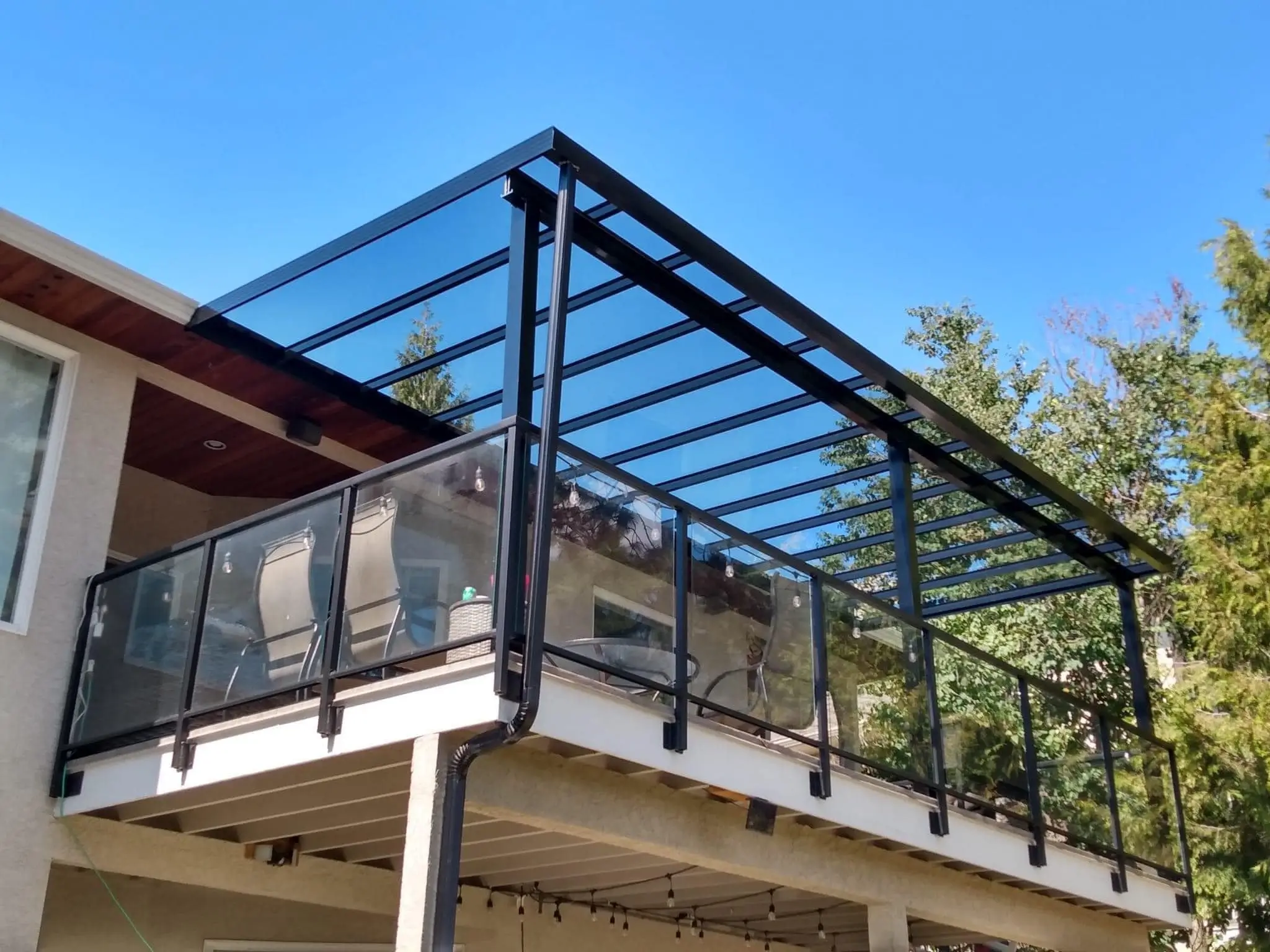
Glass: Best for Light and Views
Glass covers use tempered safety glass in an aluminum frame, clear or tinted. They’re the right call over a window, a kitchen, or a view you don’t want to lose, and take a day or two to install instead of one.
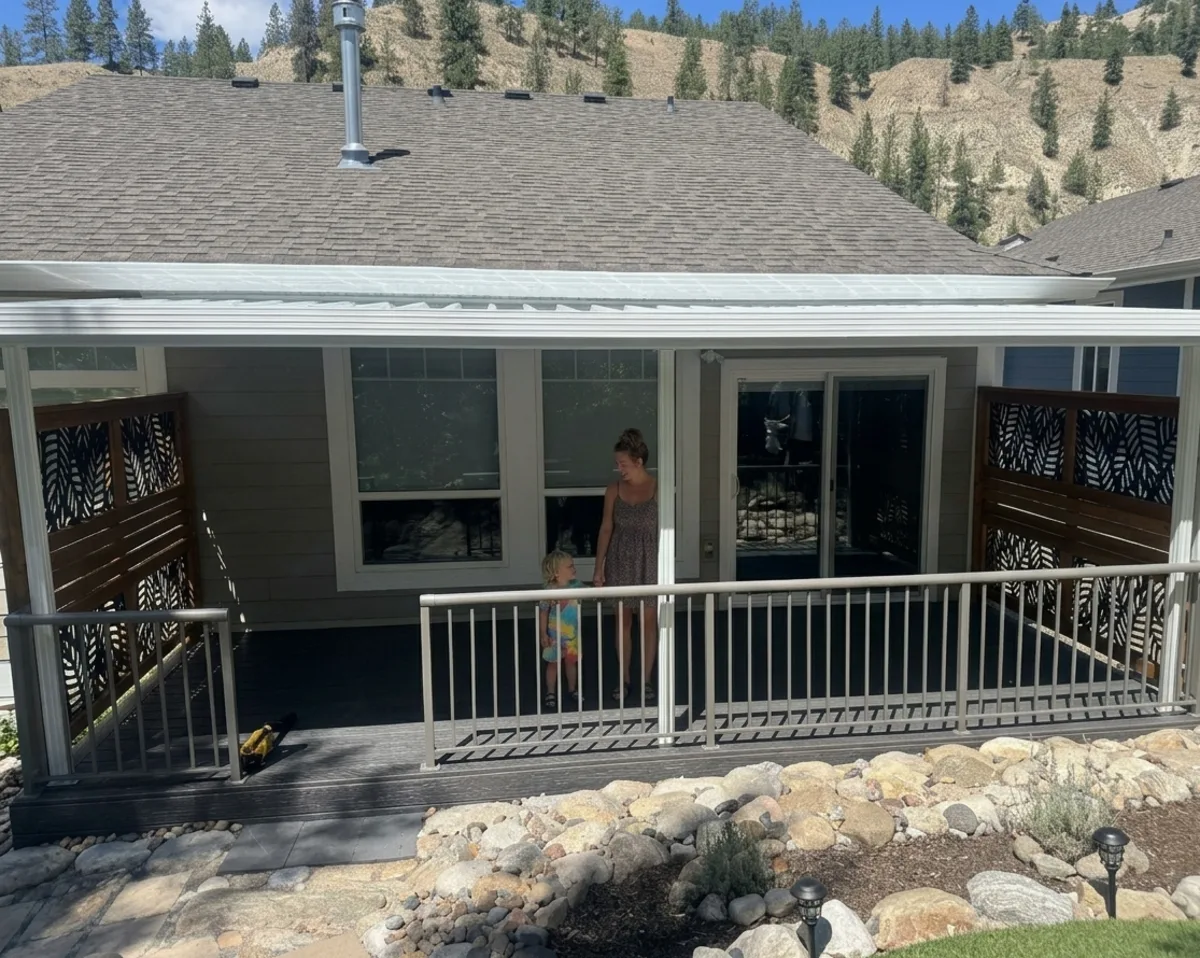
Mixed: Aluminum Roof, Glass Strips
A solid aluminum roof with a few glass panels dropped in gives you shade where you sit and daylight at the house wall. We recommend it most on bigger decks, since it runs cooler than an all-glass roof.
| Factor | Aluminum | Glass | Mixed |
|---|---|---|---|
| Light underneath | Shade, full | Maximum | Partial |
| Typical install | 1 day | 1 to 2 days | 1 day |
| Snow performance | Over-built for BC | Built for our snow loads | Over-built, same frame |
| Best exposure | Any | Clear north/east, tinted south/west | Big decks, any exposure |
Our opinion: for most Okanagan backyards, a solid aluminum roof is the right call. Glass is worth the extra day of install when light actually matters, not just because it looks nice in photos.
Best Patio Shade Options: Match Your Cover to Sun and Snow Load
North or East-Facing Decks
A deck that faces north or east doesn’t take a hard hit from the afternoon sun, so clear glass or straight aluminum both work fine here. You’re choosing based on light preference, not heat.
South or West-Facing Decks
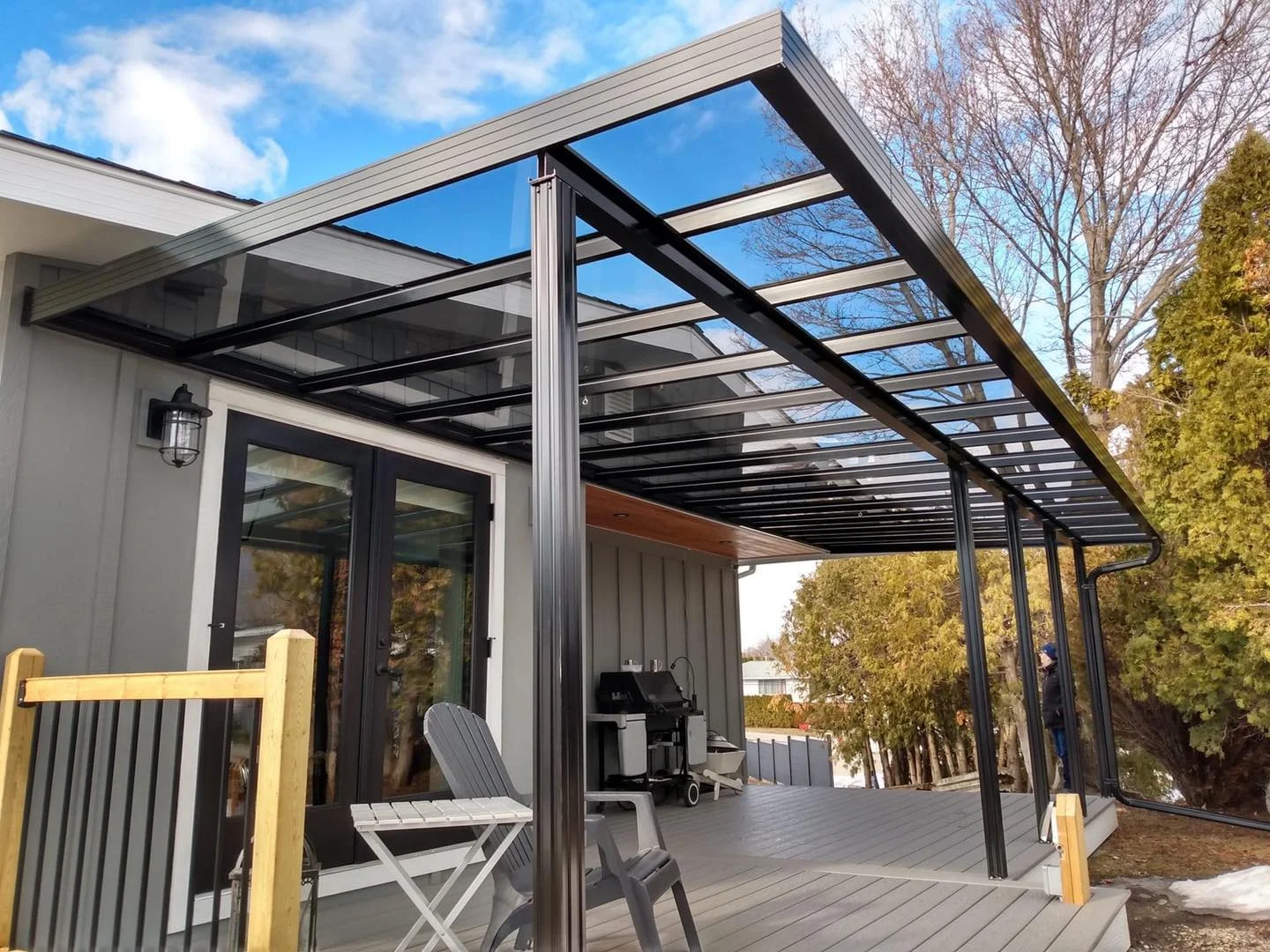
South and west-facing decks take the brunt of an Okanagan summer afternoon. If you’re going glass here, get it tinted grey, green or neutral, or lean on aluminum with a few glass strips instead of a full glass roof. Clear glass on a west wall gets warm by 4pm in July, and that’s the mistake we see homeowners regret most.
Snow Load and Roof Pitch
Every cover we build is sized for your elevation and roof span, since snow load isn’t the same in downtown Kelowna as it is up a Vernon hillside. A proper pitch sheds snow instead of holding it, and both our aluminum and glass structures are over-built for a wet February dump. For more detail, our snow load guide breaks down how glass holds up specifically.
The Best Cover for Patio Decks: Attached, Freestanding or Sized Right
Attached Patio Covers
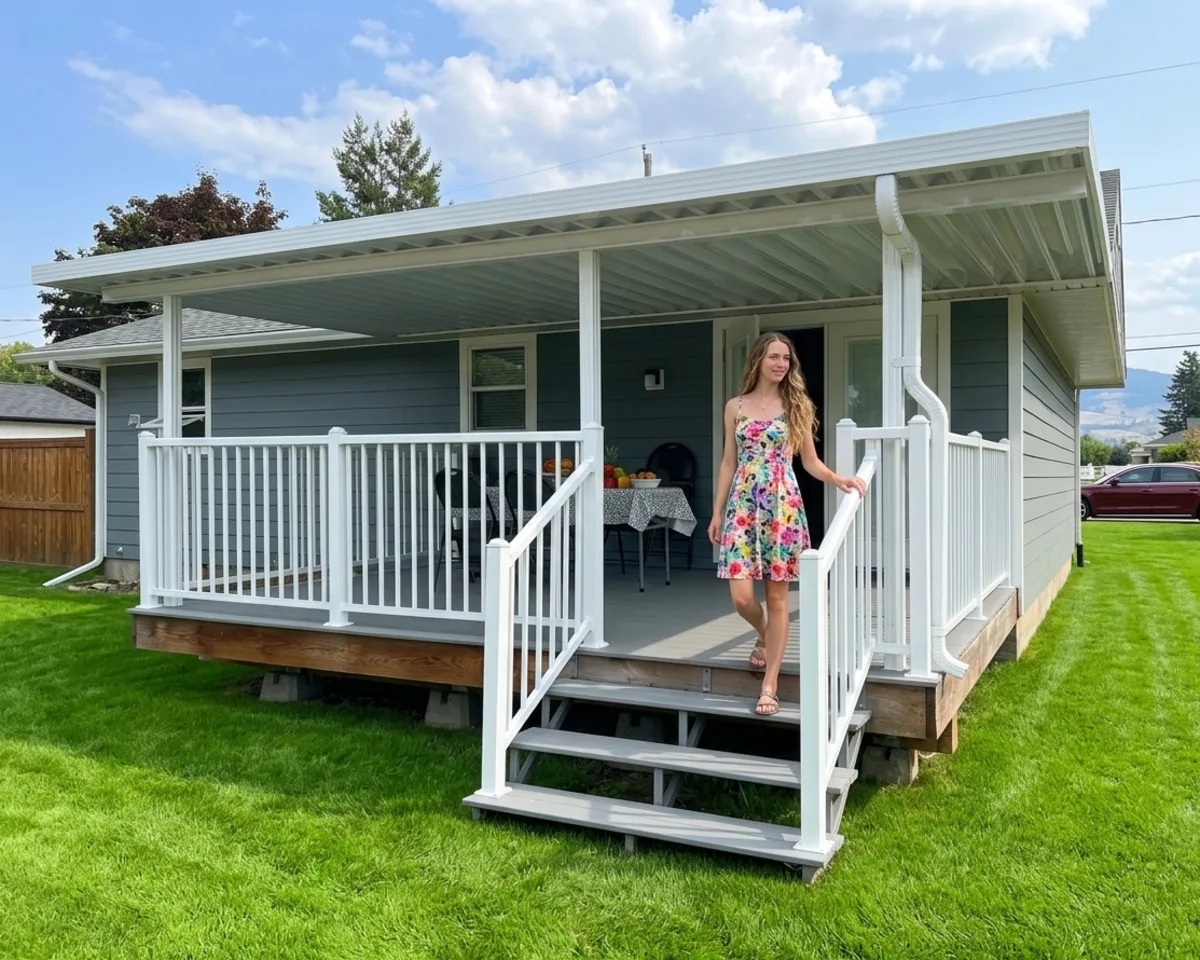
An attached cover ties into your house with a ledger board and extends the roofline out over the patio. It’s the most common build we do, since it shares the wall for support and makes the transition from inside to outside feel natural.
Freestanding Patio Covers
A freestanding cover stands on its own posts with no connection to the house. That’s the right call over a pool, in the middle of a yard, or when the house wall can’t take a ledger board. It needs more posts and footings than an attached cover, but it goes anywhere a patio does.
Getting the Size Right
Size the cover to how you’ll actually use the space, not the whole deck. A table and a sitting area usually need less roof than people expect, and oversizing it just means more roof to shed snow off of. Walk the space with your furniture roughly placed and measure from there, or let us do it on-site.
Best Outdoor Patio Covers Start With the Right Colour
Choosing a Colour
Powder-coat finishes come in custom colours to match your house trim, not just the standard white or black. Black frames tend to disappear against a view, which is why most of our lakefront jobs go black, while white stays classic against stucco and siding. We don’t do . If that’s the look you had in mind, ask us what else gets close.
Wood-Look Finishes vs Plain Aluminum
A few people search for alumawood, which is a wood-grain vinyl coating over an aluminum core, built mostly for Arizona and California heat. We don’t build with it. Everything we make is heavy-gauge structural aluminum with a straight powder-coat finish, built for BC snow rather than desert sun.
Patio Cover Mistakes We Get Called to Fix
- Clear glass over a west-facing deck. Looks great in May, runs hot by August. Tint it.
- Undersizing a freestanding cover. Plan the posts and footings for the load before the frame goes up.
- Picking a colour off a swatch indoors. Hold it up against your actual siding in daylight first.
- Skipping the snow load conversation. Your elevation changes what the structure needs.
- Attaching to a wall that can’t support it. We check this before we build, not after.
Finding the Best Patio Covers Near Me to Install It
The install is what makes or breaks a patio cover. We design, manufacture and install everything in-house with our own crew out of West Kelowna, so the same people who build your frame put it up. Every cover carries a 3-year leak warranty and a 10-year materials warranty.
We serve Kelowna, West Kelowna, Vernon, Penticton, Lake Country and Salmon Arm. If you want to see finished work before you decide, the aluminum patio covers and glass patio covers pages both have real installs, and our glass vs aluminum guide goes deeper on that specific comparison. Or skip the research: send us a photo of your deck and which way it faces, and we’ll tell you what we’d build.
| Your deck | Go with |
|---|---|
| Faces south or west | Tinted glass, or aluminum with glass strips |
| Faces north or east | Clear glass or straight aluminum |
| Sits right against the house | Attached cover |
| Detached, over a pool, or the wall can’t take a ledger | Freestanding cover |
| Sits over a window or kitchen | Glass or mixed roof |
| Just need shade, nothing fancy | Solid aluminum |
| High elevation, heavy snow pocket | Aluminum or glass, sized for your snow load |
Recent Patio Cover Projects
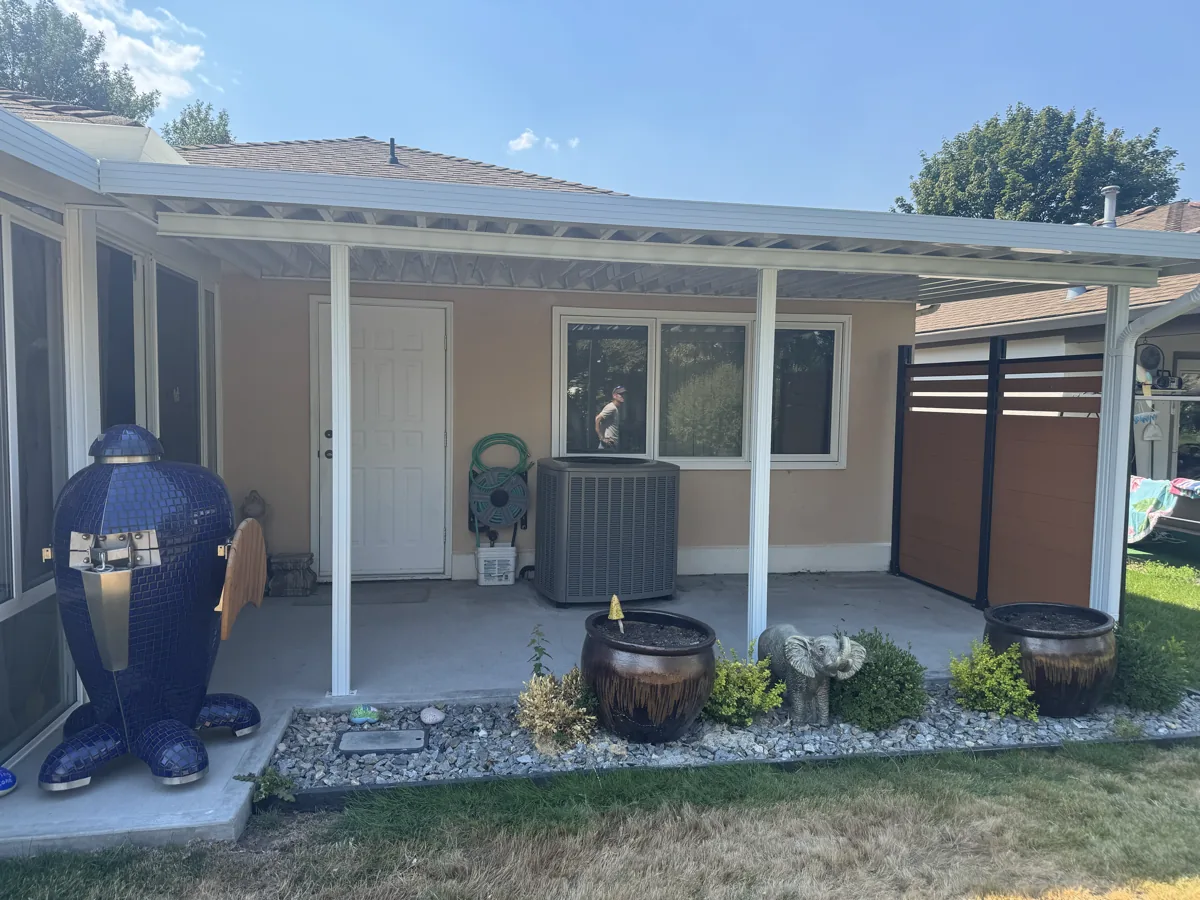
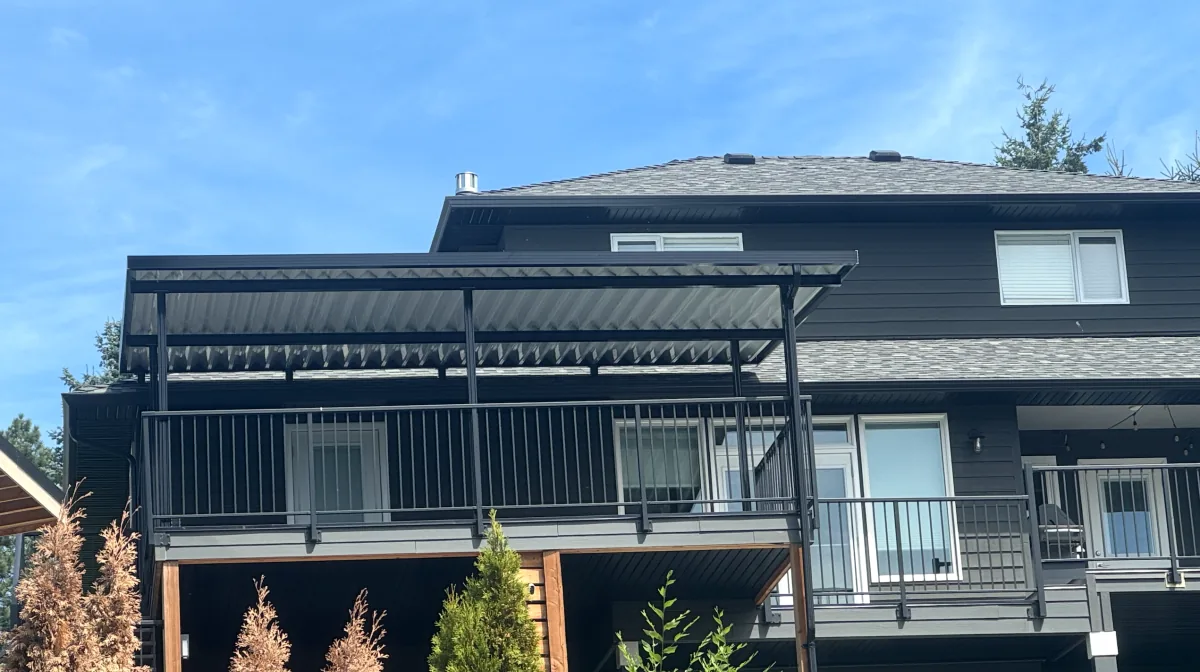
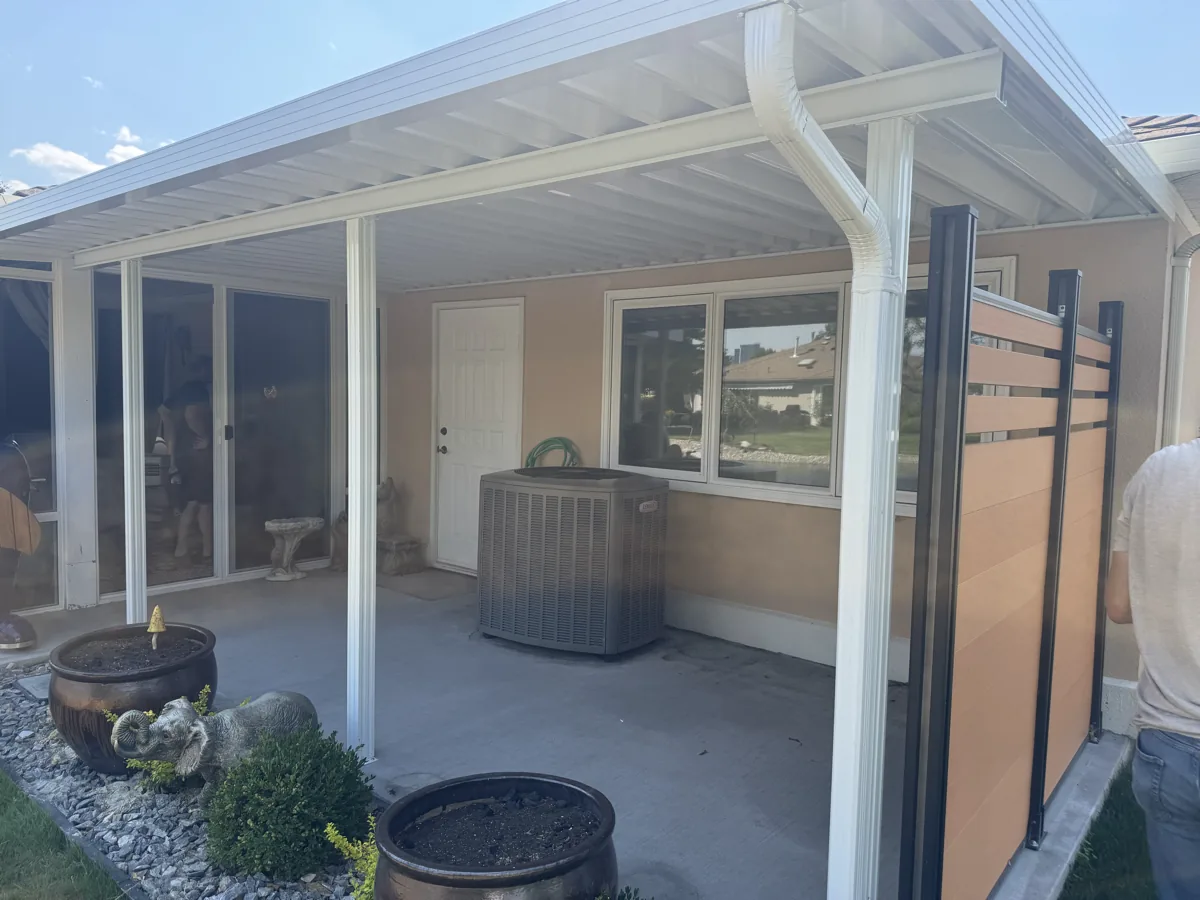
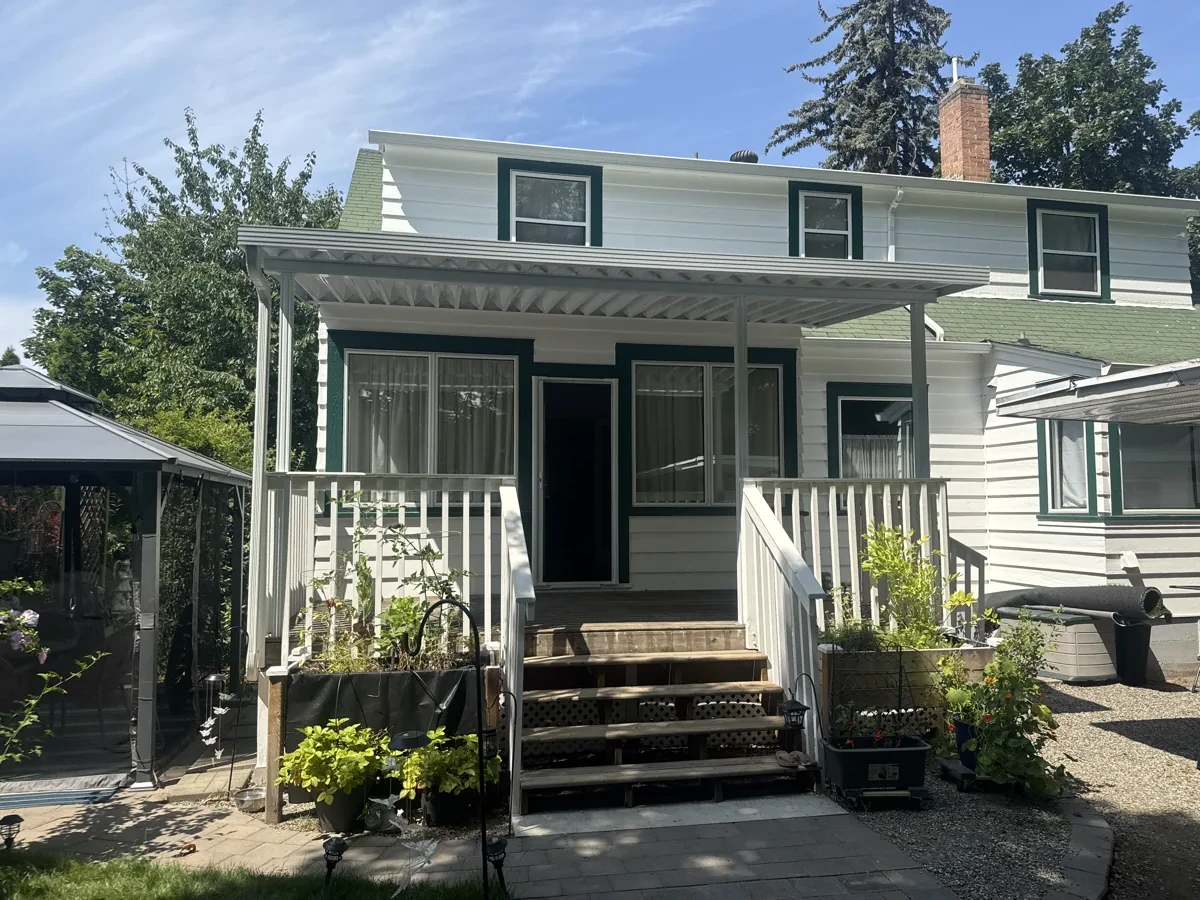
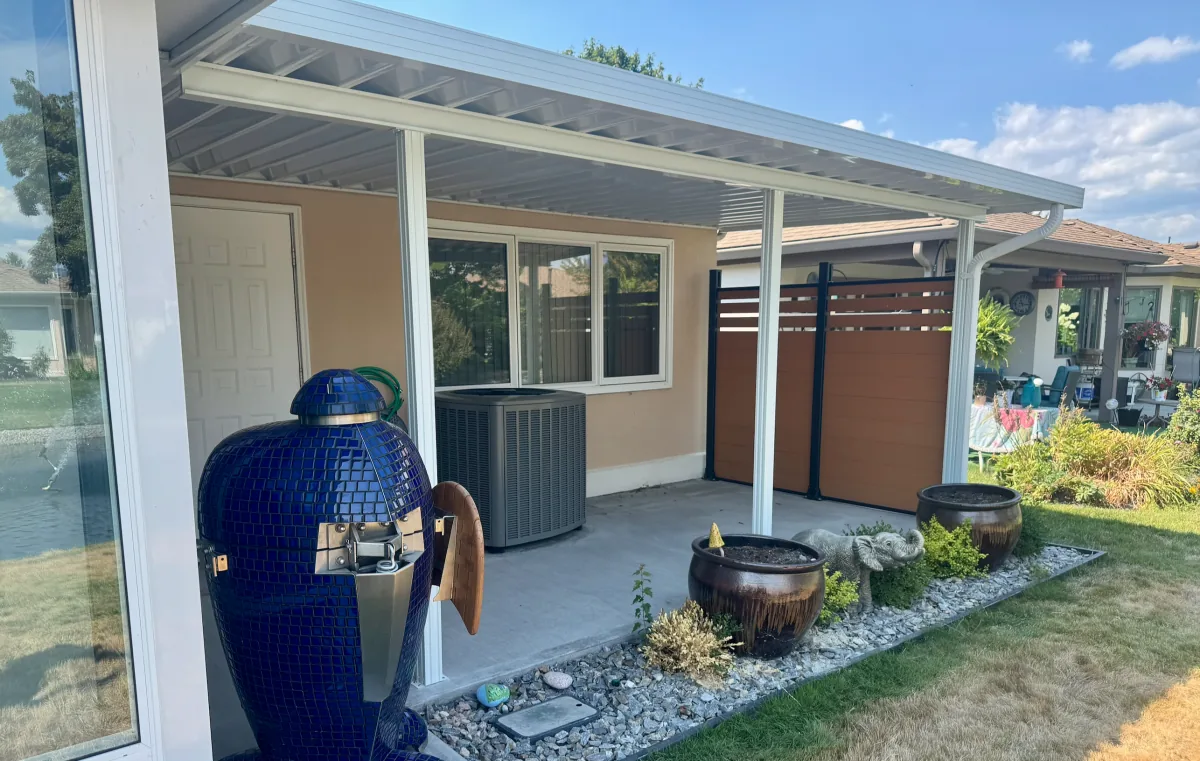
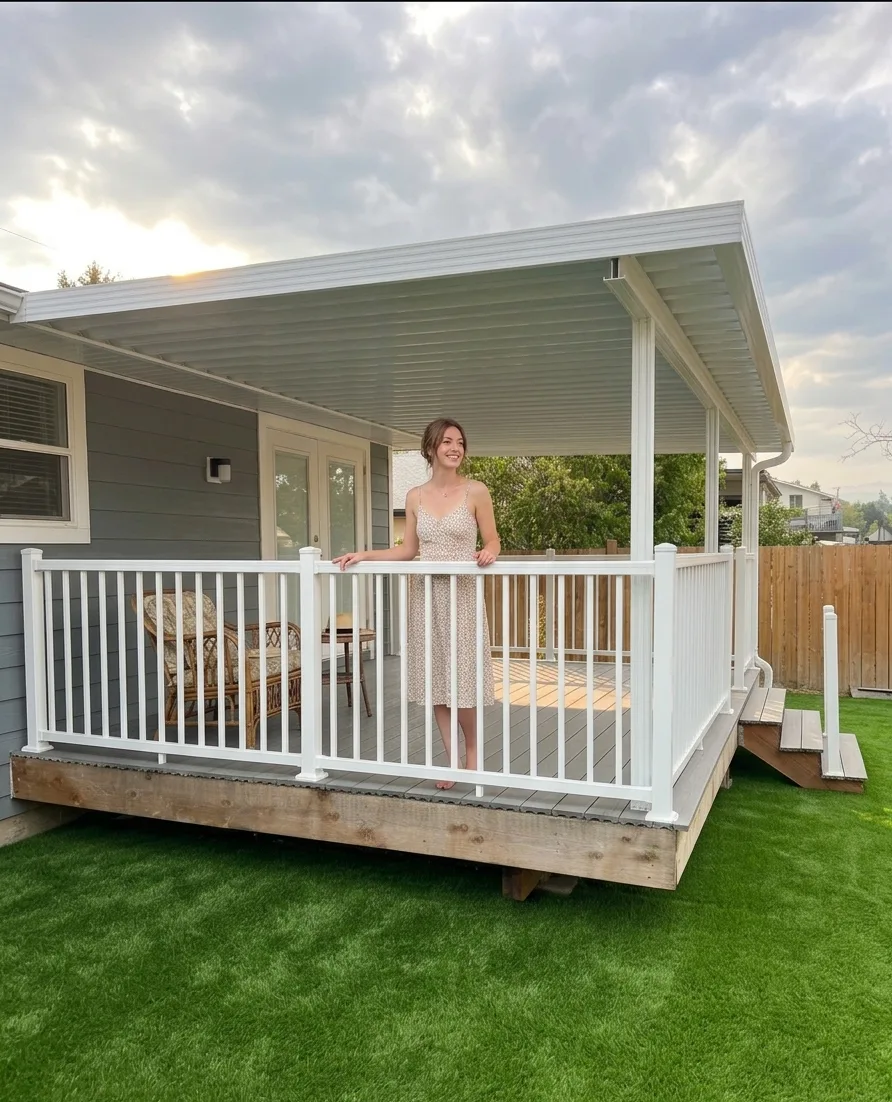
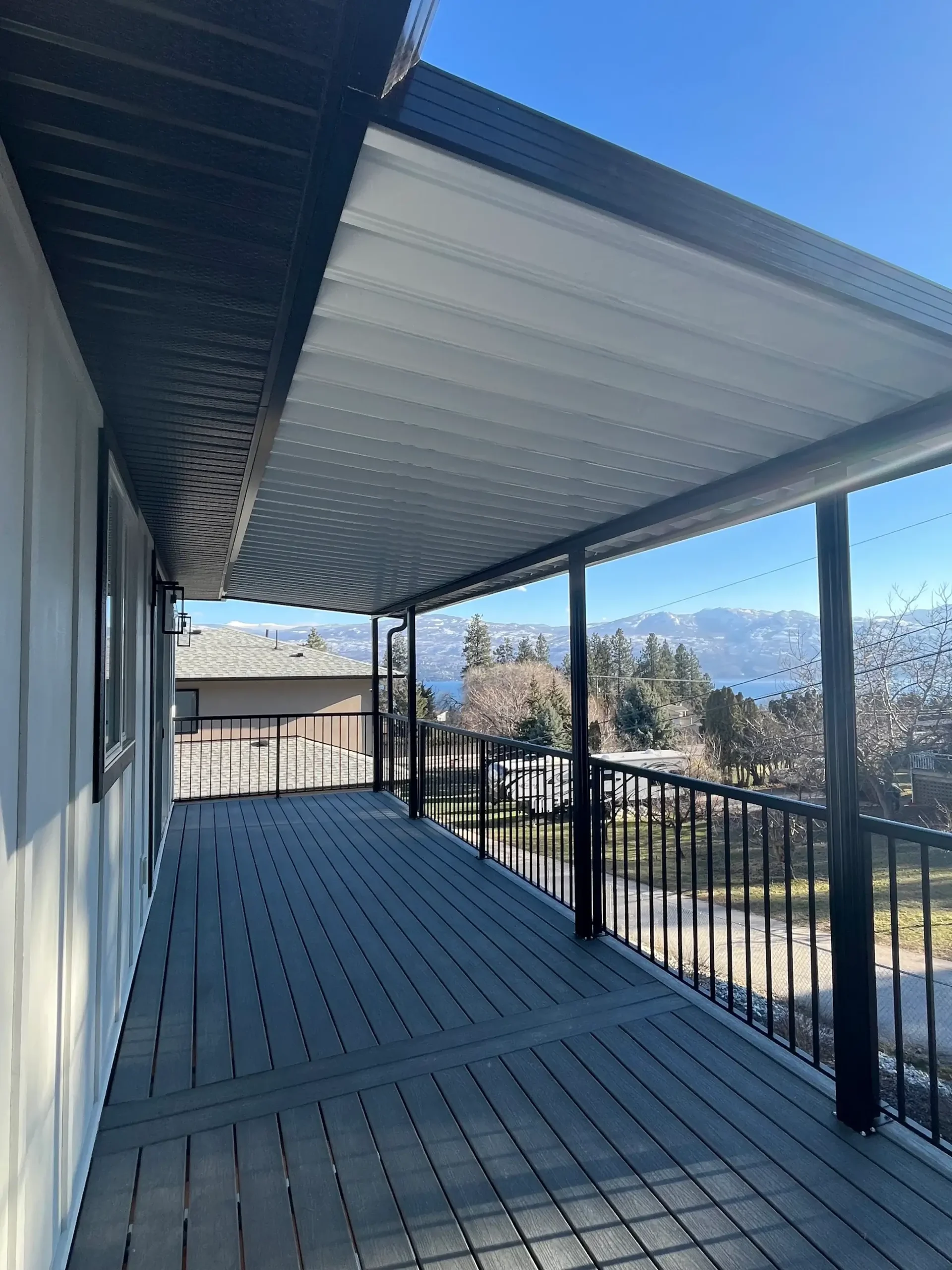
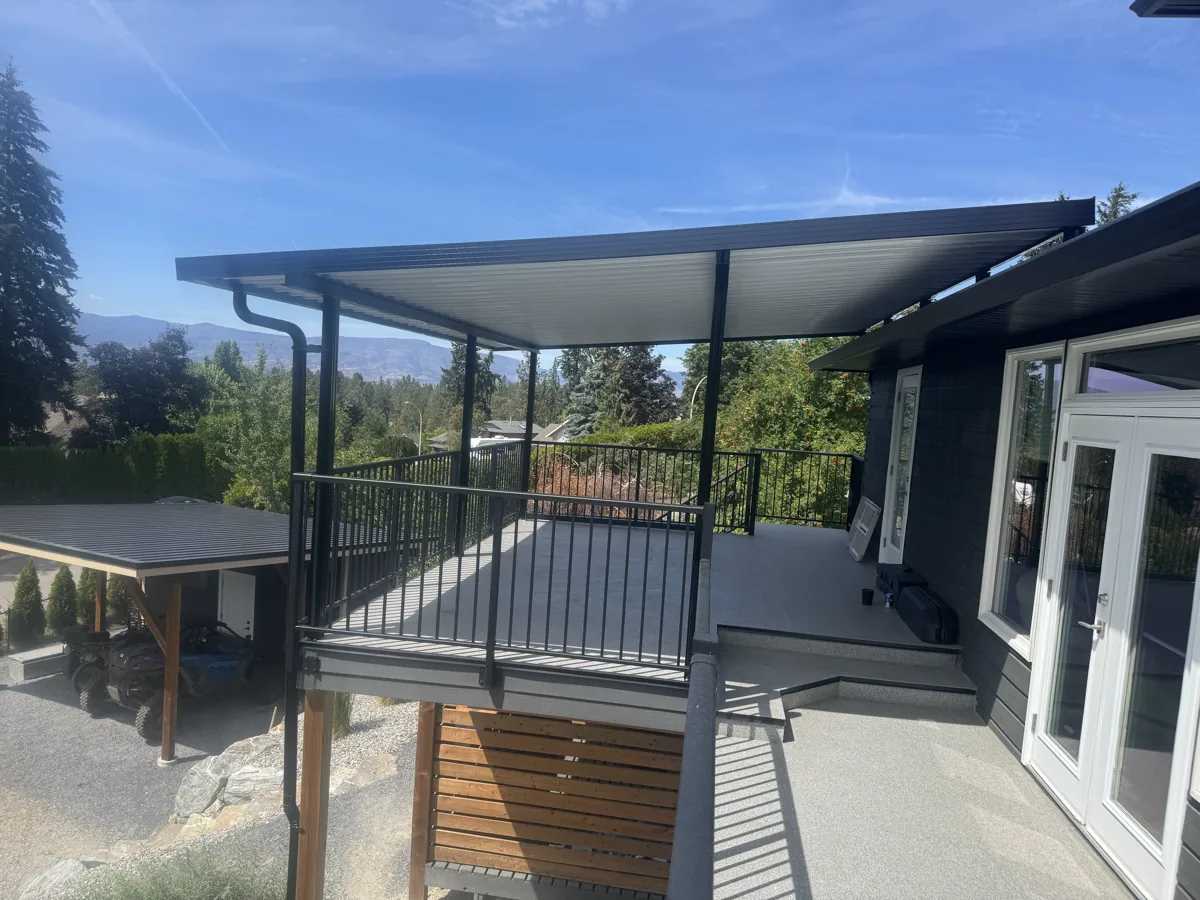
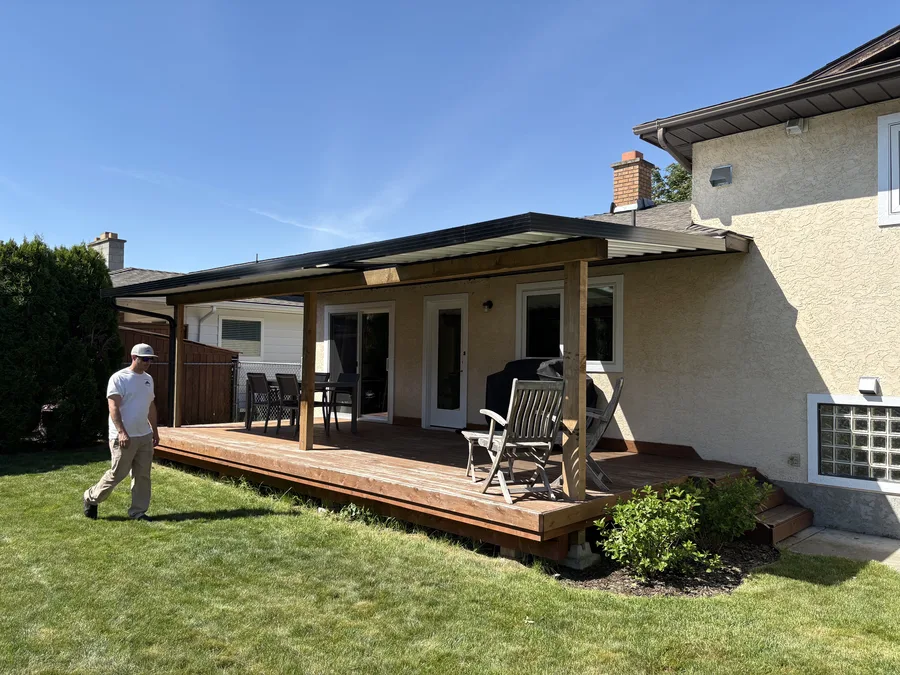
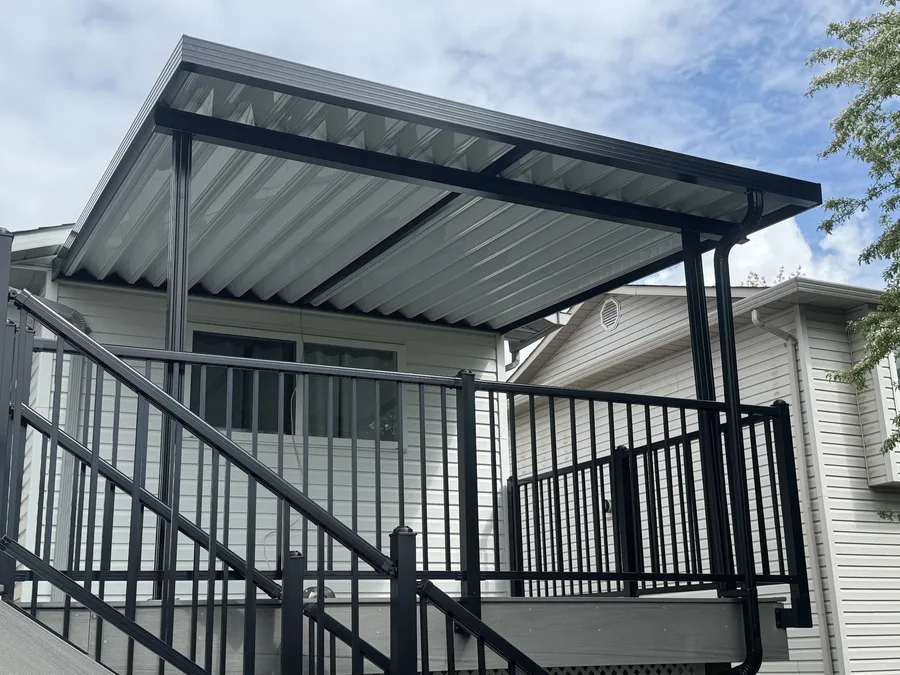
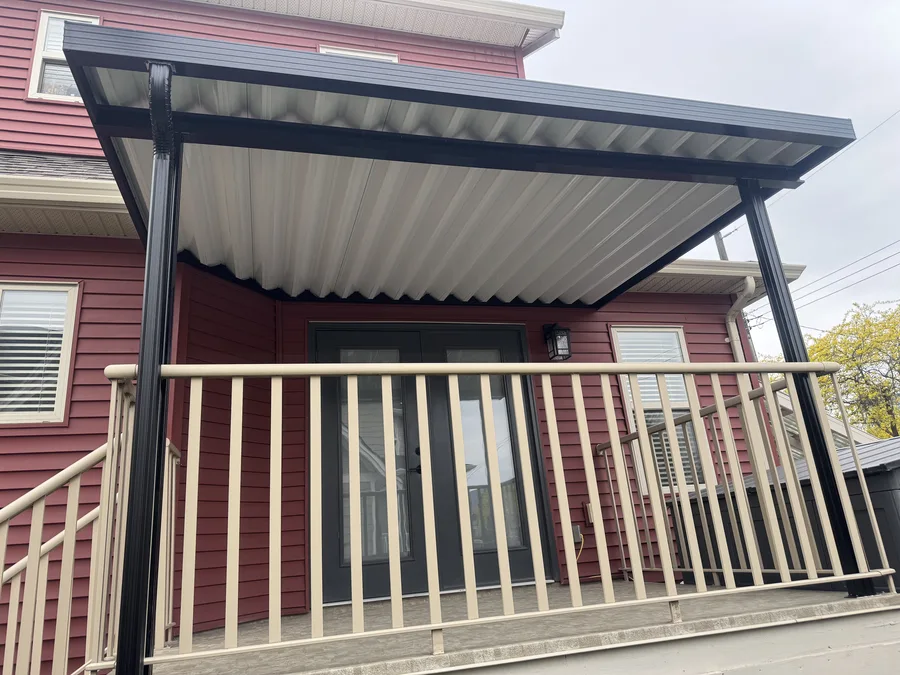
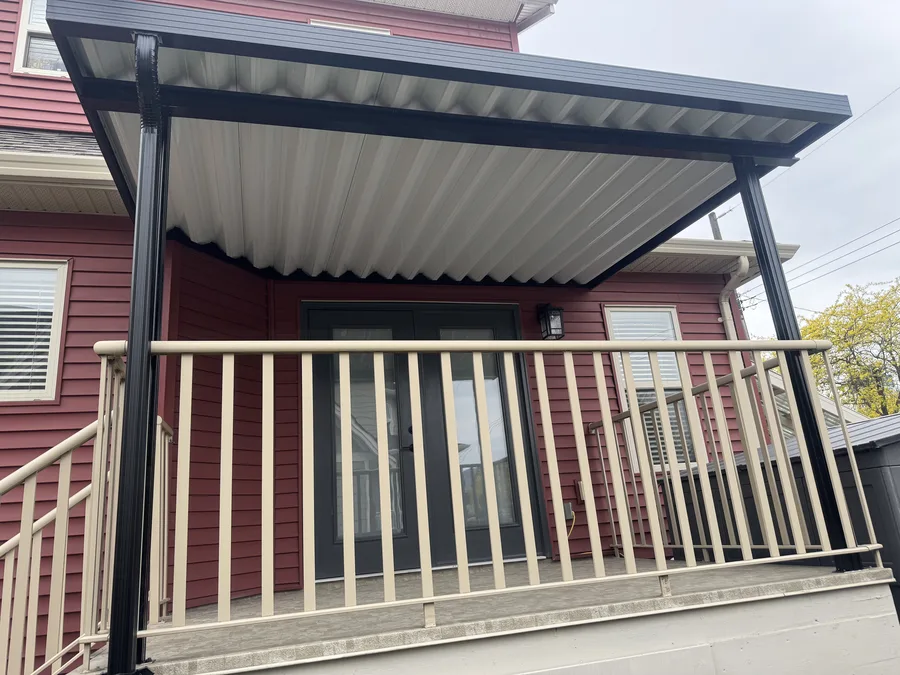
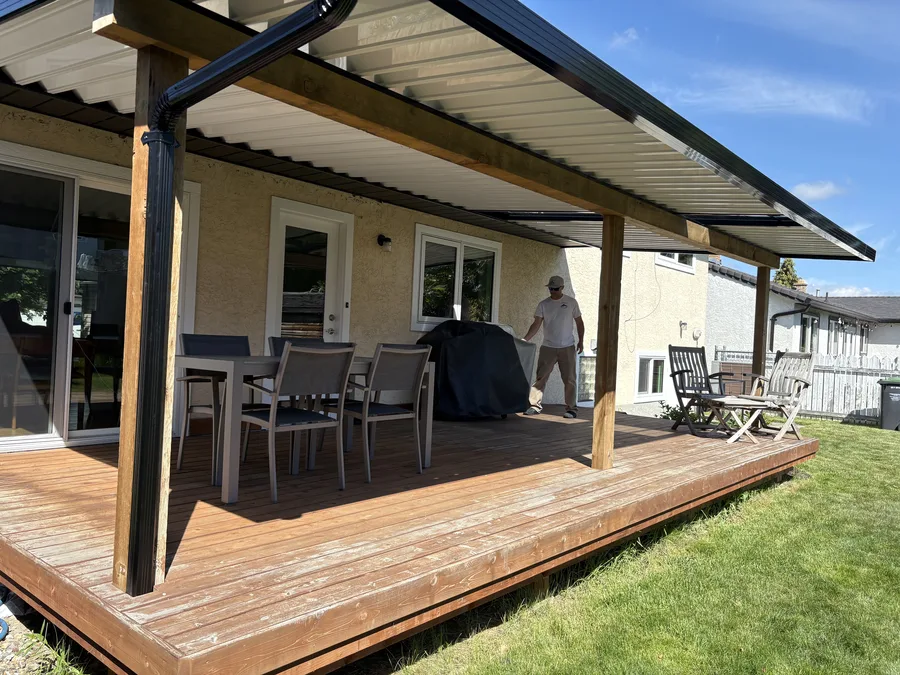
A few we’ve built recently — every one custom-made in West Kelowna and installed by our own crew.
How to Choose a Patio Cover: Questions We Get
How can I choose the right patio cover for my home?
Start with which way your deck faces. North or east, clear glass or aluminum both work; south or west, tint the glass or lean on aluminum with glass strips. From there it’s attached vs freestanding, sized to the space you’ll use, then colour. We’ll walk through it on a free on-site visit.
What should I consider when choosing a patio cover for my home?
Exposure, material, and how the cover attaches to your house matter most. After that it’s size, colour and snow load for your elevation. Skip any of the first three and you’ll likely redo part of the job later.
What’s the best patio cover material for BC weather?
Aluminum is the standard for most Okanagan homes because it’s over-built for our winters and needs almost no upkeep. Glass is the better pick when light or a view matters more than full shade. Most of our mixed-roof jobs split the difference on bigger decks.
Should I choose an attached or freestanding patio cover?
If your patio sits right against the house, attached is usually the better call; it shares the wall for support and feels like a natural extension of the house. If your wall can’t take a ledger board, or the patio is detached, over a pool, or anywhere away from the house, go freestanding.
Is alumawood the same as your aluminum covers?
No. Alumawood is a wood-grain vinyl coating over an aluminum core, built for hot, dry climates. We build heavy-gauge structural aluminum with a powder-coat finish, which is what holds up under BC snow. The two aren’t interchangeable products.
Who installs the patio cover, and how long does it take?
Our own crew installs everything we design and manufacture, out of our West Kelowna shop. Most aluminum covers go up in a day, glass a day or two. Larger builds take longer, and we’ll tell you what to expect up front.
What colour options do you offer for a patio cover?
Custom powder-coat colours to match your trim, including black and white, our two most-requested. We don’t offer . Black tends to disappear against a view; white reads classic against most siding.
Takes under 60 seconds · Your information is never shared.
Prefer to talk to someone? Call (250) 215-7513
Ready to Choose Your Patio Cover?
Designed, made and installed in the Okanagan by our own crew. 1,500+ patios built since 2005, 4.9 stars across 32 Google reviews.
Serving Kelowna, West Kelowna, Vernon, Penticton, Lake Country & Salmon Arm