

Patio Cover Installation Process: What to Expect from Start to Finish in the Okanagan (2026)
Most aluminum patio cover installs take one day, start to finish. Glass covers take one to two days. Before the crew ever shows up, you get a free site visit, a custom design and in-house manufacturing in our West Kelowna shop. Here’s exactly what happens at each step.
Designed, manufactured and installed in the Okanagan by our own crew. No subcontractors, no outsourced parts.
The Patio Cover Installation Process, Step by Step
Every patio cover installation process we run follows the same six steps, whether it’s a small aluminum roof over a townhouse patio or a full glass enclosure on a lakeview deck. The order doesn’t change. What changes is how long each step takes.
- Free site visit. We measure the space, check the deck or slab, and talk through materials. Usually 30 to 60 minutes.
- Design and material selection. Our in-house design team draws the layout. You pick the colour and the glass or panel type.
- Manufacturing. Posts, beams, panels and gutters are custom-cut and powder-coated in our West Kelowna shop.
- Installation day. Our crew sets the posts, builds the frame, and locks in the roof panels and gutters.
- Cleanup and walkthrough. We clear every scrap of debris and walk you through the finished cover.
- Warranty handoff. You get your warranty paperwork and a short maintenance card.
| Phase | Aluminum cover | Glass cover |
|---|---|---|
| Site visit | 30 to 60 minutes | 30 to 60 minutes |
| Design and material pick | Standard colour options | Clear, tinted or mixed glass added |
| Manufacturing | Panels and frame only | Tempered glass ordered and fitted to the frame |
| On-site installation | Typically one day | Typically one to two days |
| Crew on site | 2 to 3 installers | 2 to 3 installers, glass handled with extra care |
Patio Cover Design and Installation Planning
How to Install a Patio Cover: What We Check at the Site Visit
Before anyone talks about how to install a patio cover on your property, we need eyes on it. One of our installers measures the space, checks the condition of your deck or patio slab, and photographs the spots where the cover will attach to your house. We’re looking for gas lines, electrical panels and roof overhangs that could change the design.
This is also where we talk through residential patio cover installation options for your specific home. Aluminum keeps things low-maintenance. Glass keeps the light. We’ll give you an honest read on which one fits your space, not just the one with the bigger price tag.
Patio Roof Builders’ Design and Material Choices
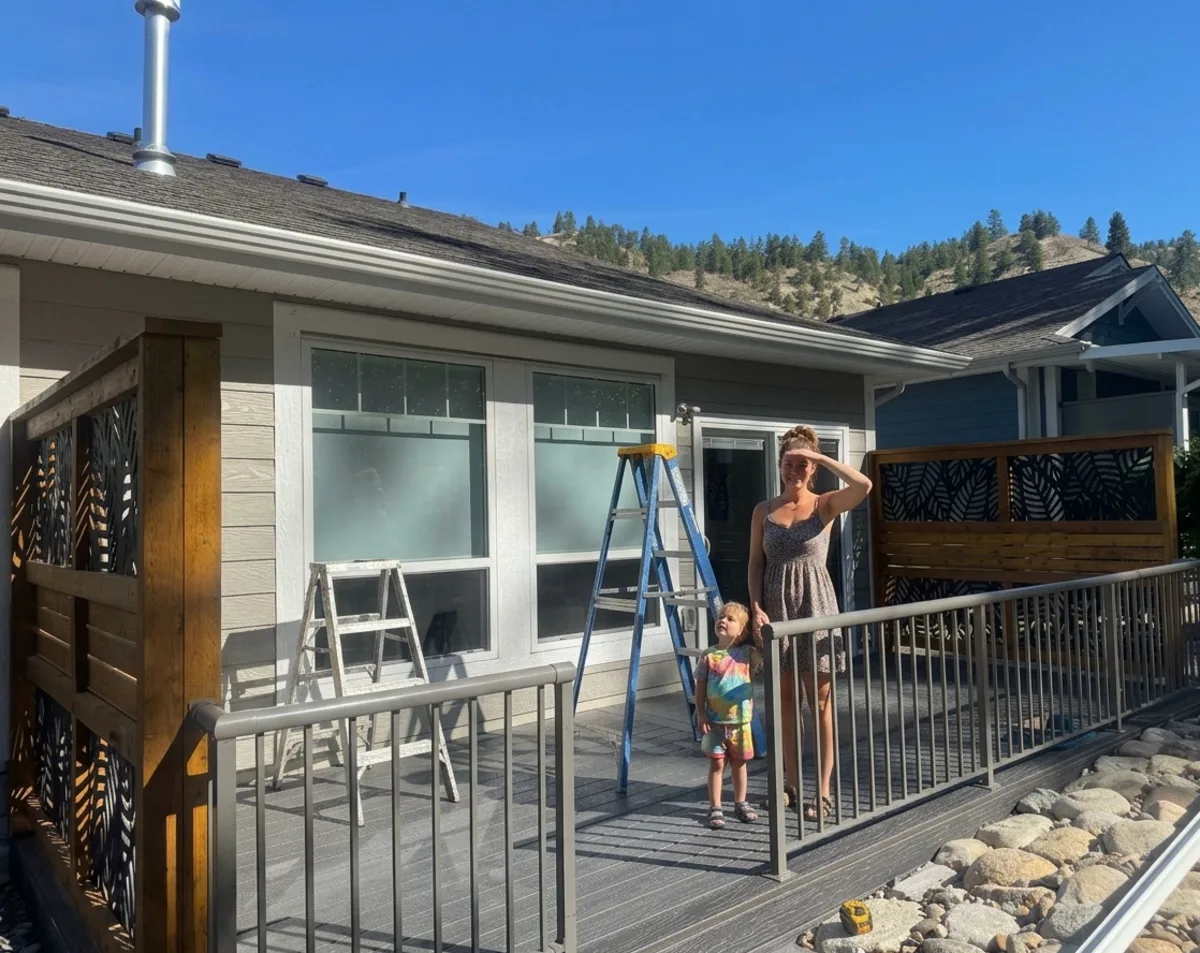
Once we know what you’re after, our in-house design team draws the layout. You’ll see exactly where the posts land, how the panels run, and how it ties into your house. Material choice happens here too: colour, gutter style, and whether you want a solid aluminum patio roof installation or glass strips mixed in.
Metal Patio Cover Installation: Manufacturing in Our Shop
Patio Cover Builders at Work: Powder Coating and Prep
While your design is finalized, the metal patio cover installation starts taking shape in our West Kelowna shop. Posts, beams and roof panels are custom-cut to your exact dimensions, not trimmed on-site to fit. Aluminum components go through powder coating, an electrostatically applied finish baked on at high heat that won’t peel or chip the way regular paint does.
Hardware, fasteners, flashing and gutters get pre-assembled and boxed for your specific job before the crew ever loads the truck. It’s a big part of why an install covered patio job goes as fast as it does once the crew is actually on site.
Aluminum Patio Cover Installation Day
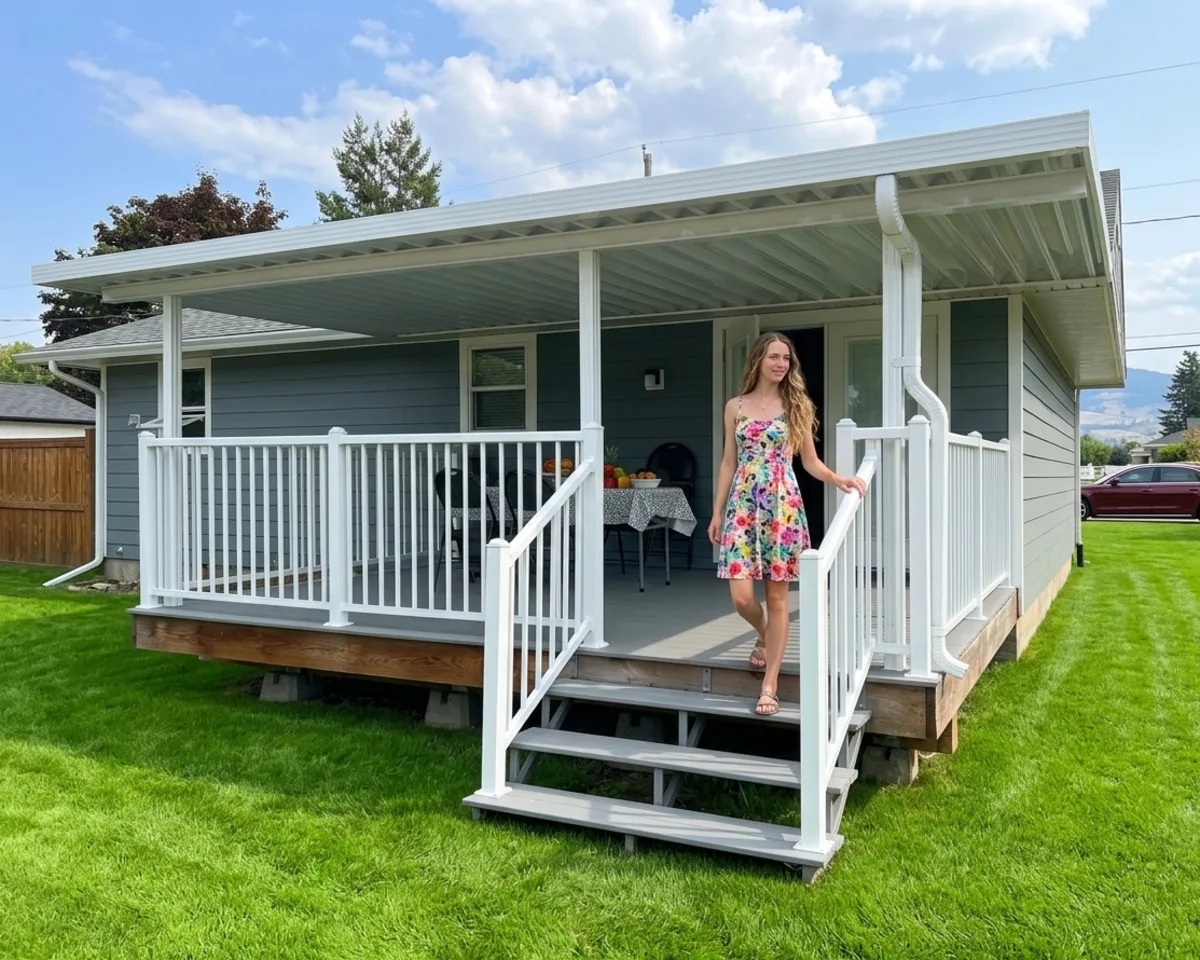
This is the day it comes together. Our crew shows up early, usually by 7:30 or 8:00 AM, and for a standard residential aluminum patio cover installation we’re done the same day.
Covered Patio Contractors’ Morning: Posts and Footings
We mark and drill the post locations first. On an existing concrete patio we core-drill through the slab and anchor the posts. On a deck, posts bolt to the framing or through to the substructure. Every post gets checked for plumb and level before we move on, because a cover is only as straight as its posts.
Patio Roof Installation: Frame, Panels and Cleanup
With the posts set and the ledger board secured to your house, the frame goes up: beams first, then rafters, then roof panels. Each panel slides into a channel system with no exposed fasteners. Gutters and downspouts are built into the frame, not bolted on after the fact, so water drains off the cover instead of pooling against your house.
The last hour is cleanup. Drill dust, packaging and cut-offs leave with the crew. A solid patio cover installation should leave your yard looking better than it did that morning, not worse.
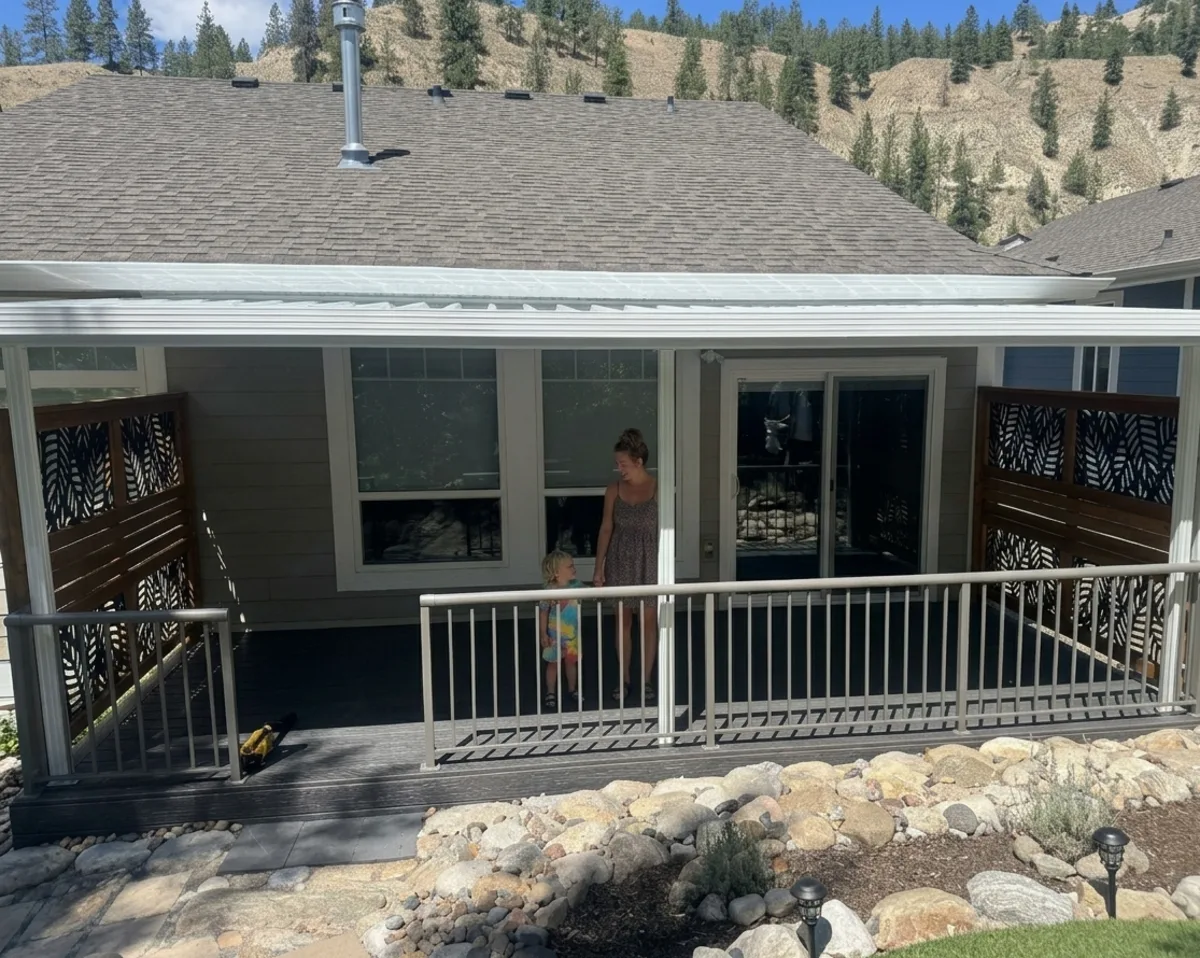
Mistakes We Get Called to Fix After Patio Cover Installation
- Skipping the site visit to save a week. We’ve had to redesign more than one cover because measurements were guessed, not taken.
- Picking a colour from a tiny swatch. Powder coat looks different in full sun. We bring full-size samples for a reason.
- Not clearing the work area. Furniture and planters left in place slow the crew down and risk getting damaged.
- Assuming any deck can carry a cover. We check the framing every time. Most pass. A few need reinforcement first.
- Locking in an install date before the design is signed off. Dates move when the design changes late. Sign off first.
Patio Covers Installation: What to Expect for Your Project
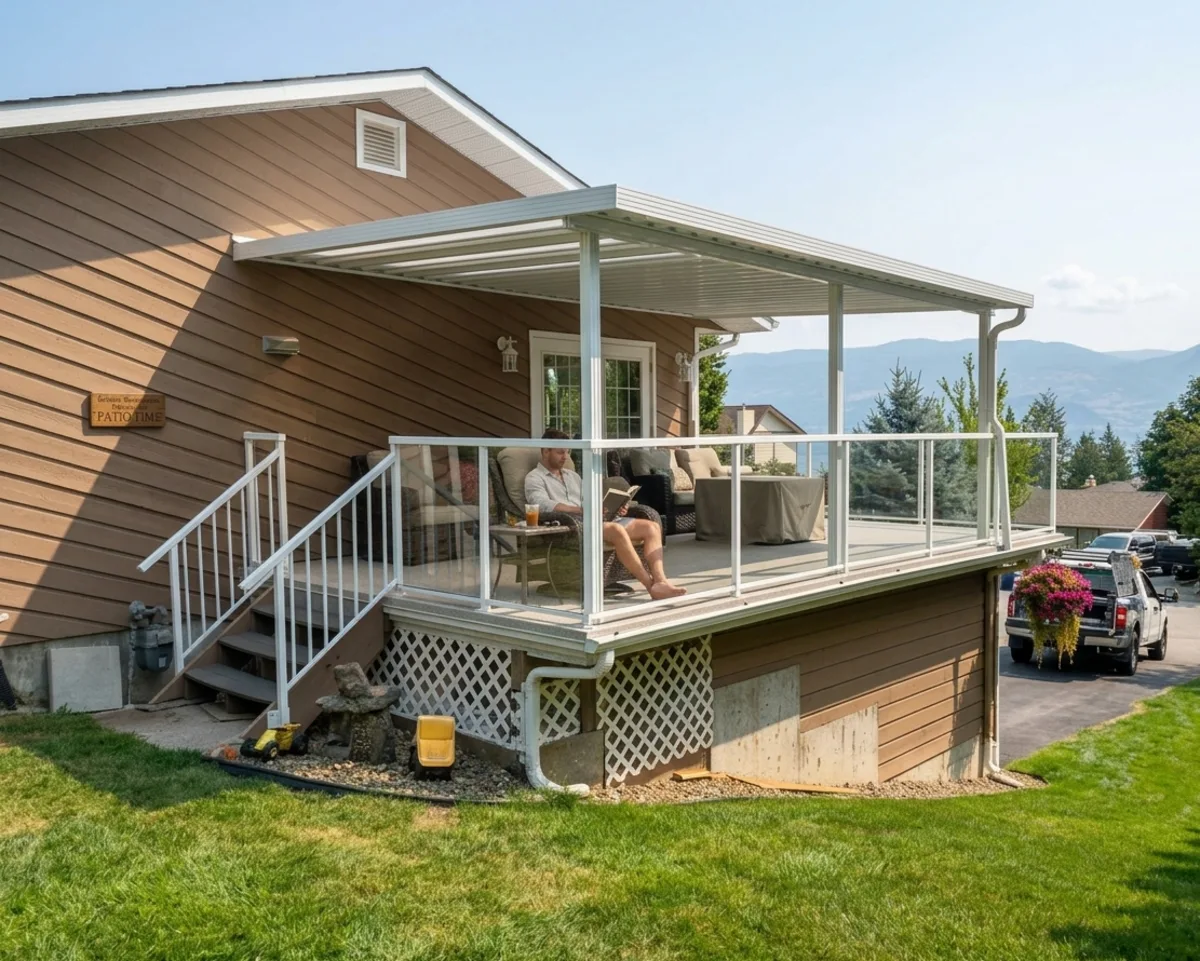
Every patio covers installation project moves through the same six steps, but your timeline depends on what you’re building. Here’s the honest breakdown by project type. The one thing we won’t lock in before your design is signed off is an exact install date. Weather and shop queue can bump it a few days either way.
| Your project | What to expect |
|---|---|
| Standard aluminum roof over an existing deck or patio | One day on-site once manufacturing is done |
| Large or L-shaped aluminum cover | Two days on-site, same shop lead time |
| Glass roof or glass mixed with aluminum strips | One to two days on-site, glass ordered to the design |
| Cover plus matching glass or aluminum railing | Built in the same visit so the frames match |
| Still deciding between aluminum and glass | Book the free site visit, we’ll recommend one on the spot |
See the material differences on our aluminum patio covers and glass patio covers pages, or send us a photo of your deck and we’ll tell you which installation timeline fits. Once your cover is up, our aluminum patio cover maintenance guide covers the easy upkeep that keeps it looking right for years.
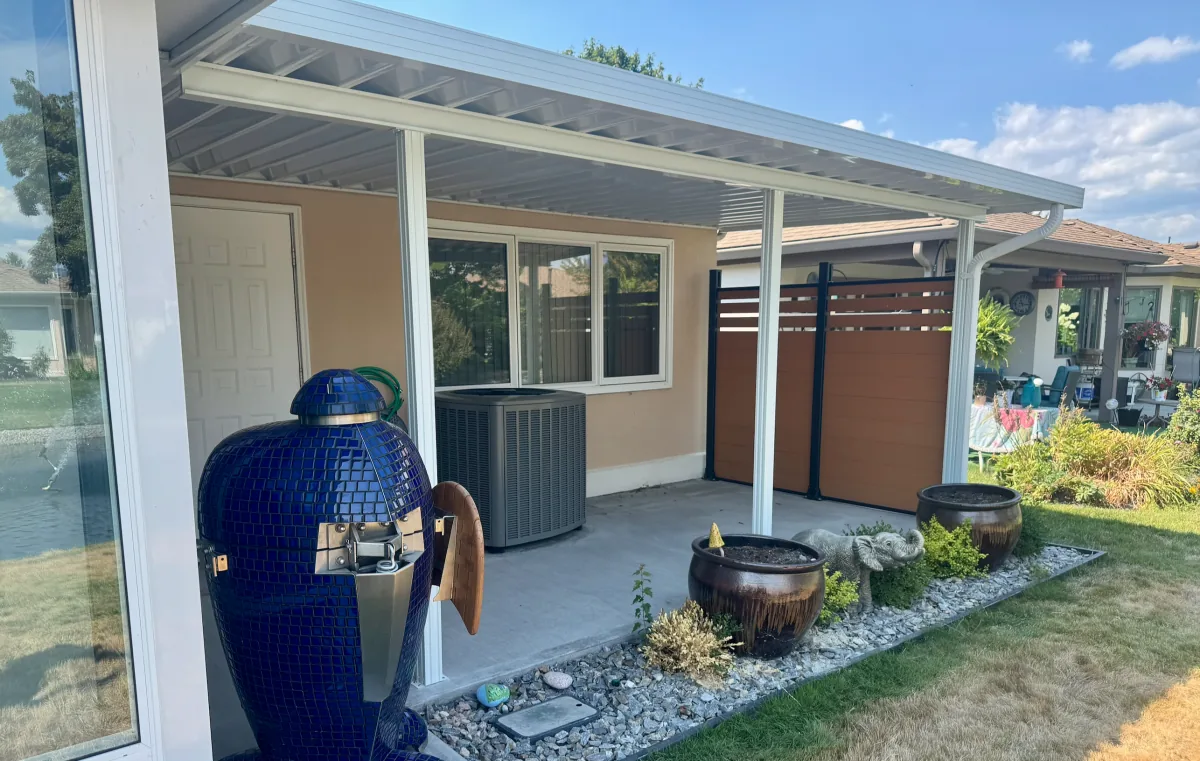
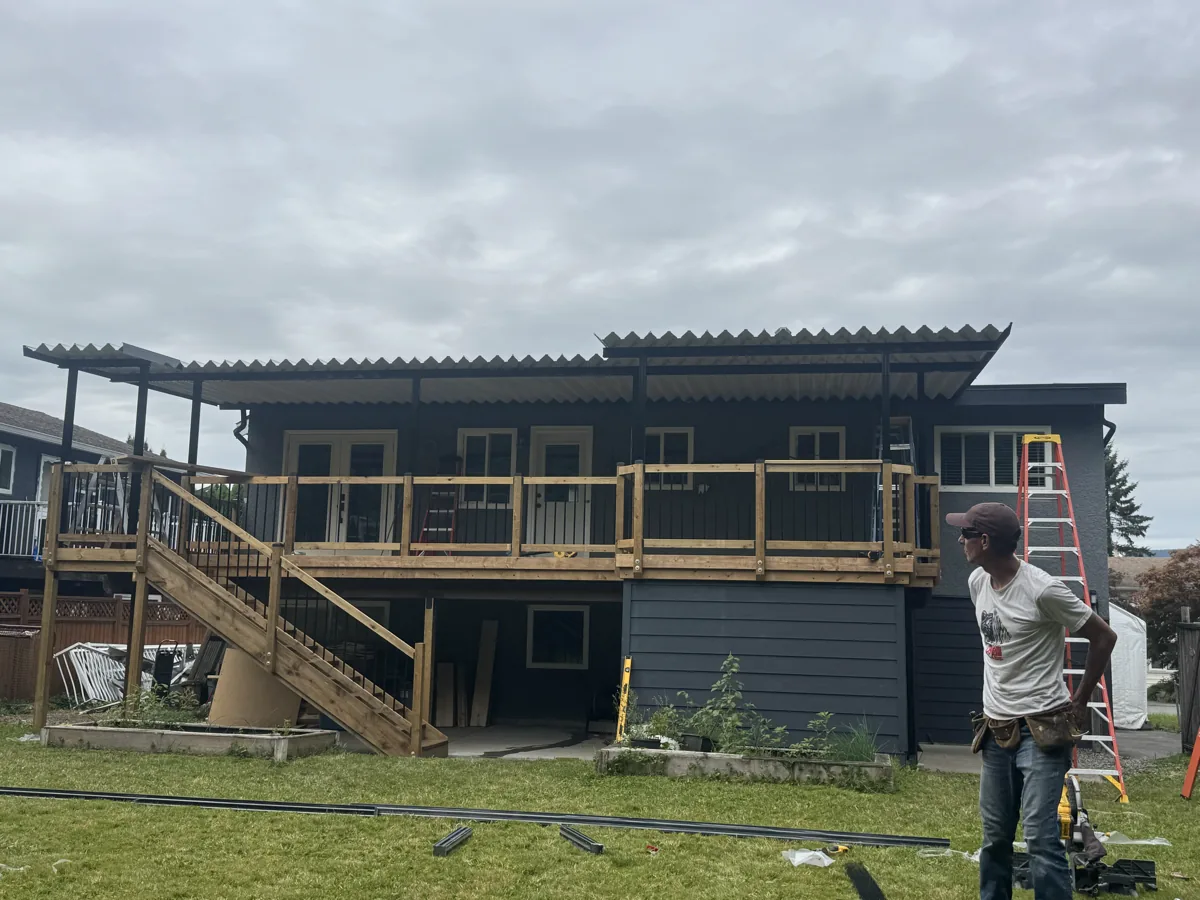
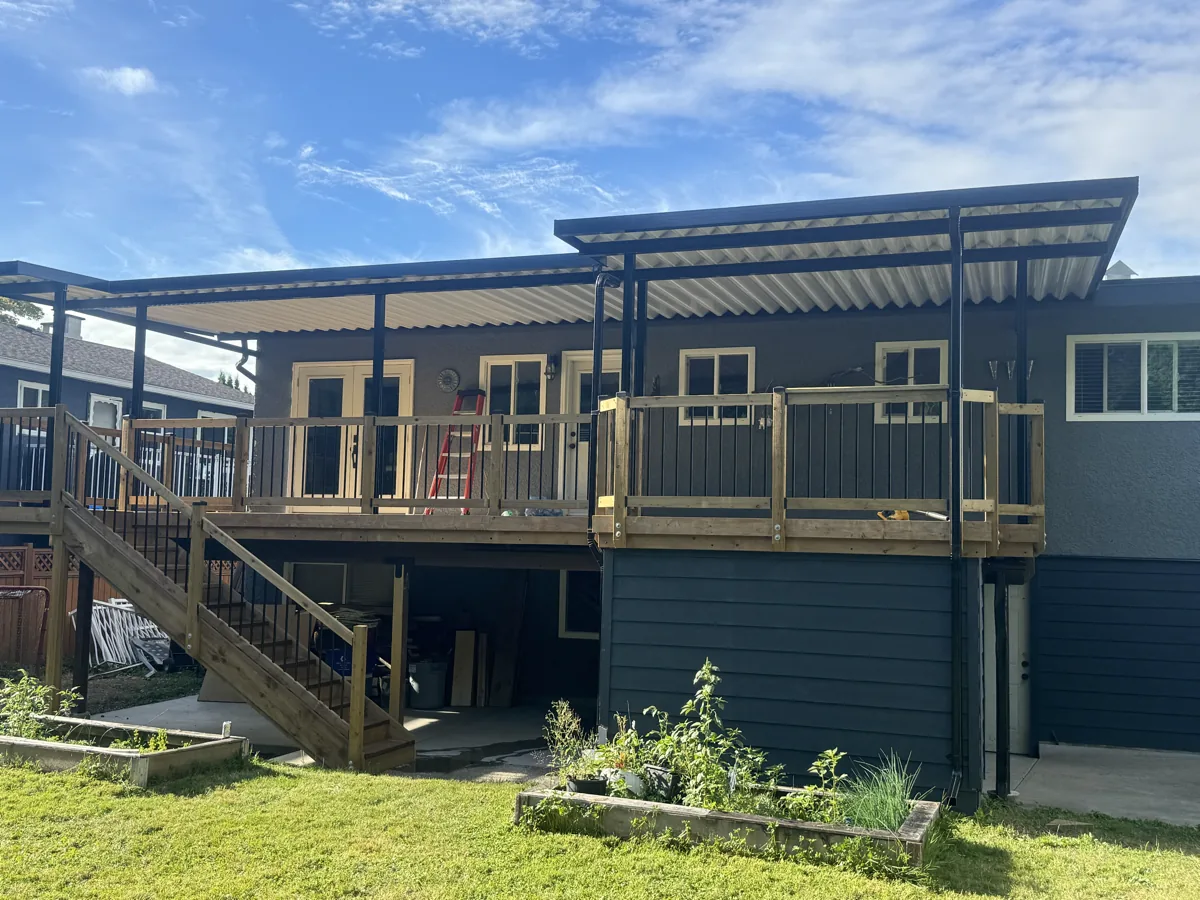
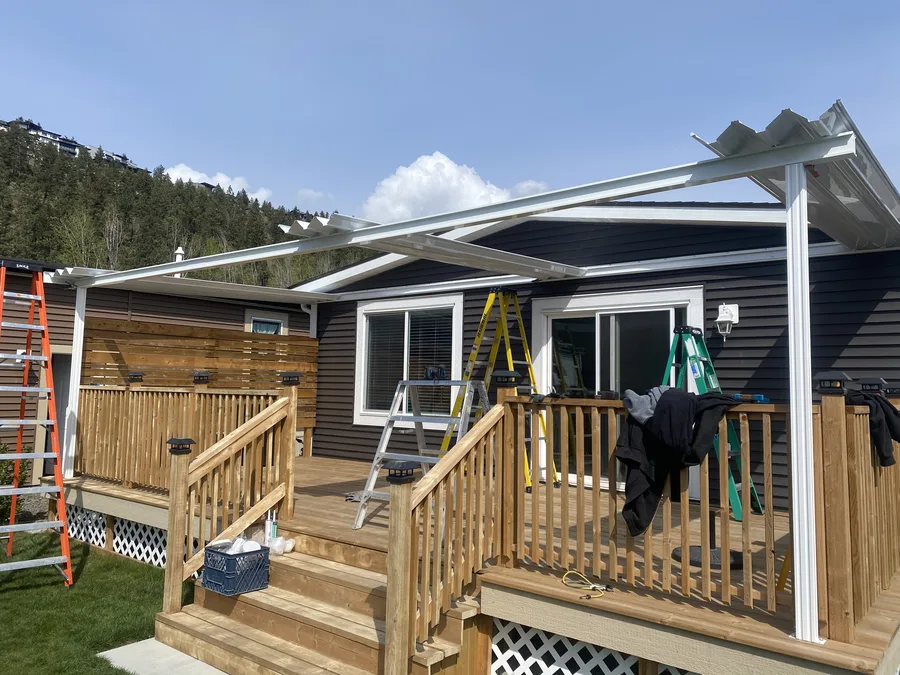
Our Crew at Work
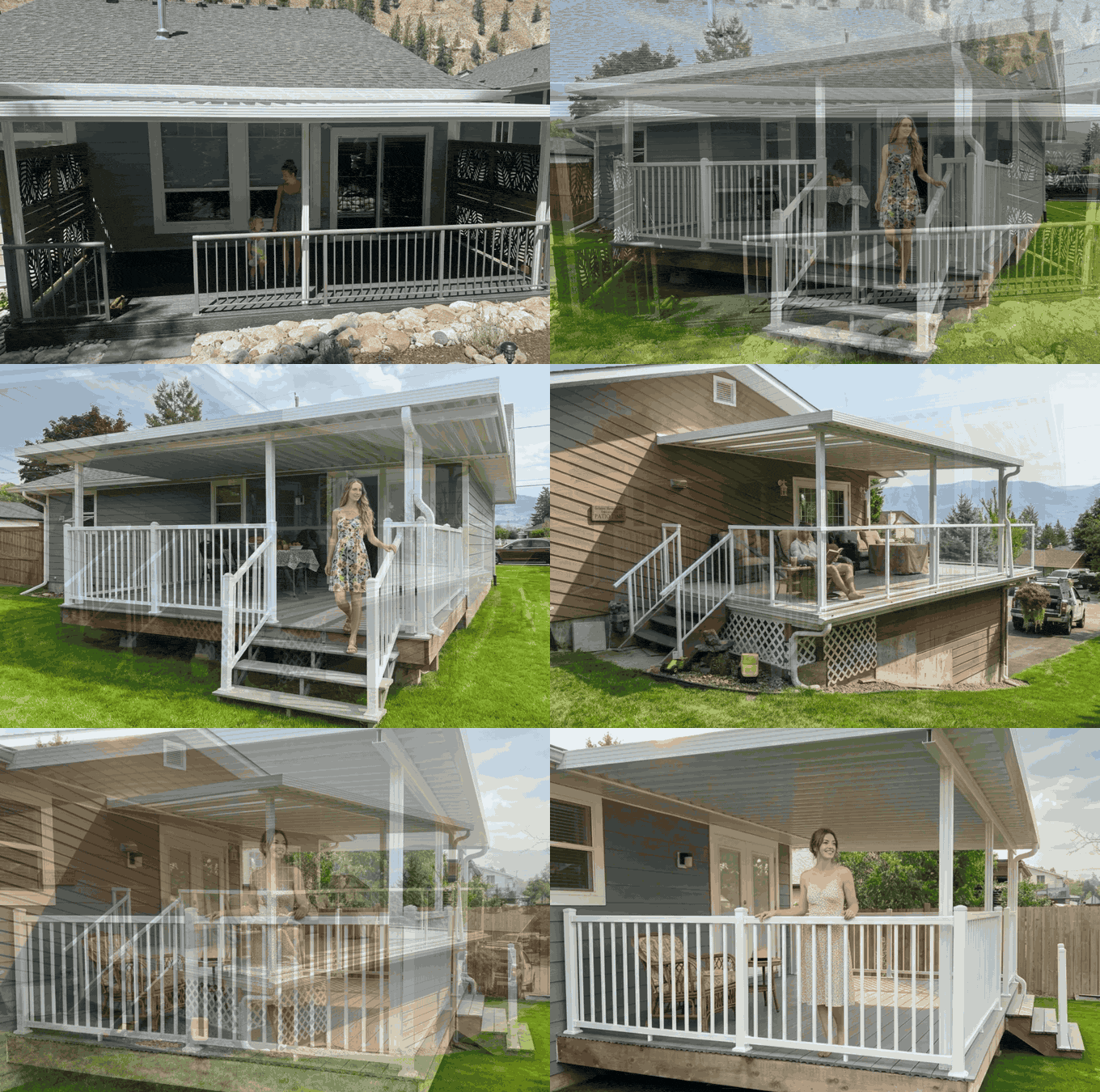
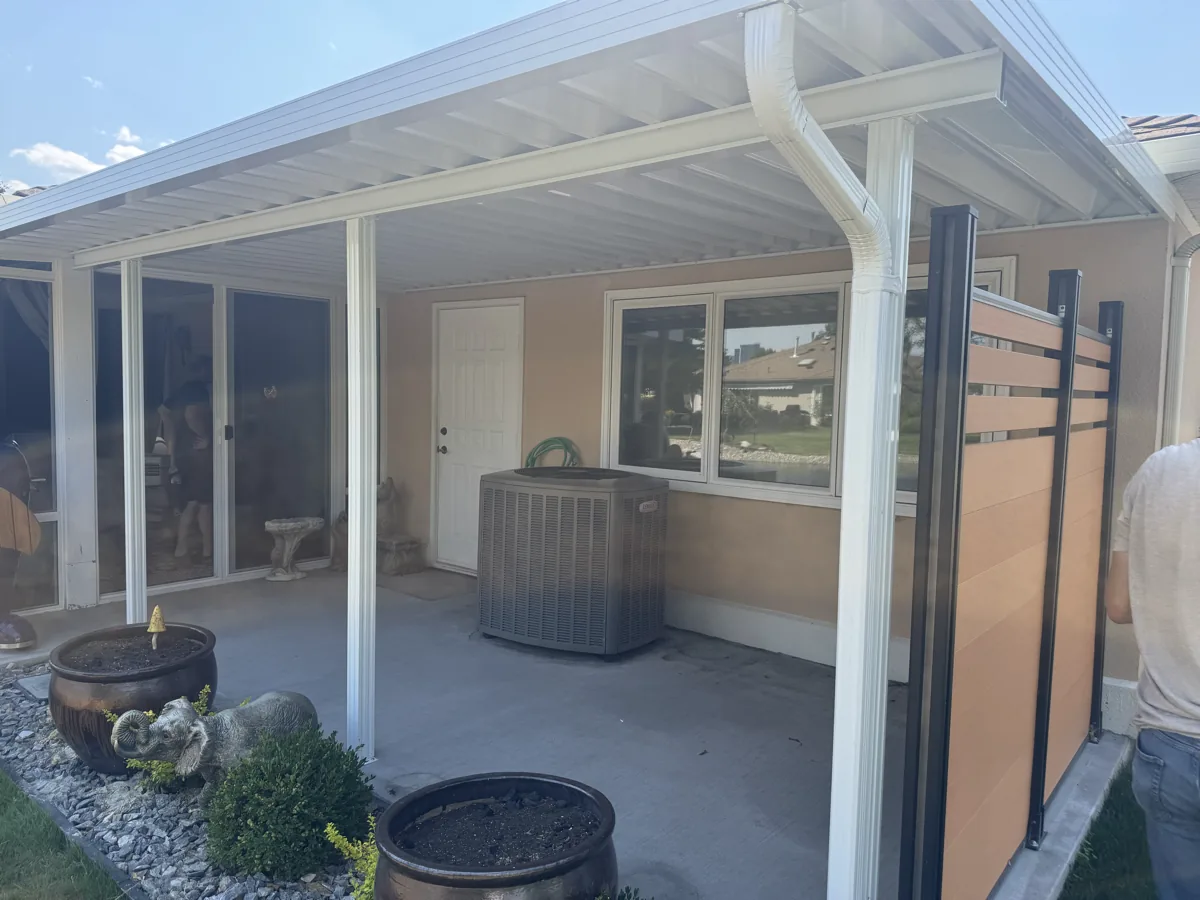
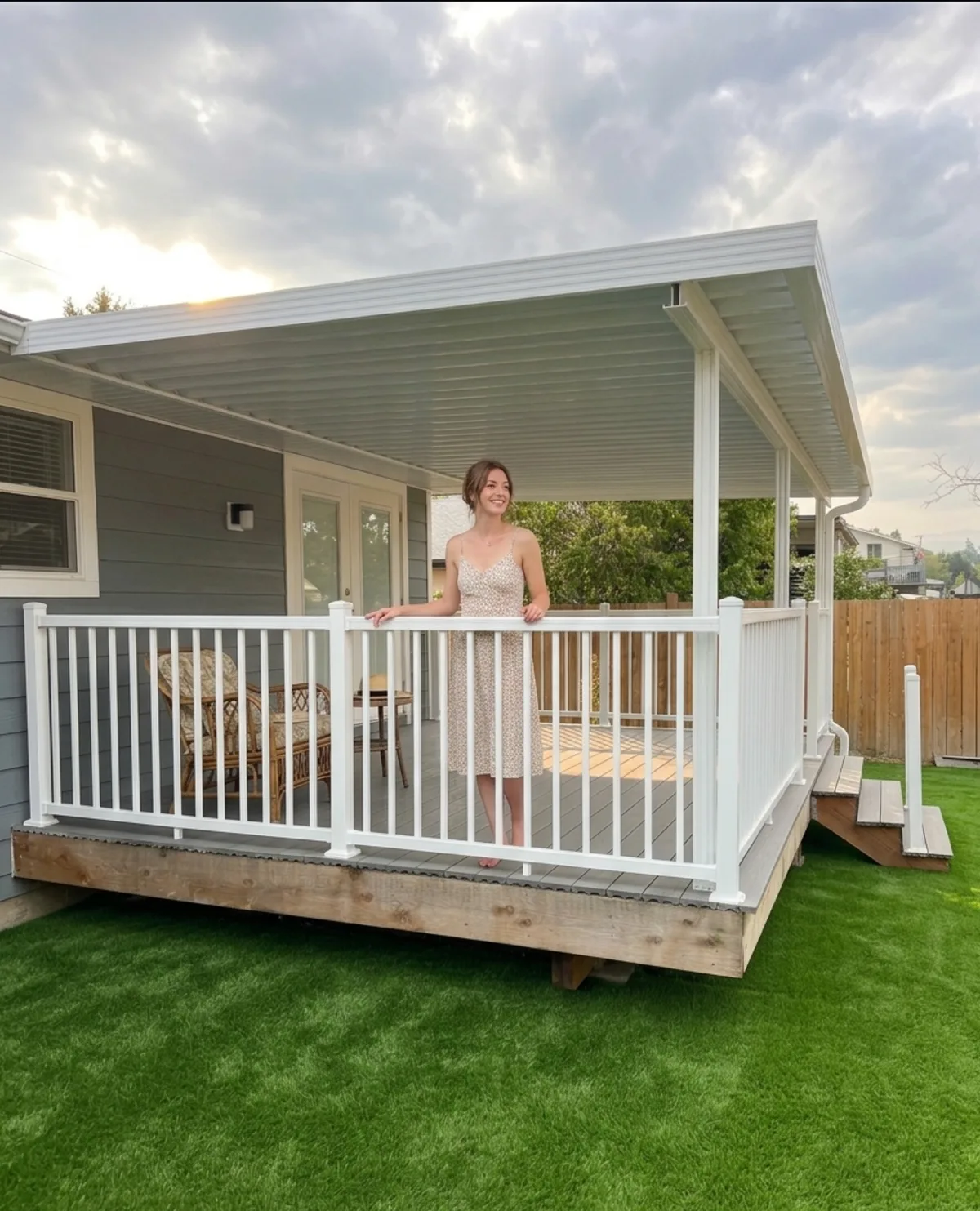
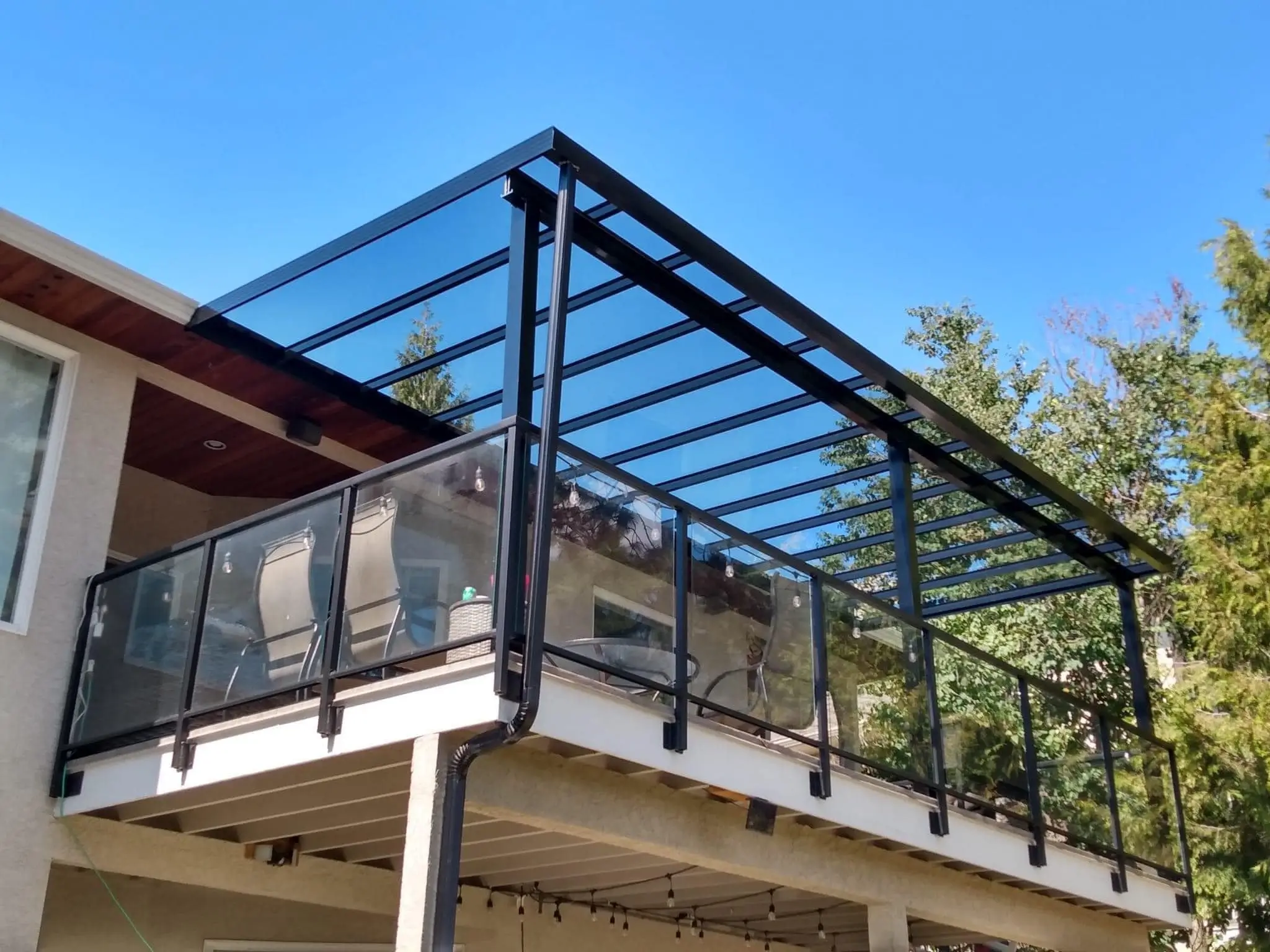
A few we’ve built recently — every one custom-made in West Kelowna and installed by our own crew.
Patio Cover Installation Questions
How long does it take to install a custom patio cover?
Most standard aluminum covers go up in one day once the design is final and the materials are manufactured. Glass covers typically take one to two days because the panels need extra care. Larger or unusual builds, like L-shaped covers or multi-level decks, can run a day or two longer. Nothing is off the shelf, every piece is custom-cut to your deck.
How long does it typically take to install a patio cover?
On-site, a typical residential aluminum patio cover takes one full day: posts and footings in the morning, frame and roof panels after lunch, cleanup before the crew leaves. That’s after the design is finalized and the parts come out of our West Kelowna shop. Glass covers add roughly a day for the extra handling glass panels need.
How do you install a patio cover?
We set the posts first and check them for plumb, then build the frame, lock in the roof panels and tie in the gutters. Flashing gets sealed against your house, then we test the drainage and clean up completely. All of it happens in-house with our own crew. Nothing is subcontracted.
Can a patio cover be installed on an existing deck or patio?
Yes, and most of our jobs are exactly that. We install on existing concrete patios, wood decks and composite decking. During the site visit we check that the deck framing or slab is in good shape and can carry the extra load. In rare cases it needs minor reinforcement before we start.
What’s the difference between an aluminum and a glass patio cover installation?
The steps are the same: site visit, design, manufacturing, install day. The difference is glass needs an extra day on-site for careful handling, and typically a day or two more in the shop since the glass has to be ordered to your exact design.
What happens after the patio cover installation is finished?
You get warranty paperwork covering three years on leaks and ten years on materials, plus a short maintenance card. A quick rinse of the roof panels two or three times a year and clearing the gutters each fall keeps it looking right for years.
Takes under 60 seconds · Your information is never shared.
Prefer to talk to someone? Call (250) 215-7513
Ready to Start Your Patio Cover Installation?
Designed, made and installed in the Okanagan by our own crew. 1,500+ patios built since 2005, 4.9 stars across 32 Google reviews.
Serving Kelowna, West Kelowna, Vernon, Penticton, Lake Country & Salmon Arm