

Polycarbonate Patio Covers: Honest Pros, Cons, and What We’d Build Instead (2026)
Short answer: not for most Okanagan homes. Polycarbonate patio cover panels are cheap and easy to find, but they yellow within years, dent and scratch, and most kits aren’t built for our snow. We build aluminum and tempered glass covers instead, and here’s the honest reasoning.
We design, manufacture and install our own aluminum and tempered glass patio covers out of our West Kelowna shop. We don’t sell polycarbonate, so everything below comes from watching it hold up (or not) on other people’s decks, not from trying to sell you a kit.
What Is a Polycarbonate Patio Cover?
Polycarbonate is a rigid plastic sheet. You’ve probably seen it on greenhouses, bus shelters and big box store skylights. It comes clear, tinted or frosted, and it got popular for patio covers because it lets light through almost like glass, at a fraction of the weight and the cost.
There are two types. Solid polycarbonate is one thick sheet with decent impact strength. Multiwall panels stack two or three layers with air pockets between them, which is what most DIY polycarbonate patio cover panel kits use, because they’re lighter and cheaper again. Both types yellow in the sun eventually, and neither is something we install.
Solid vs. Multiwall Polycarbonate Patio Roof Panels
Solid panels hold up better to a dropped branch or a hard hail hit. Multiwall panels are lighter, cheaper, and the ones you’ll find in most big box store patio cover kits, but they’re also the first to crack under real weight. Neither is rated the way a permanent, site-built structure needs to be.
| Factor | Polycarbonate | Aluminum | Glass |
|---|---|---|---|
| Holds up in Okanagan sun | Yellows and goes brittle within a few years | Powder coat holds for decades | Tempered glass does not fade |
| Built for Okanagan snow | Rarely | Yes, over-built | Yes |
| UV and yellowing | Yellows, often by year 8 to 10 | Doesn’t yellow | Doesn’t yellow |
| Noise in rain or hail | Loud | Very quiet | Quiet |
| Maintenance | Frequent | Almost none | Minimal |
| Relative upfront cost | Lowest | Mid-range | Premium |
Where a Clear Patio Roof Panel Makes Sense
We’ll give credit where it’s due. A clear patio roof panel in polycarbonate has real upsides, and for the right situation it can be a fine short term fix.
Dual-Wall Patio Cover Benefits (and Their Limits)
Dual-wall polycarbonate panels trap a layer of air, so they insulate a little better than a single sheet and cost less than solid panels or glass. The trade-off is strength. The air channels make dual-wall panels the weakest option in this guide, and they’re the ones that crack first under a heavy, wet Okanagan snowfall.
A Transparent Patio Cover Lets In the Most Light
Solid clear polycarbonate panels pass roughly 86 to 90 percent of daylight through, close to bare glass. Most panels also carry a UV coating that blocks about 99 percent of UV rays, at least while it’s new. That coating is also the first thing to break down in our sun, which is where the yellowing we cover below gets its start.
See-Through Patio Roof Panels Are Impact Resistant
This is polycarbonate’s real strength, literally. It flexes instead of shattering, so hail, a dropped branch or a stray ball won’t put a hole in it the way a weaker material might. For a quick, budget rain shelter on a rental property or a seasonal setup, that durability against impact is genuinely useful.
Polycarbonate vs Aluminum: The Honest Comparison
This is the part most homeowners actually want. Here’s how polycarbonate holds up next to the aluminum and glass covers we build, side by side.
Polycarbonate and Aluminum Canopies Side by Side
A polycarbonate canopy costs less upfront than an aluminum or glass cover, often by half. But a quality polycarbonate panel is warrantied against yellowing, and in the Okanagan’s roughly 2,000 sunny hours a year, we see real yellowing show up around year 8. Our aluminum covers run with almost no upkeep. Spread the cost over the life of the cover and polycarbonate is usually the more expensive choice, not the cheaper one.
When Glass Beats a Clear Patio Cover Panel
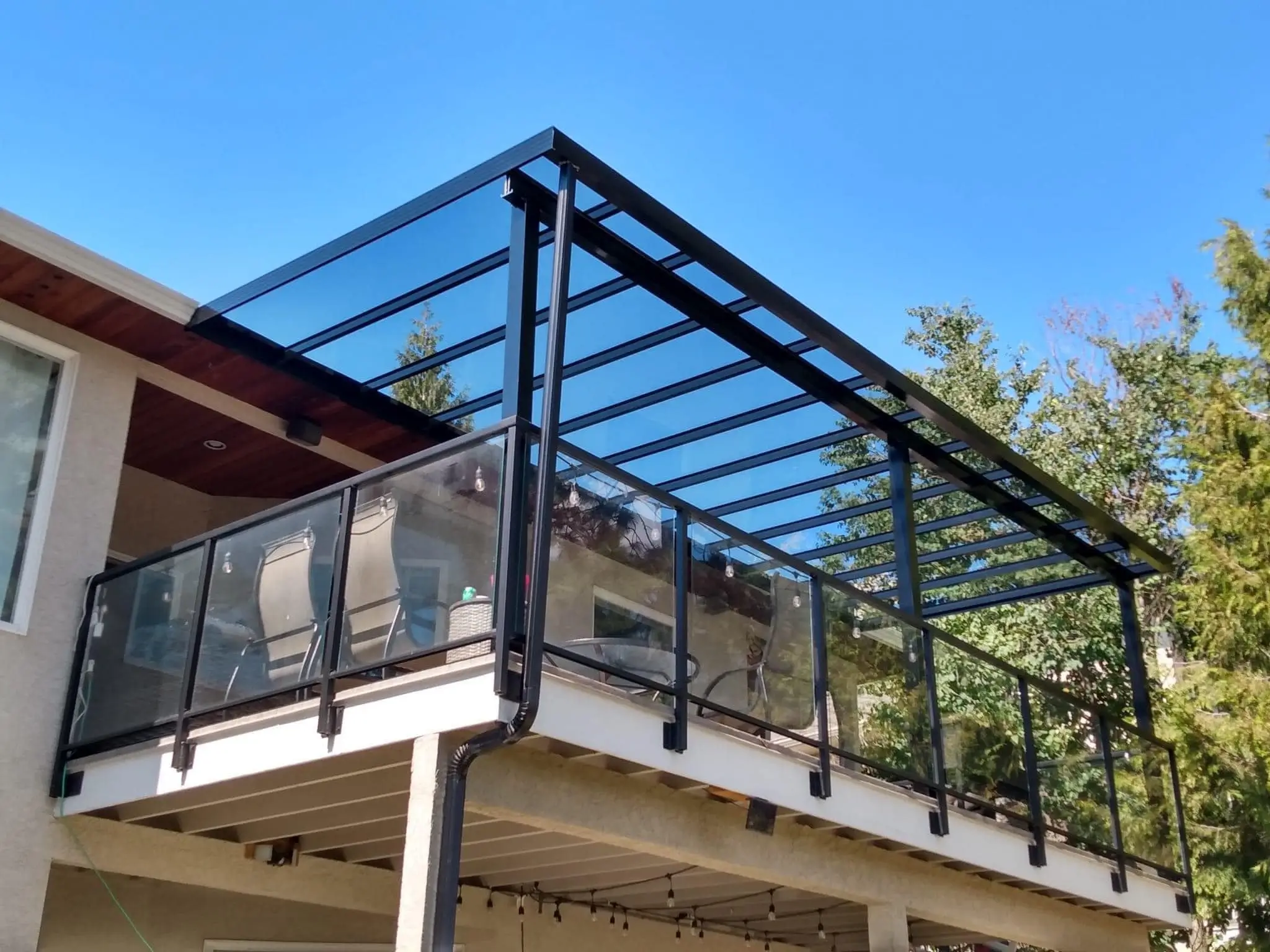
If what you actually want is light and a clear view, not just a cheap roof, tempered glass beats any clear patio cover panel. Glass doesn’t yellow, doesn’t scratch under normal use, and carries real snow load the way we build it. It’s also quiet. Polycarbonate drums under rain and turns into a snare drum during an Okanagan hailstorm. Tempered glass and solid aluminum don’t. Glass costs more than polycarbonate going in, and that’s a fair trade-off to weigh, but it’s a one time purchase instead of a ten year replacement cycle. See our glass patio covers for how we build it, or read the full glass vs aluminum comparison if you’re weighing both.
Polycarbonate and Okanagan Snow
This is the section that matters most if you’re in the Okanagan. Snow is where polycarbonate loses, plain and simple.
Why a Polycarbonate Deck Cover Struggles With Our Winters
Most polycarbonate deck cover kits are built for mild climates with light rain, not the heavy, wet snow that Kelowna, Vernon, West Kelowna and Lake Country get most winters. BC building code accounts for local snow load, and a lightweight kit built for a coastal climate often isn’t rated for what piles up here, especially where it drifts against a house wall. We’ve seen panels buckle and crack in their first winter. The framing usually survives. The panels don’t bounce back once they’ve flexed past what they were built for.
Mistakes We Get Called to Fix on a Polycarbonate Patio Enclosure
- Picking clear panels for a south or west-facing deck. They look great in May and turn into a greenhouse by August.
- Skipping the pitch. Panels laid too flat pool water and sag early.
- Clearing snow with a metal shovel. It gouges the surface and the scratches scatter light for good.
- Assuming the kit was rated for local snow. Most aren’t. Ask for the actual load rating before you buy one.
- Treating a polycarbonate patio enclosure as a permanent upgrade. Appraisers generally treat it closer to a canvas awning than a built structure, so it adds little to home value at resale.
What We’d Build Instead of a Polycarbonate Patio Roof
We don’t install polycarbonate. Not because we can’t get it, but because we can’t stand behind a 10 to 15 year material on a structure attached to your house. When someone calls us wanting light and a view, we build tempered glass. When they want maximum weather protection with almost no upkeep, we build solid aluminum. Same crew, same West Kelowna shop, usually finished in one day for aluminum and one to two days for glass.
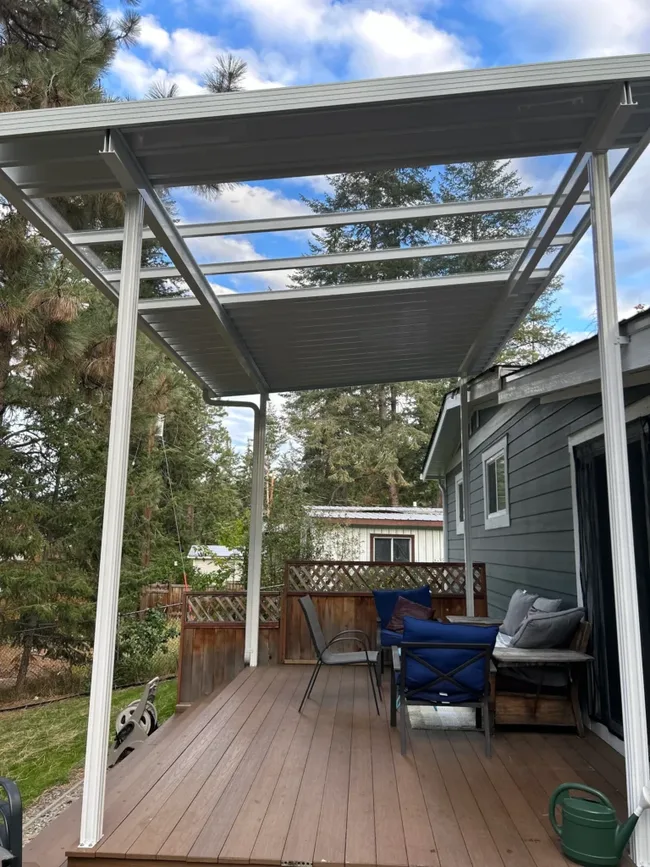
A lot of homeowners end up wanting both. An aluminum roof with a few glass skylight strips gives shade where you sit and daylight at the house wall, and it costs less than an all glass roof. Check our aluminum patio covers or our aluminum maintenance guide to see what almost no upkeep actually looks like day to day.
Honest limitation: both aluminum and tempered glass cost more upfront than a polycarbonate kit. If your budget is genuinely tight right now, that’s real and we won’t pretend otherwise. But a cover you replace once lasting decades is usually cheaper than one you replace twice in twenty years, and it’s the option we’ll stand behind. If you’d rather talk it through than read another comparison, send details through our contact page and we’ll follow up.
| Your situation | Go with |
|---|---|
| Want maximum daylight and a view | Tempered glass, clear or tinted |
| Want year-round weather protection, low upkeep | Solid aluminum |
| Budget can’t stretch past a basic kit right now | Polycarbonate, as a short term fix only |
| Cover sits over a snow-loaded roof span | Aluminum or glass, sized for the site |
| South or west-facing deck | Tinted glass, or an aluminum and glass mix |
| Want to talk it through first | Contact us with a photo of your deck |
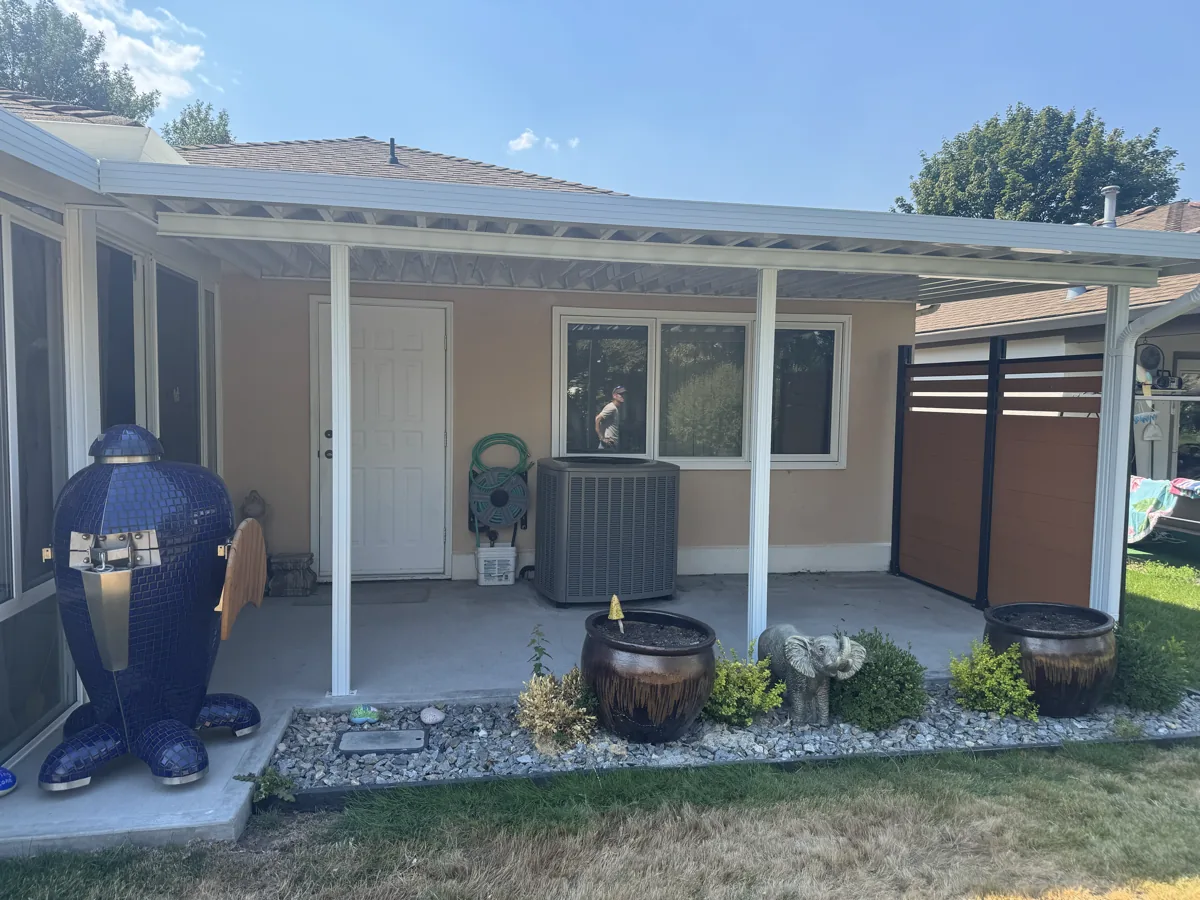
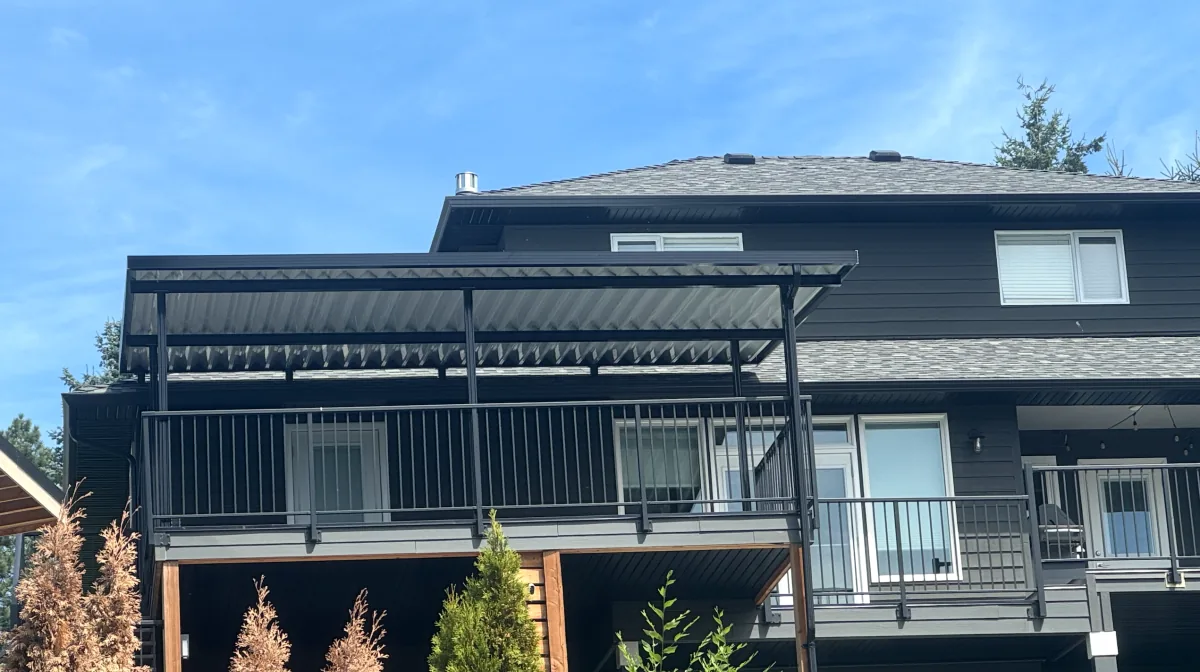
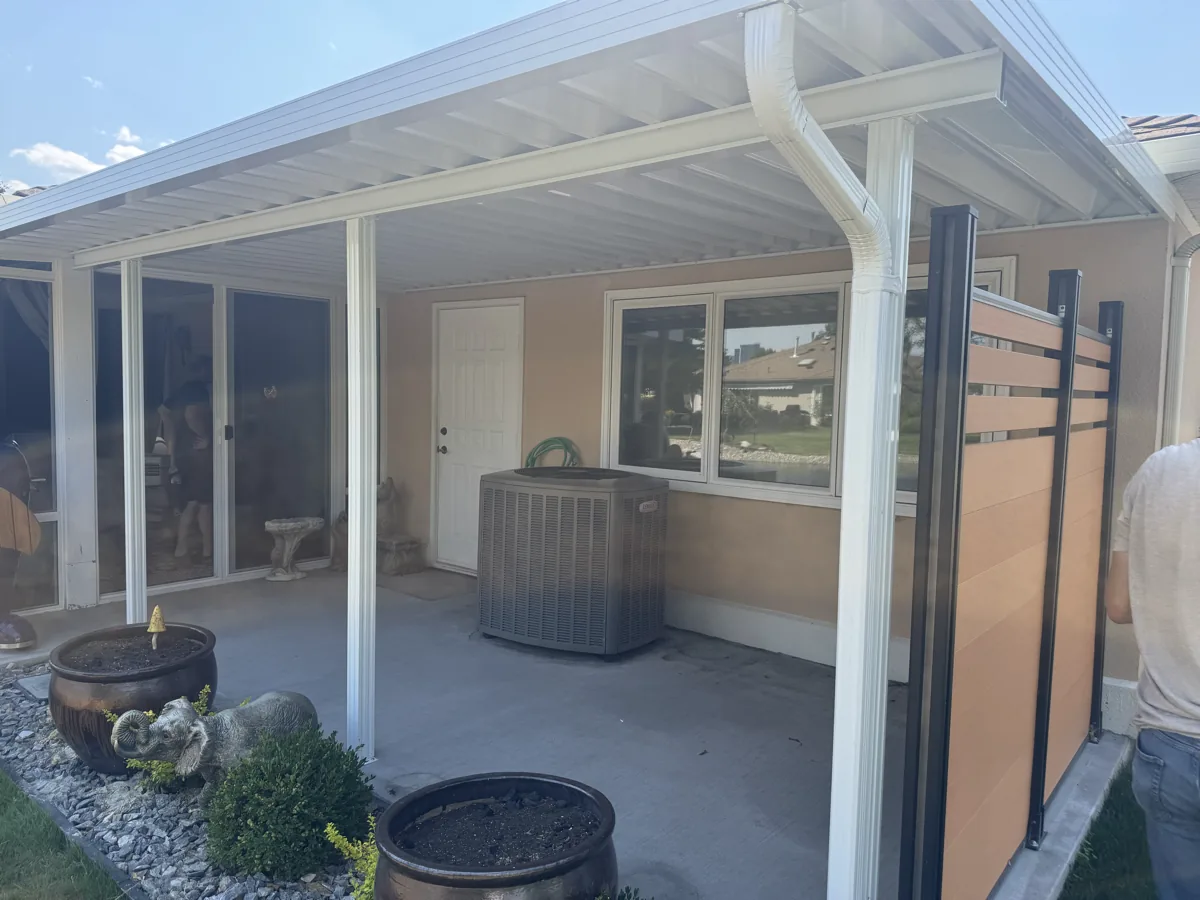
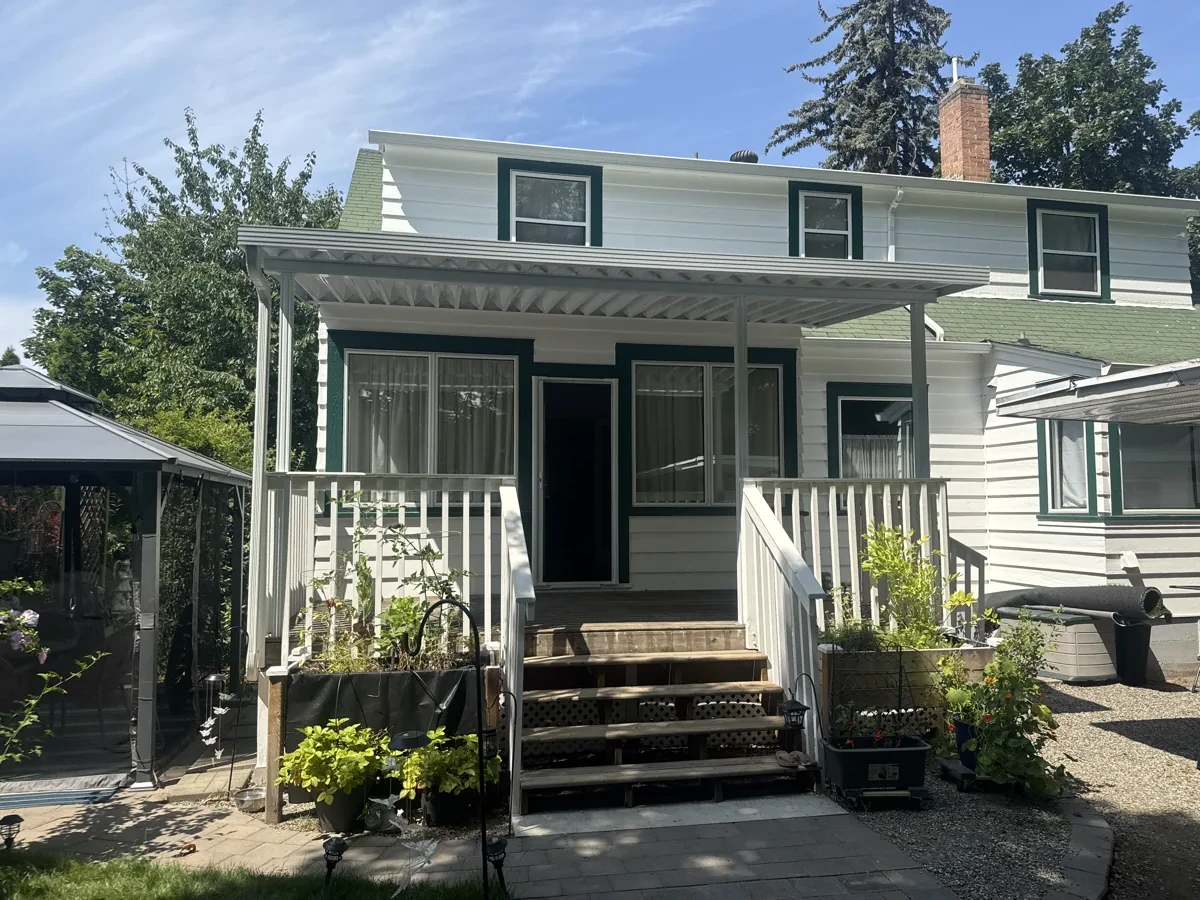
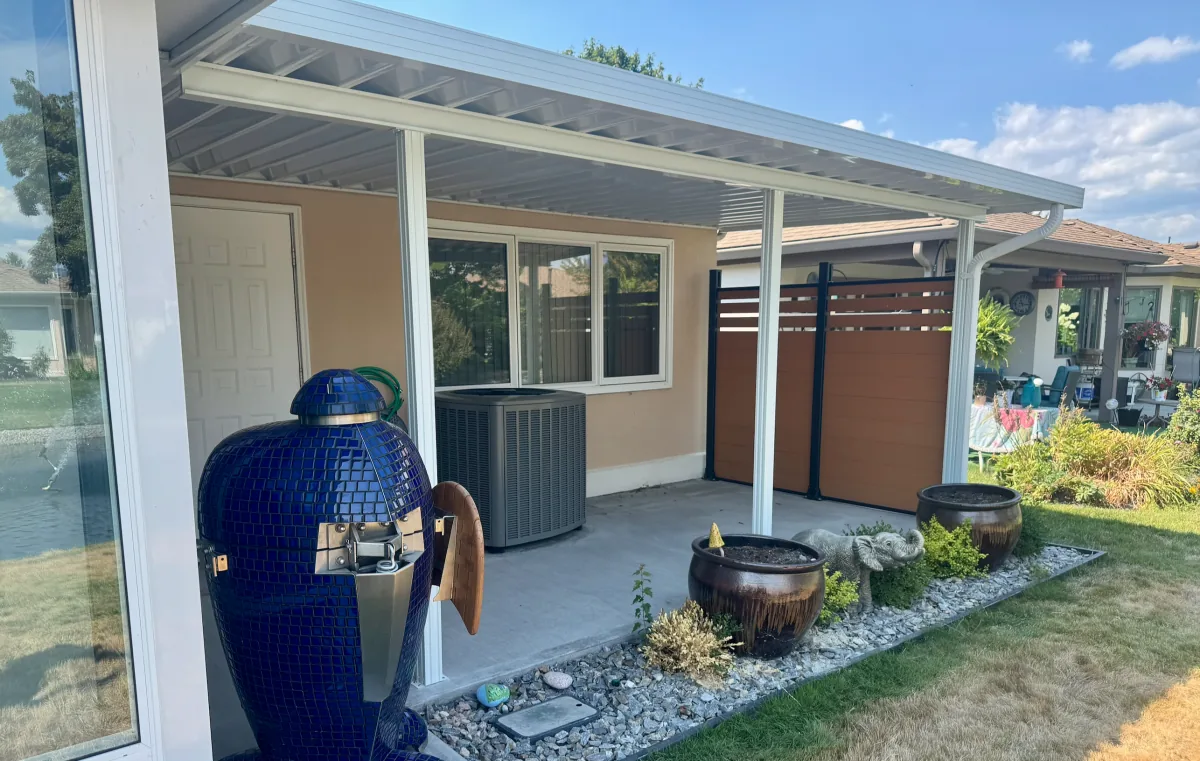
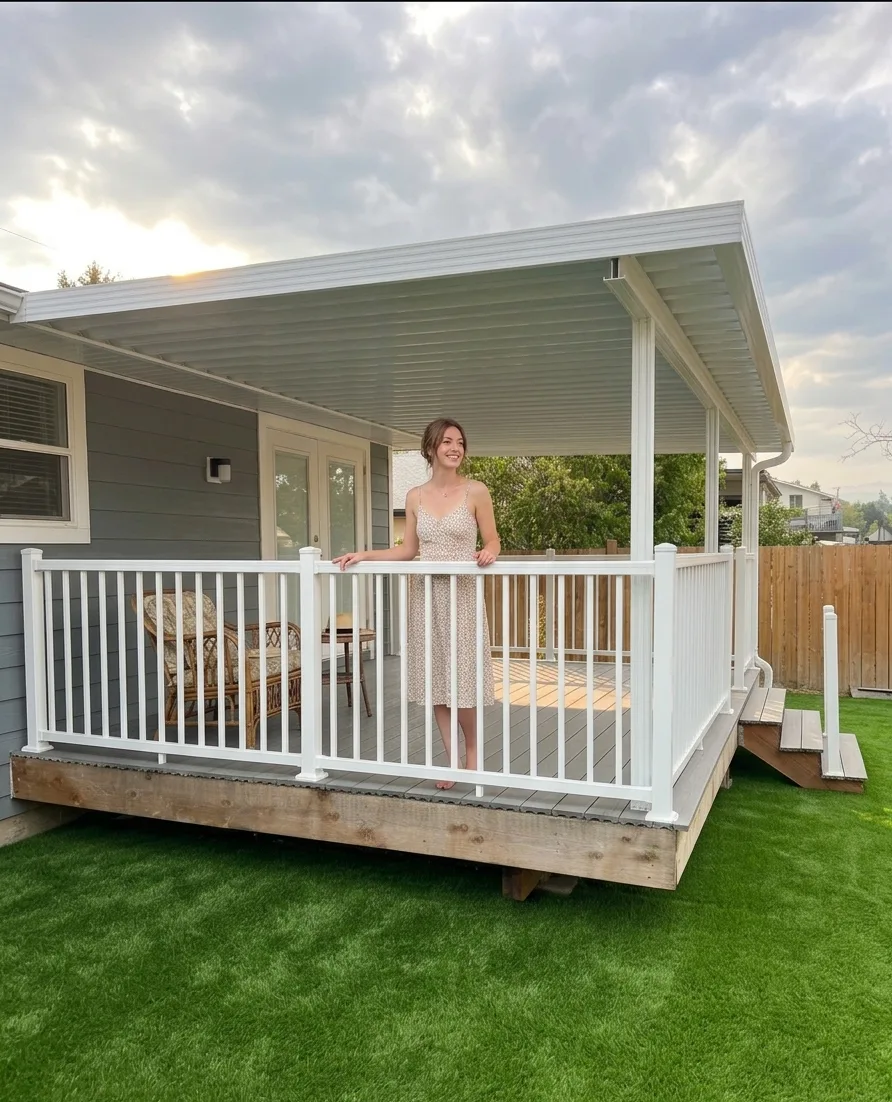
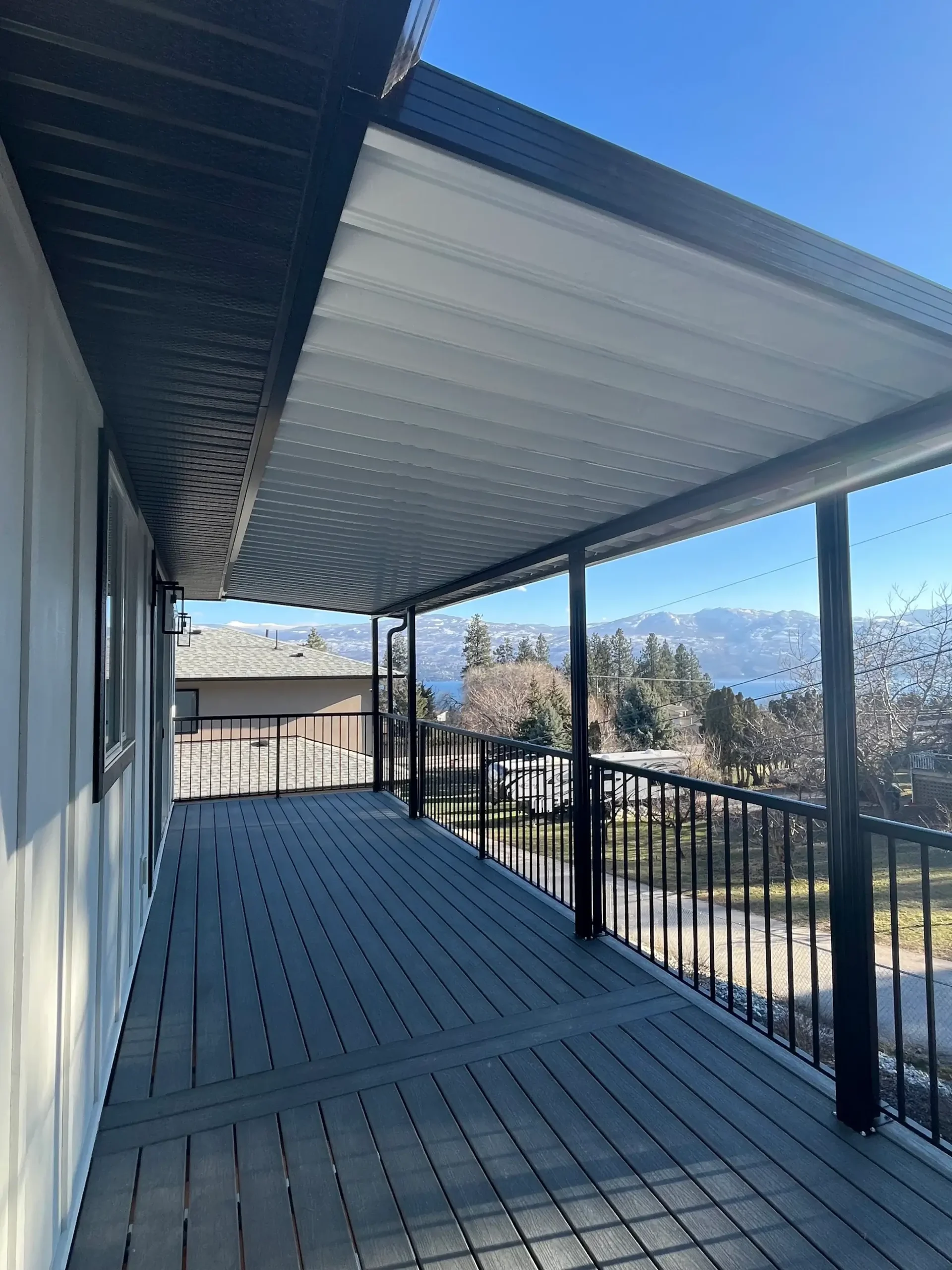
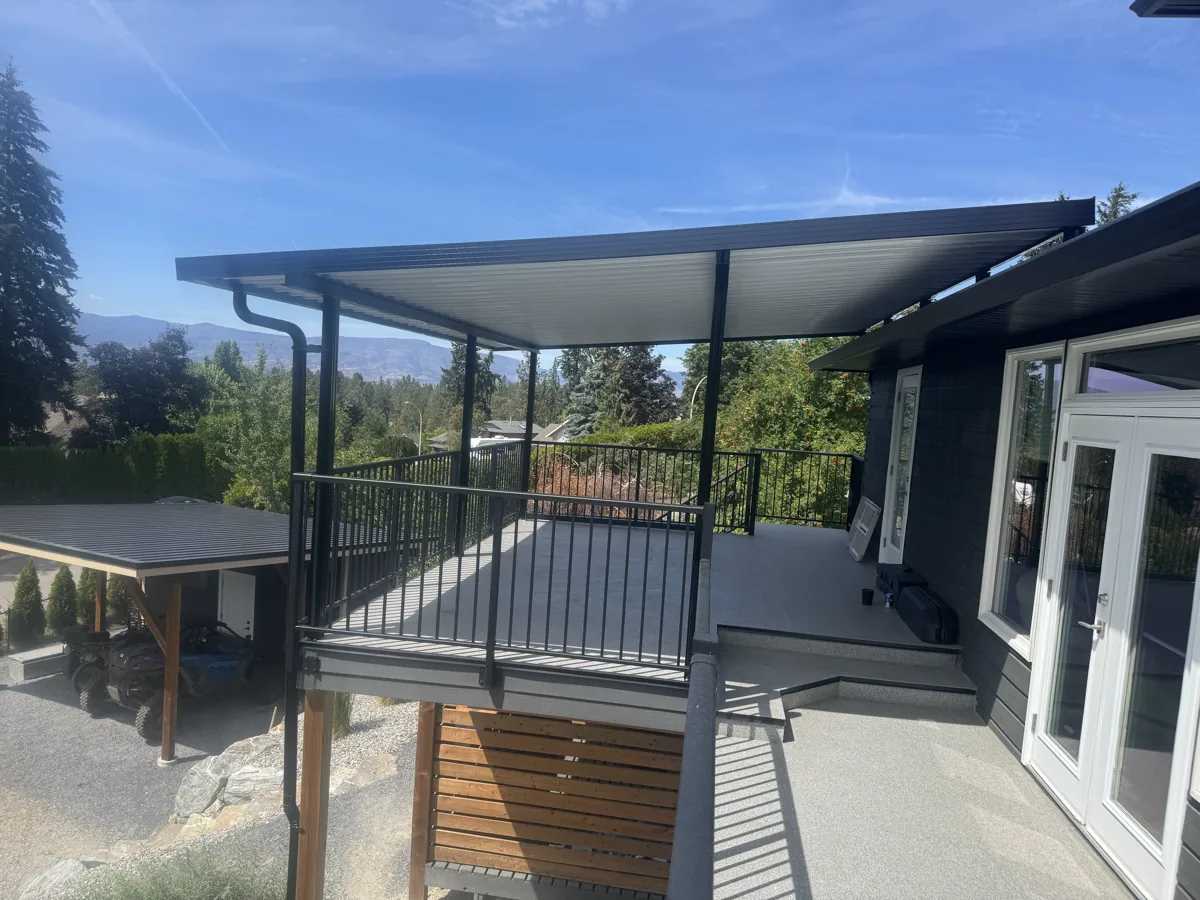
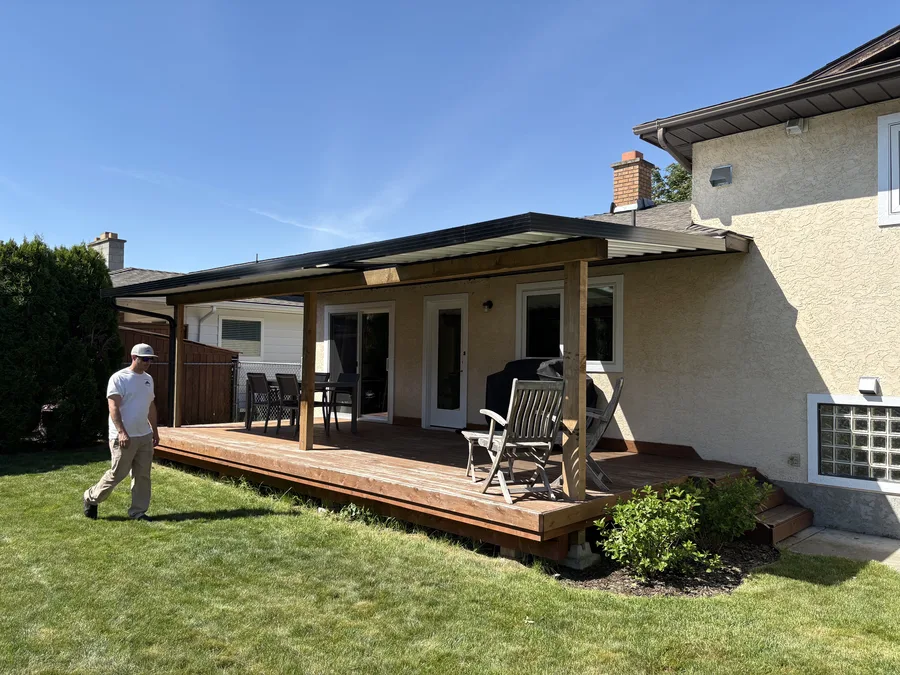
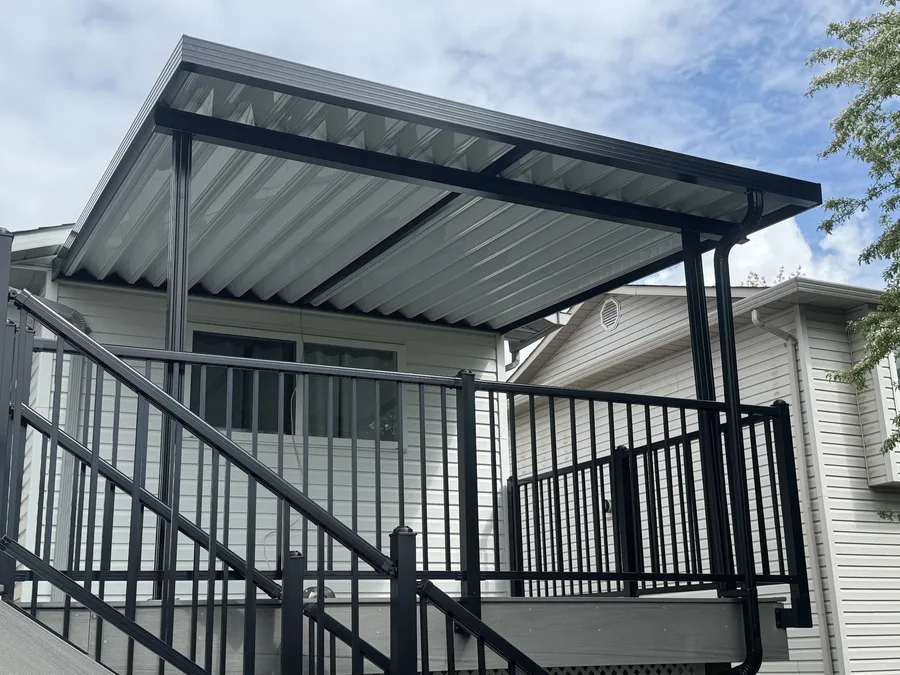
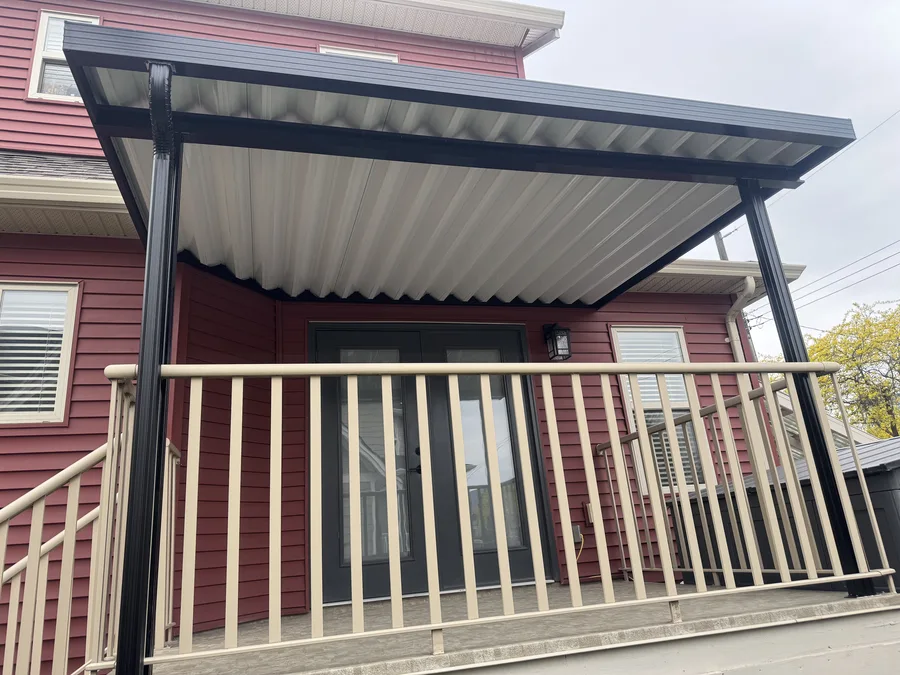
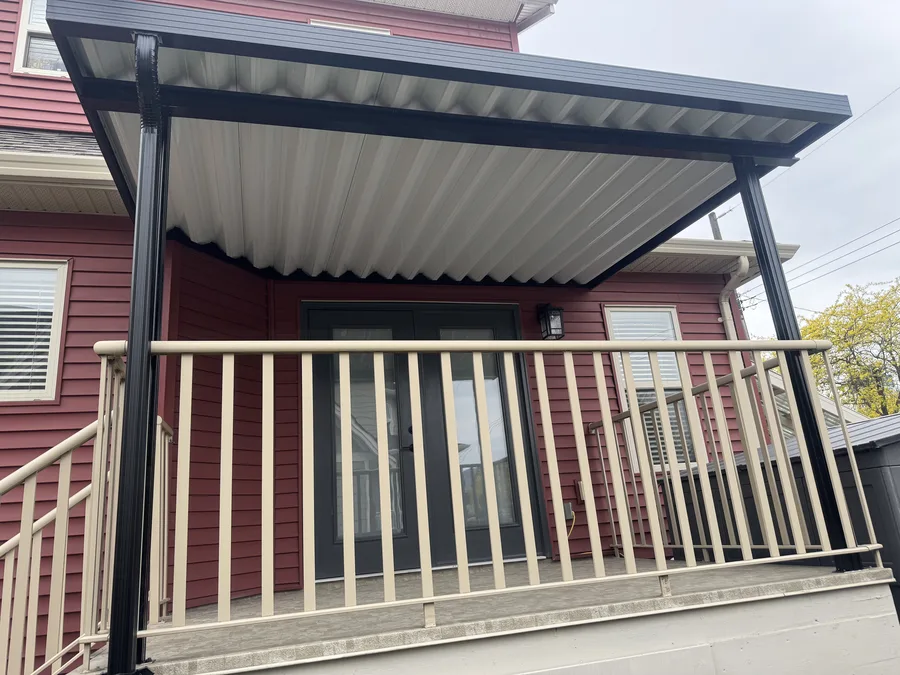
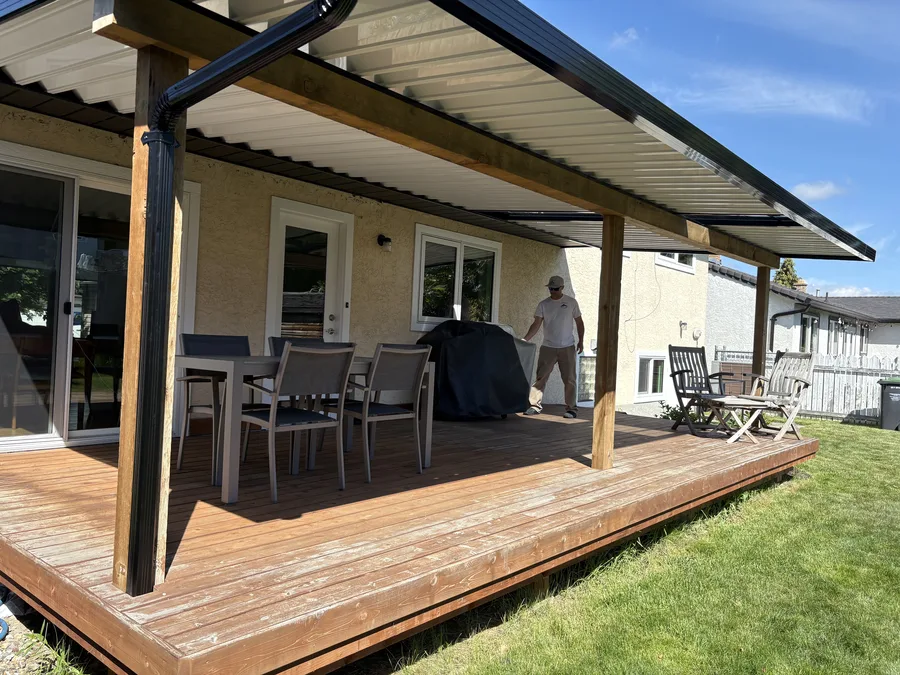
Recent Aluminum Cover Projects
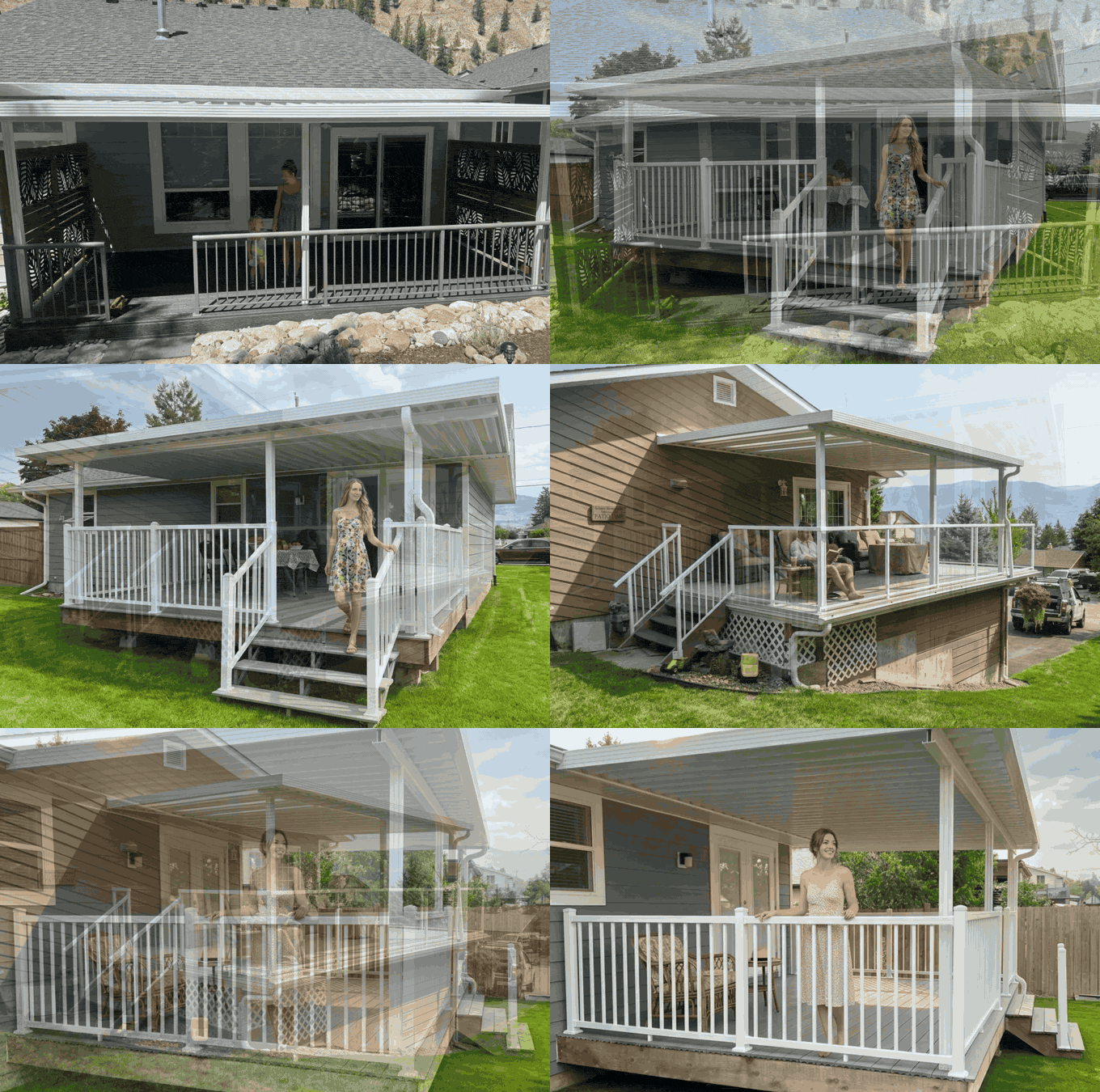
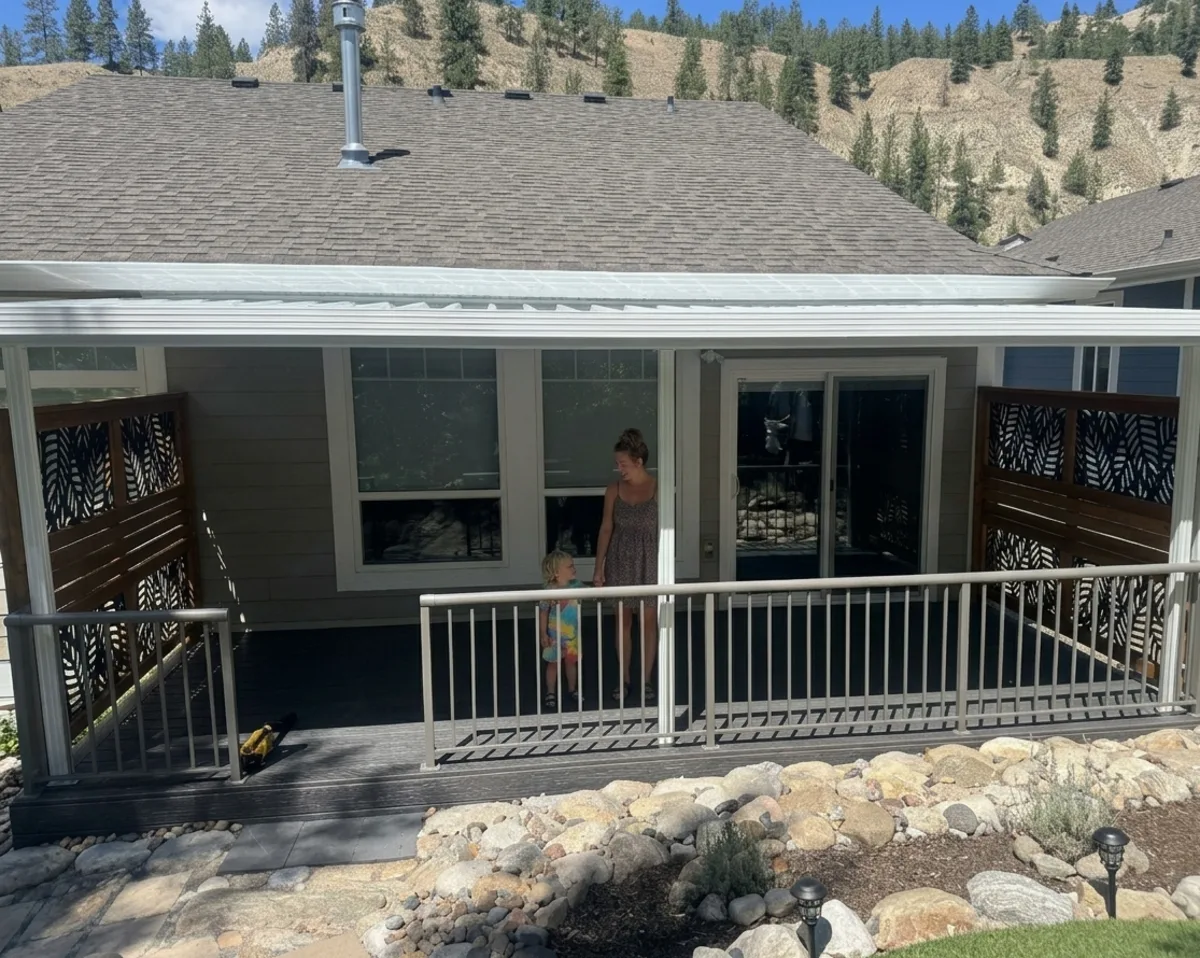
A few we’ve built recently — every one custom-made in West Kelowna and installed by our own crew.
Polycarbonate Patio Cover Questions
Can polycarbonate panels be used for a patio roof?
Yes, and that’s exactly what most DIY patio cover kits use. Solid or multiwall polycarbonate panels can span a patio roof on a lightweight aluminum or wood frame. The catch for Okanagan homes is snow load. Most kits are built for a mild climate and aren’t rated for what piles up here most winters.
Does polycarbonate yellow?
Yes, every polycarbonate panel yellows with enough UV exposure. Manufacturers typically warranty against serious yellowing for , but in the Okanagan’s roughly 2,000 sunny hours a year, we see it start around year 8. Once it starts it speeds up, and there’s no fix besides replacing the panels.
How long do polycarbonate panels last?
Most last before yellowing and surface wear make them worth replacing, shorter in a high UV spot like ours. Tempered glass runs and solid aluminum runs , both with far less maintenance along the way.
Is polycarbonate or aluminum better for a patio cover?
Depends what you want. Polycarbonate costs less to start and lets light through. Aluminum costs more upfront but needs almost no upkeep, handles the heaviest Okanagan snow without issue, and lasts two to three times as long. For a permanent structure attached to a house, we build aluminum.
Can a polycarbonate deck cover handle Okanagan snow loads?
Usually not. Standard kits are lightweight systems built for mild climates, not the heavy, wet snow that Kelowna, Vernon, West Kelowna, Lake Country and Salmon Arm get most winters. Panels can buckle or crack under a load they weren’t built for, sometimes in the first season. A properly sized aluminum or glass cover doesn’t have that problem.
What’s the difference between a clear patio roof and a polycarbonate patio enclosure?
A clear patio roof is usually just the panels overhead, open on the sides. A polycarbonate patio enclosure adds walls or screens to close the space in. Either way the panels behave the same: light, affordable, and not built for heavy snow, which is why we build both the roof and any enclosure walls out of aluminum and tempered glass instead.
Takes under 60 seconds · Your information is never shared.
Prefer to talk to someone? Call (250) 215-7513
Ready for a Cover Built for Okanagan Winters?
Designed, made and installed in the Okanagan by our own crew. 1,500+ patios built since 2005, 4.9 stars across 32 Google reviews.
Serving Kelowna, West Kelowna, Vernon, Penticton, Lake Country & Salmon Arm