

Patio Roof Ideas for Every Okanagan Deck
Patio roof ideas, the short answer: solid aluminum panels for year-round shade and snow, glass or mixed aluminum-glass where you want light, and a sloped design on almost every Okanagan home. Ten real layouts below, plus which one fits your deck.
All ten use heavy-gauge aluminum or tempered safety glass, built in our West Kelowna shop and installed by our own crew, most of them in a single day.
Patio Roof Ideas: Solid, Single-Skin or Glass Panels
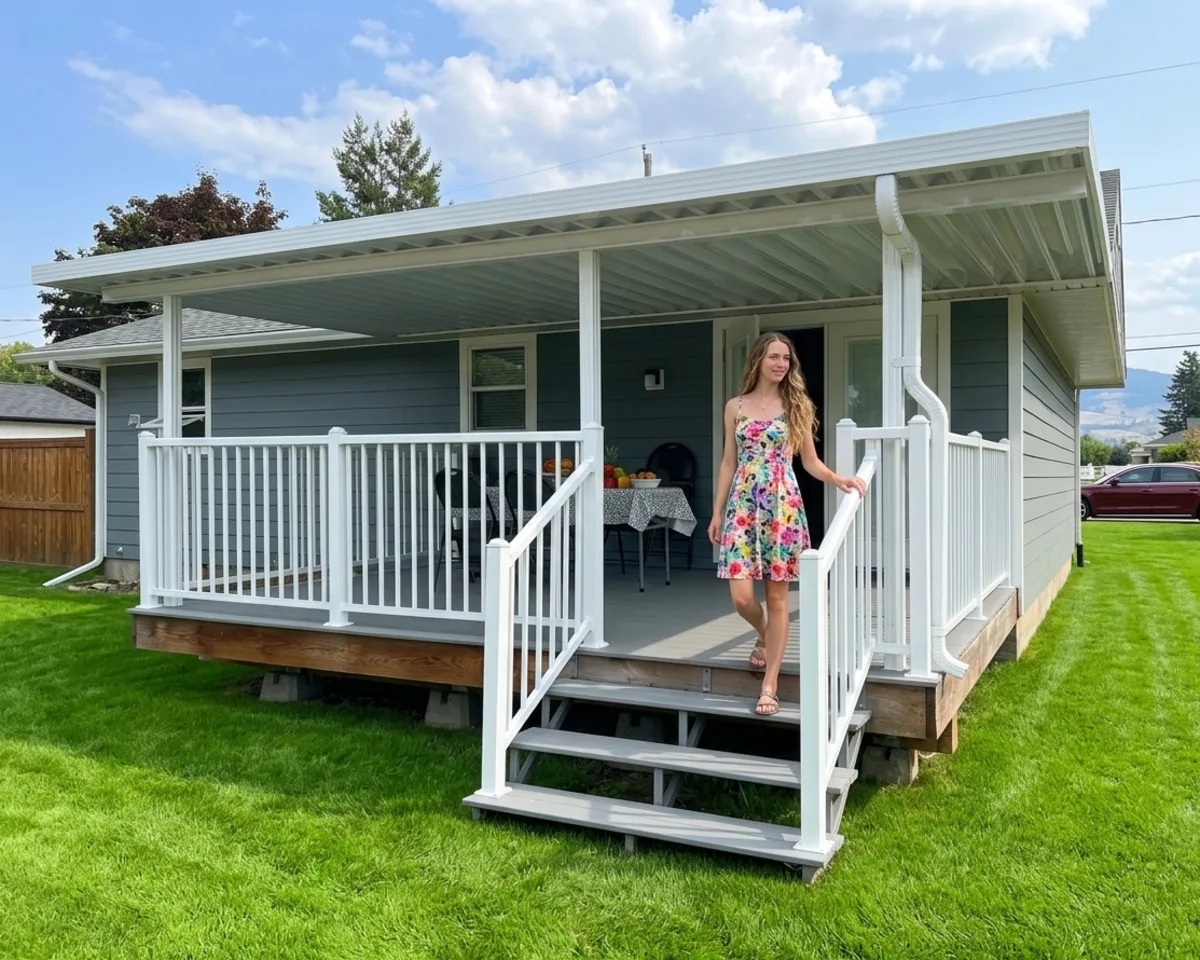
1. Solid Aluminum Patio Roof
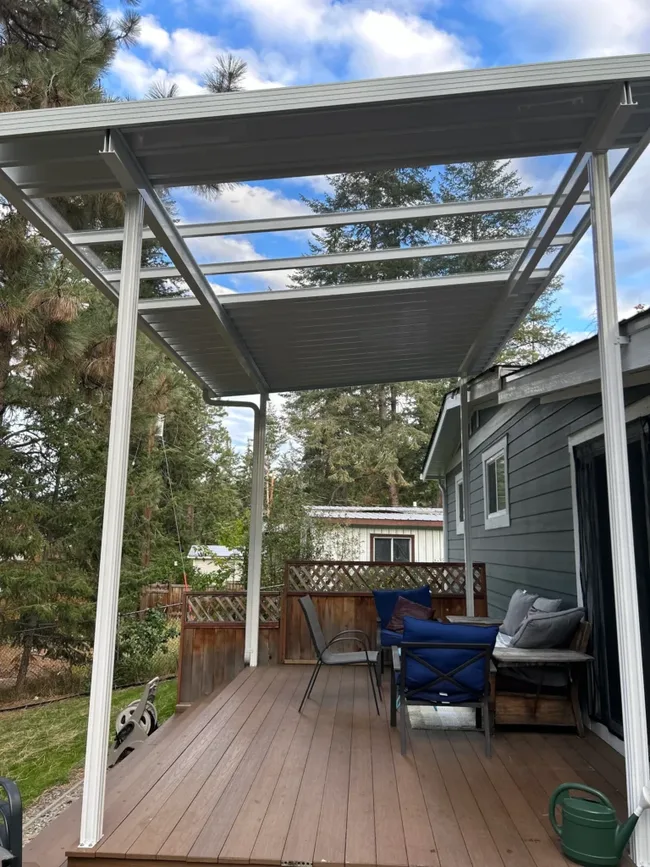
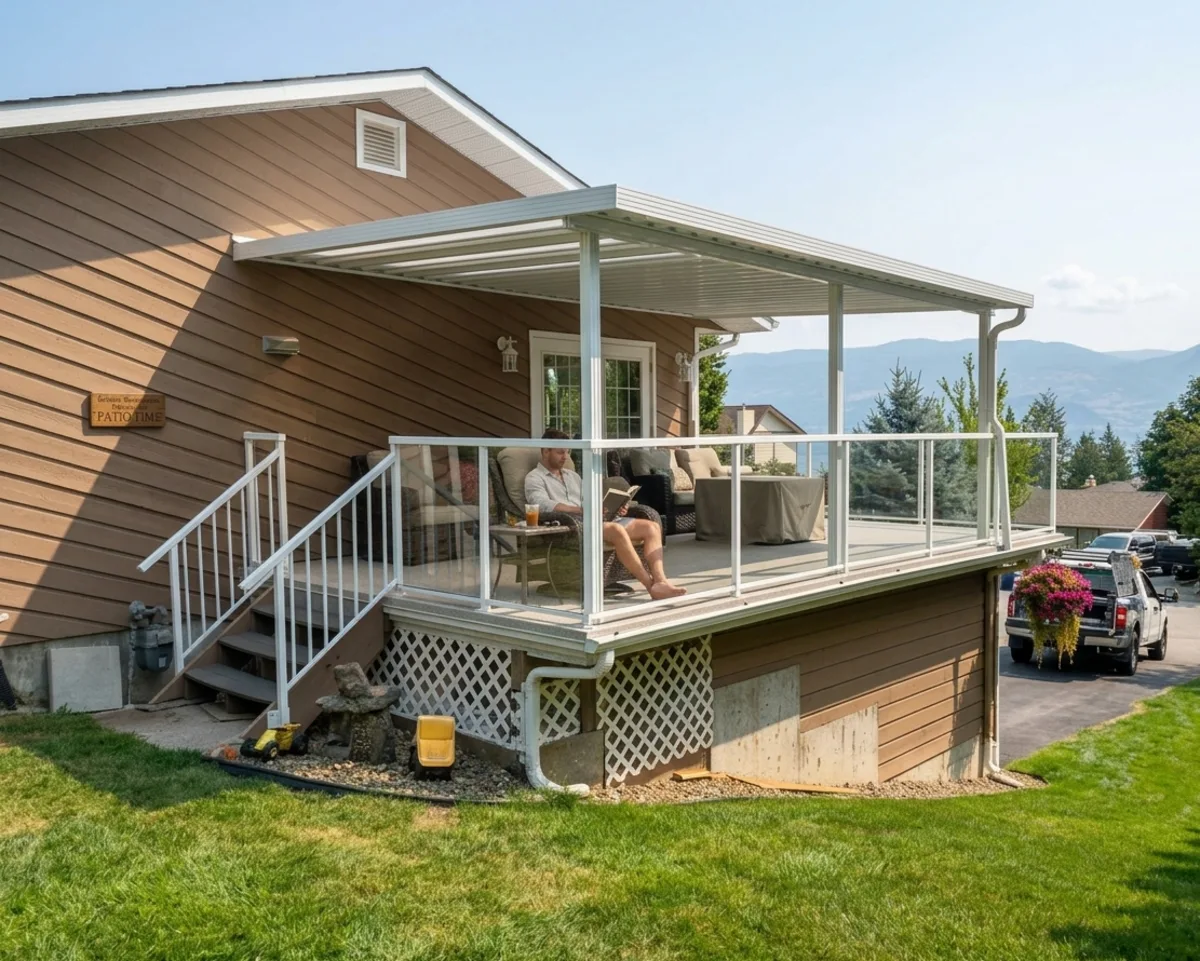
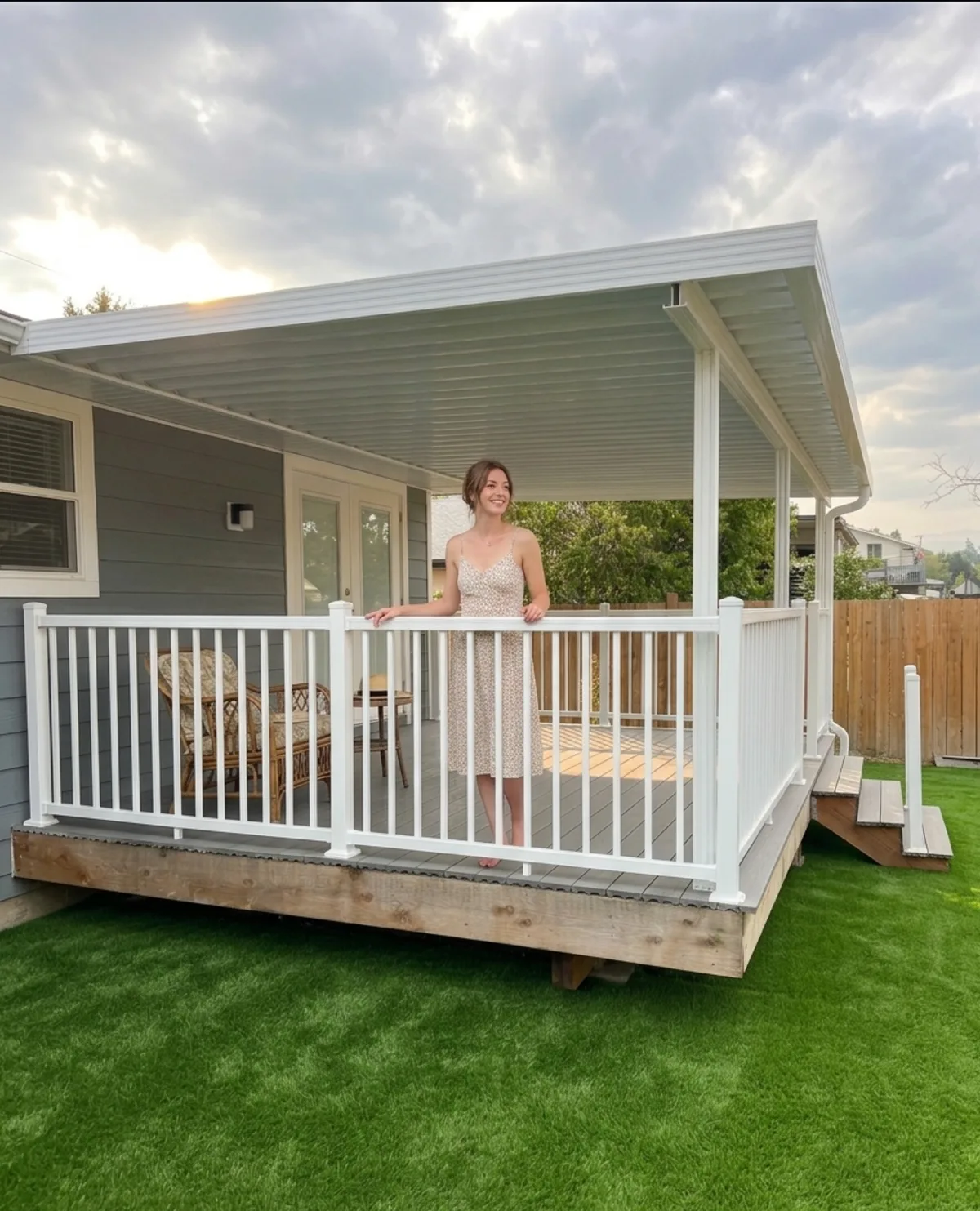
A solid aluminum roof is still what we install most. Thick interlocking panels give full shade and shrug off rain and snow all winter, and the flat underside looks clean from below. It’s the roof we quote by default on a West Kelowna or Kelowna deck used from April through October. See our aluminum patio covers page for the full build.
2. Single-Skin Aluminum Roof Panels
Single-skin panels are one sheet of aluminum formed into a shallow pan, lighter and more affordable than the solid style. Rain’s a bit louder and you lose a little shade, but the roof still carries our full warranty and holds up to the same snow load. A good fit over a side entrance, hot tub pad or any space that won’t be enclosed later.
3. Aluminum Roof With Glass Skylight Strips
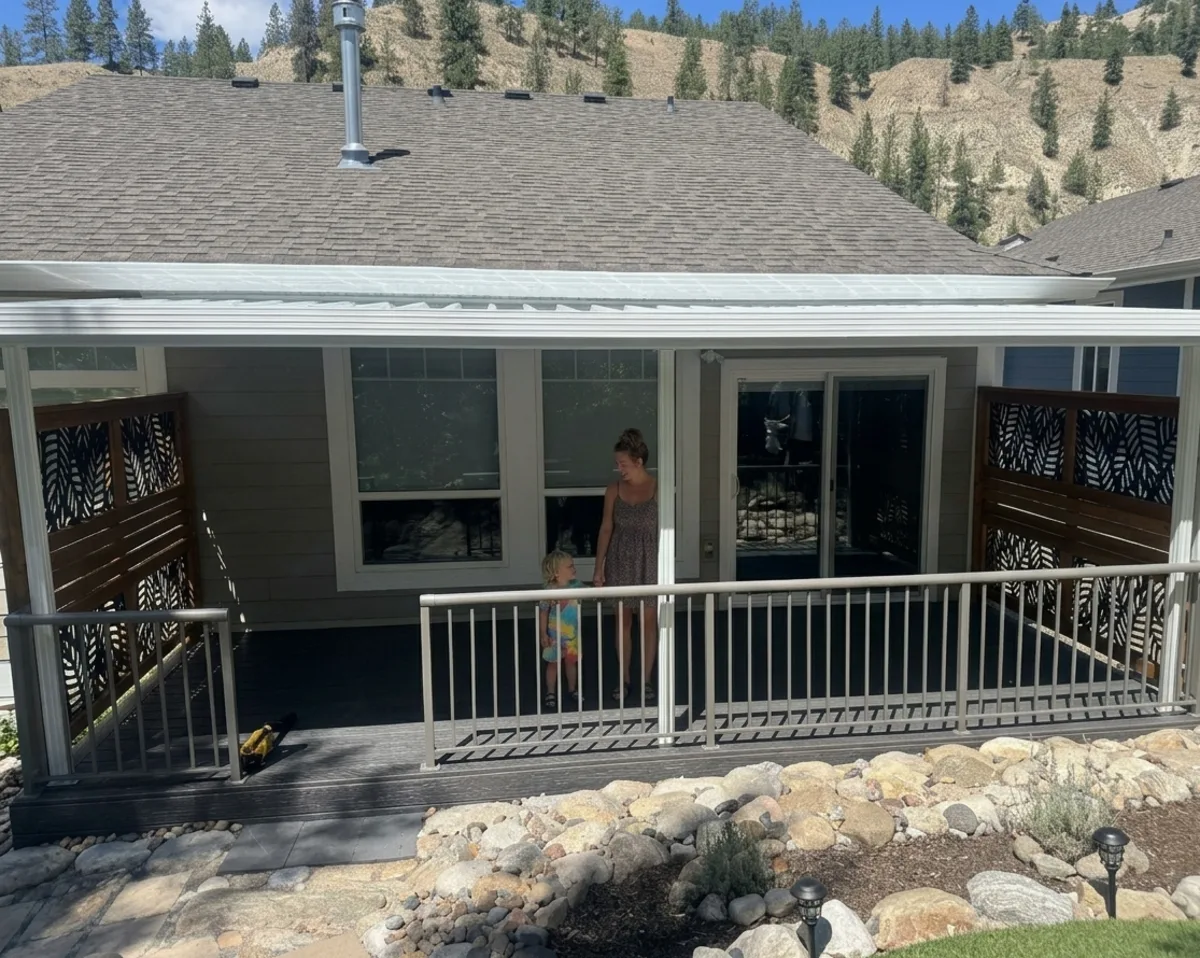
Mix solid aluminum panels with a strip or two of tempered glass and you get shade where you sit and daylight at the house wall. It runs cooler than an all-glass roof and keeps the kitchen window bright. It’s the patio roof idea we point homeowners to most on a big deck that still wants some natural light.
| Roof type | Shade | Rain noise | Daylight | Best for |
|---|---|---|---|---|
| Solid panel | Best | Quiet | None | Year-round use, 3-season conversion |
| Single-skin | Good | Moderate | Low | Budget builds, secondary spaces |
| Aluminum + glass strips | Good | Quiet | Partial | Big decks that still want light |
Gable, Flat and Lean-To Roofs for Decks
4. Sloped Lean-To Patio Roof
A lean-to, or shed-style roof, ties into your fascia on one side and slopes down to the posts on the other. Snow and rain slide off on their own, and it’s the most structurally efficient shape we build, which is why it ends up on most Okanagan homes. Standard pitch is a quarter inch per foot, steeper if you’re in Vernon or Lake Country.
5. Gable Patio Roof
A gable roof peaks in the middle instead of sloping one way, matching a traditional pitched-roof home instead of bolting a flat shape onto it. It costs more to frame than a lean-to and suits a specific style of house, usually an older build in Kelowna or Penticton with a steep roofline already.
6. Flat or Low-Slope Patio Roof
Flat patio roofs read as modern and minimal, even though there’s always a slight pitch built in for drainage. They need a proper built-in gutter, and on a walk-on deck or rooftop patio they’re often the only shape that makes sense. We frame these heavier in Vernon and Lake Country, where snow load is the real design driver.
Outdoor Roof Ideas in Glass
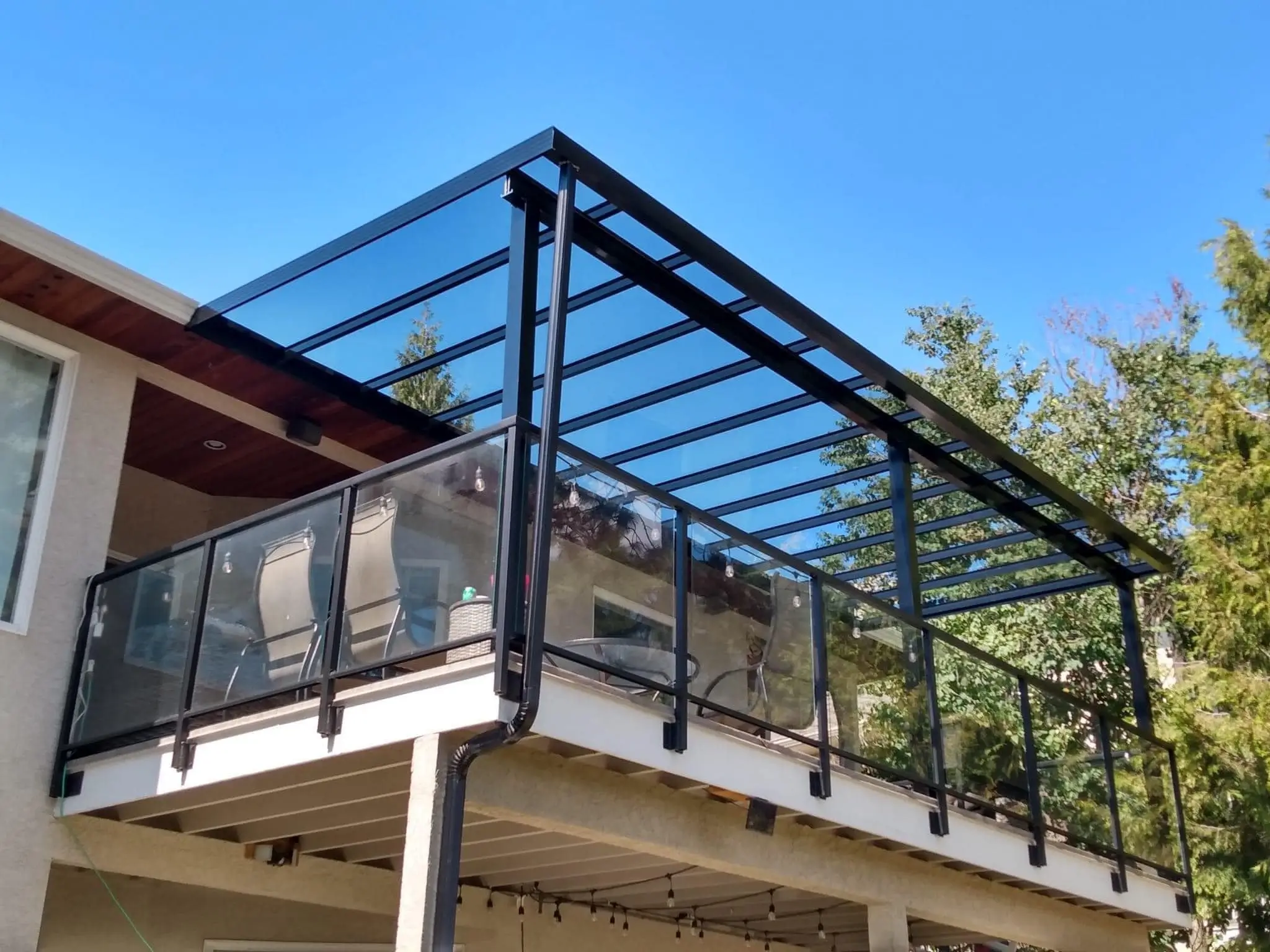
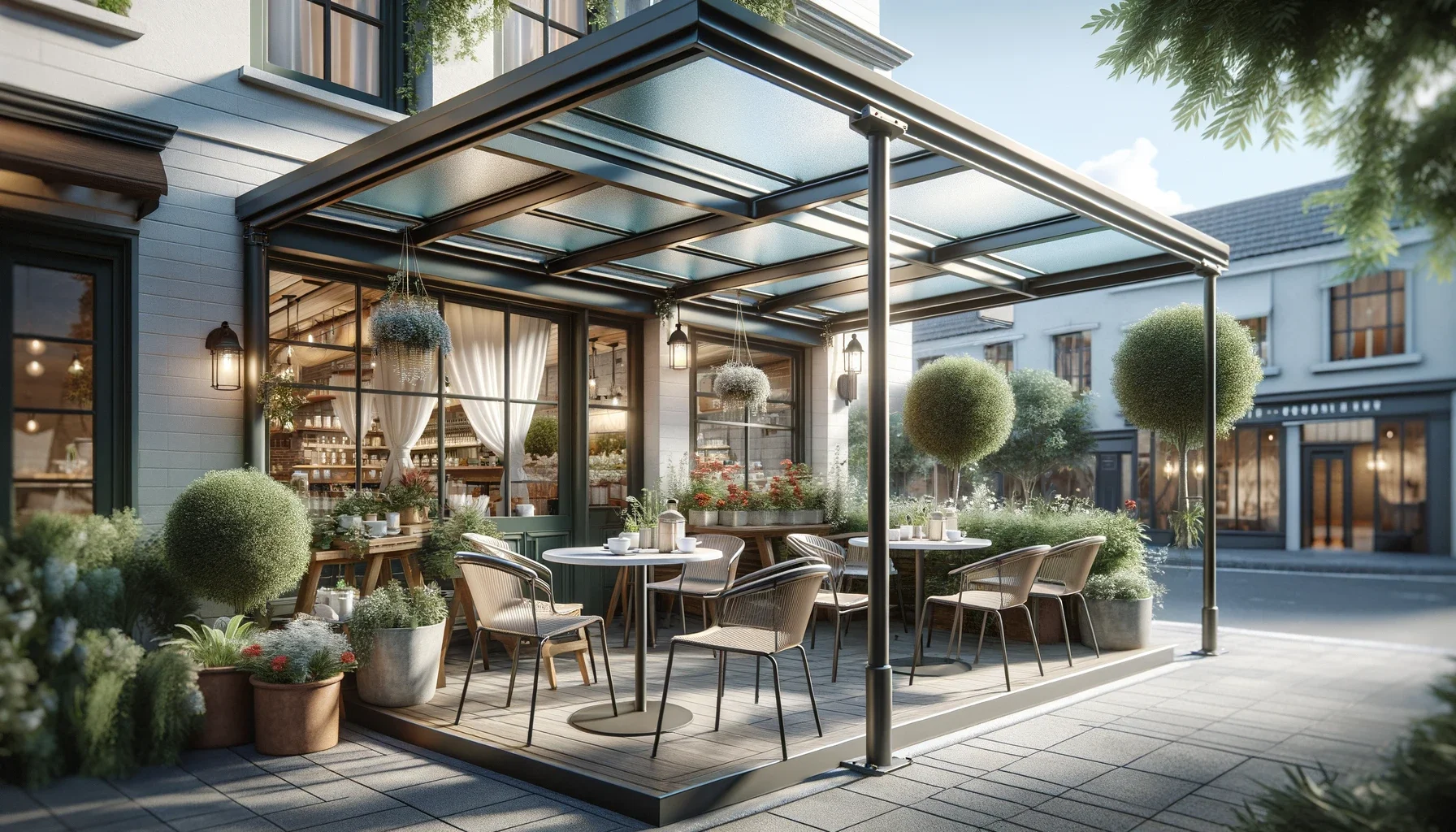
7. Clear or Tinted Glass Patio Roof
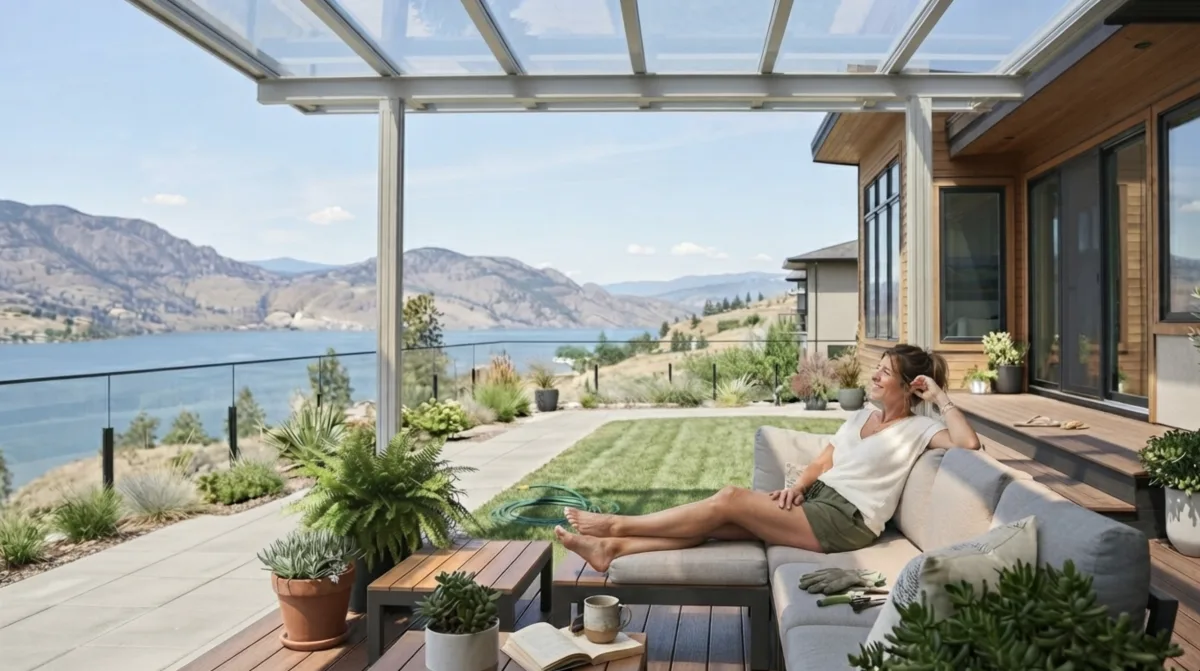
Tempered safety glass on an aluminum frame gives you a roof that lets the sky through. Clear glass is the pick on a north or east-facing deck. Face south or west and the same clear glass runs warm by mid-afternoon, so we switch to tinted grey, green or neutral glass, which cuts the glare and takes the edge off the heat. Full writeup on both: glass patio covers.
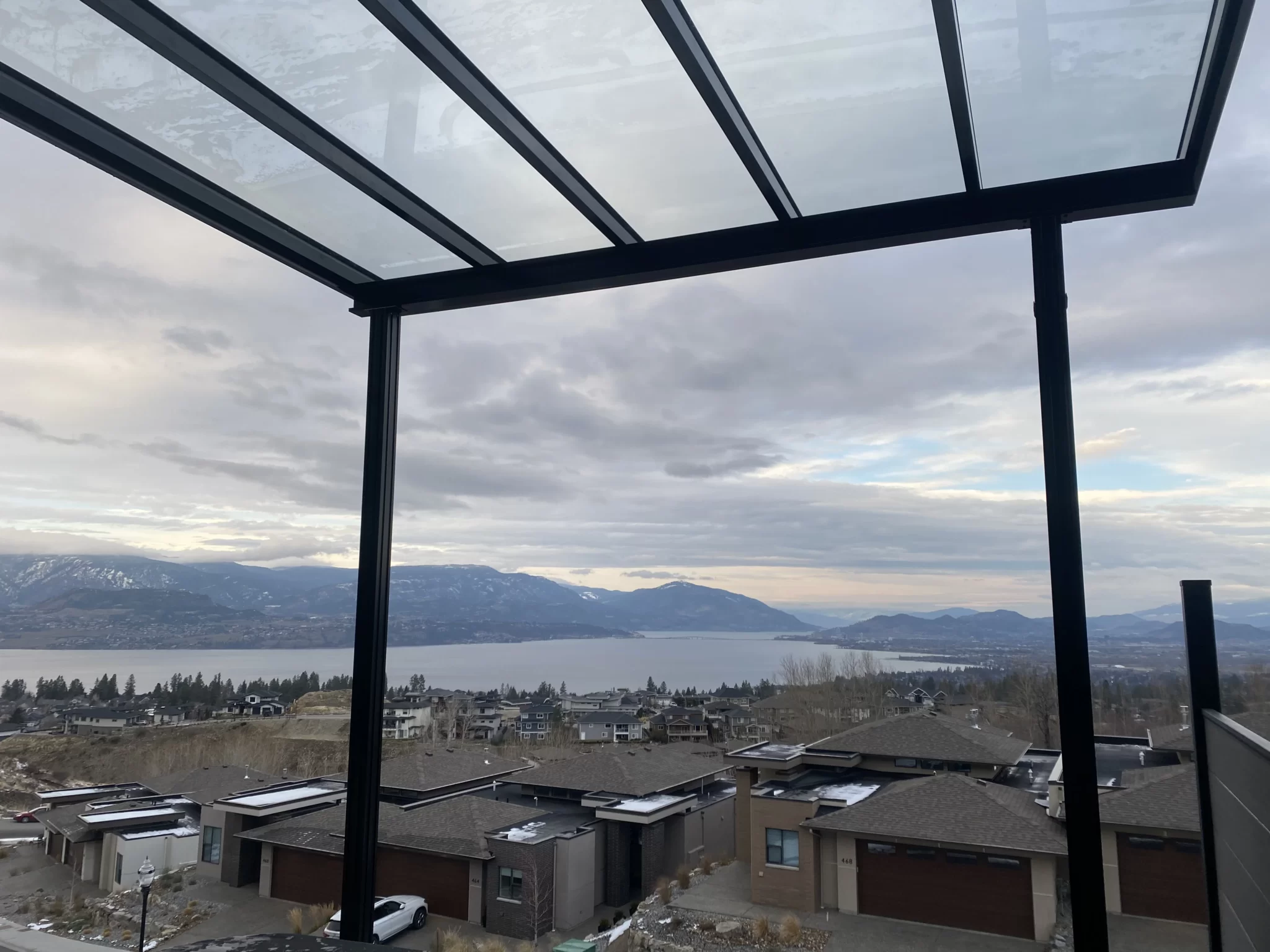
8. Glass Roof Over a Lake-View Deck
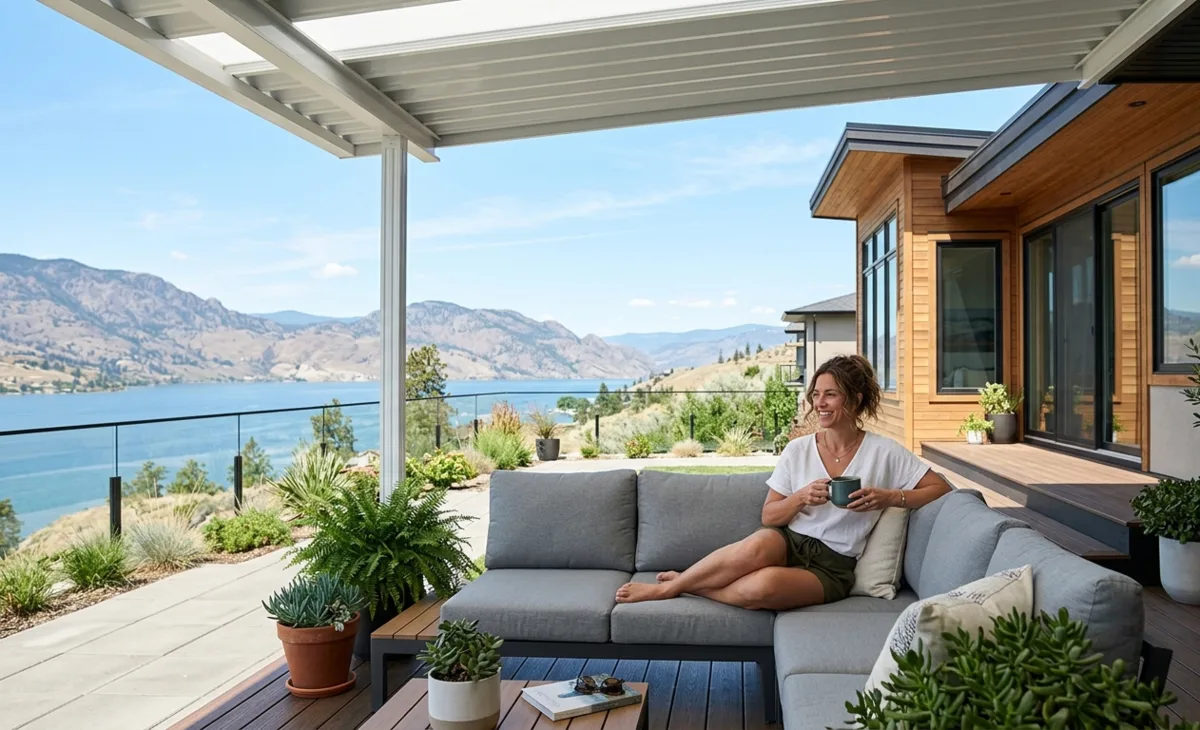
On a lakefront property the roof itself should disappear. A slim black aluminum frame with clear or light-tint glass keeps the view front and centre from every chair, and pairing it with a matching glass railing turns the whole deck into a glass box with a view. See the full tradeoffs in glass vs aluminum patio covers.
Colour, Lighting and Integrated Patio Roof Designs
9. Colour-Matched Patio Roof and Railing
White, black or a custom colour match on the panels, paired with matching aluminum or glass deck railings, is what separates a patio roof that looks bolted on from one that looks built with the house. We bring colour samples to every site visit so you can see the match before we order anything. Set a realistic budget early. Every patio roof is priced to the project, and the best way to get a real number is a free on-site quote.
10. Built-In Lighting Under the Patio Roof
Recessed LED pucks or a wired fan mount go into the panel system before it ships from our shop, so there’s no exposed wiring once it’s installed. Plan the lighting at the quote stage. Adding it after the roof is up means opening panels back up, which costs more than wiring it in the first time.
Five Patio Roof Mistakes We Get Called to Fix
- Clear glass over a west-facing deck. Looks great in May, runs hot by August. Tint it.
- A flat roof with no real gutter. Flat shapes need a built-in drainage system, not an afterthought downspout.
- Lighting added after the install. Plan it before the panels ship and the wiring stays hidden.
- A roof shape that fights the house. A flat roof on a steep-pitched craftsman home never looks intentional.
- Single-skin panels over a space you plan to enclose. Build for the heavier solid-panel load if a 3-season room is in the plan.
Which Patio Roof Design Fits Your Deck?
| Your deck | Go with |
|---|---|
| Used April through October, want full shade | Solid aluminum panels |
| Tight budget, just want rain cover | Single-skin aluminum panels |
| Big deck, still want some natural light | Aluminum with glass skylight strips |
| Faces north or east | Clear glass roof |
| Faces south or west | Tinted glass or solid aluminum |
| Lake or mountain view | Slim black frame, glass or mixed |
| Heavy snow area (Vernon, Lake Country) | Solid panels, or a flat roof framed heavier |
| Might enclose it later | Solid panels, built to carry a 3-season room |
Browse more looks in our patio cover design ideas gallery, or check our patio roof page for what we build in your area. Or skip the research: send us a photo of your deck and we’ll tell you which of these patio roof ideas we’d build on it.
Recent Patio Roof Projects
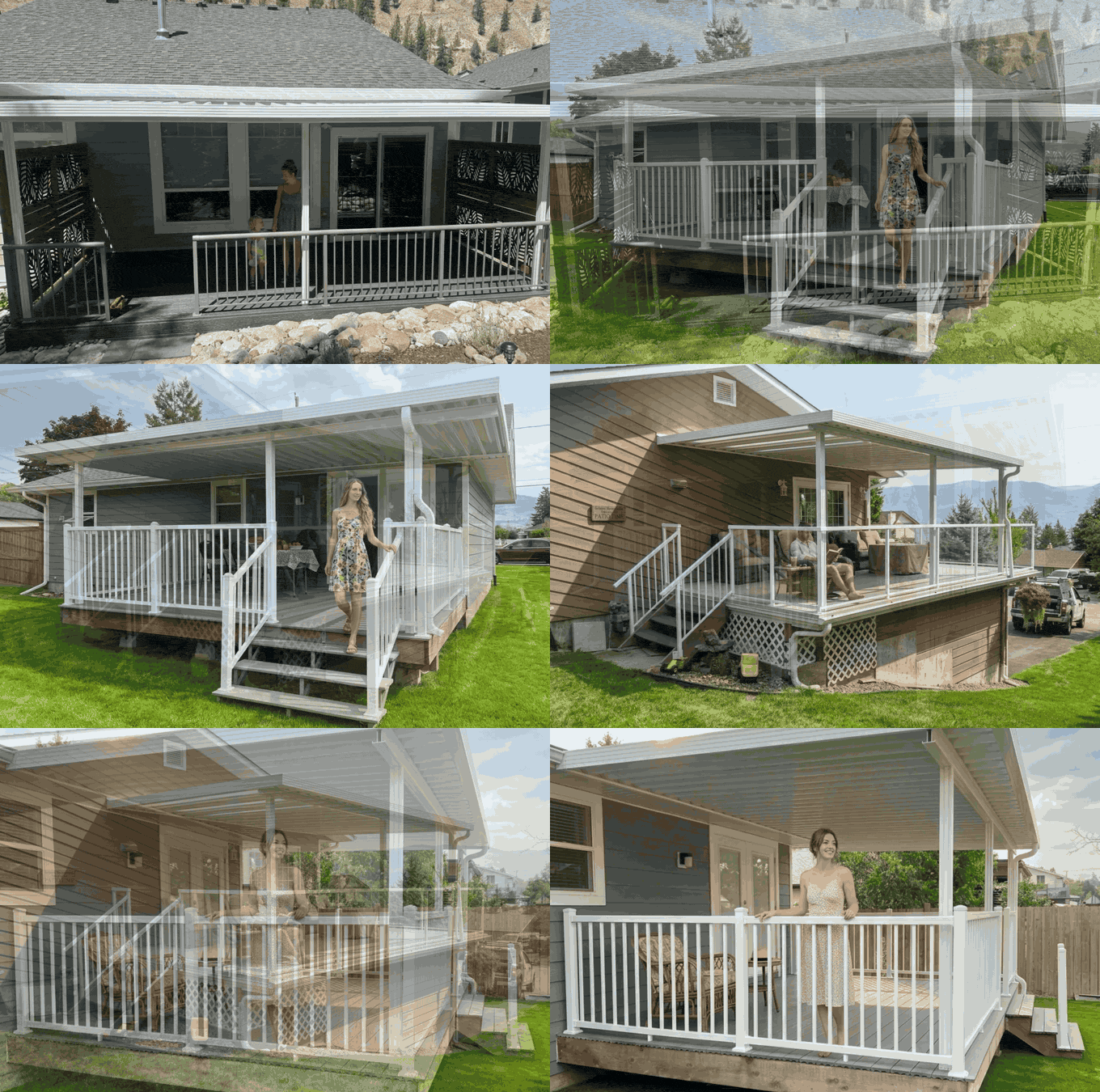
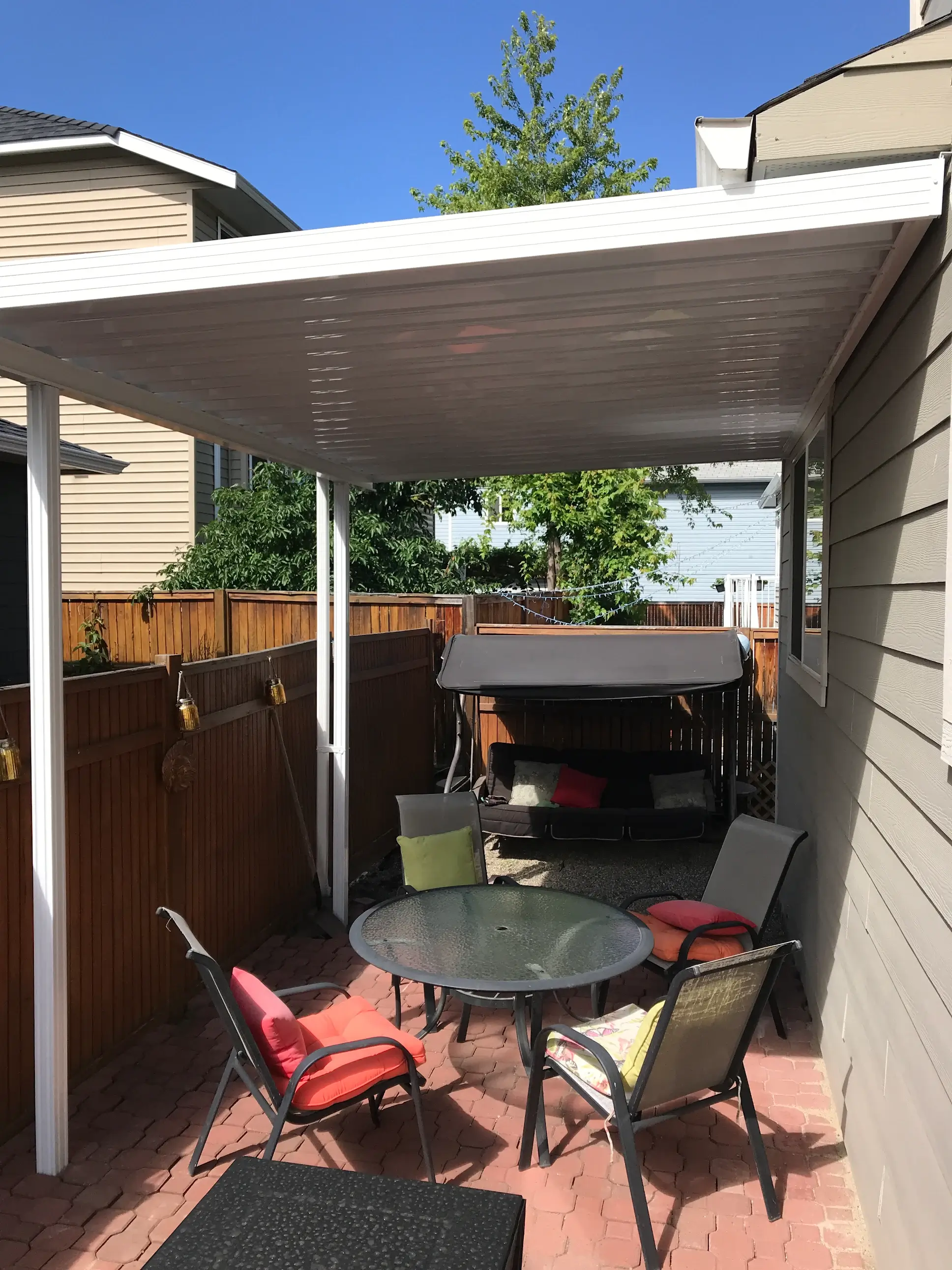
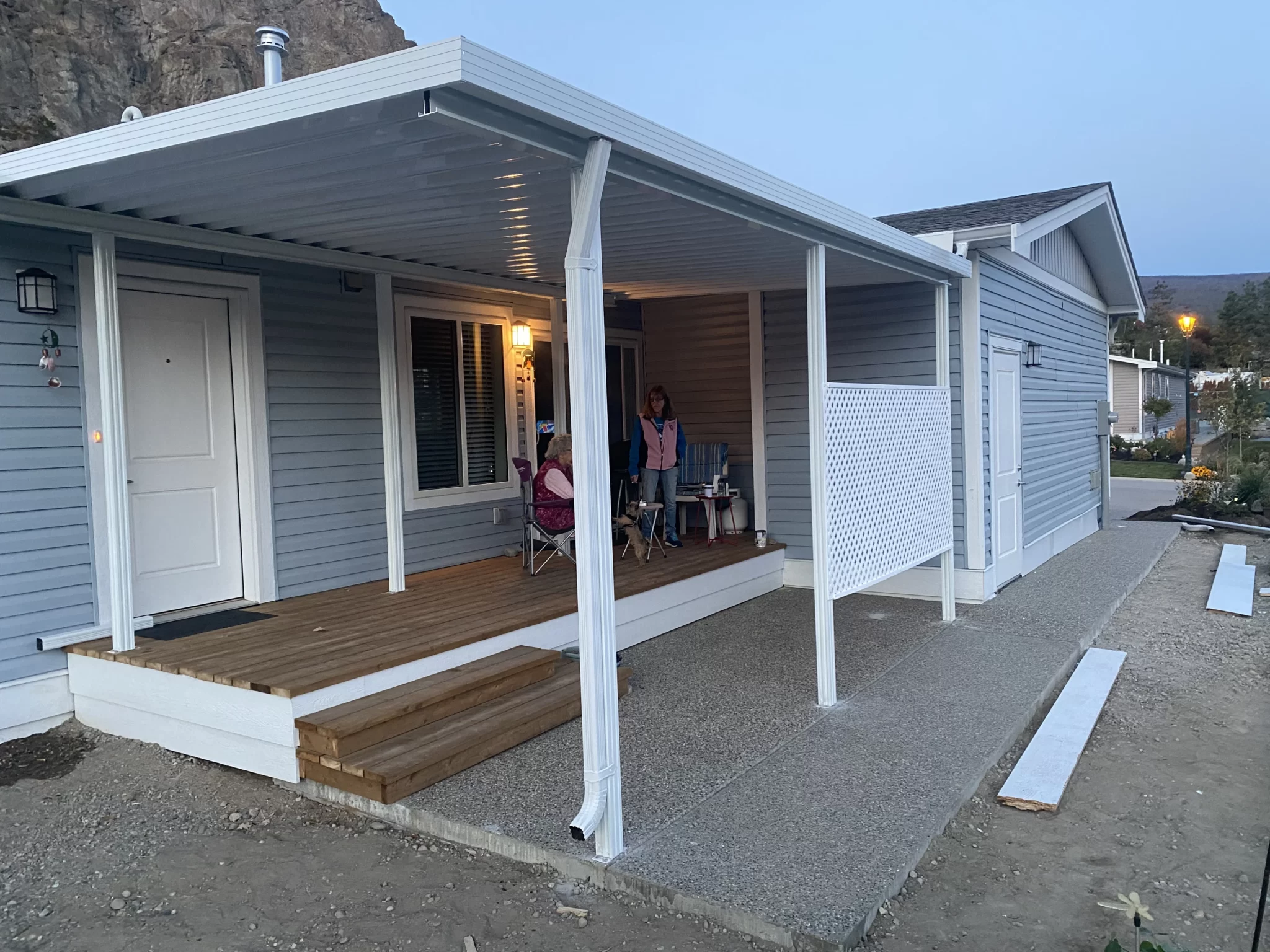
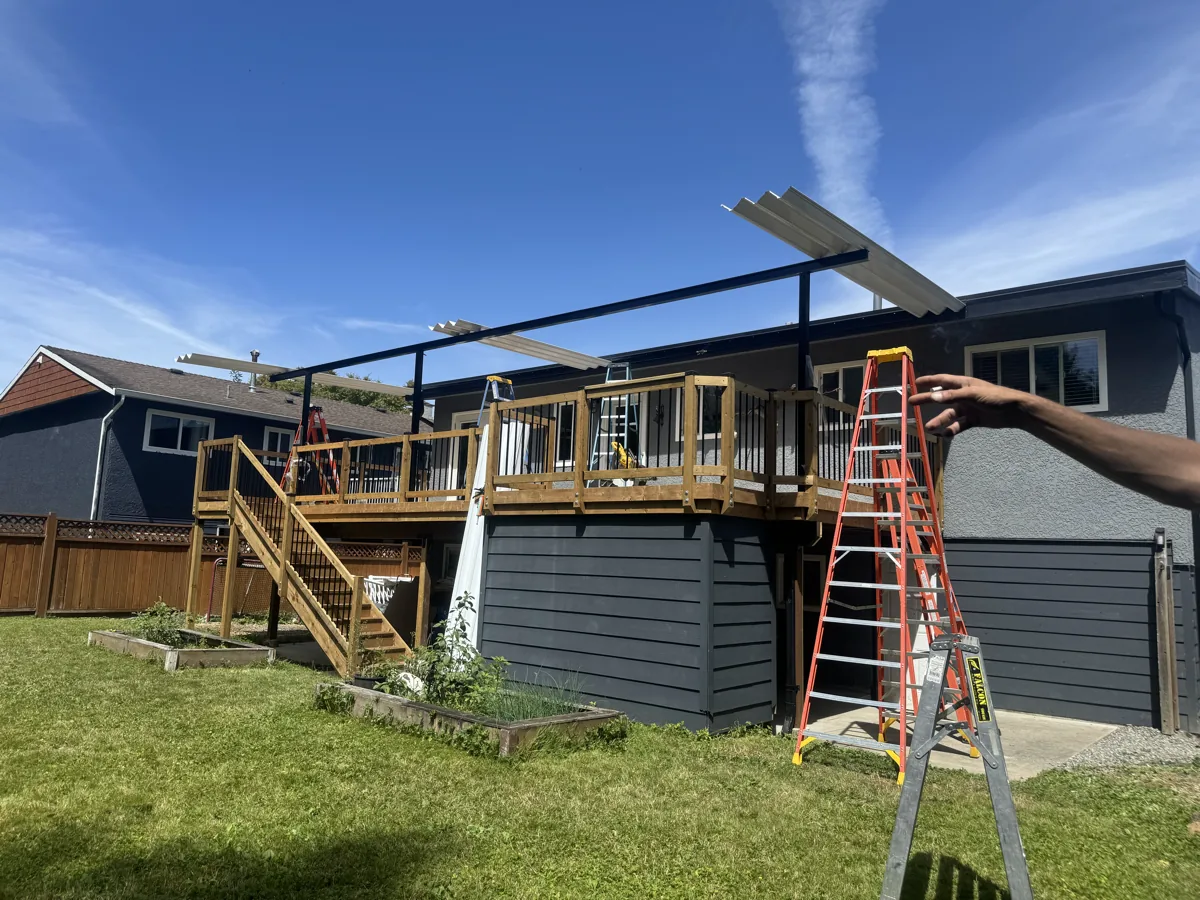
A few we’ve built recently — every one custom-made in West Kelowna and installed by our own crew.
Patio Roof Questions
What’s the best material for a patio roof?
Aluminum is the material we build with for every patio roof, solid panel, single-skin or glass-framed. It handles Okanagan winters without rotting, warping or needing a repaint, and it carries our full warranty either way. Wood and vinyl both struggle in this climate long term.
Should I choose a solid, single-skin or glass patio roof?
It depends on how you use the space and which way the deck faces. Solid panels give the most shade and the quietest rain, single-skin panels are the more affordable shade-and-rain option, and glass or mixed aluminum-glass roofs let light through where you want it. We’ll walk through all three at the free site visit.
What’s the difference between a gable and a flat patio roof?
A gable patio roof peaks in the middle to match a traditional pitched-roof home, while a flat or low-slope roof reads as modern and needs a proper built-in gutter for drainage. Most Okanagan homes end up with a sloped lean-to instead of either, since it sheds snow on its own and ties directly into the existing fascia.
Can I add lighting to a patio roof after it’s already installed?
It’s much easier to wire lighting in before the panels ship from our shop than to open an installed roof back up. Tell us at the quote stage if you want recessed LEDs or a fan mount and we’ll build the wiring into the panel system before it ever reaches your house.
Does a patio roof have to match my house’s roofline?
It doesn’t have to, but it looks better when it does. A flat roof on a steep-pitched craftsman home tends to look bolted on, while matching the roofline, or at least the colour, makes the patio roof look like it was part of the original build.
Takes under 60 seconds · Your information is never shared.
Prefer to talk to someone? Call (250) 215-7513
Ready for Your Patio Roof?
Designed, made and installed in the Okanagan by our own crew. 1,500+ patios built since 2005, 4.9 stars across 32 Google reviews.
Serving Kelowna, West Kelowna, Vernon, Penticton, Lake Country & Salmon Arm