
"Quality Outdoor Living Since 1995"

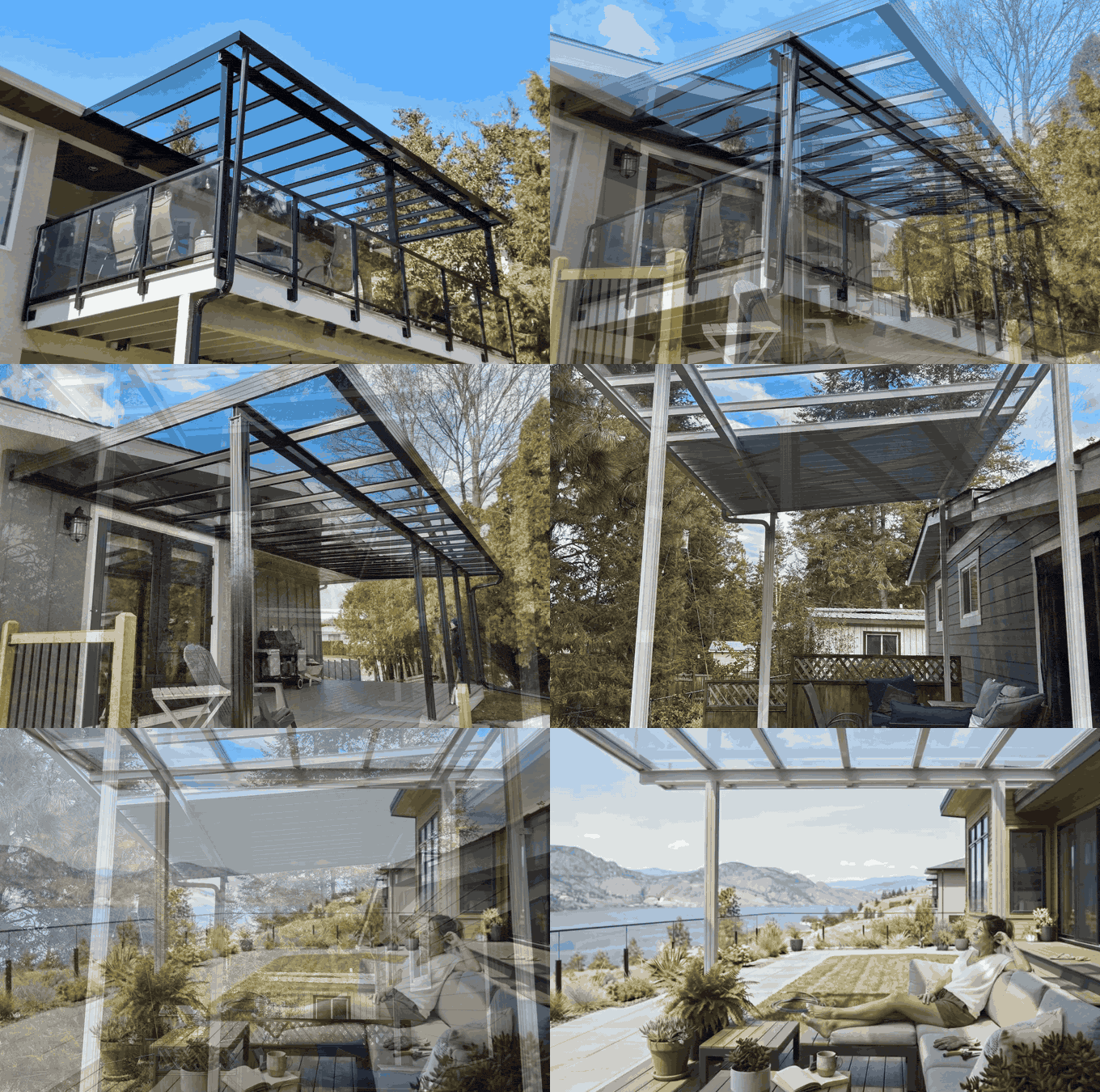
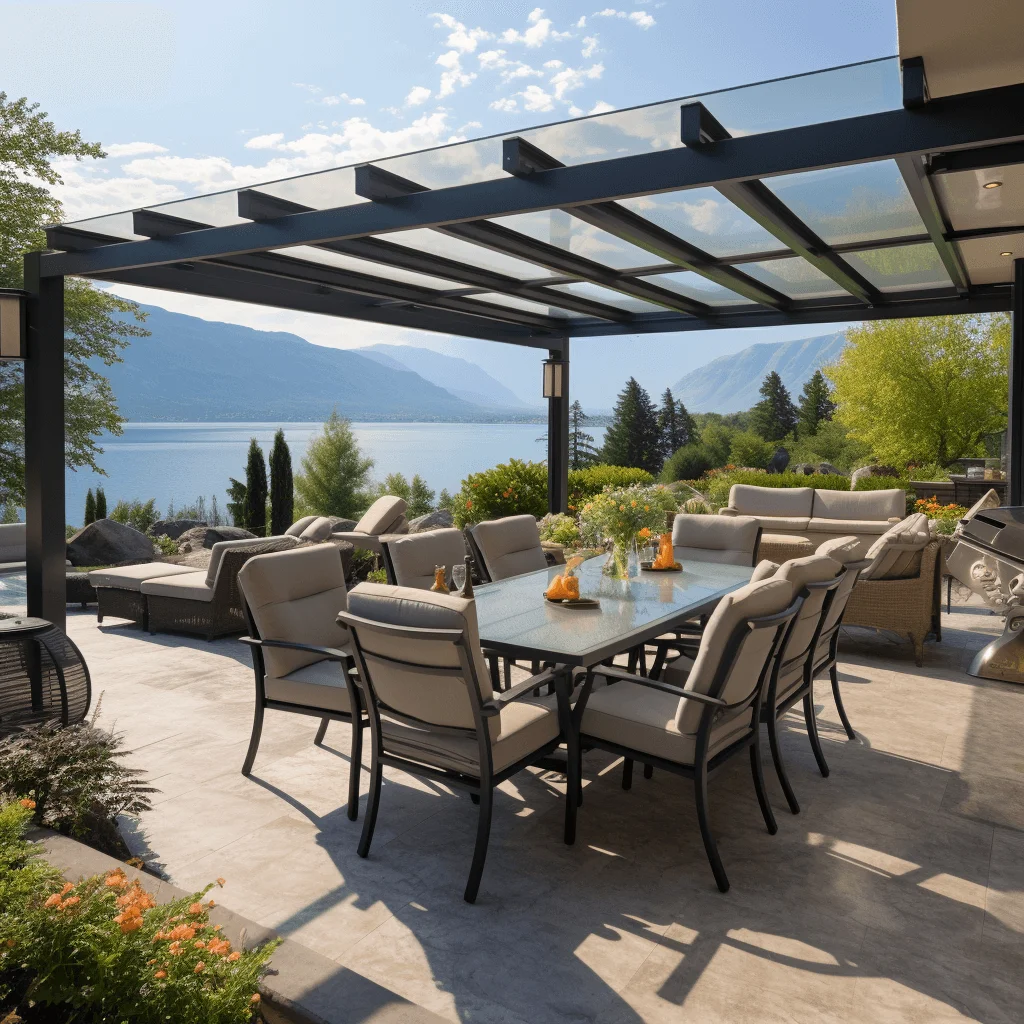
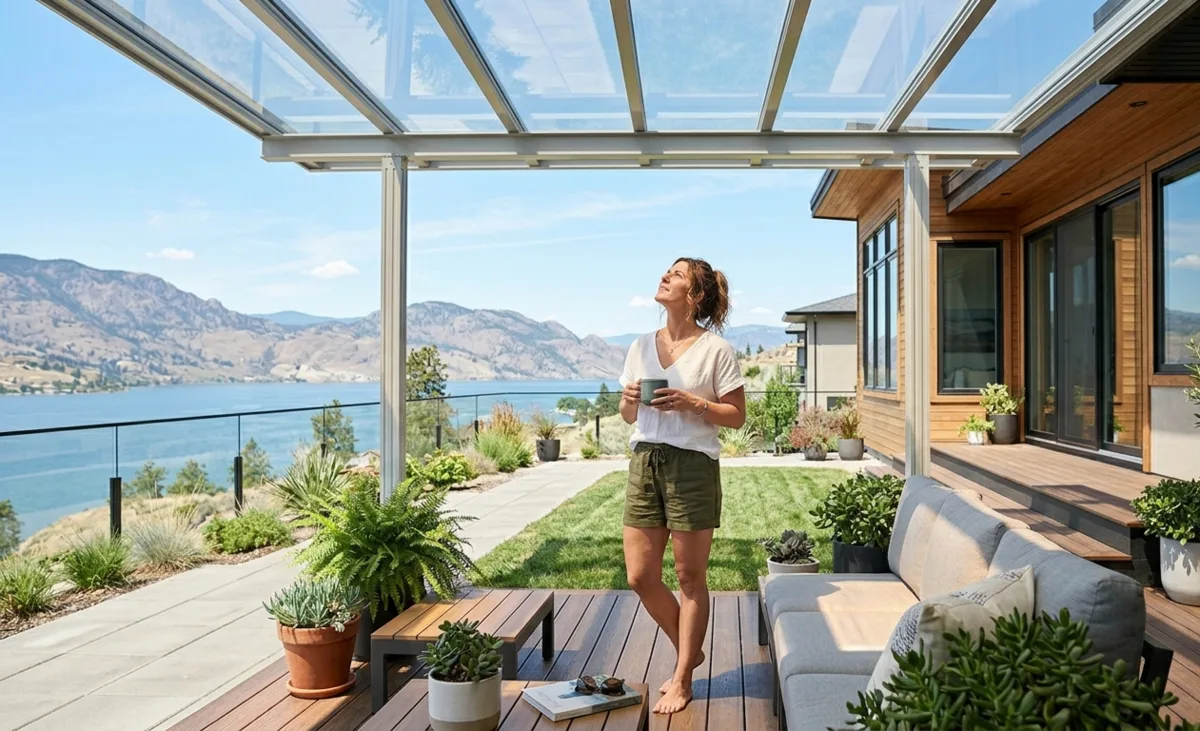
Glass roof patio cover with Okanagan lake view, Kelowna

Is Glass Strong Enough for BC Snow? (2026 Guide): Tempered Glass Patio Cover Strength

March 2026·11 min read

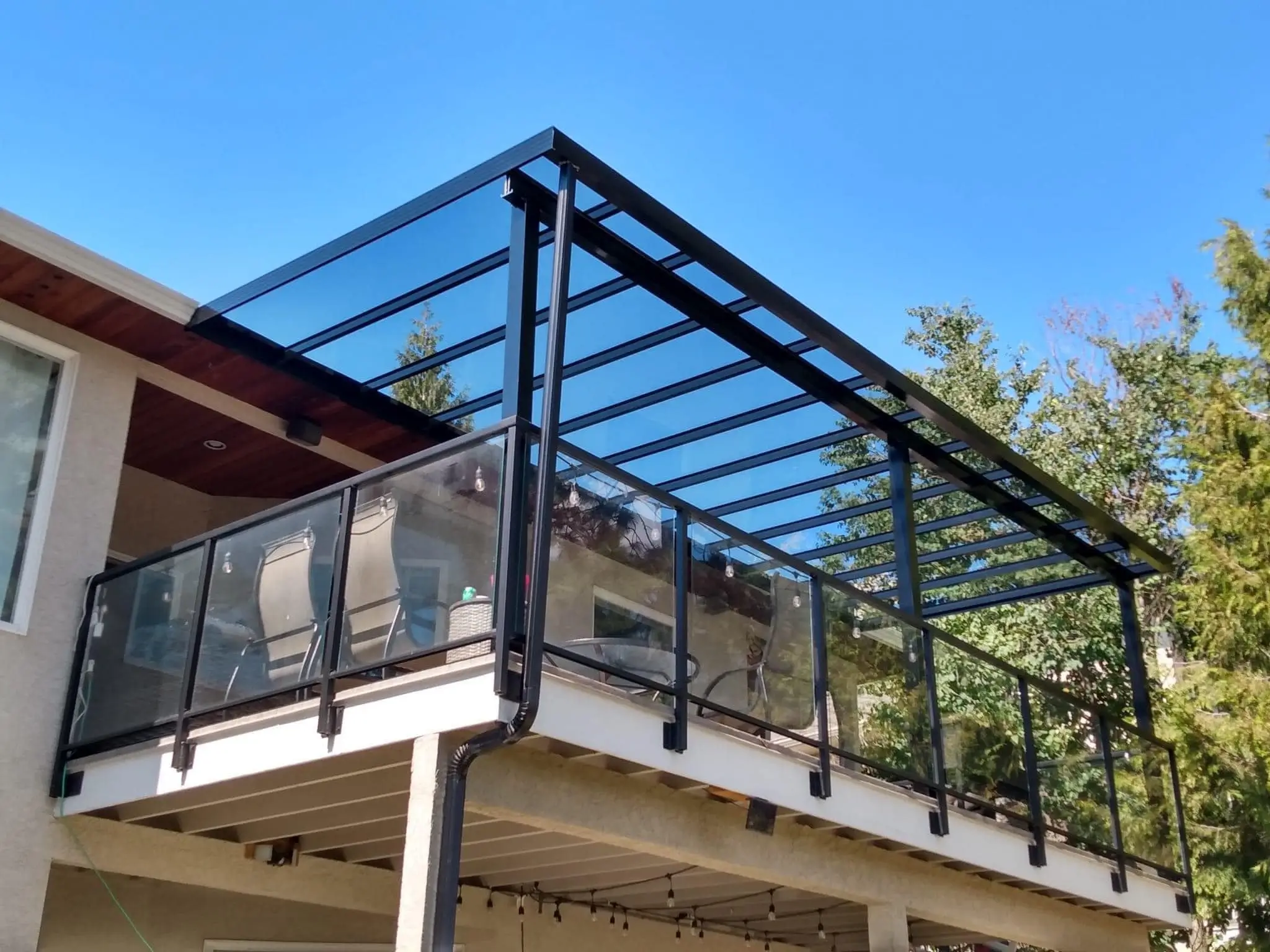
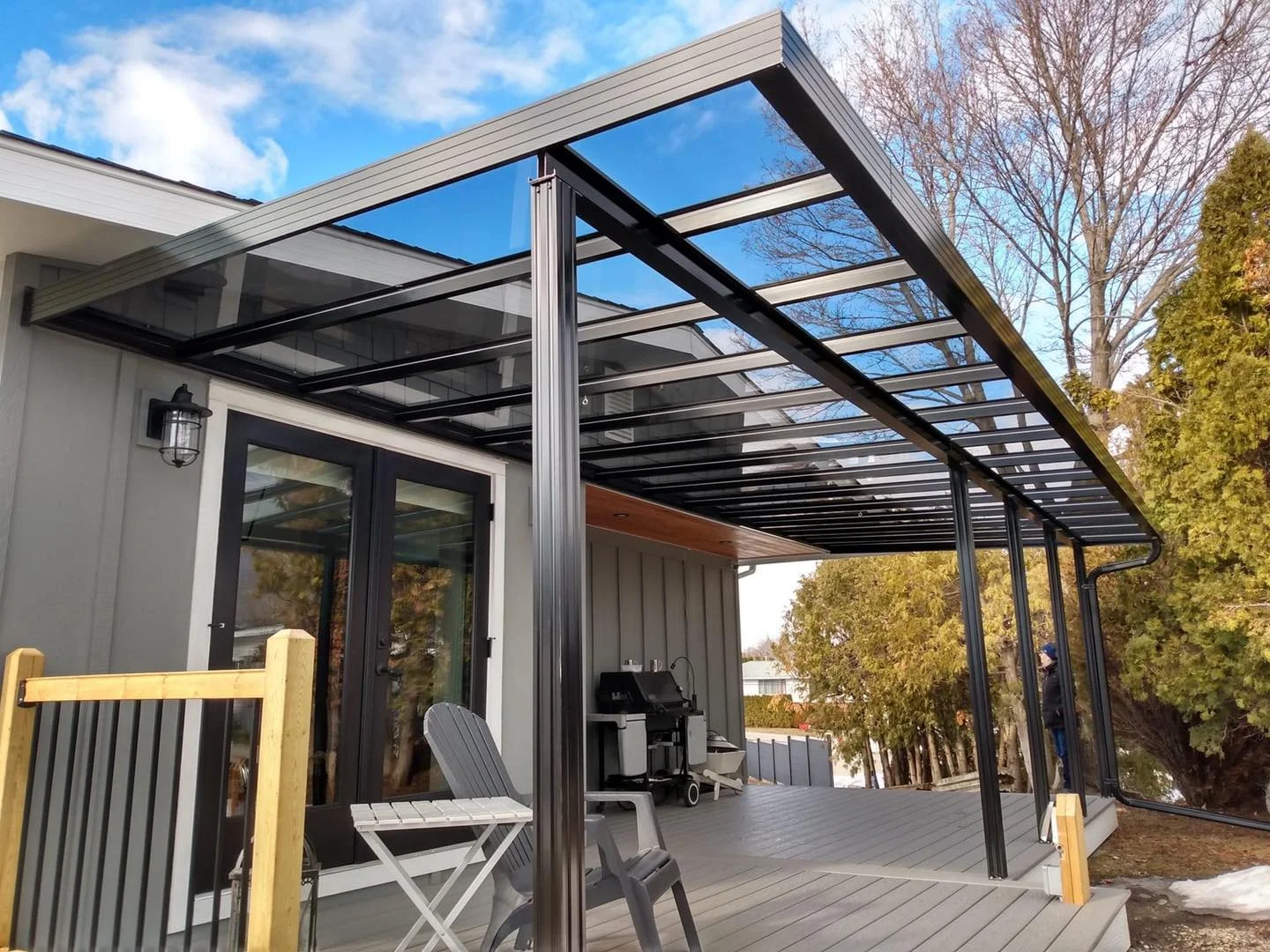
Here’s the straight answer: a well-built glass patio cover is absolutely strong enough for BC snow. Our glass covers use heavy-gauge tempered glass and architectural aluminum, over-built for Okanagan winters. The real question isn’t if glass can handle snow—it’s making sure the structure is sized correctly for your location and roof span.

Yes, Glass Patio Covers Are Built for BC Snow

When people ask if glass is “strong enough,” they’re usually picturing a single pane of glass magically holding up tons of snow. That’s not how it works.

A glass patio cover is a complete system where the glass, aluminum frame, support beams, and posts all work together to distribute weight. The glass itself is tempered (heat-treated to be 4-5 times stronger than regular glass), and the heavy-gauge aluminum framework carries the majority of the structural load.

Standard specs for BC installations:

  • Glass thickness: 6mm tempered minimum (some use 8mm or 10mm)
  • Built tough: over-built for BC winters, sized for your local snow conditions
  • Beam spacing: Typically 24-36 inches on center
  • Aluminum posts: 4×4 or 6×6 inch structural aluminum
  • Slope: 10-15 degrees minimum for drainage and snow shedding

This isn’t guesswork. We size the structure for your location and roof span, so your cover is built to stand up to the snow your area actually gets.

Quick Reality Check: Glass patio covers have been installed across the Okanagan for 20+ years. They regularly survive winters with 2-3 feet of snow without damage. Built right, they last.

Understanding Snow Load in the Okanagan

Snow load is just the weight of snow pressing down on each square foot of your cover. It adds up fast, and it varies by where you live. BC Building Code accounts for local snow load based on your location, elevation, and historical weather data—so a cover in the Okanagan has to be built for real winter snow.

What Different Snow Types Actually Weigh

Snow TypeRelative WeightNotes
Fresh powderLightLight, fluffy snow right after it falls
Settled snowModerateSnow that’s been sitting for a week or two
Packed/wet snowHeavyHeavy spring snow or rain-soaked snow
IceVery heavySolid ice (rare to get a full foot)

What That Looks Like in Real Terms

An over-built glass cover for our region comfortably handles:

  • 8-12 feet of fresh powder (you’ll never see this much accumulate before it compacts)
  • 2-3 feet of settled snow (typical heavy winter scenario)
  • 1.5-2 feet of wet, packed snow (worst-case spring scenario)

Snow load varies across the Okanagan—Vernon and higher elevations get more snow than the valley floor, while Kelowna, West Kelowna and Penticton see lighter loads. We build for the conditions where you live.

Pro Tip: Snow load isn’t the same everywhere in the Okanagan. We’ll tell you exactly what your project needs and build the structure over-built for your area’s winters.

Tempered Glass Specifications for Snow Loads

Not all glass is created equal. Here’s what you need to know about the glass itself:

Glass Thickness Options

6mm tempered glass (most common):

  • Strong enough for typical Okanagan snow loads when properly supported (24-30″ beam spacing)
  • Light and easy to support
  • Cost-effective for most Okanagan installations
  • Meets ASTM E1300 safety standards

8mm tempered glass (higher loads):

  • Handles heavier snow zones with standard spacing
  • A bit heavier than 6mm
  • Used in higher snow zones (Vernon, Lake Country hills)
  • Can span slightly wider beam spacing

10-12mm tempered glass (commercial/extreme):

  • Built for the heaviest snow and commercial spans
  • The heaviest glass option
  • Overkill for most residential applications
  • Used for commercial installations or the heaviest snow areas

What “Tempered” Actually Means

Tempered glass is regular glass that’s been heated to 620°C (1150°F) and then rapidly cooled. This process creates internal stresses that make the glass:

  • 4-5 times stronger than regular annealed glass
  • Heat-resistant up to 250°C temperature differentials
  • Safer when broken (shatters into small cubes instead of sharp shards)
  • Cannot be cut or drilled after tempering (all fabrication happens before heat treatment)

The ASTM E1300 standard governs how glass is rated for structural loads. Any legitimate installer will provide glass that meets or exceeds this standard with documentation.

Laminated vs Tempered Glass for Snow Loads

You’ll sometimes see laminated glass offered as an upgrade. Here’s the difference:

FeatureTempered GlassLaminated Glass
ConstructionSingle pane, heat-treatedTwo glass layers with PVB film between
Strength4-5x stronger than regular glassSimilar strength, but holds together if broken
Failure modeShatters into small cubesCracks but stays in place (like a car windshield)
Snow strengthOver-built for BC wintersComparable strength
Relative costStandardHigher
Best forMost residential patio coversOverhead applications where falling glass is a concern

For snow loads specifically, tempered and laminated perform about the same. Laminated is often chosen for safety reasons (so if a tree branch cracks the glass, it doesn’t rain shards on your patio), not because it handles snow better.

Some installers use tempered-laminated glass—laminated glass made with tempered layers. This gives you the strength of tempered with the safety of laminated, at a higher price than standard tempered.

How Aluminum Frame Structure Distributes Snow Weight

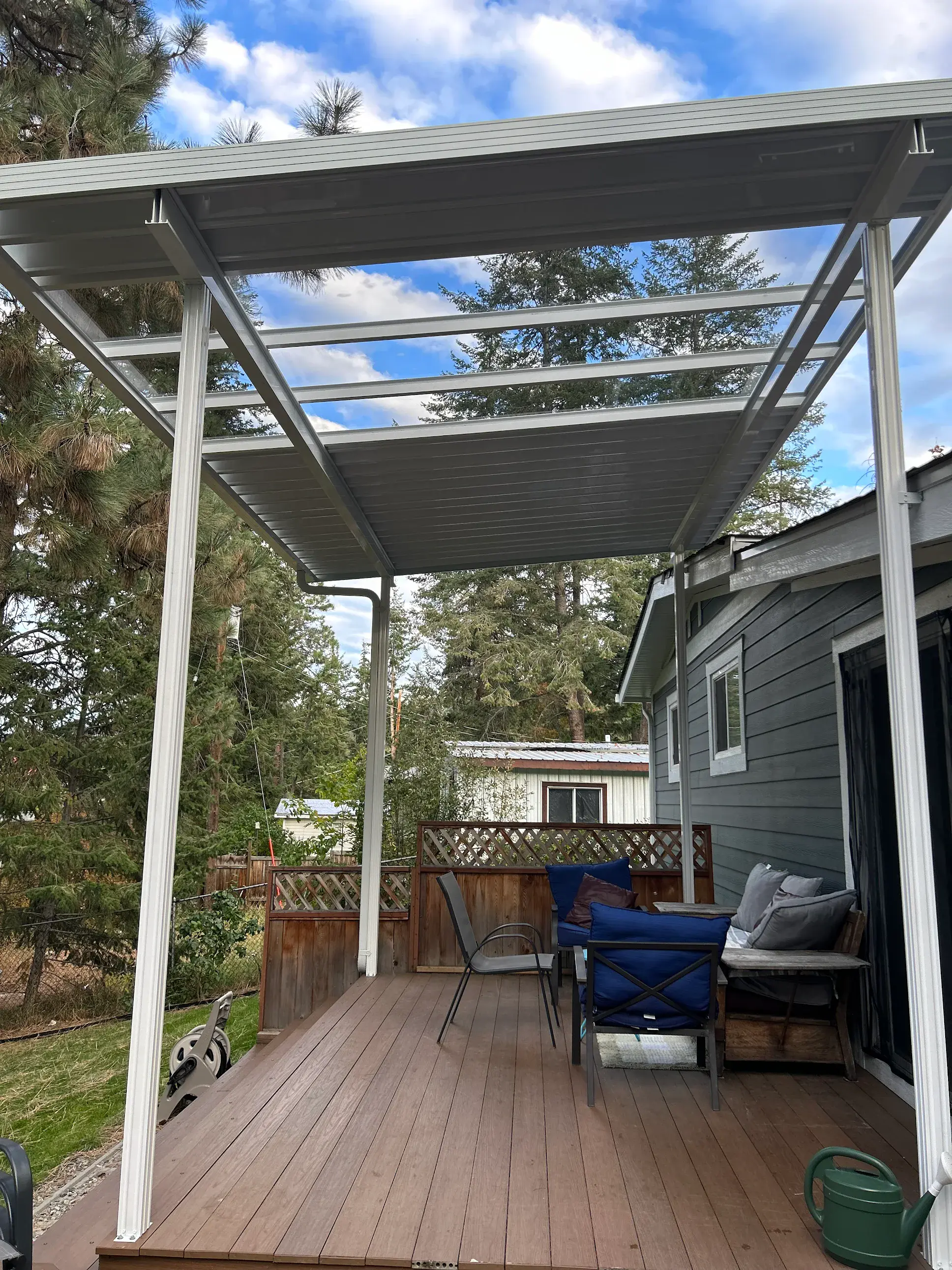
The glass doesn’t carry the load alone—it transfers weight to the heavy-gauge aluminum frame, which is where the real strength comes from.

Components That Matter

Aluminum beams (rafters):

  • Typically 3×6 inch or 4×8 inch extruded aluminum
  • Spaced 24-36 inches on center
  • Support the glass panels directly
  • Transfer weight to the ledger (house attachment) and posts

Ledger board (wall attachment):

  • 6-8 inch aluminum channel bolted to house framing
  • Must be anchored into structural members (not just siding)
  • Carries half the snow load (the other half goes to posts)

Aluminum posts:

  • 4×4 inch minimum (6×6 inch for larger spans)
  • Typically spaced 8-12 feet apart
  • Anchored to concrete footings below frost line (30-36 inches in BC)
  • Transfer weight directly to the ground

Why Beam Spacing Matters

The closer the beams are spaced, the less load each glass panel experiences. A glass panel spanning a short distance is far stronger than the same panel spanning a wide gap.

This is why you can’t just slap glass on any frame. We size the beam spacing for your glass thickness and your area’s snow conditions.

The Role of Slope

A 10-15 degree slope does two things:

  • Sheds snow naturally (especially wet spring snow that slides easily)
  • Improves drainage so water doesn’t pool and freeze on the glass

Flat roofs (0-5 degrees) accumulate more snow and need a heavier-duty build. Most BC installations use at least 10 degrees to help snow slide off before it reaches critical weight.

BC Building Code Requirements for Glass Patio Covers

Good news for most homeowners: many of our glass covers go up with no permit hassle. When a permit does apply, here’s what’s typically involved—and we’ll tell you exactly what your project needs.

What Some Projects May Need

1. Building permit (only if required):

  • Many patio covers don’t trigger one—we’ll tell you if yours does
  • Requirements vary by municipality
  • We’ll tell you exactly what your project needs before we start

2. Structural drawings (if a permit requires them):

  • Show beam sizes, spacing, post locations, and footing depths
  • We design your cover in-house and size the structure for your location and roof span
  • Built over-built for BC winters, not just to the minimum

3. Inspections (permitted projects only):

  • If your project is permitted, the city may verify footings before the pour
  • A final check confirms the build matches the approved plans
  • Most of our covers skip this entirely—no permit, no inspection

4. Setback compliance:

  • Most municipalities require 3-5 feet from property lines
  • Some areas have height restrictions (typically 12-15 feet max)
  • Heritage or HOA areas may have additional design restrictions
Good to know: Whether or not a permit applies, the build still has to be done right. The upside of going with us: many of our covers go up with no permit hassle, and we’ll tell you upfront what your project needs. See our aluminum patio covers to compare your options.

Snow Load Zones in the Okanagan

BC divides the province into snow load zones, so the amount of snow a cover has to stand up to depends on where you live. In general:

  • Kelowna (lower elevations): lighter snow loads
  • West Kelowna: light to moderate
  • Vernon: heavier—more snow than the valley floor
  • Penticton: among the lightest in the region
  • Lake Country (hills): heavier at elevation
  • Salmon Arm: moderate to heavy

Wherever you are, we build your cover over-built for your area’s winters—not just to the bare minimum.

Real-World Performance in Snowy Regions

Theory is one thing. Let’s talk about what actually happens in BC winters.

How Glass Covers Handle Snow

We’ve installed glass patio covers across the Okanagan since 2005. Here’s what 20+ years of real-world performance shows:

Typical winter behavior:

  • Light snow (6-12 inches fresh) usually slides off on its own within 1-3 days as it compacts
  • Heavy snow (12-24 inches) may accumulate for a week or two before sliding
  • The 10-15 degree slope helps snow release naturally, especially when temps rise above freezing
  • Glass stays clear (you can see sky through the snow, unlike opaque panels)

Maintenance reality:

  • Most homeowners never manually remove snow
  • Covers are built to hold heavy snow loads season after season
  • If you’re paranoid after a 2+ foot snowfall, you can use a roof rake from the ground
  • Never climb on the glass or use metal shovels (can scratch/damage)

Longevity in Snow Country

Properly installed glass covers last 20-30+ years in BC climates. The glass itself doesn’t degrade from freeze-thaw cycles (unlike polycarbonate, which can yellow or crack). The aluminum frame is powder-coated to resist corrosion.

We’ve seen covers installed in Vernon in 2005 that are still going strong with zero structural issues. The limiting factor is usually gaskets/seals (which can be replaced) or homeowner preference for a style update, not structural failure.

What Causes Problems

When glass covers fail in snow, it’s almost always due to:

  • Installation errors: Beams spaced too wide, footings too shallow, ledger not anchored properly
  • Cutting corners: DIY builds that aren’t sized for real snow loads
  • Undersized components: Using 6×6 posts where 8×8 was specified, or skimping on beam size
  • Snow sliding from above: If you have a steep metal roof dumping 3-4 feet of snow onto the cover at once (fixable with snow guards on main roof)

When the structure is sized right and installed correctly, snow failures are extremely rare.

Glass vs Aluminum Panels for Snow: Which is Stronger?

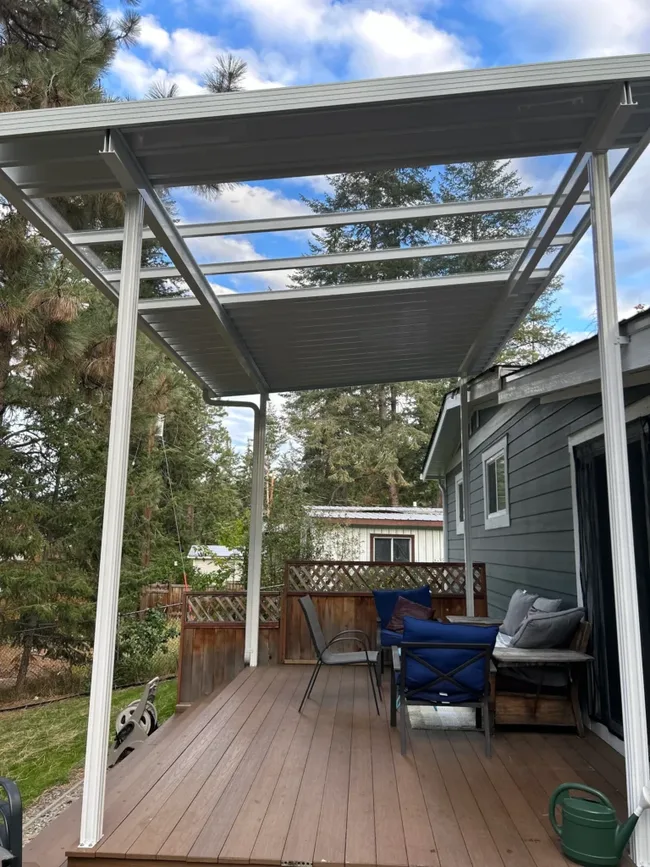
People assume aluminum panels are “tougher” than glass for snow. When both are built right, they’re comparable. Here’s the honest comparison:

FactorGlass (6mm Tempered)Aluminum Panels
Snow strengthOver-built for BC wintersOver-built for BC winters
WeightHeavier (rigid glass)Lighter (lighter frame needed)
Deflection under loadMinimal (glass is rigid)Slight flex (aluminum panels bend slightly)
Damage resistanceCan crack from impact (but rare)Can dent from hail/branches
Light transmission90%+ (clear view of sky)0% (opaque, blocks all light)
Relative costHigherLower

Bottom line: Both handle snow fine when built right. Glass gives you natural light and a view of the sky. Aluminum is more affordable and blocks all light. Choose based on your priorities, not fear of snow.

We’ve written a detailed comparison in our Glass vs Aluminum Patio Covers guide if you want the full breakdown.

Warning Signs Your Glass Cover Isn’t Handling Snow Properly

If your cover was installed correctly, you shouldn’t see any issues. But if something’s wrong, here’s what to watch for:

Red Flags That Require Immediate Action

1. Sagging beams or posts:

  • If you see visible bowing in the aluminum beams, the system is overloaded
  • Posts leaning inward means footings are failing or undersized
  • Action: Remove snow immediately and call the installer right away

2. Cracks in glass:

  • Hairline cracks radiating from corners or edges mean the glass is overstressed
  • Could be from thermal stress, impact damage, or excessive load
  • Action: Cracked tempered glass won’t fail catastrophically, but replace the panel before next snow season

3. Gaps opening at ledger:

  • If the cover is pulling away from the house, the ledger wasn’t anchored properly
  • This is a serious structural issue
  • Action: Stop using the space beneath and have the installer assess it

4. Loud creaking/popping under snow:

  • Some noise is normal as materials expand/contract
  • Loud, repetitive popping could mean fasteners are failing
  • Action: Have it inspected, especially if sounds increase with more snow

Yellow Flags (Monitor, But Not Emergency)

1. Water pooling on glass:

  • Means slope is inadequate or beams have settled slightly
  • Won’t cause immediate failure, but chronic pooling can lead to seal degradation
  • Action: Address after winter (may need to adjust slope or add drainage)

2. Ice dams at gutters:

  • If snow melts and refreezes at the edge, it can create heavy ice buildup
  • More of a gutter issue than a structural problem
  • Action: Clear gutters, ensure downspouts drain away from foundation

3. Excessive snow accumulation vs neighbors:

  • If your cover holds way more snow than similar covers nearby, slope might be too shallow
  • Action: Manually clear heavy accumulations and consider adding heat tape or adjusting slope
Pro Tip: Take photos of your cover in summer (no load) so you can compare beam alignment in winter. Visible changes = potential problem.

Building for Higher Snow Zones

If you live somewhere that gets heavier snow—higher elevation, or a spot where snow slides off a roof above—your cover needs a heavier-duty build: thicker tempered glass, tighter beam spacing, bigger posts, and deeper footings. It’s a bigger structure, so it’s more of an investment than a standard build.

Rather than guess, we come out and look at your site. We design and manufacture your cover in-house, size the structure for your location and roof span, and build it over-built for BC winters—then give you one clear, no-pressure quote.

Do You Actually Need the Heavier Build?

Reasons to go heavier:

  • Your property is at higher elevation than most of your city
  • You have a steep metal roof above that could dump snow onto the cover
  • You want peace of mind and plan to keep the cover 30+ years
  • Winters in your pocket of the Okanagan run heavier than average

Reasons a standard build is fine:

  • You’re in a typical snow zone for your area, not a heavy pocket
  • Nothing above is dumping extra snow onto the cover
  • You’re okay with clearing snow once or twice in a big winter

Most homeowners are fine with our standard build, which is already over-built for our region. We’ll tell you exactly what your project needs when we come out.

Want to Know What Your Project Takes?

Book a free, no-obligation on-site quote. We’ll assess your snow zone, size the structure, and give you a straight answer—no pressure.

Get Your Free On-Site Quote

Installation Best Practices for Snow Country

How your cover gets installed matters as much as what components you use. Here’s what separates a snow-ready installation from a future problem:

Critical Installation Details

1. Footings below frost line:

  • Frost line in BC interior is 30-36 inches deep
  • Footings must extend below this depth or frost heave will shift posts
  • Typical footing: 12-16 inch diameter sonotube, 36 inches deep
  • Fill with rebar-reinforced concrete, minimum 3000 PSI

2. Ledger anchored to structure (not siding):

  • Ledger must bolt through siding into rim joist or wall studs
  • Use lag bolts or through-bolts, minimum 3/8 inch diameter
  • Spacing: every 16-24 inches maximum
  • Add flashing above ledger to prevent water intrusion into wall

3. Proper slope for drainage and snow shedding:

  • Minimum 10 degrees (some installers use 12-15 degrees)
  • Slope away from house so water doesn’t run back toward foundation
  • Use a level and calculate drop per foot (10 degrees ≈ 2 inches drop per foot)

4. Beam-to-post connections:

  • Must use structural brackets, not just screws through aluminum
  • Common: Simpson Strong-Tie or equivalent heavy-duty connectors
  • We build these connections to stand up to real snow loads

5. Glass panel support:

  • Glass sits on EPDM or neoprene gaskets (not directly on metal)
  • Gaskets cushion the glass and allow slight thermal expansion
  • Structural silicone sealant around edges (not just for water—also distributes load)
  • Never use screws through glass (all fastening is through frame)

Site-Specific Considerations

If you have a metal roof above the patio cover:

  • Install snow guards on the main roof to prevent avalanche dumps
  • Position cover far enough from house so sliding snow lands beyond the cover edge
  • Consider a heavier-duty build even if you’re not in a heavy snow zone

If your property has poor drainage:

  • Add gutters to the patio cover to direct runoff away from foundation
  • Extend downspouts 6+ feet from house with underground drains
  • Ensure ground slopes away from footings so freeze-thaw doesn’t cause movement

If you’re in a high wind area:

  • Wind uplift can actually be more critical than snow load in exposed sites
  • We account for wind exposure and add anchoring where your site needs it
  • May need tie-down straps or additional ledger bolts
Hiring Tip: Ask your installer how many glass patio covers they’ve installed in snow country. Experience matters. Someone who’s done 50+ installations in Vernon knows the little details that make the difference.

Frequently Asked Questions

Is a glass patio roof strong enough for snow?

Yes, when it’s built right. A well-built glass cover with heavy-gauge tempered glass and architectural aluminum handles typical Okanagan snow loads (2-3 feet of settled snow) without issue. The glass works together with the aluminum frame to distribute weight to posts and footings. We over-build for BC winters and size the structure for your location and roof span.

How much weight can a glass roof hold?

A well-built glass patio cover easily holds the weight of a typical Okanagan winter—roughly 2-3 feet of settled snow, or 8-12 feet of fresh powder before it compacts. Thicker glass and tighter framing handle even heavier snow. How much a given cover holds comes down to glass thickness, beam spacing, and how the structure is sized for your location.

Can tempered glass handle snow?

Absolutely. Tempered glass is 4-5 times stronger than regular glass due to heat treatment. It’s specifically designed for structural applications. The limiting factor isn’t the glass itself—it’s how the frame supports it. Proper beam spacing (24-36 inches on center) ensures each glass panel experiences manageable loads even under heavy snow.

What snow load can glass withstand?

Thicker glass and tighter framing handle heavier snow—6mm tempered is plenty for most Okanagan homes, while 8mm, 10mm and 12mm step up for heavier snow zones and commercial spans. The support structure matters as much as the glass. Either way, a well-built cover handles far more snow than most BC winters deliver before it naturally sheds.

Do I need to remove snow from my glass patio cover?

Generally no. A well-built cover is made to hold heavy snow season after season, and the 10-15 degree slope helps snow slide off naturally within days of heavy snowfall. Some homeowners manually clear snow after extreme events (24+ inches) for peace of mind, but it’s not structurally necessary when the cover is built for your area.

How much does snow actually weigh?

It varies dramatically by type. Fresh powder is light—only a few pounds per square foot for each foot of depth—while settled snow runs heavier, and wet, packed spring snow heavier still. A foot of slushy March snow can weigh several times more than a foot of January powder. A well-built cover accounts for the heaviest snow your area sees, not just the fluffy stuff.

What if we get an unusually heavy snow year?

A well-built cover shows warning signs long before any real trouble—sagging beams, visible deflection, or creaking sounds. Because we over-build for BC winters, there’s a healthy margin, so a heavier-than-normal winter isn’t cause for panic. If you ever see the frame sagging, clear the snow and give us a call.

Is thicker glass always better for snow?

Not always. Thicker glass handles heavier loads, but it’s also heavier and adds to the price. It’s really a balance of glass thickness, beam spacing, and frame sizing. Sometimes tighter beam spacing with 6mm glass is the smarter build over thicker glass with wider spacing. We figure out the right combination for your specific site.

Can glass patio covers handle snow sliding off the roof above?

Not always—this is a common failure scenario. If you have a steep metal roof that dumps 3-4 feet of snow at once onto the patio cover, you may need: (1) snow guards on the main roof, (2) positioning the cover beyond the slide zone, or (3) a heavier-duty build even if your area’s snow load is light. Tell us about the roof above during planning and we’ll build for it.

Will glass crack from temperature changes in winter?

No. Tempered glass is rated to handle temperature differentials up to 250°C. Winter scenarios (hot interior air, cold exterior glass, or sun warming glass while snow sits on top) don’t come close to stressing tempered glass. Cracks are almost always from impact damage or installation stress, not thermal shock.

How does glass compare to polycarbonate for snow loads?

Glass is significantly stronger. Polycarbonate panels handle far less snow and need very close support spacing (16-20 inches). They also yellow over time and can crack in extreme cold. Glass shrugs off heavy snow, doesn’t degrade in UV or cold, and lasts 20-30+ years. For BC snow country, tempered glass is the better long-term choice despite a higher upfront price.

Do glass patio covers meet BC Building Code for snow?

Yes. Our glass covers are built to stand up to the snow your area actually gets—over-built for BC winters, not just to the bare minimum. Many go up with no permit hassle at all; when a permit does apply, we’ll tell you exactly what your project needs. We design and manufacture every cover in-house and size the structure for your location and roof span.

Ready for a Glass Patio Cover That Handles BC Winters?

We’ve been building glass patio covers across the Okanagan since 2005—designed and manufactured in-house, installed by our own local crew, and over-built for BC winters. Book a free on-site quote and we’ll size the structure for your property.

Get Your Free Quote
Patio cover Okanagan

Ready to Start Your Project?

Get a free, no-pressure quote. We’ll help you choose the right solution for your backyard.

Serving Kelowna, West Kelowna, Vernon, Penticton, Lake Country & Salmon Arm

Call Now Free Quote
Scroll to Top