
Deck Railing Height in BC: What the Code Actually Requires
In BC, a deck railing must be 900 mm high (the ’36-inch’ guard everyone talks about) if your deck sits under 1.8 m above grade, and 1,070 mm (42 inches) if it’s higher. Any deck over 600 mm (24 inches) off the ground needs a guard, no exceptions.
We design, manufacture and install both aluminum and glass deck railings in-house, with our own crew, right here in West Kelowna.
Required Deck Railing Height: When Does BC Code Kick In?
Any deck surface more than 600 mm (24 inches) above grade needs a guard railing under the BC Building Code. That measurement runs straight down from your walking surface to the ground below it, not to the nearest step or landing.
That height of deck requiring railing is the same whether it’s a small side-door landing or a full-size entertaining deck. Decks, balconies and landings attached to the house all fall under the same rule. A low deck under 24 inches isn’t required to have one by the BC Code, but plenty of Okanagan municipalities add their own tighter rules, so a quick call to the building department before you order materials is cheap insurance.
Deck Height Railing Required vs. Permit Thresholds in Kelowna
The City of Kelowna requires a building permit once your deck surface is more than 0.6 m (24 inches) above grade, the exact same number that triggers the guard requirement. If you need a railing, you almost certainly need a permit too. Properties outside city limits in Lake Country, West Kelowna’s rural areas and other unincorporated spots fall under the Regional District of Central Okanagan instead, with similar thresholds.
| Deck Height Above Grade | Minimum Guard Height |
|---|---|
| 600 mm to 1.8 m (2′ to 5’10”) | 900 mm (36 inches) |
| Above 1.8 m (5’10″+) | 1,070 mm (42 inches) |
Deck Railing Height in BC: 36-Inch vs 42-Inch Guards
The minimum height for your railing depends entirely on how high your deck sits above grade. Most backyard decks around Kelowna sit somewhere between 3 and 4 feet off the ground, which puts them squarely in the 36-inch category.
Standard Deck Railing Height for a Typical Okanagan Deck
A 36-inch guard is the standard deck railing height for most single-story backyard decks here. It meets code, doesn’t feel like a cage around your seating area, and still does the job it’s there for.
Deck Guardrail Height for Elevated and Hillside Decks
Once a deck clears 5’10” above grade, you’re in 42-inch territory. That covers most upper-floor balconies and the hillside properties we see a lot of around the lake, where the deck can sit well above the slope beneath it.
Some municipalities, Vancouver among them, enforce a flat 42-inch rule no matter the deck height. Kelowna generally sticks to the standard BC Building Code numbers above, but it’s worth one phone call to confirm before you build. See our deck railings in the Okanagan page for the styles we build in both heights.
Guardrail Height BC & the 4-Inch Sphere Rule
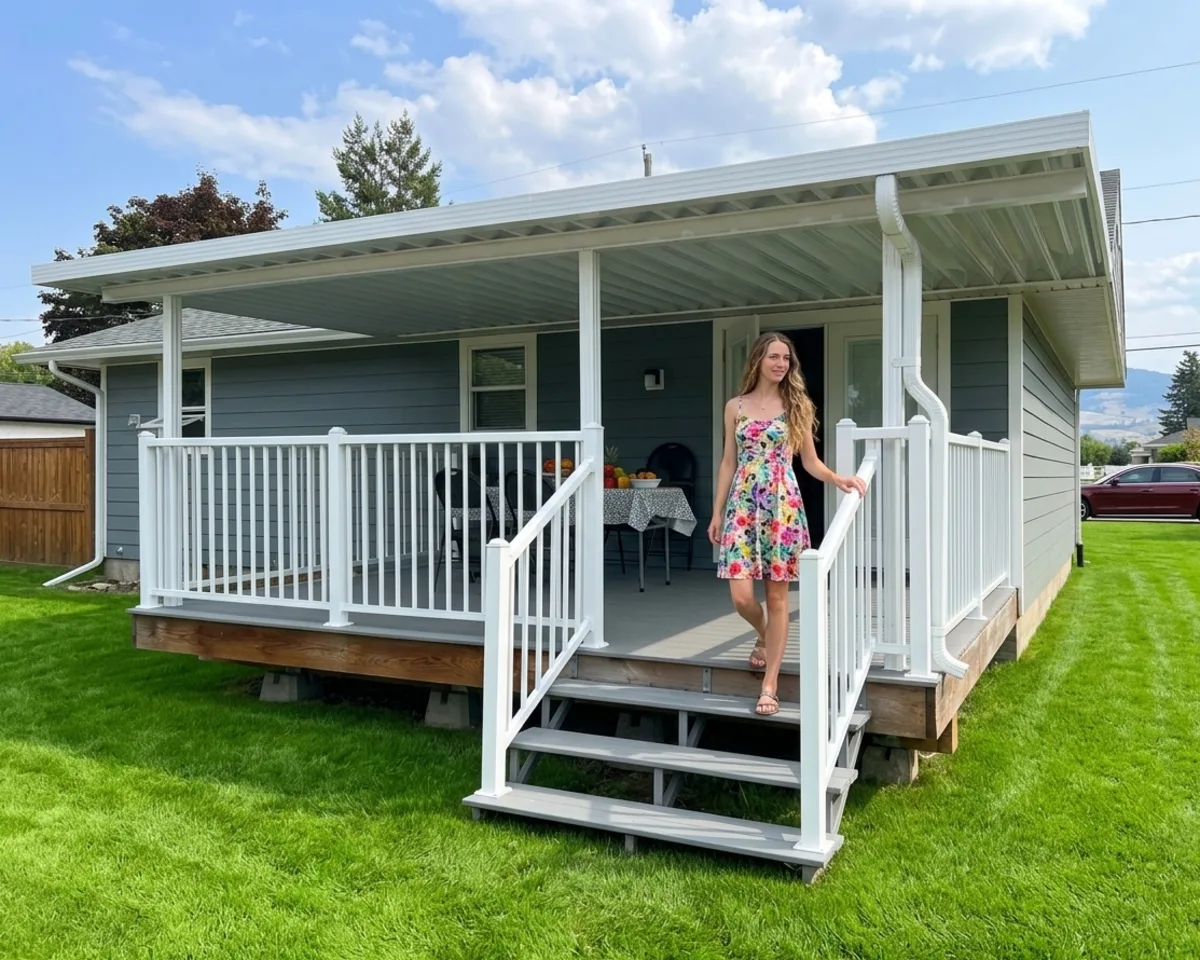
Height isn’t the only number that matters. The BC Building Code also says no opening in your guard can let a 100 mm (4-inch) sphere pass through it, the same guard rail height rule that trips up more DIY builds than anything else.
Railing Height Code BC for Baluster & Bottom-Rail Gaps
Center-to-center spacing doesn’t count here. You measure the actual gap between balusters, and it can’t exceed 4 inches anywhere on the rail. The gap under the bottom rail and the deck surface can’t exceed 4 inches either, and any decorative cutout or pattern has to pass the same sphere test.
BC Building Code Glass Railing & Climbing Prevention
The code also wants a guard that’s hard for a small child to climb, measured in a zone from 100 mm to 900 mm above the deck surface. Horizontal railings are allowed in BC now, as long as the deck sits under 4.2 m (13’9″) above grade, the spacing still passes the sphere test, and the design doesn’t create an obvious ladder effect. Glass railings sidestep the whole issue since tempered or laminated panels, at least 12 mm thick, give a climber nothing to grab onto, which is a big reason they’ve taken off on lake-view decks around here.
Your railing also has to resist real forces, not just look solid. BC Code Table 9.8.8.2 calls for a horizontal load of 0.75 kN/m (about 51 lbs per linear foot) along the top rail, plus a 1.0 kN (225 lb) point load applied anywhere on it. That’s exactly why we through-bolt or bracket every post instead of toenailing it to the deck frame.
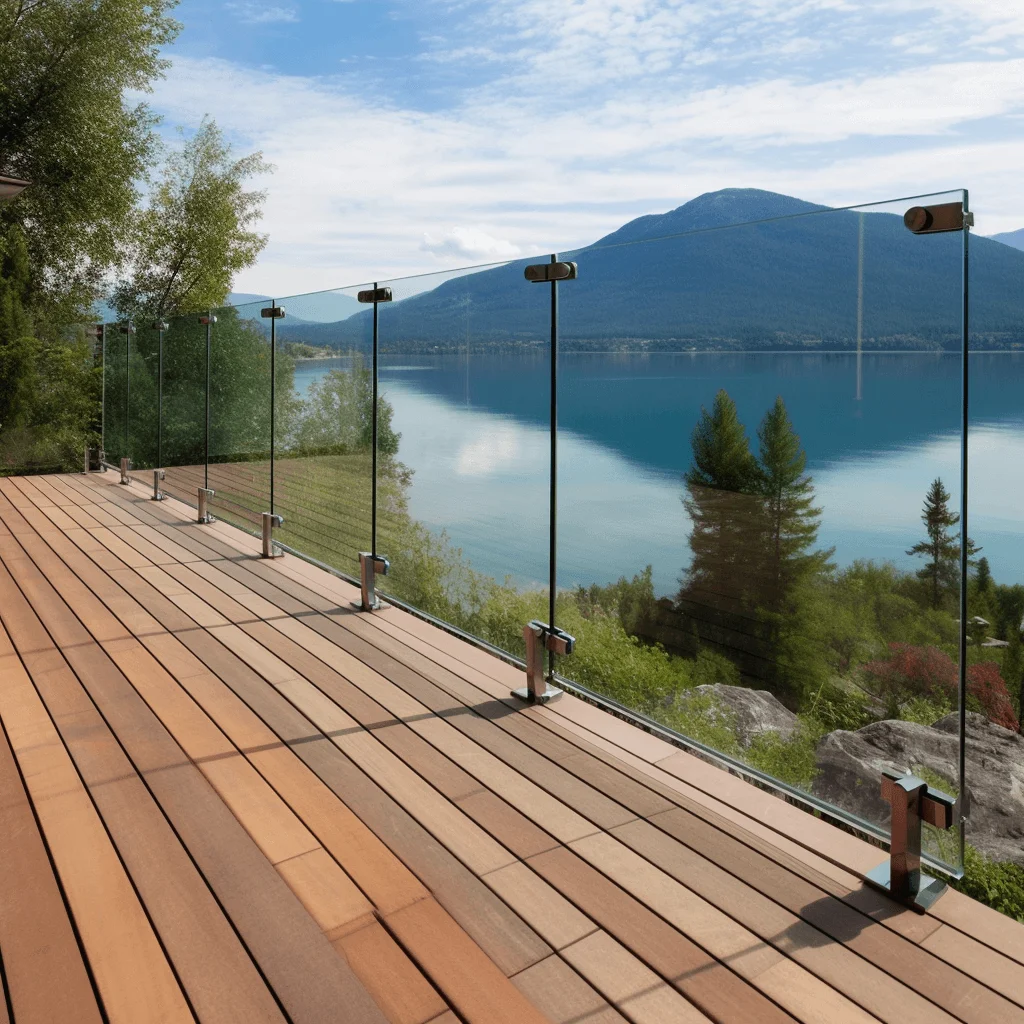
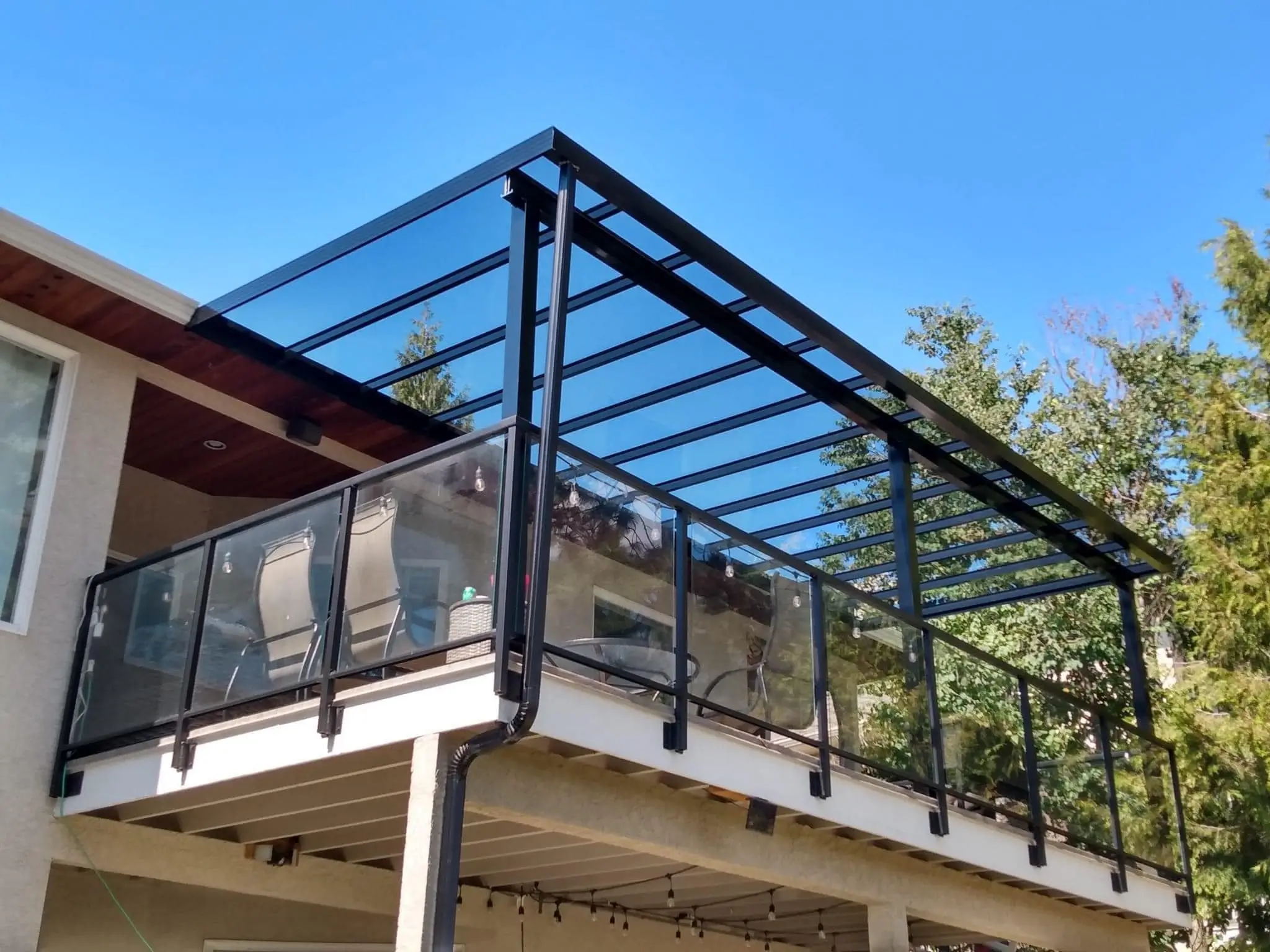
See matching roof and railing combinations on our glass patio covers page if you’re pairing a cover with the railing.
Deck Stair Handrail Height in BC
Stairs run on a separate rule from the guard around your deck. Exterior stairs with 4 or more risers need a handrail, full stop. Three steps and you’re technically fine without one, though we’d still put one in.
Handrail Height BC Building Code for Stair Risers
The handrail height code for decks sits between 900 mm and 1,070 mm (35 to 42 inches), measured from the stair nosing up to the top of the rail, following the slope of the stairs the whole way down.
Deck Stair Rail Code: Graspable Profile & Clearance
It has to be continuously graspable from top to bottom. A flat 2×4 or 2×6 doesn’t qualify, because you can’t wrap your hand around it if you stumble. You also need at least 2 inches of clearance between the handrail and any wall or post. A guard and a handrail do different jobs, and your stairs may need both at once.
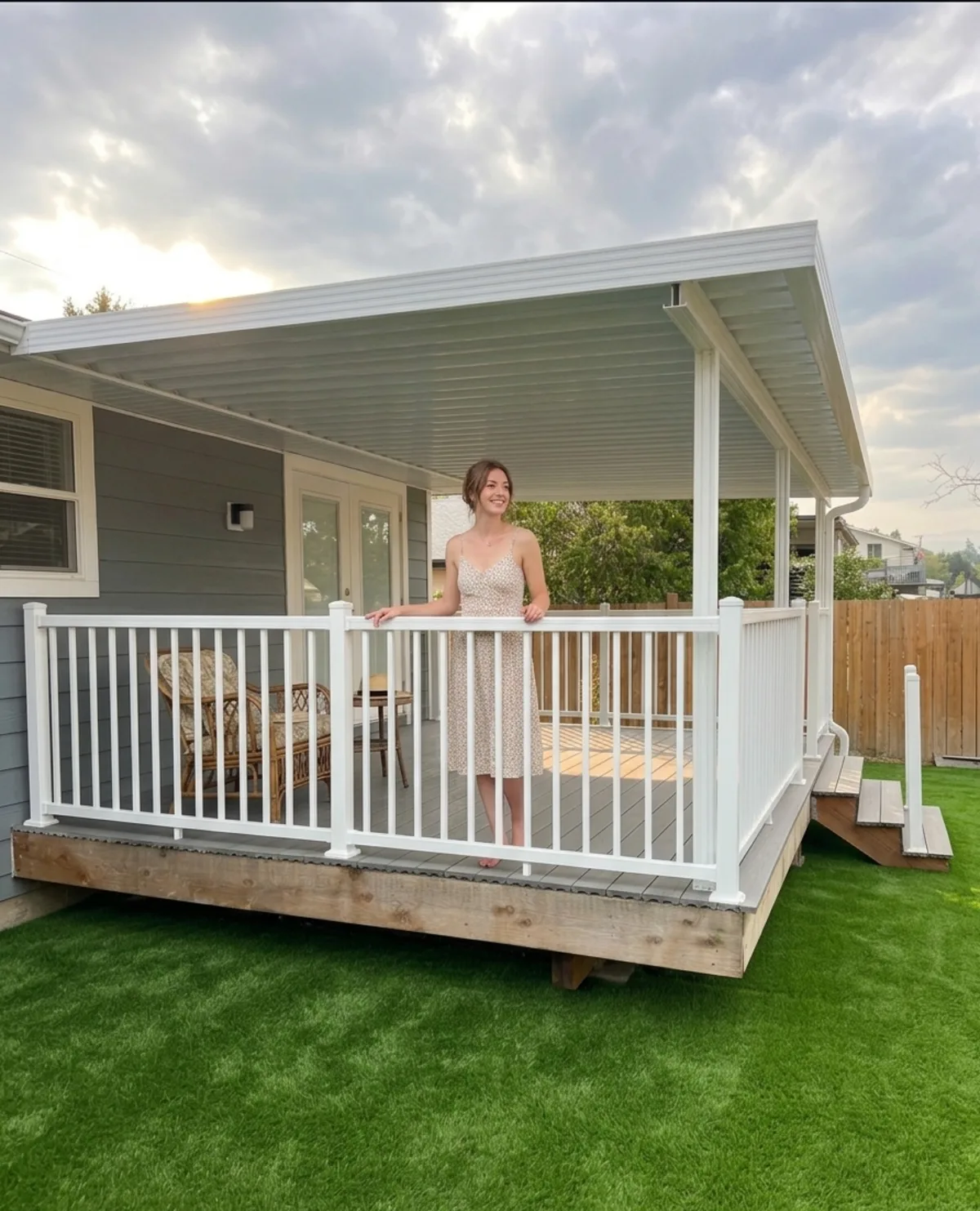
Aluminum vs Glass: Meeting the Standard Railing Height Either Way
Every material on this list can hit the same railing height code, but they get there differently. Aluminum is the easiest: durable, low maintenance, and the powder coat holds up fine through an Okanagan winter and summer both. Glass has to be tempered or laminated and at least 12 mm thick, which clears every requirement above without a single baluster. Wood needs proper post connections and a yearly rot check. Cable only passes the sphere test when it’s properly tensioned, and it needs re-tensioning over time. Composite varies a lot, so check the manufacturer’s load rating before you commit to it.
For what it’s worth, our honest opinion: in a climate with 35C summers and snow-load winters, aluminum and glass hold their code compliance better over the long run than wood or composite ever do.
Deck Railing Code Mistakes We Get Called to Fix
- Railing too short for the deck height. Ordering 36 inches when the deck’s actual height calls for 42.
- Baluster gaps wider than 4 inches. An instant fail every time an inspector checks.
- Bottom-rail gap over 4 inches. Easy to miss during a rushed install.
- A flat board standing in for a handrail. If you can’t wrap your hand around it, it doesn’t count.
- Toenailed posts instead of through-bolts or brackets. They won’t pass the load test, full stop.
- Horizontal infill that creates a ladder effect. Flagged in the 100-900 mm climbing zone every time.
- Assuming a 24 to 30-inch deck is exempt. It isn’t. That’s exactly where the rule starts.
Which Guard Height Applies to Your Deck?
| Your situation | Go with |
|---|---|
| Deck 24″ to 5’10” above grade | 36″ (900 mm) guard minimum |
| Deck above 5’10” (balcony, hillside) | 42″ (1,070 mm) guard minimum |
| Stairs with 4+ risers | 900 to 1,070 mm graspable handrail |
| Want the view, zero climbing risk | Frameless or semi-frameless glass railing |
| Low maintenance, any budget | Powder-coated aluminum railing |
| Replacing an existing permitted railing | Usually no new permit, confirm first |
| New deck build over 24″ above grade | Building permit required alongside the railing |
Compare railing and cover pricing factors in our patio cover cost guide, see matching covers on our aluminum patio covers page, or browse the full lineup on our deck railings in the Okanagan page.
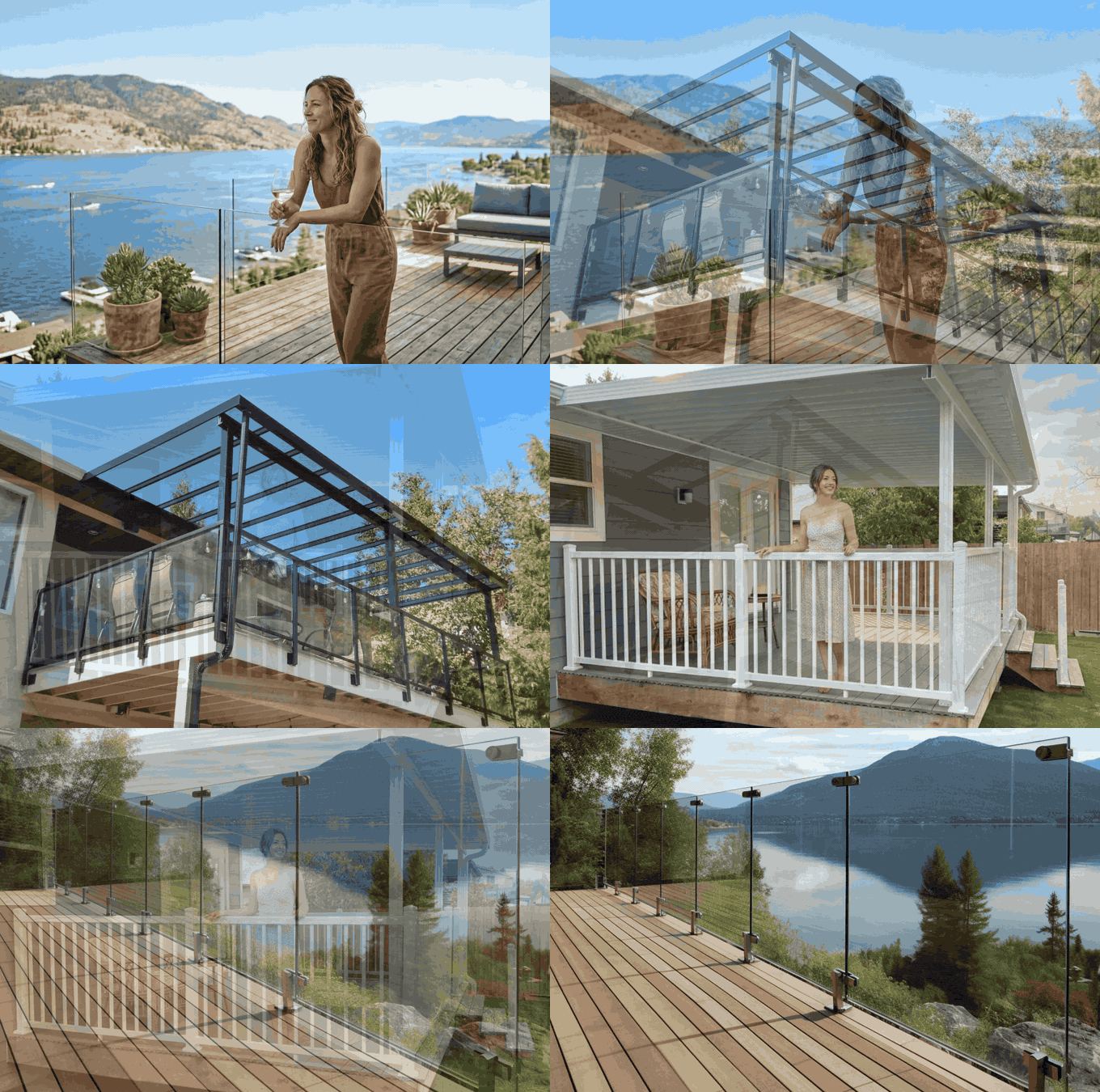
Recent Railing Projects
A few we’ve built recently — every one custom-made in West Kelowna and installed by our own crew.


Deck Railing Height Questions
How high does a deck railing need to be?
In BC, 900 mm (just over 35 inches, the ’36-inch’ guard everyone talks about) if your deck sits under 1.8 m above grade, and 42 inches (1,070 mm) if it’s higher than that. The rule only applies once your deck surface is more than 24 inches (600 mm) above the ground. Below that, the BC Code doesn’t require a guard at all.
Is railing height 36 or 42?
Both are correct, depending on your deck. Under 1.8 m (5’10”) above grade, 36 inches meets code. Above that, you need 42 inches. Most backyard decks land in the 36-inch bracket, while upper-floor balconies and hillside decks usually need the taller one.
How high can a deck be without a railing?
Up to 24 inches (600 mm) above grade, the BC Building Code doesn’t require a guard railing at all. Some Okanagan municipalities set a stricter local rule, so it’s worth a call to the building department before you assume you’re exempt.
What is the standard deck railing height in BC?
900 mm (the ’36-inch’ guard) is standard for most single-story backyard decks, since they typically sit under 1.8 m above grade. Once a deck or balcony clears that height, the standard jumps to 42 inches (1,070 mm).
What is the handrail height code for deck stairs in BC?
Between 900 mm and 1,070 mm (35 to 42 inches), measured from the stair nosing along the slope of the stairs. It only applies once your exterior stairs have 4 or more risers, and the handrail has to be continuously graspable the whole way down.
Do I need a permit for deck railing height requirements in Kelowna?
Yes, if your deck is over 24 inches (0.6 m) above grade, the same threshold that triggers the guard requirement. The City of Kelowna handles permits inside city limits; RDCO covers West Kelowna’s rural areas, Lake Country and other unincorporated spots. Replacing an existing permitted railing with the same basic design usually doesn’t need a fresh permit, but confirm it first.
Can I install horizontal deck railings under BC code?
Yes, as long as your deck sits under 4.2 m (13’9″) above grade and the spacing between the horizontal elements still passes the 4-inch sphere test without creating a ladder effect. Vertical pickets, solid glass panels and properly tensioned cable all avoid the climbing question entirely.
Takes under 60 seconds · Your information is never shared.
Prefer to talk to someone? Call (250) 215-7513
Ready for Code-Compliant Deck Railings?
Designed, made and installed in the Okanagan by our own crew. 1,500+ patios built since 2005, 4.9 stars across 32 Google reviews.
Serving Kelowna, West Kelowna, Vernon, Penticton, Lake Country & Salmon Arm