

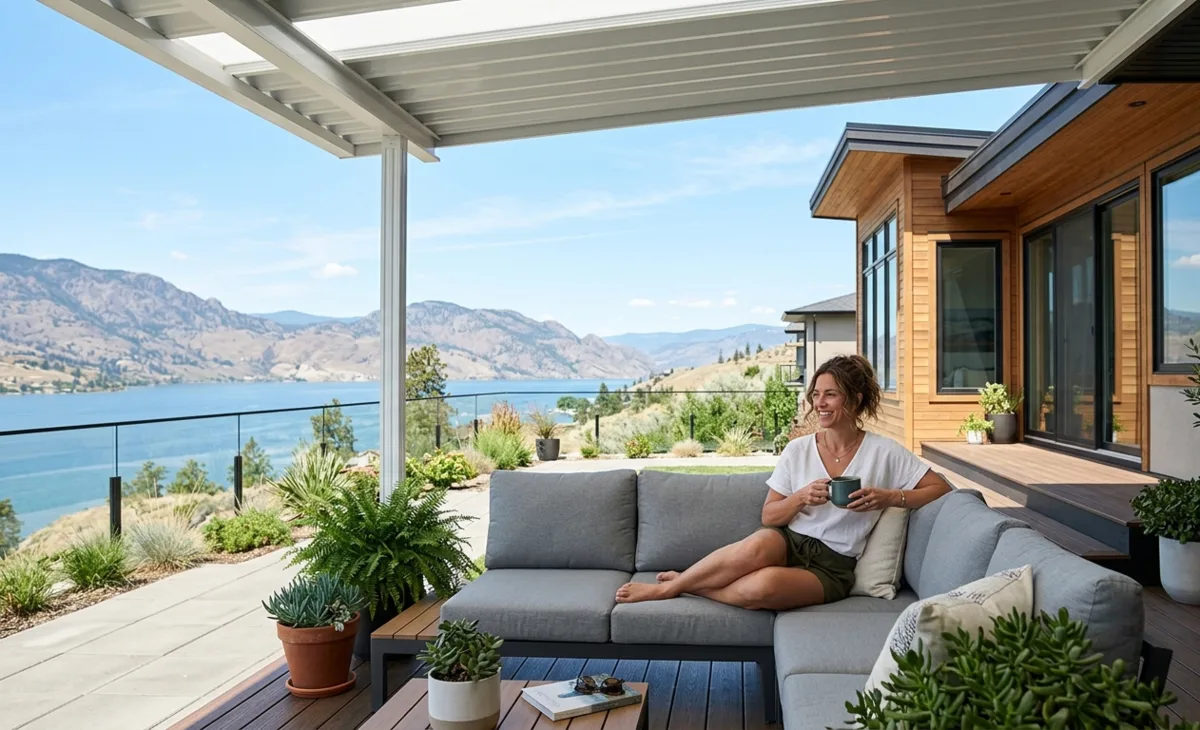
Aluminum Patio Cover Maintenance Guide (2026): Cleaning, Care & Long-Term Tips
Your aluminum patio cover is a serious investment. Here’s how to protect it with just 2 hours of work per year—and avoid the costly restoration bills we see when maintenance gets ignored.
The Truth About “Low Maintenance” (It’s Not Zero)
Every contractor selling aluminum patio covers says “low maintenance.” They’re not wrong—but low doesn’t mean none. Here’s what that actually translates to in the Okanagan:
- Annual time commitment: 2-3 hours total (spread across 3 seasons)
- Annual cost: Minimal—just basic cleaning supplies (DIY)
- Professional service: Optional, if you’d rather not DIY
Compare that to a wood pergola that needs yearly sanding, staining, and sealing, or canvas awnings that need replacing every few years. Aluminum wins by a mile—but only if you do the basics.
Seasonal Maintenance Calendar (Okanagan-Specific)
The Okanagan has four distinct seasons, and your cover faces different challenges in each. Here’s when to do what:
Spring Deep Clean (April-May) – 60-90 minutes
Why now: Winter road salt, cottonwood debris, and moss buildup from wet months need to go before summer UV hits.
Tasks:
- Remove cottonwood fluff and leaf debris from top surface
- Wash entire cover with mild detergent solution
- Check and clean gutters (if equipped)
- Inspect fasteners for rust or loosening
- Clear drainage channels
Summer Quick Check (July-August) – 15-30 minutes
Why now: Peak UV exposure can accelerate powder coating degradation. Catch issues early.
Tasks:
- Hose down to remove pollen and dust
- Inspect for white oxidation spots (early stage)
- Check for wasp nests in corners and posts
- Verify flashings are still sealed against house wall
Fall Heavy-Duty Clean (September-October) – 60-90 minutes
Why now: Wildfire smoke residue and falling leaves need removal before winter moisture locks them in.
Tasks:
- Deep clean to remove smoke film and sap
- Clear gutters and downspouts completely
- Inspect for small dents or damage from summer storms
- Tighten any loose hardware before freeze-thaw cycles
- Apply protective wax (optional, every 2-3 years)
Winter Spot Checks (December-February) – 10 minutes after heavy snow
Why now: Heavy snow and ice dams can stress hardware. Our covers are over-built for BC winters, but a quick check after big storms still helps.
Tasks:
- After heavy snowfall (12+ inches), visually inspect for sagging
- Clear snow from gutters if ice damming occurs
- Watch for icicles forming—indicates drainage issues
Step-by-Step Cleaning Process (45-60 Minutes)
This is your twice-yearly deep clean. Do it right and you’ll never need a professional restoration.
What You’ll Need
- Garden hose with spray nozzle
- Soft-bristle brush or car wash mitt
- 2 buckets (one for soap, one for rinse)
- Mild dish soap (Dawn, Palmolive) or car wash soap
- Step ladder (if cover is 10+ feet high)
- Microfiber towels (for drying, optional)
The Process
Step 1: Rinse First (5 minutes)
Hit the entire surface with plain water to remove loose dirt and debris. This prevents scratching when you scrub. Start at the top and work down so dirty water doesn’t re-soil clean areas.
Step 2: Mix Your Solution (2 minutes)
In a bucket, mix 2-3 tablespoons of mild dish soap per gallon of water. That’s it. No need for specialized aluminum cleaners unless you’re dealing with oxidation (see below).
Step 3: Wash in Sections (25-35 minutes)
Dip your soft brush or mitt in soapy water and wash one panel at a time. Use gentle circular motions—you’re not scrubbing a BBQ grill. Pay extra attention to:
- Corners where dirt accumulates
- Underside of panels (bird droppings, spider webs)
- Gutters and drainage channels
- Joints between panels
Step 4: Rinse Thoroughly (10 minutes)
Use your hose to rinse each section immediately after washing. Don’t let soap dry on the surface—it can leave streaks and attract more dirt.
Step 5: Spot Dry (Optional, 5 minutes)
If you want zero water spots, use microfiber towels to dry the surface. Not necessary for function, but makes it look showroom-clean.
Dealing with Stubborn Stains
Bird droppings: Soak with soapy water for 5 minutes first, then wipe. Acidic droppings can etch powder coating if left too long.
Tree sap: Use rubbing alcohol on a cloth. Dab—don’t rub—until it dissolves, then wash normally.
Wildfire smoke film: Add 1/4 cup white vinegar to your soap solution. The acidity cuts through oily residue without harming the finish.
Protecting Your Powder Coating Finish
Powder coating is baked-on paint that’s 3-4 times thicker than liquid paint. It’s tough, but not invincible. Here’s how to keep it looking new for 30+ years:
What Damages Powder Coating
- Abrasives: Steel wool, scouring pads, hard-bristle brushes
- Harsh chemicals: Bleach, ammonia, strong degreasers, oven cleaners
- High-pressure washers at close range: Over 1,500 PSI within 12 inches can chip edges
- Prolonged UV exposure without maintenance: Powder coating fades if never cleaned (dirt holds UV rays against surface)
Safe Products for Powder-Coated Aluminum
| Product Type | Safe Options | Avoid |
|---|---|---|
| General Cleaning | Dawn dish soap, car wash soap, Simple Green (diluted) | Bleach, Pine-Sol, Ajax powder |
| Oxidation Removal | Bar Keeper’s Friend (gentle), white vinegar, aluminum brightener | Steel wool, sandpaper, oven cleaner |
| Protection | Carnauba car wax, aerospace protectant | Oil-based furniture polish, WD-40 |
Should You Wax Your Aluminum Cover?
Short answer: Not required, but helpful every 2-3 years.
Waxing adds a sacrificial layer that UV, rain, and dirt attack instead of your powder coating. It also makes future cleaning easier—dirt wipes off instead of bonding to the surface.
Best wax for aluminum: Carnauba-based car wax (Meguiar’s, Turtle Wax). Apply with a foam applicator, let haze, buff off with microfiber. Takes 30-40 minutes for a typical 12×16 cover.
When to skip wax: If your cover is under trees that drip sap or in high pollen areas. Wax makes these stick worse. Just wash more often instead.
What NOT to Do (5 Common Mistakes)
We’ve fixed these mistakes more times than we can count. Save yourself the repair bill:
1. Using a Pressure Washer Too Close
The mistake: “I’ll blast it clean with 3,000 PSI from 6 inches away!”
What happens: You chip the powder coating at seams and edges. Water gets under the coating, causing bubbling and peeling within 6 months.
The fix: If you must use a pressure washer, stay 24+ inches away and keep it under 1,500 PSI. A garden hose with a spray nozzle works just as well and is way safer.
2. Scrubbing with Abrasives
The mistake: “This spot won’t come off, let me grab the Brillo pad.”
What happens: You scratch through the powder coating down to bare aluminum. That spot now oxidizes white and spreads.
The fix: For stubborn spots, soak longer with mild cleaner. Use a plastic scraper if needed. Never metal, never abrasive pads.
3. Mixing Harsh Chemical Cocktails
The mistake: “I’ll mix bleach and ammonia for extra cleaning power!”
What happens: You create toxic chloramine gas (dangerous to breathe) AND you strip the protective oxide layer off your aluminum. Double fail.
The fix: One product at a time. Mild dish soap handles 95% of cleaning needs.
4. Ignoring Gutters Until They Overflow
The mistake: “They’ll clean themselves out eventually, right?”
What happens: Debris clogs gutters, water backs up under panels, and you get rot in your wood fascia or water stains on your house siding. We’ve seen major siding damage from a 10-minute gutter cleaning that got skipped.
The fix: Check gutters twice a year minimum (spring and fall). Takes 10 minutes.
5. Leaving Bird Droppings for Weeks
The mistake: “I’ll get to it next time I wash the cover.”
What happens: Bird droppings are acidic. Left on powder coating for 2+ weeks in summer sun, they can permanently etch the surface. You’ll have dull spots that won’t buff out.
The fix: Spot-clean droppings within a few days. Soak with water, wipe gently, done in 2 minutes.
Hardware Inspection Checklist (15 Minutes, Twice a Year)
The panels get all the attention, but hardware failures cause bigger problems. Here’s what to check:
Screws and Fasteners
- What to look for: Rust stains, loose screws, missing caps
- Action: Tighten any loose screws. Replace rusted ones with stainless steel. Check that decorative caps are in place (they keep water out of screw heads).
- Red flag: Multiple screws loose in one area means the beam or post might be shifting. Call a pro.
Flashings and Seals
- What to look for: Gaps between flashing and house wall, cracked caulking, water stains
- Action: If caulk is cracked, scrape it out and re-seal with exterior silicone caulk (clear or color-matched). A single tube of caulk can prevent costly water damage repairs.
- Red flag: Water stains on your house siding below the flashing = active leak. Fix immediately.
Gutters and Downspouts
- What to look for: Clogs, sagging sections, leaks at seams
- Action: Clear debris. Check that downspouts drain away from your foundation (6+ feet). Tighten gutter brackets if sagging.
- Red flag: Water pooling on top of cover = pitch is wrong or gutter is completely clogged. Needs professional assessment.
Posts and Beams
- What to look for: Wobble when you push on them, cracks at base, rust at ground contact
- Action: Posts should be rock-solid. If they move, the concrete footing may have failed or bolts are loose. This is structural—call a contractor.
- Red flag: Any visible movement or leaning. Not a DIY fix.
Dealing with Okanagan-Specific Issues
The Okanagan climate throws unique challenges at patio covers. Here’s how to handle the big three:
Cottonwood Fluff (May-June)
The problem: White fluffy seeds pile up on your cover like snow. They clog gutters and stick to wet surfaces.
The fix: Wait until the cottonwood season ends, then do one big cleanup. Trying to clean during peak season is pointless—more will land tomorrow. Use a leaf blower to clear the top surface, then hose it down.
Prevention: Install gutter guards if cottonwoods are close. Mesh screens keep fluff out while allowing water through.
Wildfire Smoke Residue (July-September)
The problem: Smoke leaves an oily film that turns surfaces dingy gray. It’s not just dirt—it’s creosote and ash particles that bond to powder coating.
The fix: Add 1/4 cup white vinegar to your regular soap solution. The acidity cuts through the oil. Wash thoroughly, rinse well. May need two passes for heavy smoke seasons.
Prevention: Wash your cover within 2 weeks after a smoky period ends. The longer smoke residue sits, the harder it is to remove.
Freeze-Thaw Cycles (November-March)
The problem: Water gets into small cracks or screw holes, freezes, expands, and makes the crack bigger. Over years, this can loosen fasteners or split seams.
The fix: Do your fall inspection before first freeze. Seal any cracks in caulking. Make sure screw caps are in place. Check that water drains completely (no pooling on flat areas).
Prevention: Properly installed covers with correct pitch (1/4 inch per foot minimum) shed water before it freezes. If you see ice buildup, drainage is the issue—call a pro to assess pitch.
When to Call a Professional
Most maintenance is DIY-friendly. But some situations need a contractor. Here’s when to pick up the phone:
Structural Issues
- Posts wobble or lean
- Beams sag between supports
- Panels have dents from hail or falling branches
- Water pools on flat sections (pitch problem)
- Cover pulls away from house wall
Advanced Restoration
- Heavy oxidation (chalky white film) that won’t wash off
- Powder coating fading to bare metal in spots
- Multiple panels with scratches or chips
- Rust bleeding through from fasteners
Restoration process: Professional buffing, chemical oxide removal, and protective coating reapplication. Worth it if your cover is otherwise solid but cosmetically rough.
Electrical Work (If Lights Are Installed)
- Lights flicker or don’t turn on
- Visible wire damage
- Outlets not working
Always hire a licensed electrician for electrical issues. DIY electrical work on an outdoor structure is dangerous and may void insurance.
Extending Your Cover’s Lifespan (30+ Years vs. 15 Years)
Here’s the math on why maintenance matters:
Scenario 1: Neglected Cover
- No cleaning for 10 years
- Oxidation sets in at year 8-10
- Costly restoration needed at year 12
- Fasteners rust through by year 15
- Full cover replacement needed at year 18
The result over 30 years: You pay for your cover up front, then a restoration, then a second full replacement.
Scenario 2: Maintained Cover
- Basic cleaning supplies each year
- One professional deep clean around year 20
- Cover lasts full 30+ years with no replacement
The result over 30 years: You pay for your cover once, add a little for supplies, and it lasts the full 30+ years.
The payoff: skipping maintenance can cost you a whole second cover.
That’s the payoff on 2 hours of work per year. Cleaning your patio cover is one of the highest-value maintenance tasks you can do.
DIY Repair Tips for Minor Issues
Small problems you can fix yourself before they become big problems:
Surface Scratches
If it’s through the powder coating to bare metal:
- Clean area with rubbing alcohol
- Apply rust-inhibiting primer (spray or brush-on)
- Touch up with color-matched paint (ask your installer for the exact color code)
- Seal with clear coat
A few basic materials here can prevent a much larger oxidation problem down the road.
Loose Trim Pieces
Decorative trim can loosen over time. If it’s aluminum trim that snaps in:
- Clean the channel it sits in
- Apply a thin bead of construction adhesive (PL Premium or similar)
- Press trim back into place
- Wipe excess adhesive immediately
- Let cure 24 hours before stressing it
Small Gaps in Caulking
Don’t wait for these to become leaks:
- Scrape out old caulk completely (use a 5-in-1 tool)
- Clean surface with rubbing alcohol (removes oils)
- Apply exterior-grade silicone caulk (color-matched if visible)
- Smooth with wet finger or caulk tool
- Let cure 24 hours before water exposure
One small tube of caulk can seal 30+ feet of seams.
Tools & Supplies Checklist
Everything you need for year-round aluminum cover care:
One-Time Purchases (You Probably Already Have These)
- Garden hose with adjustable spray nozzle (Canadian Tire)
- 6-foot step ladder (Home Depot)
- 2 plastic buckets (Dollar Store)
- Soft-bristle car wash brush, telescoping handle helps (Canadian Tire)
- Microfiber towels, pack of 6 (Costco)
Annual Consumables
- Mild dish soap (Dawn, Palmolive)
- White vinegar (for smoke residue)
- Exterior silicone caulk (1 tube)
- Carnauba car wax (every 2-3 years)
Annual upkeep: Just a few basic cleaning supplies.
Optional Upgrades
- Gutter guards (if under trees)
- Aluminum brightener (for oxidation removal)
- Touchup paint kit (from installer)
Where to Buy in the Okanagan
- Canadian Tire (Kelowna, Vernon, Penticton): Cleaning supplies, hoses, brushes
- Home Depot (Kelowna, West Kelowna): Caulk, primers, repair materials
- Costco (Kelowna): Microfiber towels, bulk soap
- Rona (West Kelowna, Vernon): Specialty sealants and adhesives
Frequently Asked Questions
How do I clean an aluminum patio cover?
Mix 2-3 tablespoons of mild dish soap per gallon of water. Rinse the cover with plain water first, then wash in sections using a soft-bristle brush or car wash mitt. Rinse thoroughly after each section to prevent soap residue. For stubborn stains like wildfire smoke, add 1/4 cup white vinegar to the soap solution. Avoid pressure washers closer than 24 inches or abrasive scrubbers that can damage powder coating.
What is the best cleaner for aluminum patio covers?
Dawn or Palmolive dish soap works for 95% of cleaning needs. For oxidation removal, use Bar Keeper’s Friend (non-abrasive formula) or a dedicated aluminum brightener. Car wash soap is also excellent and won’t strip protective coatings. Avoid bleach, ammonia, Pine-Sol, or any abrasive powdered cleansers—these can damage powder coating and cause long-term deterioration.
Can I use a pressure washer on my aluminum cover?
Yes, but with caution. Stay 24+ inches away and keep pressure under 1,500 PSI. Pressure washers closer than 12 inches or over 2,000 PSI can chip powder coating at seams and edges, allowing water infiltration that causes bubbling and peeling. A garden hose with a spray nozzle is safer and works just as well for regular cleaning. Save the pressure washer for concrete and wood surfaces.
How do I remove white oxidation from aluminum?
For light oxidation, wash with a 50/50 mix of white vinegar and water, then rinse thoroughly. For heavier oxidation, use Bar Keeper’s Friend paste (not powder) or a dedicated aluminum brightener like Flitz or Mothers. Apply with a soft cloth, rub gently in circular motions, rinse completely, then dry. Heavy oxidation that doesn’t respond to these methods requires professional buffing and restoration.
How often should I clean my aluminum patio cover?
Deep clean twice per year—once in spring (April-May) and once in fall (September-October). Add a quick hose-down in summer (July-August) to remove pollen and check for issues. In the Okanagan, fall cleaning is critical to remove wildfire smoke residue before winter. If you’re under cottonwood trees, add a third cleaning in late June after cottonwood season ends. Total annual time: 2-3 hours.
Will my powder coating fade in the sun?
Quality powder coating resists UV fading for 20-30+ years when maintained. However, dirt and contaminants left on the surface hold UV rays against the coating and accelerate fading. Regular cleaning (twice yearly) removes these particles and extends coating life. Darker colors show fading more than lighter colors. Waxing every 2-3 years adds UV protection but isn’t required. If fading is already visible, professional restoration can often restore the original color.
Can I paint over powder coating?
Yes, but it requires proper prep. Sand lightly with 220-grit to roughen the surface (powder coating is smooth and paint won’t stick otherwise), clean thoroughly with degreaser, apply metal primer, then paint with exterior-grade metal paint. However, paint won’t last as long as the original powder coating (5-10 years vs. 30+). If your coating is faded, professional re-coating or restoration is a better long-term investment than DIY painting.
Should I wax my aluminum patio cover?
Waxing isn’t required, but it helps. Apply carnauba-based car wax every 2-3 years to add UV protection and make future cleaning easier. Wax creates a sacrificial layer that dirt and UV attack instead of your powder coating. Skip wax if you’re under sap-dripping trees or in high pollen areas—it makes sticky substances adhere worse. Total time to wax a 12×16 cover: 30-40 minutes. Use Meguiar’s or Turtle Wax products designed for automotive finishes.
What causes black streaks on aluminum covers?
Black streaks are typically caused by mold/mildew growth on dirt and pollen buildup, or by runoff from asphalt shingles on the house above. Wash with mild dish soap and a soft brush—streaks usually come off easily if cleaned regularly. For stubborn mold, use a 10:1 water-to-vinegar solution. Prevent streaks by washing twice yearly and ensuring proper drainage (water shouldn’t sit on horizontal surfaces). If streaks return within weeks, you may have a drainage or shading issue causing constant moisture.
How do I clean gutters on my patio cover?
Scoop out debris by hand or with a gutter scoop. Flush with a garden hose to check for clogs in downspouts. Check twice per year minimum (spring and fall), or quarterly if you’re under cottonwood trees. For hard-to-reach gutters, use a telescoping gutter cleaning tool or hire a professional. Install mesh gutter guards to reduce cleaning frequency if debris is constant. Clogged gutters cause water backup that can damage house siding and rot wood fascia—don’t skip this task.
How do I protect my cover from wildfire smoke?
You can’t prevent smoke from landing, but you can remove it before it bonds permanently. Wash within 2 weeks after a smoky period using dish soap + 1/4 cup white vinegar per gallon of water. The vinegar cuts through oily creosote residue. Heavy smoke years may require two wash passes. Don’t use a pressure washer—the oily film needs chemical breakdown, not just force. Once smoke residue sits for months, it becomes much harder to remove and may require professional cleaning.
What’s the lifespan of a well-maintained aluminum cover?
30-40+ years with proper maintenance. Neglected covers show oxidation and powder coating failure at 10-15 years. The aluminum structure itself can last 50+ years, but the finish degrades without care. Twice-yearly cleaning, gutter maintenance, and prompt repair of scratches or caulk gaps are the difference between a 15-year cover and a 40-year cover. For full lifespan details, see our complete aluminum patio cover lifespan guide.
Need Professional Maintenance or Restoration?
We offer deep cleaning, oxidation removal, and full restoration services for aluminum patio covers across the Okanagan. Get a free assessment of your cover’s condition.
Get Your Free Quote
Ready to Start Your Project?
Get a free, no-pressure quote. We’ll help you choose the right solution for your backyard.
Serving Kelowna, West Kelowna, Vernon, Penticton, Lake Country & Salmon Arm
Related Guides