

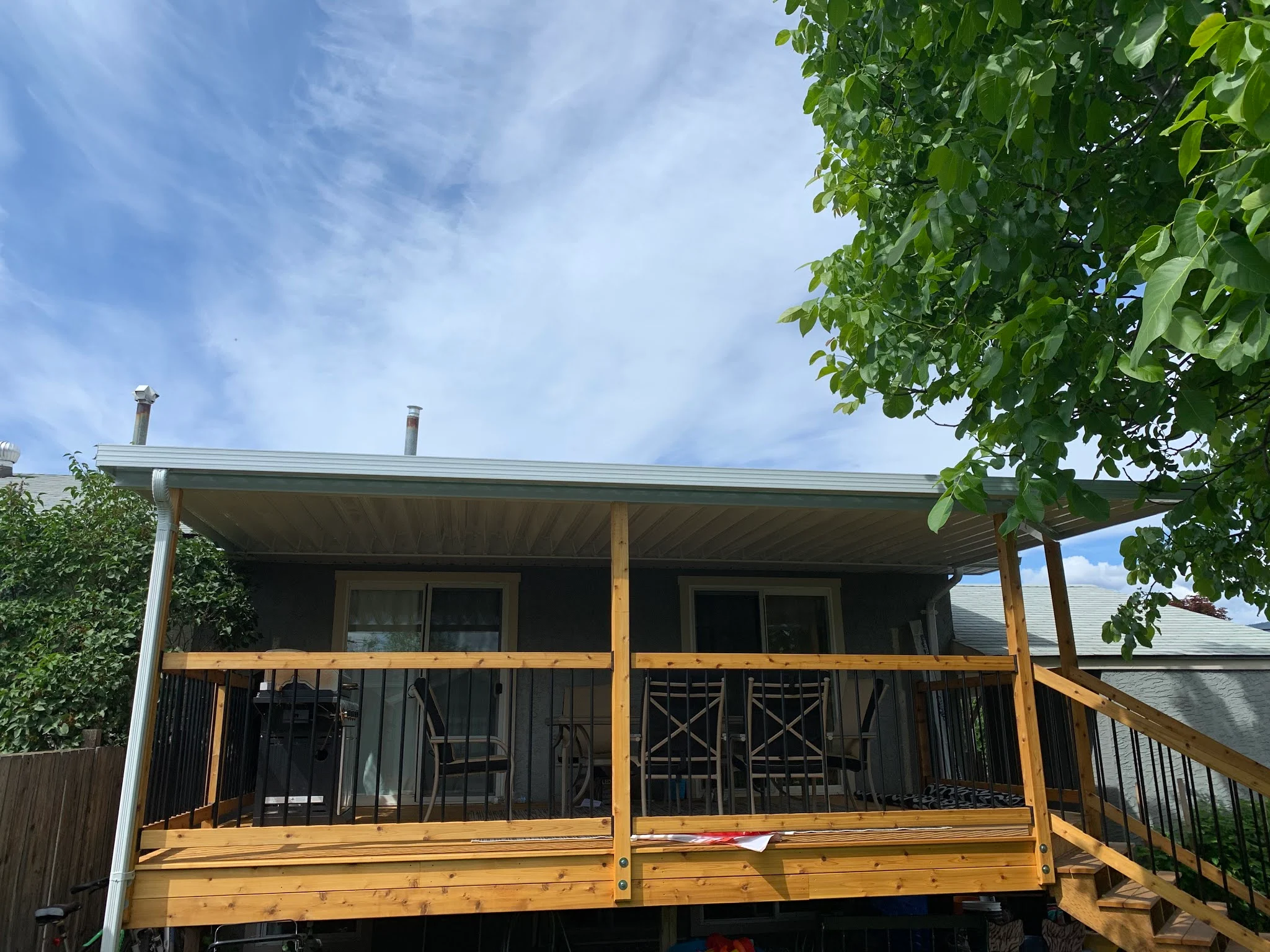
Patio Cover Sizes: How to Pick the Right Dimensions for Your Space
The most expensive patio cover mistake isn’t picking the wrong material. It’s picking the wrong size. Too small and you’re still baking in the afternoon sun. Too big and it swallows your yard. Here’s how to get it right the first time.
After installing hundreds of covers across the Okanagan, I can tell you the sizing conversation is where most projects either come together or fall apart. A homeowner in West Kelowna asked us for a 12×12. We walked the space, measured the furniture layout, checked sun angles—and they actually needed a 14×18. That extra two feet on each side was the difference between a cover that worked and one they’d regret.
This guide covers standard sizes, how to measure properly, what each size costs installed, and the BC building code rules that might limit your options. No fluff. Just the numbers and the reasoning behind them.
Standard Aluminum Patio Cover Sizes
Most manufacturers offer these standard sizes. They’re the most cost-effective because the engineering is already done—no custom drawings required.
Small Covers (Under 200 sq ft)
- 10′ x 10′ — Fits a bistro set or two chairs. Works for townhome patios and condo decks.
- 10′ x 12′ — Covers a 4-person dining table with room to push chairs back.
- 12′ x 14′ — Our most common small install. Handles a dining set plus a couple of lounge chairs.
Medium Covers (200–400 sq ft)
- 14′ x 16′ — 6-person dining plus a small lounge zone. Good for most standard decks.
- 16′ x 18′ — The most popular size we install in the Okanagan. Fits a full dining set, lounge area, and still has breathing room.
- 16′ x 20′ — The sweet spot for outdoor kitchens. Enough depth for a BBQ island plus dining space.
Large Covers (400+ sq ft)
- 20′ x 20′ — Full outdoor living room and dining combo. Popular on lakefront properties.
- 20′ x 24′ — Multiple zones: cooking, eating, lounging. Handles large gatherings.
- 24′ x 30′+ — Estate-scale. Usually requires multiple support posts and engineered footings.
How to Measure Your Space
Grab a tape measure and a helper. You need three numbers.
- Projection (depth): Measure from your house wall straight out to where you want the cover to end. This is how far it sticks out from the building.
- Width: Measure along the house wall. This is how wide the cover runs left to right.
- Attachment height: Measure from the patio surface up to where the cover will bolt to the house. You need a minimum of 7 feet of clearance, but 8–9 feet feels much better and allows for ceiling fans or lights.
While you’re out there, note anything that could get in the way: windows, dryer vents, downspouts, electrical panels, gas lines, or hose bibs. These don’t stop the project, but they affect where posts go and how the ledger board attaches.
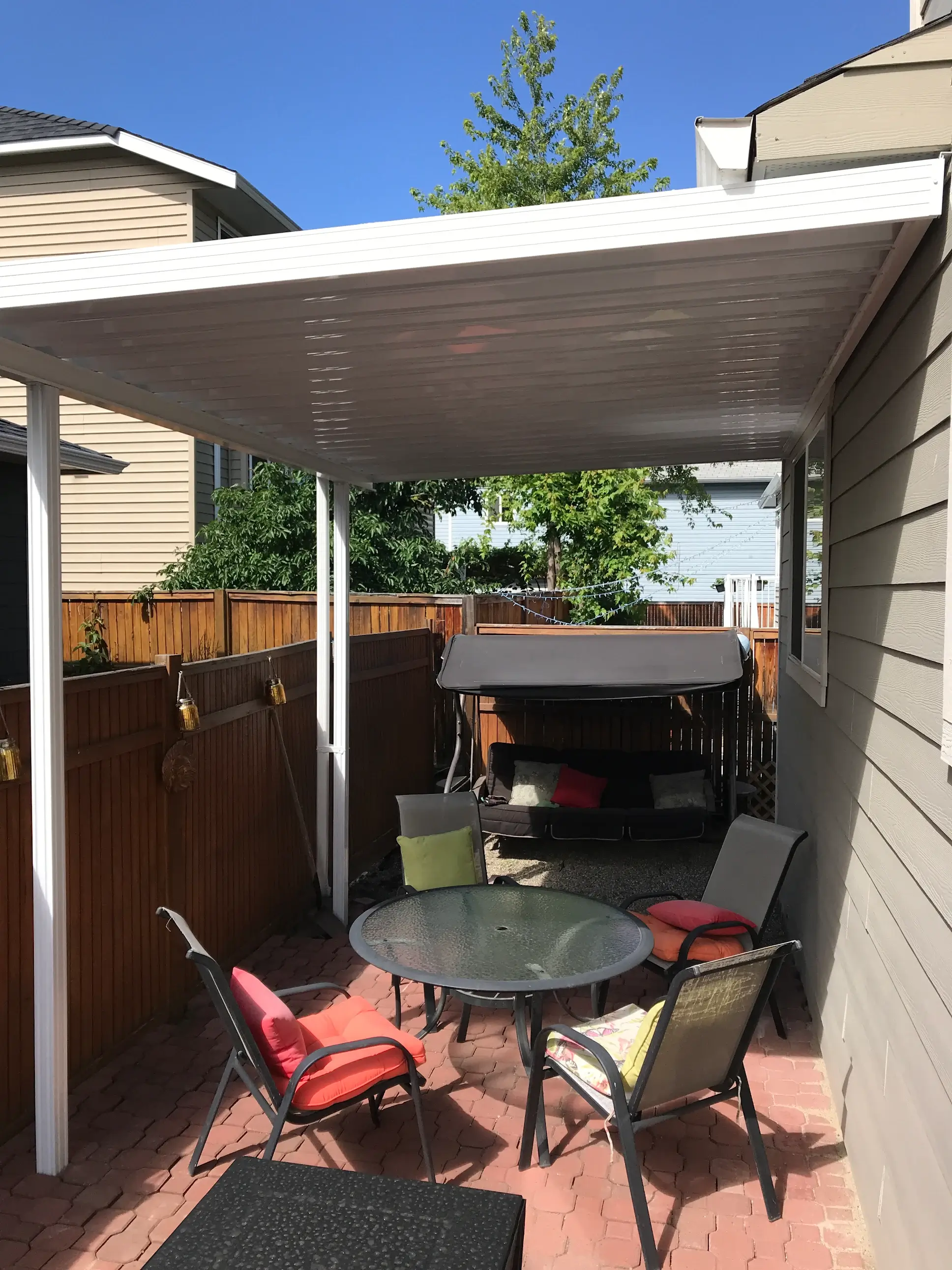
Size vs. Cost: What Each Size Runs
Bigger covers cost more, but the per-square-foot price actually drops as you go up in size. The engineering, permits, and installation labour are relatively fixed—it’s material that scales. Here’s what to budget for aluminum patio covers installed in the Okanagan:
| Size Category | Square Footage | Installed Cost | Cost / Sq Ft |
|---|---|---|---|
| Small | 100–200 sq ft | $4,000 – $8,000 | $35 – $45 |
| Medium | 200–400 sq ft | $8,000 – $15,000 | $30 – $40 |
| Large | 400–600 sq ft | $15,000 – $25,000 | $28 – $38 |
| Extra Large | 600+ sq ft | $25,000+ | $25 – $35 |
Popular Patio Cover Sizes & Estimated Cost
Looking for a specific size? These are estimated installed costs for the most popular aluminum patio cover dimensions in the Okanagan, based on our per-square-foot pricing above. Final price depends on attached vs freestanding, roof style, and site access, so grab a free quote for an exact number.
| Popular Size | Square Footage | Estimated Installed Cost |
|---|---|---|
| 10′ x 10′ | 100 sq ft | $4,000 – $4,500 |
| 10′ x 12′ | 120 sq ft | $4,500 – $5,500 |
| 12′ x 12′ | 144 sq ft | $5,000 – $6,500 |
| 12′ x 16′ | 192 sq ft | $6,500 – $8,000 |
| 10′ x 20′ | 200 sq ft | $7,000 – $8,500 |
| 12′ x 20′ | 240 sq ft | $8,000 – $9,500 |
| 16′ x 20′ | 320 sq ft | $10,000 – $13,000 |
| 20′ x 20′ | 400 sq ft | $12,000 – $15,500 |
These are ballpark ranges for standard insulated aluminum panels. A few things push the price up or down:
- Roof style: Solid insulated panels cost more than lattice or open-beam. Glass panel roofs are the premium option.
- Colour: Standard colours (white, sandstone, brown) are included. Custom powder-coat colours add 10–15%.
- Add-ons: Recessed LED lighting, ceiling fans, skylights, and electrical all add to the total.
- Site conditions: Sloped lots, second-storey decks, or tight access can add installation costs.
- Permits: Required in most Okanagan municipalities. Typically $200–$500. We handle the paperwork.
For a detailed cost breakdown by material type, check our full patio cover cost guide.
Want an Exact Quote for Your Size?
We’ll measure your space, review your options, and give you a fixed price. No surprises.
Get Your Free QuoteSizing Around Your Furniture
This is where most people undersize their cover. They measure the table and order a cover that matches. Then they realize chairs push back 3 feet, the BBQ needs space, and the kids want room to run around.
Here’s what common furniture layouts actually need:
| Furniture Layout | Minimum Cover Size | Recommended Size |
|---|---|---|
| Bistro set (2 chairs) | 8′ x 8′ | 10′ x 10′ |
| 4-person dining | 10′ x 10′ | 12′ x 12′ |
| 6-person dining | 12′ x 12′ | 14′ x 14′ |
| 8-person dining | 12′ x 16′ | 14′ x 18′ |
| Dining + lounge | 14′ x 18′ | 16′ x 20′ |
| Outdoor kitchen + dining | 16′ x 18′ | 18′ x 22′ |
| Full outdoor living room | 18′ x 20′ | 20′ x 24′ |
The “minimum” column keeps everything dry. The “recommended” column gives you the overhang buffer and room to actually use the space without bumping into posts.
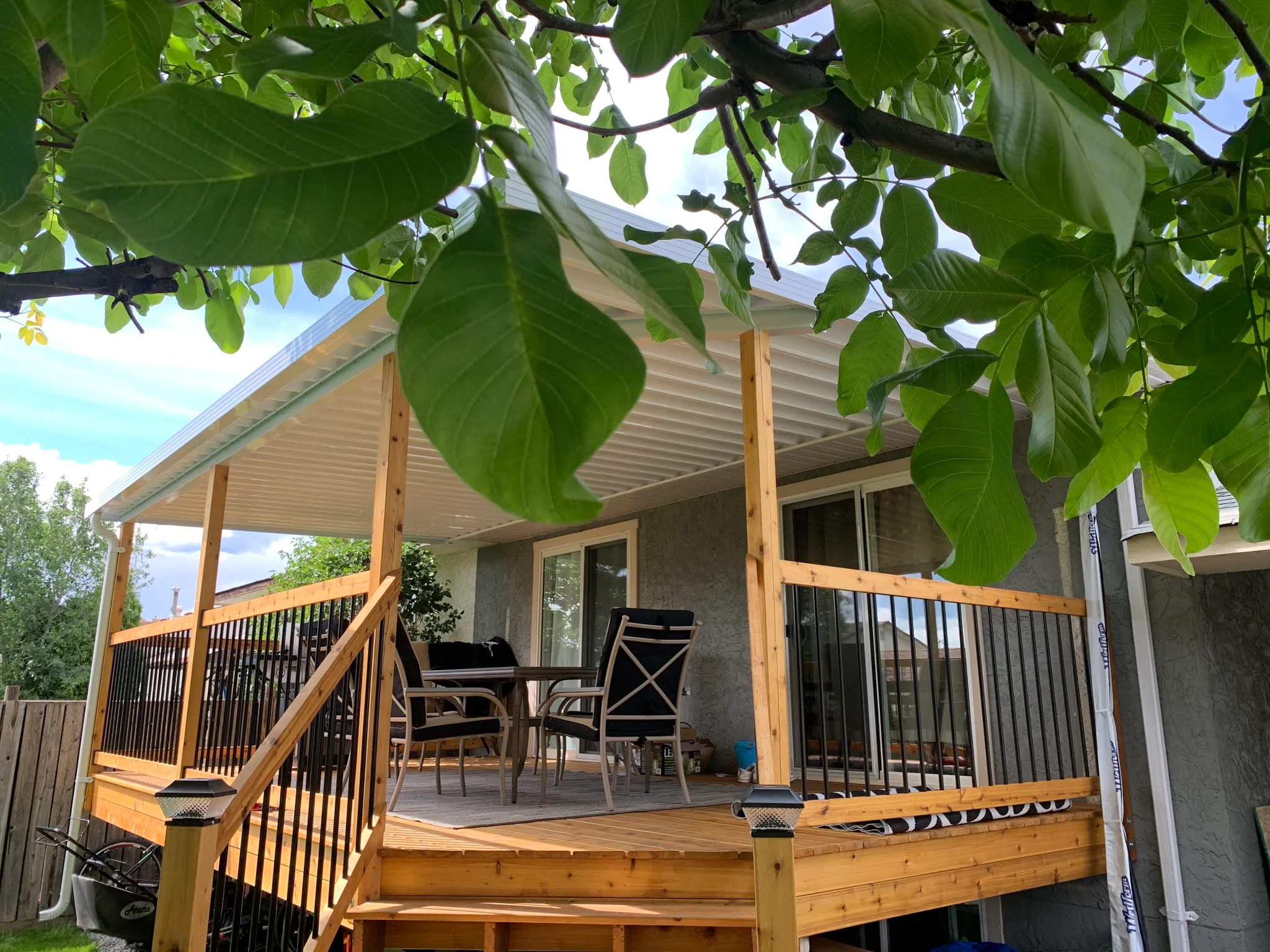
When You Need a Custom Size
Standard sizes work for maybe 60% of the projects we do. The other 40% need something custom. Here’s when custom makes sense:
- Irregular patio shapes: L-shaped decks, curved edges, or patios that step down to a lower level.
- Extending beyond the patio: You want the cover to reach past the existing slab into the yard. Common when people are adding a new outdoor living area.
- Matching roof angles: Your home has a specific pitch and the cover needs to follow the same slope to look integrated, not bolted-on.
- Tight spaces: Narrow side yards, setback limits, or obstacles like mature trees that force non-standard dimensions.
Custom sizing adds 1–2 weeks to the timeline for engineering drawings and typically costs 10–20% more than a standard size. Worth it when the alternative is a cover that doesn’t fit right.
BC Building Code: What Limits Your Size
Your dream 30-foot cover might not fly with the city. Here are the BC Building Code requirements that affect patio cover sizing in the Okanagan:
- Property setbacks: Minimum 1 metre (3.3 ft) from property lines in most municipalities. Some require more.
- Lot coverage: Total structures—house, garage, patio cover, shed—can’t exceed your lot’s maximum coverage percentage. Usually 40–50% depending on zoning.
- Height limits: Typically 3–4 metres (10–13 ft) from grade to the top of the cover. Varies by municipality.
- Snow load engineering: Every cover in the Okanagan must be rated for local snow loads, typically 1.5–2.5 kPa. Larger spans need heavier beams and more support posts.
- Permits: Required in Kelowna, West Kelowna, Vernon, Penticton, and Lake Country. We handle the application.
The setback and lot coverage rules are the ones that actually shrink your cover size. We check these before quoting so you don’t design around a size you can’t build. For more on the permit process, see our BC patio cover permits guide.
Common Sizing Mistakes We See
After years of doing this, the same mistakes come up over and over:
- Measuring the patio, not the furniture. Your 12×12 patio doesn’t mean you need a 12×12 cover. Measure what’s going under it.
- Forgetting chair pushback. Dining chairs slide back 2–3 feet when people stand up. If the cover edge is right at the table, half your guests are in the rain.
- Ignoring sun angles. The sun doesn’t come straight down. At 4 PM in July, it’s hitting your patio at a sharp angle from the west. You need overhang on the sun-facing side or you’re not getting shade when you need it most.
- Skipping the height. A 7-foot ceiling is code minimum but feels low. Go 8–9 feet if your house wall allows it. Taller ceilings make the space feel open instead of boxed in.
- Not checking setbacks first. We’ve had homeowners design their entire outdoor layout only to find out the cover can’t go within 5 feet of the property line. Check the rules before you plan the furniture.
Frequently Asked Questions
How much does a 10×20 patio cover cost?
A 10×20 aluminum patio cover is about 200 square feet and runs roughly $7,000 to $8,500 installed in the Okanagan, depending on attached vs freestanding, roof style, and site access.
How much does a 12×16 patio cover cost?
A 12×16 aluminum patio cover is about 192 square feet and typically runs $6,500 to $8,000 installed, one of the most popular sizes for a combined dining and lounge area.
How much does a 20×20 patio cover cost?
A 20×20 aluminum patio cover is about 400 square feet and generally runs $12,000 to $15,500 installed. At this size the cost per square foot drops, since engineering and labour are partly fixed.
What is the most popular patio cover size?
In the Okanagan, the 16′ x 18′ is our most-installed size. It gives you roughly 288 square feet—enough for a 6-person dining set, a pair of lounge chairs, and comfortable movement between zones. It fits the average deck without overwhelming the backyard.
How much does a 12×12 aluminum patio cover cost?
A 12×12 (144 sq ft) aluminum patio cover typically runs $5,000–$9,000 installed in the Okanagan. The range depends on roof style (insulated panels vs. lattice), colour choice, and whether you add features like integrated LED lighting. Permits are an additional $200–$500.
How far should a patio cover extend from the house?
Most covers project 10–16 feet from the house wall. The right depth depends on your furniture layout: a dining table needs at least 10 feet, an outdoor kitchen needs 12–14 feet. Add 2–4 extra feet beyond your furniture for overhang protection against angled rain and low sun.
Do I need a permit for a patio cover in Kelowna?
Yes. Kelowna, West Kelowna, Vernon, Penticton, and Lake Country all require building permits for patio cover installations. The permit ensures your cover meets BC Building Code requirements for snow load, setbacks, and structural safety. We handle the full application process.
Can I get a custom-sized patio cover?
Absolutely. About 40% of our projects use custom dimensions—for L-shaped decks, irregular patios, or covers that extend past the existing slab into the yard. Custom sizing adds 1–2 weeks for engineering and typically costs 10–20% more than standard sizes.
Not Sure What Size You Need?
We’ll come out, measure your space, and recommend the right size for your layout and budget. Free, no-pressure quotes.
Get Your Free Quote
Ready to Start Your Project?
Get a free, no-pressure quote. We’ll help you choose the right size for your backyard.
Serving Kelowna, West Kelowna, Vernon, Penticton, Lake Country & Salmon Arm